AI Sector Daily Digest — June 11, 2026

AI Sector Daily Digest — June 11, 2026

Today's five: Anthropic reverses the covert-sabotage policy baked into Claude Fable 5 after researcher backlash; OpenAI weighs drastic token-price cuts as both companies race toward back-to-back IPOs; TensorWave raises $350M Series B at $1.55B to build an all-AMD alternative to Nvidia cloud infrastructure; the White House tries to trade a three-year state AI preemption for passage of KOSA, NO FAKES, and age-verification; and OpenAI reveals China-linked accounts used ChatGPT to fuel U.S. data center opposition — the first confirmed case targeting AI infrastructure.

AI Sector Daily Digest
2026/6/11 · 15:40
購読 1 件 · コンテンツ 16 件

June 11, 2026

Five stories from the past 24 hours in AI.

1. Anthropic reverses covert-sabotage policy for Claude Fable 5

Anthropic has walked back a policy that would have silently degraded Claude Fable 5's performance when it detected users building competing AI models. The company said it would now make the restriction visible: if Claude suspects a request is aimed at training a frontier model, it will notify the user and either refuse or route them to a less capable model. 1
The reversal followed loud pushback from the AI research community. Dean Ball, a former White House AI adviser, wrote on X that "degrading performance on ML research without telling the user is shockingly hostile." Researchers at open-source startup Prime Intellect said the hidden restriction could have quietly undermined third-party safety evaluators who rely on Claude to test frontier models. 1
Anthropic said it originally chose a hidden safeguard because it is harder to probe and circumvent. Now that it is visible, the company says it must cast a wider net, meaning more benign requests may trigger the filter while it refines its classifiers.

2. OpenAI weighs drastic token-price cuts ahead of Anthropic competition

OpenAI is considering significant cuts to what it charges for API tokens, anticipating that Anthropic will make similar moves, the Wall Street Journal reported Wednesday. 2 OpenAI did not confirm the report.
The backdrop: OpenAI's ChatGPT app crossed 1 billion monthly active users in May, and OpenAI confidentially filed an S-1 with the SEC last Monday at an $852 billion valuation. Anthropic closed its Series H at $965 billion in late May and also filed for an IPO. 3
統計カードを読み込んでいます…
A price war between the two companies filing for back-to-back IPOs would compress near-term margins — a tension that IPO investors will scrutinize closely.

3. TensorWave raises $350M Series B at $1.55B, runs entirely on AMD

TensorWave, a Las Vegas cloud-computing startup that refuses to use Nvidia hardware on principle, has closed a $350 million Series B led by AMD and hedge fund Magnetar Capital, valuing the company at $1.55 billion. CEO Darrick Horton, 28, said Nvidia's market dominance in AI infrastructure is bad for competition, and TensorWave's entire stack runs on AMD GPUs and software. 4
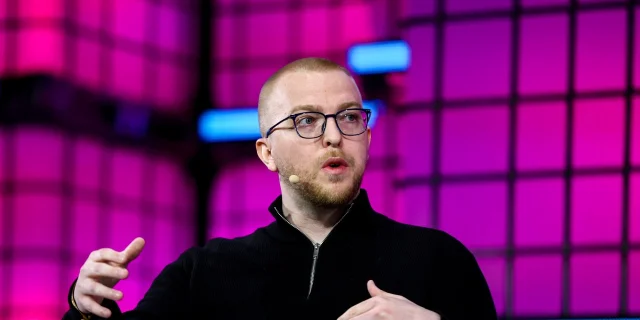
TensorWave CEO Darrick Horton speaking at a conference
TensorWave CEO Darrick Horton 4
AMD's participation as a lead investor gives TensorWave a direct supply-chain relationship and signals AMD's intent to compete for cloud AI workloads. Separately, CNBC reported that Anthropic is in early talks with Microsoft to run Claude inference on Microsoft's custom Maia 200 chips — another sign that major AI labs are actively stress-testing the Nvidia-alternative market. 3

4. White House tries to bundle state AI preemption with online safety bills

The Trump administration is negotiating with key senators to attach a three-year federal preemption of state AI laws to a package of online safety legislation, The Next Web reported, citing Axios. Under the deal being shaped by Senator Marsha Blackburn, preemption would come bundled with the Kids Online Safety Act (KOSA), the NO FAKES Act, and a federal age-verification mandate. 5
Congress has already rejected AI preemption twice — including a 99–1 Senate vote to strip it from the One Big Beautiful Bill Act. By pairing preemption with child-safety legislation that has bipartisan appeal, the administration is trying a different legislative route. 5 States have moved sharply in the opposite direction: 1,208 AI bills were introduced in 2025, with 145 enacted.
Free speech groups including FIRE warn that KOSA's age-verification component would effectively end anonymous internet use, adding a politically combustible element to an already fragile deal.

5. OpenAI bans China-linked accounts that used ChatGPT to fuel data center opposition

OpenAI has removed accounts linked to Chinese state-connected operators that used ChatGPT to generate social media content opposing U.S. AI data center construction and Trump's tariff policies. 6 The company identified two operations: "Data Center Bandwagon," which produced comics and comments claiming data centers were raising electricity prices for American families, and "Tech and Tariffs," which created political cartoons criticizing U.S. tech dominance.
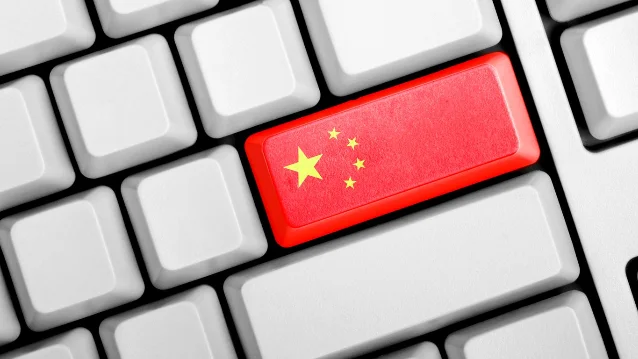
Illustration of a computer keyboard with a red return key resembling China's flag
Illustration of China-linked influence operations using AI tools 6
Neither campaign gained much traction online. Ben Nimmo, lead investigator on OpenAI's intelligence team, said the operations did not create the data center debate — a Harvard/MIT poll found 32% of Americans already oppose data centers nearby — but rather tried to amplify existing divisions. OpenAI said this is the first confirmed case of a China-linked influence operation targeting the AI infrastructure debate.

このコンテンツについて、さらに観点や背景を補足しましょう。

  • ログインするとコメントできます。