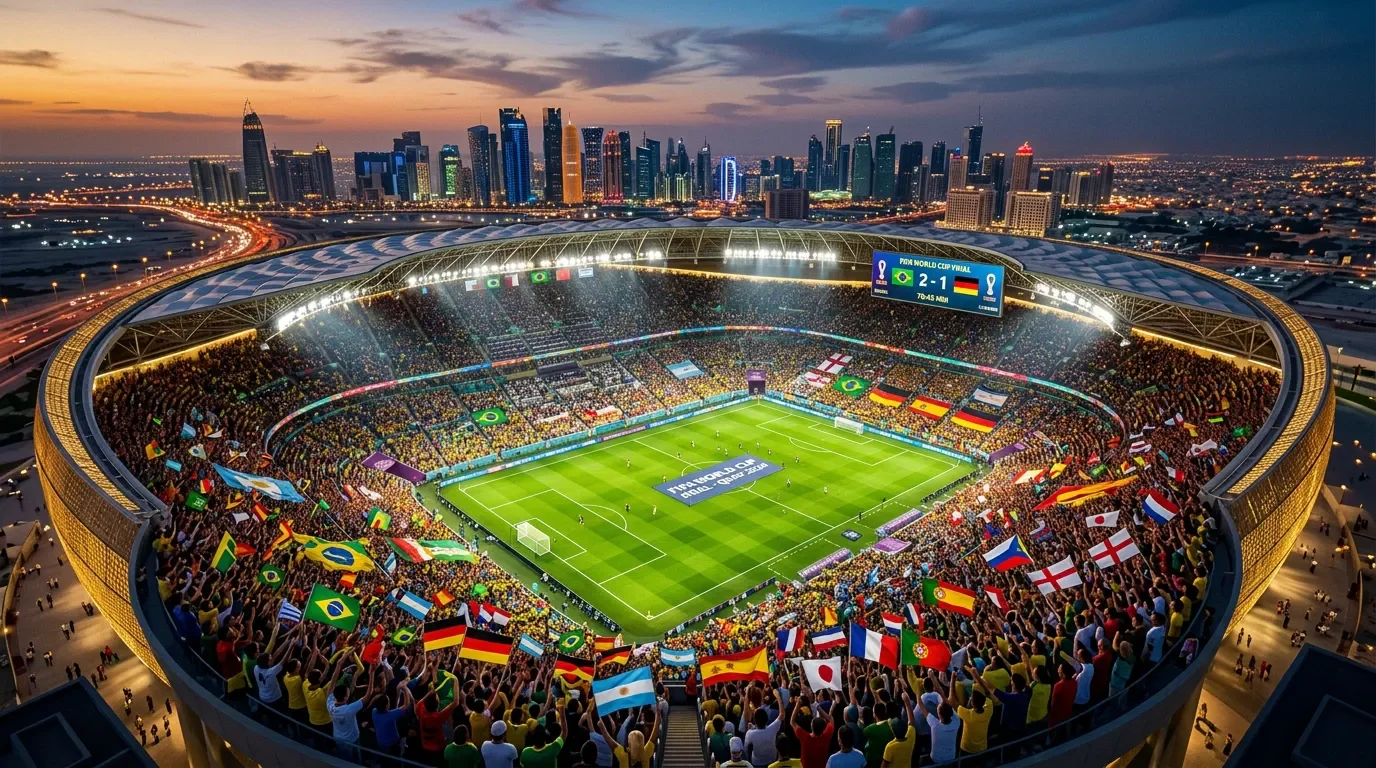
Your Complete Guide to All 16 FIFA World Cup 2026 Host Cities
The 2026 FIFA World Cup is live across 16 cities in the US, Mexico, and Canada. This guide covers every stadium, official fan zone, public transit tip, and local highlight — city by city — so you can make the most of the tournament wherever you are.

The 2026 FIFA World Cup is running right now — 48 teams, 104 matches, 39 days, and 16 cities spread across the United States, Mexico, and Canada. 1 If you're planning to attend a match, watch a game at an official fan zone, or simply explore the host city nearest to you, here is a city-by-city breakdown of every venue, fan festival, and travel essential you need.
Quick Reference: All 16 Host Cities at a Glance
| City | Country | Stadium | Capacity | Notable Round |
|---|---|---|---|---|
| New York / New Jersey | USA | MetLife Stadium | 87,157 | Final (July 19) |
| Dallas | USA | AT&T Stadium | 92,967 | Semi-Final |
| Atlanta | USA | Mercedes-Benz Stadium | 75,000 | Semi-Final |
| Los Angeles | USA | SoFi Stadium | 70,240 | Quarter-Final |
| Boston | USA | Gillette Stadium | 70,000 | Quarter-Final |
| Kansas City | USA | Arrowhead Stadium | 76,640 | Quarter-Final |
| Miami | USA | Hard Rock Stadium | 67,518 | Quarter-Final + Third Place |
| Houston | USA | NRG Stadium | 72,220 | Group Stage + R32 |
| Philadelphia | USA | Lincoln Financial Field | 69,328 | Group Stage + R32 |
| San Francisco Bay Area | USA | Levi's Stadium | 70,909 | Group Stage + R32 |
| Seattle | USA | Lumen Field | 69,000 | Group Stage + R32 |
| Mexico City | Mexico | Estadio Banorte (Azteca) | 87,523 | Opening Match (June 11) |
| Guadalajara | Mexico | Estadio Akron | 48,071 | Group Stage |
| Monterrey | Mexico | Estadio BBVA | 53,460 | Group Stage |
| Toronto | Canada | BMO Field | 45,736 | Group Stage + R32 |
| Vancouver | Canada | BC Place | 54,500 | Group Stage + R32 |
United States — 11 Host Cities
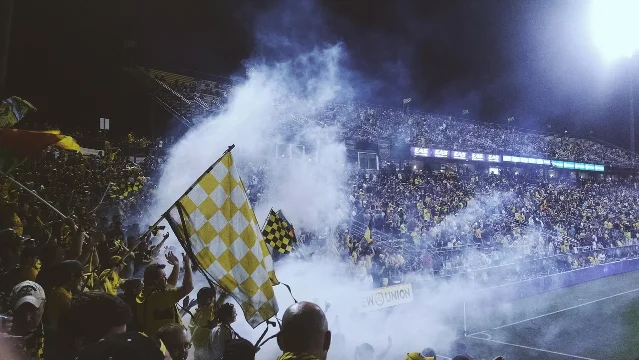
New York / New Jersey — The Final Stage
MetLife Stadium in East Rutherford, New Jersey hosts the most matches of any US venue, including the World Cup Final on July 19. 2 The stadium has been rebranded as "New York New Jersey Stadium" for the tournament to comply with FIFA's corporate naming policy. 1
Getting there: The MTA operates special World Cup train and bus services from Manhattan and surrounding areas. 3 New Jersey Transit also runs express trains to the stadium complex from Penn Station.
Fan zones: Multiple locations across the boroughs, including the Bronx Fan Zone at Bronx Terminal Market (June 13–14) and a Queens Group Stage HQ. 4
Dallas — Big Stadium, Bigger Texas
AT&T Stadium in Arlington holds 92,967 fans — the largest capacity of all 16 host venues — and hosts one of the two semi-finals. 2 The retractable-dome venue includes a massive HD screen and full climate control, making summer heat a non-issue.
Getting there: Dallas–Fort Worth is served by DART light rail and bus. The stadium in Arlington does not sit on a rail line; official match-day shuttle buses run from multiple transit hubs including CentrePort/DFW Airport station.
Local draw: The Deep Ellum entertainment district and the Fort Worth Stockyards are both within day-trip range, offering Tex-Mex dining and live music before or after matches.
Atlanta — The World's Most Unique Venue
Mercedes-Benz Stadium pitches itself as "the finest sports and entertainment facility in the world," and its eight-panel retractable pinwheel roof is hard to argue with. 2 Atlanta hosts the second semi-final here.
Getting there: MARTA rail runs directly to the adjacent Mercedes-Benz Stadium station.
Local draw: The World of Coca-Cola, the Georgia Aquarium, and the Center for Civil & Human Rights are all walkable from the stadium in the downtown core.
Los Angeles — Entertainment Capital of the Host
SoFi Stadium opened in 2020 at a cost of $5 billion and is surrounded by an 8.5-million-square-foot entertainment complex. 2 It hosts a quarter-final and will also host the 2026 Super Bowl, making 2026 a historic double for the venue. Team USA plays their group stage matches here and at Lumen Field in Seattle. 2
Getting there: LA Metro runs buses directly to SoFi Stadium for match days; multiple Metro rail lines connect to connecting bus routes across the city. 5
Fan zones: The city operates multiple fan zones including at The Original Farmers Market and in the City of Downey. 6 Official Discover LA events run for all 39 tournament days. 7
Seattle — Pacific Northwest Passion
Lumen Field, home to the Seattle Sounders MLS club, holds up to 69,000 fans with excellent views of the downtown skyline. 2 Seattle is famous for its intense soccer culture — the Sounders regularly sell out 70,000-seat matches.
Getting there: Link Light Rail and Metro Bus drops fans steps from the stadium gates, with direct service from Sea-Tac Airport. The stadium is walkable from downtown Seattle. 8
Fan zones: Beginning June 11, the Seattle Unity Loop connects multiple fan celebration sites along the waterfront including Seattle Center and surrounding neighborhoods. 9
Boston — History Meets the Beautiful Game
Gillette Stadium, freshly renovated, features a signature 218-foot lighthouse with a 360-degree observation deck. 2 Boston hosts a quarter-final here.
Getting there: Commuter rail runs from South Station to the Foxborough stadium on match days.
Fan zone: The FIFA Fan Festival™ Boston is the city's central gathering place for tournament celebrations. 10
Local draw: The Freedom Trail, Faneuil Hall Marketplace, and Boston's vibrant neighborhoods like Back Bay and the North End are all within easy reach downtown.
Houston — Space City Serves Up the Knockout Round
NRG Stadium has a retractable roof — essential for Houston's June heat — and 72,220 seats inside a large sports complex called NRG Park. 2 Houston hosts seven matches including Round of 32 games.
Getting there: Houston METRO runs dedicated World Cup transit services to NRG Stadium from downtown hubs and both major airports. 11
Local draw: Space Center Houston, the Museum District, and the diverse restaurant scene (one of the most internationally varied in the US) are major draws for visiting fans.
Kansas City — Loud and Proud
Arrowhead Stadium holds the Guinness World Record for the loudest crowd roar at a sports stadium. 2 With 76,640 capacity and a famously electric atmosphere, it hosts a quarter-final alongside group stage games.
Local draw: Kansas City BBQ is a pilgrimage destination in its own right. The city's live jazz scene, the National WWI Museum, and its many craft breweries give fans of every taste plenty to explore beyond match days.
Miami — Beach, Nightlife, and the World's Game
Hard Rock Stadium underwent a $350-million renovation that added party terraces, giant video boards, and a distinctive roof canopy. 2 Miami hosts a quarter-final plus the Third Place match.
Getting there: Miami pushes a Game Day Express Shuttle model, with major Metrobus routes feeding a match-day network. 12
Fan zone: The FIFA Fan Festival™ Miami takes place at Bayfront Park in downtown, along Biscayne Bay. 13
Philadelphia — Where America Began
Lincoln Financial Field hosted its very first event — a Manchester United vs. Barcelona preseason friendly — in 2003, and has since welcomed the Women's World Cup, CONCACAF Gold Cup, and Copa América. 2 It hosts six World Cup matches.
Local draw: The Liberty Bell, Independence Hall, and a Philly cheesesteak are essentially mandatory for first-time visitors. Full travel guidance including parking and transit options is available on the official Ticketmaster travel guide. 14
San Francisco Bay Area — Wine Country and Silicon Valley
Levi's Stadium in Santa Clara is hosting both the 2026 Super Bowl and six World Cup matches — the only venue with that dual honor. 2 The stadium sits in the heart of Silicon Valley, with easy BART and Caltrain access.
Fan zones: Free fan zones, watch parties, and community events run across San Francisco, San Jose, and Oakland throughout the tournament. 15
Local draw: Golden Gate Park, Napa Valley wine country, and Fisherman's Wharf are within easy reach. 2026 also marks San Francisco's 250th birthday, making this summer particularly festive.
Mexico — Three Historic Venues
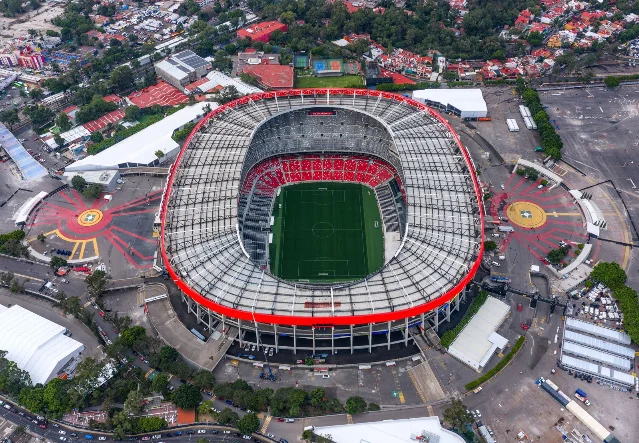
Mexico City — Where It All Began
Estadio Banorte (historically known as Estadio Azteca, capacity 87,523) hosted the Opening Match on June 11 between Mexico and South Africa. 1 It is the first stadium in history to host three FIFA World Cup tournaments — 1970, 1986, and 2026. Mexico is also hosting the World Cup for a record third time.
Mexico City is the most populated city in North America and among the oldest, with 500 years of layered history. 2 For visitors, the Zócalo historic center, Chapultepec Park and its world-class museums, and the street food scene in Coyoacán are essential stops.
Getting there: Mexico City's extensive Metro system connects to multiple transit hubs within reach of the stadium in the south of the city.
Guadalajara — The Cultural Heart of Mexico
Estadio Akron holds just over 48,000 and is one of the largest in Mexico. 2 Guadalajara is widely regarded as the cultural capital of the country — it's the birthplace of mariachi music and tequila, with year-round festivals celebrating both.
Beyond match day, the city's Hospicio Cabañas UNESCO World Heritage Site, the Tlaquepaque artisan district, and the Mercado San Juan de Dios offer rich local experiences.
Monterrey — Surrounded by Mountains
Estadio BBVA (nicknamed "The Steel Giant," capacity 53,460) opened in 2015 with a design that brings fans as close to the pitch as possible. 2 The northwest stands frame a dramatic view of Cerro de la Silla, a 5,970-foot mountain that defines Monterrey's skyline.
The city is an outdoor playground — hiking, climbing, and caving in the surrounding Sierra Madre are all accessible. For city visitors, the Macroplaza civic complex and the Paseo Santa Lucía riverwalk are relaxing daytime options.
Canada — Two Cities, Two Coasts
Toronto — North America's Most Diverse City
BMO Field underwent a $120 million renovation to bring it up to European stadium standards. 2 Located just west of downtown, it's the home of Toronto FC — Canada's most-supported MLS club — and will host six matches.
Getting there: GO Transit runs express trains directly to the stadium from Union Station and across the Greater Toronto Area. The TTC subway and bus network cover the city comprehensively. 16
Local draw: Toronto is one of the most ethnically diverse cities in the world, with vibrant neighborhoods like Kensington Market, Little Portugal, and Chinatown, plus the CN Tower and the waterfront.
Vancouver — Ocean, Mountains, and Soccer
BC Place (capacity 54,500) hosted the Opening and Closing Ceremonies of the 2010 Winter Olympics and is a retractable-roof stadium in the heart of downtown. 2 Vancouver hosts seven matches, including a Round of 32 game.
Positioned between the Pacific Ocean and the Coast Mountains, Vancouver consistently ranks among the world's most livable cities. Stanley Park, Granville Island Market, and the Capilano Suspension Bridge are fan favorites for non-match days.
Planning Your Visit: Key Tips for All Cities
Tickets: As of April 2026, official match tickets range from approximately $60 (FIFA's limited fan-access tier) to over $10,000 for premium seats at high-demand fixtures. 1 Purchase only through FIFA's official platform or your country's authorized sales agent.
Free Fan Festivals: Every host city operates an official FIFA Fan Festival™ — a free public gathering space with live screenings, entertainment, and food. The Miami FIFA Fan Festival™ is at Bayfront Park, Boston's is a major downtown installation, and the SF Bay Area runs events across three cities simultaneously. 10 13 15
Get on public transit: Every host city strongly recommends fans use public transport on match days. Parking near venues is limited, expensive, and slow to exit. Seattle's Link Light Rail, LA Metro, Houston METRO, the MTA in New York, and GO Transit in Toronto have all expanded services specifically for the World Cup.
Tournament dates to keep in mind:
- Group Stage: June 11–27
- Round of 32: June 28–July 3
- Round of 16: July 4–7
- Quarterfinals: July 9–11
- Semifinals: July 14–15
- Final: July 19 at MetLife Stadium, New York/New Jersey
参考ソース
- 1Britannica: 2026 FIFA World Cup Complete Guide
- 2Roadtrips: 2026 World Cup Cities Map and Venues
- 3MTA: World Cup 2026 New York New Jersey travel guide
- 4NYC Tourism: Fan Zones of World Cup 2026
- 5LA Metro: How to Get to World Cup Matches in LA
- 6Los Angeles World Cup 26 Fan Zones
- 7Discover Los Angeles: FIFA World Cup 2026 LA
- 8Seattle FWC26: Transportation
- 9Seattle FWC26: Fan Celebrations
- 10FIFA Fan Festival Boston
- 11Houston METRO: Ride METRO to the World Cup
- 12Reddit: FIFA World Cup 2026 Host City Transport Tips
- 13Miami FWC26: Fan Festival
- 14Ticketmaster: World Cup 2026 Travel Guide Philadelphia
- 15SF Bay Area FWC26: Fan Zones & Watch Parties
- 16GO Transit: Take the GO Train to Toronto FIFA World Cup 2026
このコンテンツについて、さらに観点や背景を補足しましょう。