
AI Sector Daily Digest — June 16, 2026
Today's five: the U.S. explains the Anthropic export curb as a foreign military-intelligence risk; DeepSeek reportedly closes a $7.4B first round; France commits €655M to state AI tools; Alibaba unveils robot-focused AI models; and MetaSyn shows LLM agents still fail at scientific meta-analysis screening.

Coverage window: June 15, 2026 08:00 UTC to June 16, 2026 08:00 UTC. Selection standard: material company, model, funding, policy, or research moves with a verifiable source timestamp inside the window.
The five that matter
| # | Story | Category | Why it matters |
|---|---|---|---|
| 1 | Commerce explains the Anthropic model curb | Regulation / frontier models | The U.S. framed the Fable and Mythos export order as a military-intelligence diversion risk, not just a generic jailbreak concern. 1 |
| 2 | DeepSeek reportedly closes a $7.4B first round | Funding / China AI | If confirmed, the round would put DeepSeek above a $50B valuation with an unusual founder-control structure. 2 |
| 3 | France puts €655M behind state AI tools | Public-sector AI | Paris wants one chatbot layer across state services, plus a public-health chatbot and easier access to public data. 3 |
| 4 | Alibaba unveils robot-focused AI models | Models / agents | China’s large platforms are pushing model work from chat interfaces toward robots and task-executing agents. 4 |
| 5 | MetaSyn tests LLM agents on scientific meta-analysis | Research | The benchmark shows current LLM pipelines still fail at eligibility screening even when retrieval recall is high. 5 |
1. Commerce explains the Anthropic model curb
What happened: U.S. Commerce Secretary Howard Lutnick said the department acted against Anthropic’s Mythos and Fable models because officials feared military-intelligence users in China, Russia, or other countries of concern could deploy them. 1
Why it matters: This turns the dispute from a narrow safety fight into a test of whether frontier model access can be treated like an export-control problem.
Source: Reuters and the security-community open letter.
More than 80 cybersecurity executives and experts signed a letter asking the government to lift the directives and use a scientific, transparent process for future AI risk assessments. 6 The next marker is whether Anthropic restores access through a tiered or licensed structure, or whether Commerce holds the line.
2. DeepSeek reportedly closes a $7.4B first round
What happened: Reuters, citing The Information, reported that DeepSeek raised more than 50 billion yuan, or $7.40 billion, at a valuation above $50 billion. 2
Why it matters: A round of that size would make DeepSeek China’s clearest private-market answer to the U.S. frontier-lab funding race.
Source: Reuters.
Treat this as reported, not confirmed. Reuters said it could not immediately verify the report and that DeepSeek could not immediately be reached for comment. 2 The reported structure matters: investors put capital into a limited partnership managed by founder Liang Wenfeng, with no voting rights and a five-year lock-up, while China’s national AI investment fund reportedly invested directly.
3. France puts €655M behind state AI tools
What happened: French Prime Minister Sebastien Lecornu said the government will invest €655 million, about $758 million, in AI and create a common chatbot for all state services. 3
Why it matters: This is government AI procurement moving from pilots into public-service infrastructure.
Source: Reuters.
The plan also includes a public-health chatbot for the Ameli state health insurance agency and a new platform to make public data easier to access. 3 Lecornu framed the move as a sovereignty issue, saying France cannot rely on tools developed by foreign powers.

4. Alibaba unveils robot-focused AI models
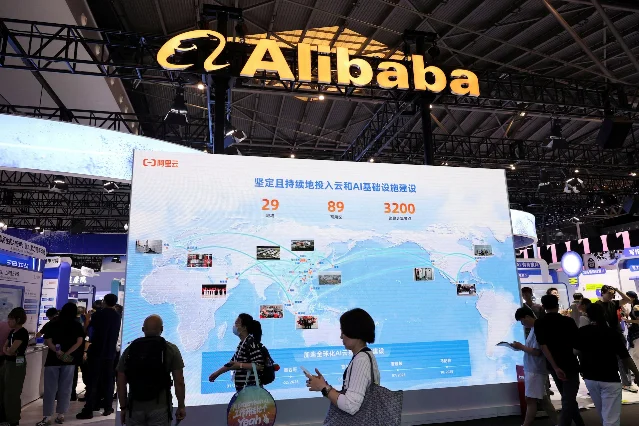
What happened: Alibaba unveiled its first suite of AI models for robots on Tuesday. 4
Why it matters: The release fits the broader shift from chatbots toward agents and embodied systems that can execute tasks.
Source: Reuters.
Reuters described the move as part of a China-wide push toward agents that can make machines more intelligent and handle complex work. 4 The article did not provide model names or benchmark data, so the practical capability gap is still open.
5. MetaSyn tests LLM agents on scientific meta-analysis
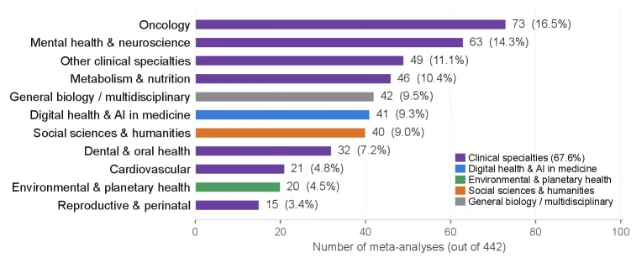
What happened: A new arXiv paper introduced MetaSyn, a benchmark built from 442 expert-curated Nature Portfolio meta-analyses and a PubMed corpus of 140,585 articles. 5
Why it matters: It targets a high-stakes workflow where fluent summaries are not enough; systems must apply eligibility criteria and recover the right studies.
Source: arXiv.
The headline result is the screening bottleneck. The best retrieval setup reached 90.9% recall at K=200, but no end-to-end system recovered more than 52.7% of the ground-truth included literature. 5 For AI agents in science, that is a practical warning: finding relevant papers is much easier than deciding which ones actually qualify.
Watch list for the next issue
- Anthropic: whether Commerce and Anthropic agree on access conditions for Fable and Mythos.
- DeepSeek: whether the reported $7.4B round is confirmed by the company, investors, or filings.
- Alibaba: whether the robot-model release comes with technical docs, partners, or benchmark claims.
このコンテンツについて、さらに観点や背景を補足しましょう。