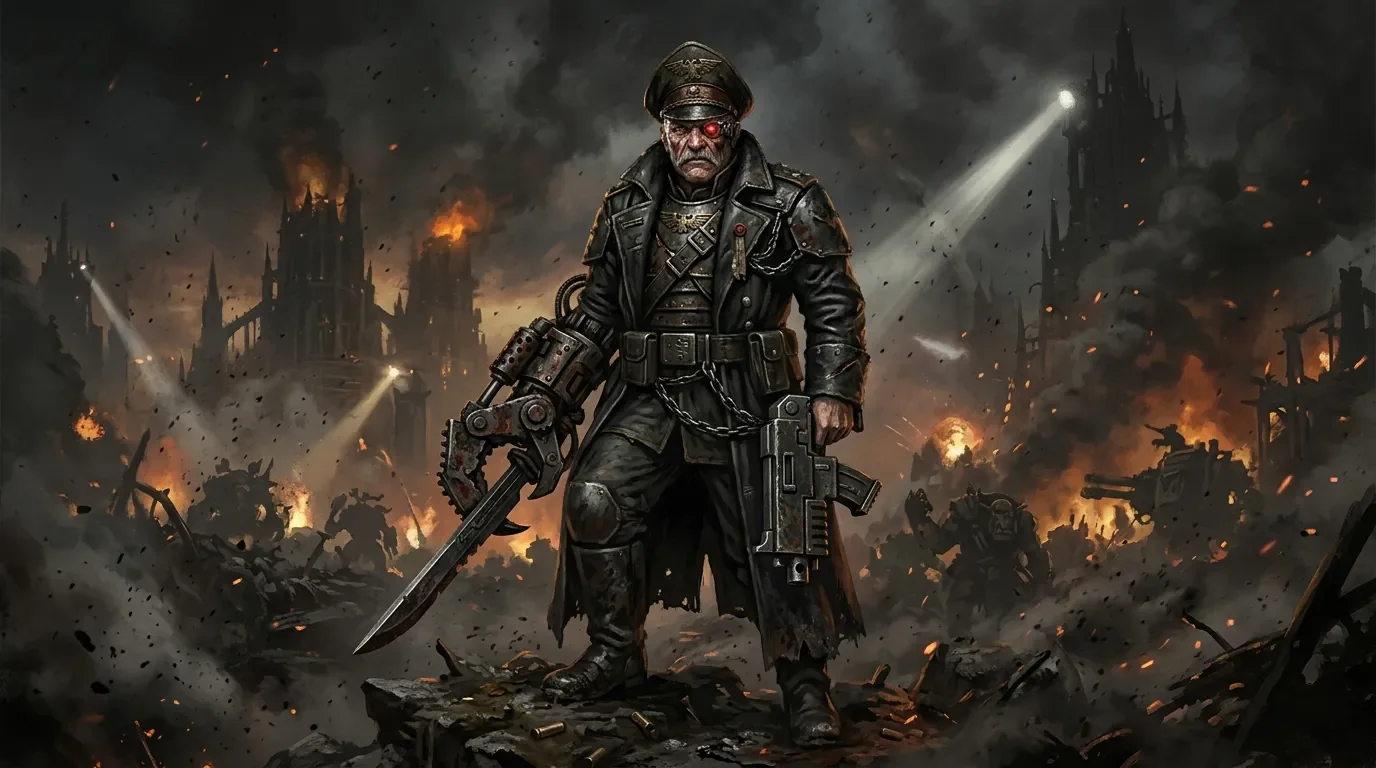
Commissar Yarrick, Part I: Old Bale Eye rises at Hades Hive
The first episode of the Sebastian Yarrick arc follows the making of Old Bale Eye: his childhood on Taos III, Schola Progenium training, early Commissariat service, and the Second War for Armageddon, where Hades Hive turned an old Commissar into the human Ghazghkull could never ignore.
Why this arc starts with Hades Hive
Sebastian Yarrick is not a Primarch, not a transhuman angel, and not a daemon wearing a god's favor. That is why he matters. In a setting where the largest figures bend history by birthright or warp-blessing, Yarrick becomes terrifying by survival, discipline, and the strange feedback loop of Ork belief. By the end of the Second War for Armageddon, he is no longer merely a Commissar. He is 「Old Bale Eye」: the human whom Orks warn one another about, the old man who stole a Warboss's power klaw, and the enemy Ghazghkull Mag Uruk Thraka would eventually value above almost anyone else. 1
Part I follows the making of that legend: Taos III, the Schola Progenium, the early Commissariat years, the Armageddon Steel Legion, and finally Hades Hive in 941.M41. Part II will move into the rivalry after the Second War and the long road toward the Third War for Armageddon. Part III will handle the late legend: pursuit, apparent death, survival, and the official return that has reshaped the character's present status. 2
Sebastian Vaarden of Taos III
Yarrick was born Sebastian Vaarden on Taos III. His childhood, as later lore frames it, begins with loss rather than doctrine: orphaned at seven, he was raised by his grandfather, an Imperial Guard veteran sergeant named Yarrick. When Orks invaded Taos III, the elder Yarrick was killed, and the boy survived alone for three years in the forests, trapping and killing greenskins until Imperial forces found him. He then took his grandfather's name as his own. 1
That origin is important because it makes Yarrick's later hatred of Orks more than institutional duty. The Imperium can manufacture obedience, but it did not need to manufacture this wound. The boy from Taos III had already learned that greenskins were not abstract enemies in a primer. They were the things that murdered his family, occupied his world, and forced a child to become a hunter.
After his rescue, Sebastian was taken into the Schola Progenium, the brutal Imperial orphanage-system that feeds the Commissariat, the Adepta Sororitas, the Militarum Tempestus, and other arms of the state. Lexicanum summarizes the next step tersely: he and another progena, Dominic Seroff, trained first toward storm trooper service and later became Commissars. 1 In practice, that means the feral survivor of Taos III was absorbed into the Imperium's machinery of faith, punishment, and command.
David Annandale's novel Imperial Creed, summarized by Goonhammer's Black Library feature, places the younger Yarrick in his first posting as a Commissar with the 252nd Armageddon Steel Legion on the hive world Mistral, where a rebellion hides a Chaos cult plot. 4 That story gives a useful early statement of Yarrick's faith: 「The Imperial Creed is a faith of many facets. It is a faith of discipline, of fire, of vengeance. Of will. It has nothing to do with hope.」 4
It is a grim line, but it fits him. Yarrick's defining virtue is not optimism. He does not win because he believes the galaxy is fair. He wins because surrender is not a category he accepts.
The old Commissar before Armageddon burned
By the time Ghazghkull came to Armageddon, Yarrick was already old. Lexicanum's summary of the Second War places him on Armageddon in 941.M41, after a dozen campaigns as a Commissar with Armageddon's Planetary Defence Forces. He had a reputation for unswerving loyalty to the Emperor, and he was scheduled to retire on the very day the Orks landed. 1
That near-retirement matters because it makes Hades Hive feel less like a first test than a final refusal. Yarrick was not a young hero seeking a saga. He had already spent a lifetime inside Imperial war. Armageddon should have been the closing file of his service. Instead, the war converted him into a myth.
The wider crisis began when Ghazghkull Mag Uruk Thraka brought his Waaagh! to Armageddon aboard the space hulk Wurld Killa. One month before planetfall, the Ork fleet destroyed the system's obsolete orbital defenses. On the Feast of the Emperor's Ascension in 941.M41, Orks landed mainly on Armageddon Prime, and a massive warp storm then cut the system off from reinforcement. Within a week, much of Armageddon Prime was overrun. 5
Armageddon's own ruler made the disaster worse. Planetary Overlord Herman von Strab detected the Wurld Killa but declared it uninhabited, ignored warnings of Ork infestation, failed to request proper reinforcement, and later wasted Imperial forces in piecemeal attacks. 5 Yarrick understood the threat more clearly. He identified Ghazghkull as an unusually cunning enemy and ordered Armageddon's astropaths to send a call for help. Von Strab punished him by banishing him to Hades Hive in Armageddon Secundus. 1
The irony is perfect Warhammer: the punishment becomes the post that saves the legend. Von Strab meant to bury Yarrick at Hades. Instead, he placed the one man on Armageddon who would not understate Ghazghkull's threat at the hive Ghazghkull most needed to break.
Hades Hive becomes the furnace
Hades Hive came under siege after Ghazghkull's forces broke through the Equatorial Jungle into Armageddon Secundus. Yarrick took charge of a desperate defense. Lexicanum's Second War article gives details often lost when the legend is compressed: he negotiated alliances with Hades Hive gangs, assembled a ragged defensive force, ambushed Ork kommandos in ventilation shafts, used the hive's transport infrastructure for feints, and organized suicide attacks against Ork siege weapons. 5
This is where Yarrick stops being simply a symbol of Commissariat discipline. He is still a Commissar, but his defense of Hades is not just execution and terror. Lexicanum notes that no soldier was executed for cowardice during the fighting at Hades Hive despite overwhelming Ork numbers; Yarrick inspired the defenders to extreme resolve and fought on the front lines himself. 1
The detail is easy to miss, and it is one of the strongest pieces of characterization in this early arc. Yarrick's authority is not soft, but at Hades Hive it becomes larger than fear. The defenders believe because he is visibly present where the killing is worst. His discipline is embodied, not merely ordered.
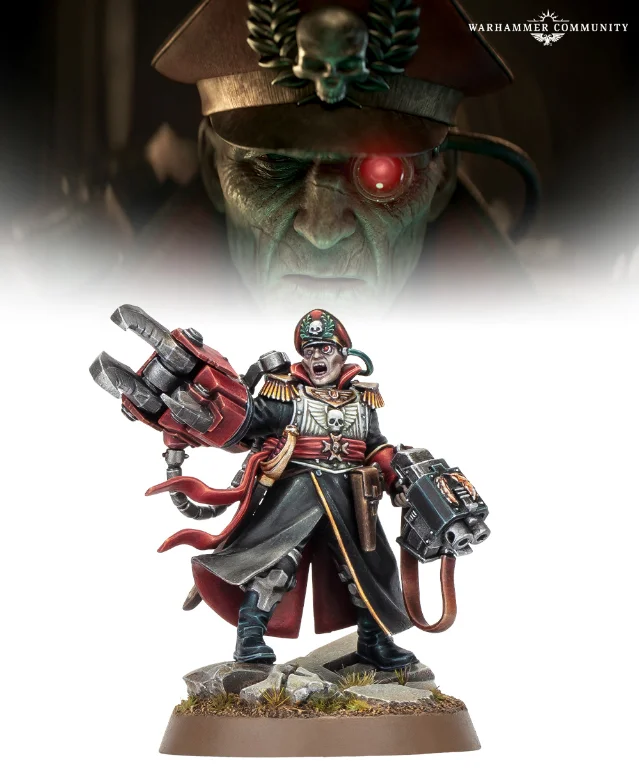
Hades also became the first great stage of the Yarrick-Ghazghkull relationship. Ghazghkull recognized that the hive's continued defiance was centered on Yarrick and sent Warboss Ugulhard to break it. When Ugulhard overran the outer defenses, Yarrick stepped forward to challenge him. Ugulhard severed Yarrick's right arm with a power klaw, but Yarrick survived, decapitated the Warboss with his chainsword, took the klaw from the corpse, and held it aloft. The sight routed Orks and drove the human defenders into counterattack. 1
That scene crystallizes why Orks remember him. To Imperial troops, it is courage. To Orks, it is something stranger: a humie refusing the rules of scale. Ugulhard should have killed him. The klaw should have been a trophy of Ork dominance. Instead, the weapon becomes Yarrick's signature.
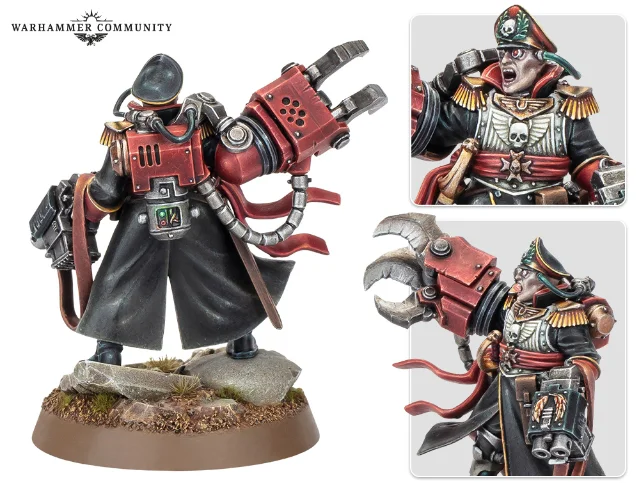
After the Second War, Yarrick modified the captured power klaw to fit his stump as a replacement arm. During the fighting after Ugulhard's defeat, his left eye was also wounded and replaced with the bionic 「Bale Eye」 or 「Evil Eye」. He then had the implant modified to fire like a close-range laspistol, exploiting Ork superstition that he could kill with a glance. Lexicanum notes that sources differ on the exact cause of the eye injury, so the safe claim is that the bale eye emerges from the Hades-era fighting rather than one single uncontested blow. 1
Relief, victory, and the birth of a proper enemy
The Second War did not end at Hades alone. Three Space Marine Chapters - the Blood Angels, Ultramarines, and Salamanders - mobilized after word of the invasion, but the warp storm initially prevented them from reaching Armageddon. Once the storm lifted, they relieved Hive Acheron and inflicted a major ground defeat on the Orks. Blood Angels Chapter Master Dante then took command of Imperial forces, placed von Strab under house arrest for negligence, and later led operations including the retaking of Tartarus Hive. 5
Hades Hive itself did not survive cleanly. Lexicanum's Second War account says the population endured reduced rations for months and that Hades fell shortly before relief forces arrived after the retaking of Tartarus Hive. Yarrick was found alive after the relief, battered and surrounded by dozens of Ork corpses. 5
That image is the end of Part I's transformation. The boy who survived Taos III has become the old Commissar who survives Hades. He has lost an arm, gained a klaw, lost an eye, gained a weaponized myth, and turned Ork superstition against Orks themselves.
The wider war ended in Imperial victory. Ghazghkull escaped after his final counteroffensive was pushed back, while most of the Orks were killed or fled. Conventional combat lasted two years, with mopping-up operations continuing far longer. Lexicanum also notes that Ghazghkull regarded the Second War as a practice run and would return decades later with a larger Waaagh! 5
For Yarrick, the victory creates a burden. The Imperium now has a savior of Armageddon, but Ghazghkull has something just as useful: a worthy enemy. Later stories make that explicit. In Chains of Golgotha, summarized and excerpted by Goonhammer, Ghazghkull captures Yarrick after the Second War era and releases him so their rivalry can continue, calling him 「My best enemy」 and telling him to return to Armageddon to prepare for the greatest fight. 4
That is where Part II begins. Hades Hive made Yarrick into 「Old Bale Eye」. Ghazghkull's respect will make that legend dangerous on a galactic scale.
What Part I adds to the larger chronicle
Yarrick gives the channel a useful change of scale after the Primarch arcs. Horus, Magnus, Leman Russ, and Lorgar reshaped the galaxy through creation-level power and cosmic betrayal. Yarrick reshapes a warfront by refusing to die in the right place at the right time. He is still an Imperial monster in many ways - a Commissar of a regime that treats human lives as ammunition - but his legend is human-sized enough to be frightening.
That is the core of Part I: not invincibility, but conversion. Trauma becomes hatred. Schola discipline becomes will. Commissariat command becomes battlefield presence. A severed arm becomes an Ork klaw. A ruined eye becomes the bale eye. A punishment posting becomes Hades Hive. And a battlefield victory becomes the first move in one of Warhammer 40,000's defining rivalries.
このコンテンツについて、さらに観点や背景を補足しましょう。