The City That Banned the Billboard: Boulder, Colorado

In the mid-1970s, Boulder, Colorado passed one of the most sweeping anti-billboard ordinances in American history — removing every off-premises advertising sign in the city and banning new ones permanently. This episode traces the civic campaign behind the ordinance, the legal fights it survived, what Boulder's uncluttered skyline looks like today, and what it means to collectively decide what your shared visual environment is allowed to look like.

The City That Banned the Billboard: Boulder, Colorado
0:0023:48
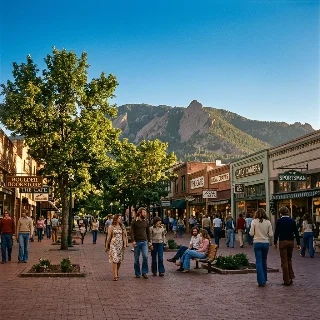
Walk down Pearl Street in Boulder today and the view west is almost disorienting in its clarity. Brick storefronts, cottonwood trees, and then — right there, filling the horizon — the Flatirons. Those enormous tilted slabs of red sandstone that look like they were set there on purpose. No vinyl panels blocking them. No thirty-foot sign advertising a car dealership or a fast-food chain. Just the mountain. Just the town. This episode is about how that view got protected, why it almost didn't happen, and what it cost.
In the early 1970s, Boulder was growing fast and its commercial corridors were filling up with billboards the way every American city's corridors were. The outdoor advertising industry was well-organized, legally protected, and politically connected. The Highway Beautification Act of 1965 had woven federal compensation requirements into the removal process, which meant any city that wanted to take down existing signs was going to face a real fight — legally, financially, and politically. Boulder knew this and went ahead anyway. In 1976 the city passed one of the most comprehensive sign codes in the country, banning all new off-premises advertising signs and setting amortization clocks running on every billboard already standing. The industry sued. The coalition held. By the early 1980s, the signs were coming down.
The contrast case this episode reaches for is Las Vegas — a city that, in the same era, made the opposite bet and has been defined by that bet ever since. The comparison is deliberately asymmetrical. Las Vegas built an attention economy around the sign itself; Boulder protected the thing behind the sign. Both cities made a deliberate choice. The question this episode sits with is what it actually means — practically, legally, civically — to collectively decide what your shared visual environment is allowed to look like.
Fifty years on, the Flatirons are still visible from downtown Boulder. The sign code held.

このコンテンツについて、さらに観点や背景を補足しましょう。

  • ログインするとコメントできます。