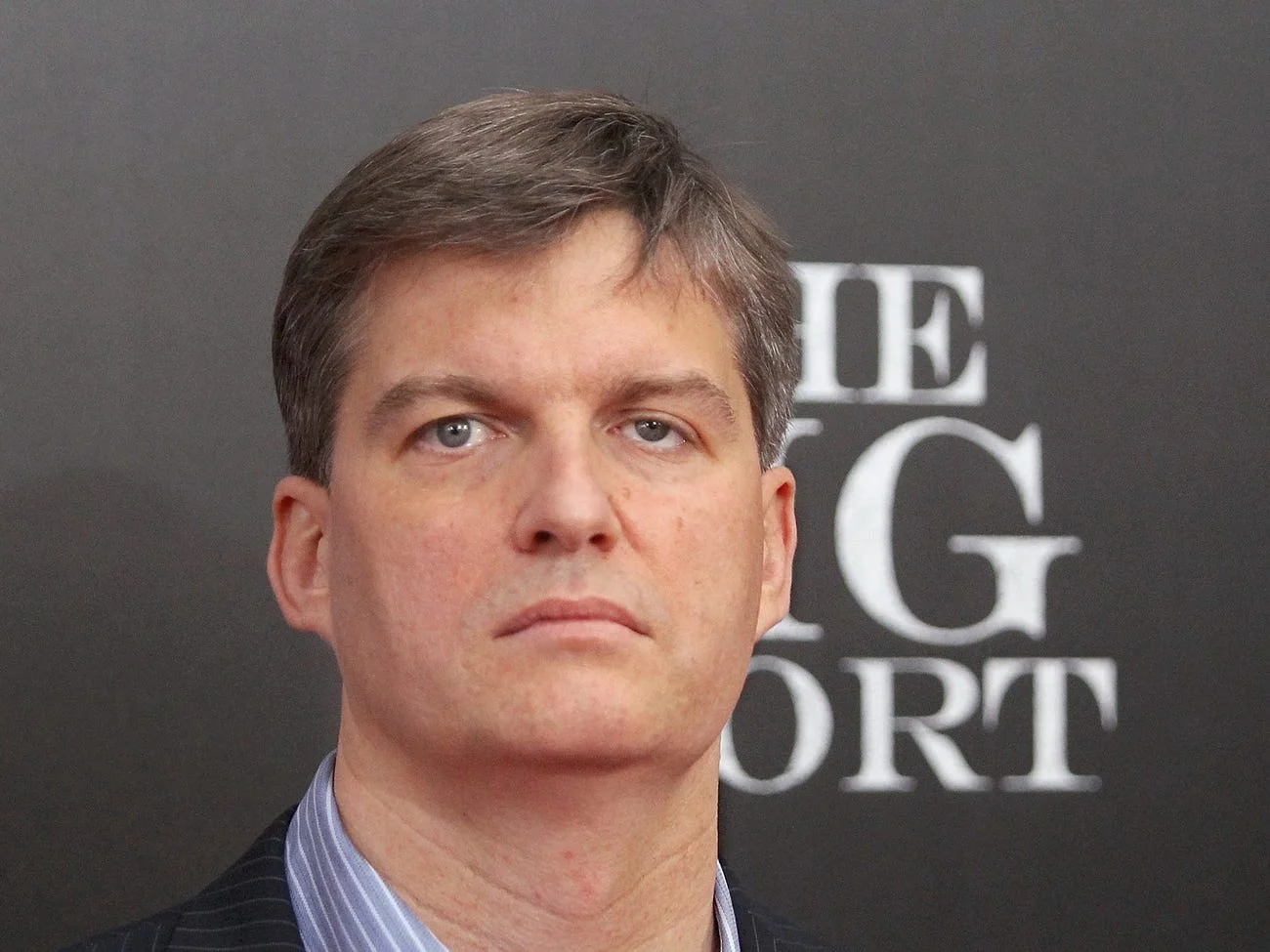
Burry names AI overconsumption: "tokenmaxxing"
Michael Burry coined "tokenmaxxing" — quota-driven, management-mandated AI overconsumption that inflates token demand without productivity gains — then capped the weekend with a tweet calling Nvidia's GPU financing ecosystem "Fugazi": tens of billions routed off balance sheets through 8–12 byzantine steps.

Over this past weekend (May 29–31), Michael Burry (Scion Asset Management, founder; best known for the 2008 subprime short chronicled in The Big Short) released a free Substack post teasing Heretic's Guide to AI's Stars Part IV, then capped the period with a blunt late-night tweet calling the entire Nvidia GPU financing ecosystem "Fugazi" — fake. Together, they carry his most precise articulation yet of why he is short Nvidia.
コンテンツカードを読み込んでいます…
What triggered the early reveal
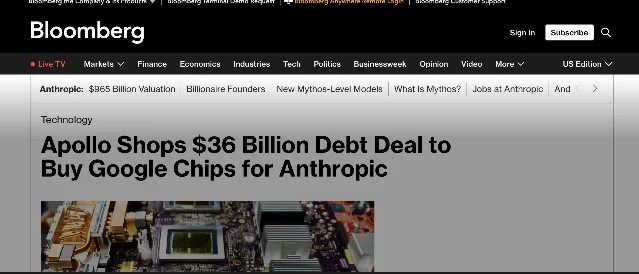
Burry's May 29 post, "Short Thoughts May 29, 2026," was published at 8:21 a.m. ET after news broke that Apollo Global Management (one of the world's largest alternative asset managers) had arranged a $38 billion debt financing package for Anthropic — backed by Google TPUs, not Nvidia GPUs. 1
Burry decided to pre-release two charts from Part IV, which was still in progress. His explanation:
"Part IV of the Heretic's Guide to AI's Stars is coming along nicely. In light of the news today about Apollo's $38 billion debt raise for Google's TPUs (not NVIDIA's GPUs) for Anthropic, I have decided to pre-release one visual from Part IV." 1
He withheld the explanatory text: "No explanation now. That is coming in Part IV." He noted a further thread to pull: "There is another angle story as well, but that is saved for Part IV." 1
One of the two charts he pre-released — a dense multi-column data table — is reproduced below as published, without accompanying commentary:
The tokenmaxxing thesis
The Apollo trigger is context. The underlying argument Burry has been building across several posts this month is more specific: the current AI token demand surge is not a Jevons Paradox (where cheaper inputs generate permanently higher consumption) but something he calls "tokenmaxxing."
His definition, from a Business Insider write-up drawing on his paid posts: 2
"Tokenmaxxing is not merely heavy AI use, and it is certainly not sustainable AI use. It is quota-driven, leaderboard-driven, management-mandated overconsumption."
The mechanism Burry describes: companies — he named JPMorgan and Disney as examples operating internal AI token leaderboards — set usage quotas and rank employees by token consumption, manufacturing demand that bears no relationship to business output. In a May 24 tweet that drew 1.2 million views, he argued that charts showing token volume surging are misread as Jevons Paradox when the real driver is corporate benchmarking: 3
"Tokenmaxxing and benchmarking are much better explanation than Jevons Paradox based on the timeline than prices of tokens falling."
His read on the economics:
"The market is capitalizing the most expensive phase of AI adoption as if it were normal and indicative of future demand." 2
The word "crazy, rushed, temporary phase" is how he characterized tokenmaxxing overall. 4
Independent data point: Jellyfish
Burry is not the only source making this productivity-ROI disconnect argument. Jellyfish, an engineering analytics platform, analyzed Q1 2026 data from 12,000 software developers. Heavy AI users consumed roughly 10x the token volume of baseline users — but produced only about 2x the work output. 4
The cost gap is starker: a baseline developer spent $52 per month on AI tokens; a heavy tokenmaxxer spent $691. Per unit of committed code, the cost jumped from $0.28 (low AI use) to $89 (heavy use) — a 317x spread on the same deliverable. Uber COO Andrew Macdonald put the management view plainly: 4
"It's very hard to draw a line between one of those stats and, 'Okay, now we're actually producing 25% more useful consumer features.'"
That is the trap Burry says is being mispriced: AI infrastructure is being built and financed to meet a token demand curve that corporate managers are manufacturing through targets, not through genuine productivity need.
"It is all Fugazi"
The weekend's sharpest statement came just before midnight on May 30 ET, when Burry posted on X: 5
"There are good reasons for this Jim. It is all Fugazi. How to make tens of $billions worth of $NVDA GPUs disappear from balance sheets in 8-12 byzantine steps."
コンテンツカードを読み込んでいます…
"Fugazi" — slang for something fabricated or illusory — is the descriptor Burry applies to the financing structures that move Nvidia GPU inventory off balance sheets through what he calls 8 to 12 layers of intermediary transactions. The tweet garnered 648 likes and 159,000 views within hours. 5
This connects directly to the Part IV preview and to arguments he made in Part III: Nvidia's three largest customers account for 64% of its receivables (up from 56% the prior quarter), and the five largest cloud customers carry $662 billion in unfunded, off-balance-sheet lease commitments as of a February 2026 Moody's report. 6 Nvidia itself holds $119 billion in non-cancellable chip supply obligations, primarily with TSMC (Taiwan Semiconductor Manufacturing Company). 6
Scion's current position: 1,000,000 Nvidia put options plus SOXX (Philadelphia Semiconductor Index) puts at a $330 strike expiring January 2027. 4
What investors should track next
Burry made two things explicit: Part IV is not yet published, and the "other angle story" he teased — likely involving the off-balance-sheet GPU financing mechanics — is the piece he considers most important. For investors watching this short thesis, the key variables are (a) whether hyperscaler capex commitments begin contracting as management pressure to demonstrate AI ROI meets the tokenmaxxing productivity gap, and (b) whether the complex GPU financing structures Burry describes come under scrutiny from auditors or regulators. Neither has resolved yet.
Cover photo: Jim Spellman/WireImage, via Business Insider
このコンテンツについて、さらに観点や背景を補足しましょう。