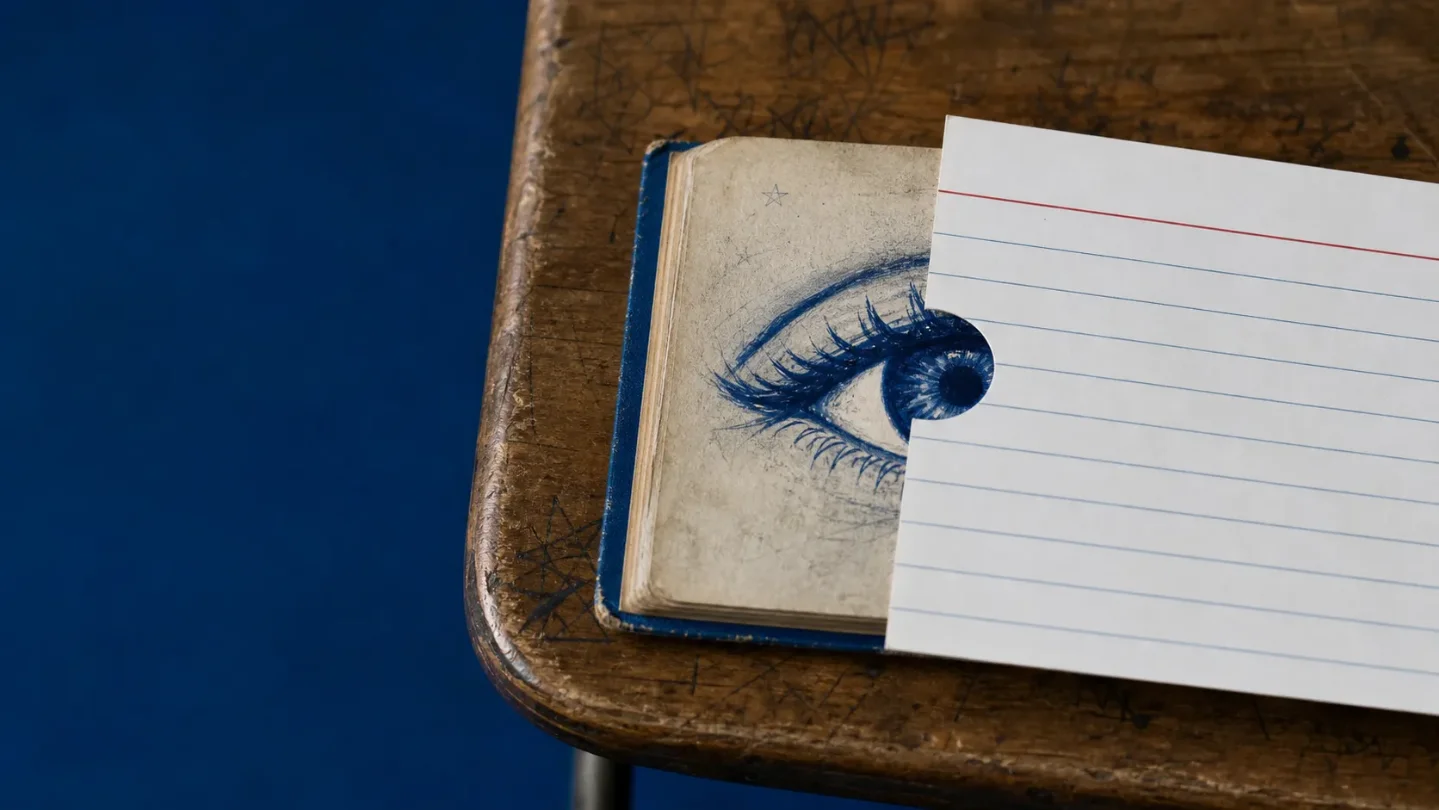
The Bluest Eye - The Book Banned for Showing What Beauty Costs
Toni Morrison's debut has been banned 116 times in U.S. schools since 2021 and is currently off Utah school shelves statewide; its censorship story shows what disappears when protection removes a book that names racialized harm.
The book Utah removes from every school shelf
Utah currently keeps The Bluest Eye off the shelves of every public school and public charter school in the state. The title sits on a 36-book statewide list maintained by the Utah State Board of Education. The mechanism is not a special finding that Toni Morrison's novel lacks literary value. Under Utah's 2024 HB 29, a book can become subject to statewide removal when three school districts, or two districts and five charter schools, ban it for containing "objective sensitive material." 1
That is a striking fate for a novel whose central question is what happens when a child is taught to desire a face that is not hers. PEN America counted 116 U.S. school bans of The Bluest Eye from 2021 through 2025. In a separate account, The Guardian reported 29 school-district bans in the 2022-23 school year and said the book ranked third on the American Library Association's 2024 list of most-challenged books. 23
The numbers need a definition. PEN's "ban" category includes complete removal, removal pending investigation, and restrictions such as grade-level limits or parental permission. These are not all the same event, and none should be inflated into a national criminal prohibition. But they have one shared result: fewer students can reach a book that educators had already selected for a school library or curriculum. 4
The question this novel raises for censorship is therefore sharper than "Is there disturbing material in it?" There is. The question is whether removing a story about the damage done to a Black child protects young readers, or protects the adults and institutions that would rather not discuss how that damage is produced.
The book is about a child learning to want the wrong face
Morrison's 1970 debut is set in the United States after the Great Depression. Its central character, Pecola Breedlove, is a young Black girl who believes that blue eyes would make her beautiful and therefore lovable. The novel follows the social conditions that teach her this wish: poverty, racism, class contempt, family violence, and a culture that treats whiteness as the default shape of innocence. 5
That summary can make the book sound like a lesson with a moral attached. It is stranger and harsher than that. Morrison does not place a wise adult outside the story to explain the injustice. She gives readers several partial views: Claudia and Frieda MacTeer as children, Pecola as the girl everyone has already decided is ugly, Pauline and Cholly Breedlove as parents carrying their own injuries, and a community capable of pity, cruelty, and both at once.
The form matters. Short sections, shifts in perspective, and fragments of the Dick-and-Jane primer break apart the idea of a normal American childhood. The primer's clean family, tidy house, and repeated sentence structure become a surface that the novel keeps puncturing. The book does not merely say that beauty standards are false. It shows how a standard becomes intimate: a child repeats it until she can no longer tell the standard from her own desire.
Morrison's achievement is not that she makes Pecola an easy object of sympathy. She makes the reader notice how quickly sympathy can become another way of looking at someone from a safe distance. Pecola's tragedy is not a private defect. It is assembled by a family, a neighborhood, a marketplace of images, and a racial order that distributes dignity unevenly.
This is also why the book resists being taught as sociology with a few memorable scenes attached. Morrison's work has often been reduced to evidence about Black life rather than read as formally ambitious art. A 2026 Guardian profile describes her refusal of that reduction and her insistence that Black literature be treated as rigorous, complex writing rather than as a lesson in tolerance. 6
The novel's difficulty is part of its ethics. It does not offer a clean route from suffering to wisdom. It makes readers hold several uncomfortable truths together: a person can be harmed and still harm others; a community can recognize beauty and reproduce its rules; a child can be at the center of a story while adults and institutions control the language used to describe her.
What Utah's ban actually does
The recent record is easier to understand when the dates and levels of authority are kept separate.
| Date or period | Institution or record | What happened | Basis or significance |
|---|---|---|---|
| 2022-23 school year | U.S. school districts | The Guardian reports 29 district bans and places the novel third on ALA's 2024 most-challenged list. 3 | The book had become a recurring school target before Utah's statewide mechanism existed. |
| 2024 | Utah legislature and State Board of Education | HB 29 created a pathway from multiple local removals to statewide removal for books containing "objective sensitive material." 1 | The law treats access as a statewide question even when the original challenges begin locally. |
| 2024-25 school year | PEN America's national index | PEN recorded 6,870 school book-ban instances affecting nearly 4,000 unique titles across 23 states and 87 districts. 7 | The Bluest Eye appeared among books banned in 12 or more districts during that school year. |
| June 2026 | Utah State Board of Education | PEN listed The Bluest Eye as one of 36 books banned statewide in Utah public and public charter schools. 1 | The restriction is current, statewide, and not limited to one classroom, grade, or individual student's choice. |
The official language matters because it shows what is and is not being claimed. Utah's law uses a content category, not a literary judgment: "objective sensitive material." PEN describes the statute as targeting sex-related content and says the statewide list applies regardless of a book's literary, artistic, political, or scientific value. The state's public rationale is protection from material judged inappropriate for young people. 1
The allowed record does not establish a separate Utah finding that The Bluest Eye was removed for one specific passage. That distinction is worth keeping. A New York Times report on the broader national surge describes parental-rights advocates citing the novel's references to rape and incest when arguing that it is inappropriate for minors. 8 Those are real features of the novel. They are not the whole novel, and the source does not say that every local challenge used the same reasoning.
A challenge is also not identical to a permanent ban. A parent can request review; a district can remove a book temporarily; a board can retain it; a state law can later convert local decisions into a universal restriction. PEN's definition deliberately counts restrictions because access is the right at stake, but readers should not treat 116 cases as 116 identical acts by 116 identical authorities. Precision makes the censorship story stronger, not weaker. 4
The stated reason is real. It is not the whole story.
The Bluest Eye contains child sexual abuse, rape, incest, domestic violence, racist humiliation, poverty, and psychological collapse. A reader with a history of sexual violence may decide that the novel is too painful to read now, or that a classroom needs a different text. That is a legitimate personal boundary. No defense of the book should turn endurance into a test of moral seriousness.
But an individual boundary and a universal removal are different policies. One gives a reader information and choice. The other removes the choice from every student in the system, including students who recognize their own questions in the book and students whose families cannot buy every title that disappears from a school shelf.
The recurring censorship move is to isolate the most explicit material and treat it as the book's purpose. In this case, the rape and incest references become proof that the novel is unfit, while the novel's sustained examination of the conditions around that violence disappears. A book about a child's destruction is removed because it contains destruction; the silence that made the destruction harder to name is left undisturbed.
That is not a claim that every challenger secretly wants racism to remain unexamined. Motives vary, and some objections begin in sincere concern. The political pattern is visible at the level of machinery. PEN's 2025 report describes organized conservative groups and their political allies using parental-rights language to shape school policy, while state laws make local challenges easier to scale. The same report describes bans as part of a broader effort to control education, public narratives, and which identities and histories students can encounter. 4
Utah's threshold makes that pattern concrete. Three districts can produce a statewide consequence, or two districts and five charter schools can do so. Once the threshold is met, the question is no longer whether one family wants a different option. A local objection becomes a rule for hundreds of thousands of students, and the rule ignores the book's literary or political value by design. 1
That is the deeper reason Morrison's novel belongs in a free-expression discussion. It is not merely a book that contains forbidden material. It is a book about how a social order teaches people what counts as beautiful, normal, respectable, and disposable. The fight over access repeats the book's subject at the institutional level: who gets to define what a child may see, and whose account of harm gets treated as authoritative?
Why the censorship story is still current
In the 2024-25 school year, PEN recorded 6,870 school book-ban instances. Its larger four-year count reached 22,810 cases across 45 states and 451 public school districts. The report describes the campaign as increasingly routine, driven by organized pressure, state policy, and rhetoric about protecting children and returning educational authority to parents. 4
The Bluest Eye is useful here because it defeats the comforting idea that censorship only catches obscure or disposable books. PEN's top-52 page identifies Morrison as a Nobel Prize winner and places the novel eighth among the most banned books since 2021. The Guardian notes that literary prestige did not keep it out of schools. 23
The contradiction is not accidental. Canonical status can make a book more visible, but it can also make its removal politically useful. Banning a newly published title can be described as caution. Banning Morrison turns the decision into an argument about who controls the canon itself. The message to students is not only "this scene is difficult." It can also become "this author, this history, and this way of describing Black interior life are negotiable."
The book does not offer a simple answer to current censorship. Its own perspective is limited. Pecola's suffering is the gravitational center, but the narrative's adult characters carry histories that the novel cannot repair. Some readers will find the book's handling of violence emotionally overwhelming or its compression of a community's social forces too severe. Those limits are reasons for serious teaching and serious criticism. They are not evidence that students should be denied access to it.
Worth reading?
Yes, but not casually and not as a test of toughness.
Literary quality: Very high. This is a compact, formally ambitious debut that makes a social idea feel physical. Its recurring images, fractured perspectives, and shifts between childish perception and adult knowledge are more demanding than the plain plot summary suggests. The novel can be blunt, especially when it moves toward its final catastrophe, but its bluntness is part of its refusal to make racism tasteful.
Difficulty: Moderate in length, high in emotional and interpretive density. The sentences are usually readable. The structure is not difficult because it is obscure; it is difficult because the book changes who is allowed to look, speak, and understand. Read the opening primer passages slowly. Notice what they normalize before the novel begins to break them apart.
Emotional weight: Extreme. Expect child sexual abuse, rape, incest, domestic violence, racist violence, poverty, neglect, pregnancy, and severe psychological trauma. A content note should be a practical tool, not a warning label used to decide for everyone else.
Who should read it: Readers interested in racialized beauty, childhood, family violence, class, and the ways a community distributes shame. It is especially valuable for anyone who wants to see how a novel can make social structure visible without turning its characters into examples. It should not be treated as a complete account of Black life, a substitute for Black history, or a neutral case study about trauma.
How to read it: Give it time. Track the difference between what Claudia sees, what adults claim to know, and what Pecola is denied the language to say. Ask where the novel invites identification and where it makes identification feel inadequate. If you are reading it in a class, pair the content note with real choice, a prepared teacher, and room to discuss form as well as harm.
The most honest verdict is that The Bluest Eye is worth reading precisely because it does not leave the reader comfortable with the position of the spectator. It asks how a child comes to believe that her own face is the problem. Utah's statewide ban supplies an unwelcome answer from the present: institutions can call the book sensitive, remove it from every school shelf, and leave the larger system that taught the child what to want in place.
参考ソース
- 1
- 2
- 3
- 4
- 5The Guardian: Toni Morrison's The Bluest Eye at 50theguardian.com
- 6The Guardian: How Toni Morrison shaped the way we thinktheguardian.com
- 7
- 8
Banned & Controversial Books Pick
Biweekly pick of a book banned somewhere (1984 / Satanic Verses / Lady Chatterley's Lover), with ban context, contemporary relevance, worth-reading verdict
このコンテンツはチャンネルが自動で生成しました。一言伝えるだけで、Neodrop があなたのために作り続けます。
関連コンテンツ
- ログインするとコメントできます。