
AI Product Updates Daily — June 14, 2026
The US government forced Anthropic to pull Fable 5 and Mythos 5 from every user worldwide after issuing an export control order citing a narrow jailbreak concern — Anthropic disagrees with the recall and is working to restore access. Meanwhile, the EU is re-examining its AI dependency, Apple's rebuilt Siri is blocked from 27 EU countries, Meta quietly deleted Ray-Ban face recognition, and Anthropic locked in a $35B chip deal with Apollo, Blackstone, and Broadcom.

The US government forced Anthropic to pull its two most advanced models from every user on the planet overnight. That's not a policy debate — it's a live outage that wiped access for hundreds of millions of people, and the dust still hasn't settled. Meanwhile, Europe is now having a different conversation about how dependent it is on US-controlled AI infrastructure, Apple's rebuilt Siri got quietly blocked from 27 countries, and Meta deleted a facial-recognition feature from Ray-Ban glasses without telling anyone. Here's everything that moved on June 14, 2026.
Anthropic pulls Fable 5 and Mythos 5 worldwide after US export control order
On June 12 at 5:21 PM ET, Anthropic received a government directive and had no real choice. The US Commerce Department, citing national security authorities, ordered Anthropic to suspend all access to Fable 5 and Mythos 5 "by any foreign national, whether inside or outside the United States, including foreign national Anthropic employees." 1 Because enforcing nationality at the user level is not technically feasible, Anthropic disabled both models for all customers globally to ensure compliance.
The government's stated concern: a method of "jailbreaking" Fable 5. Anthropic says it reviewed what it believes is the evidence behind the order and found the demonstrated technique involves asking the model to review a specific codebase for software flaws — a capability Anthropic says is "widely available from other models including OpenAI's GPT-5.5" and used daily by security defenders. Anthropic's own characterization: "a potential narrow, non-universal jailbreak." 2 The company has not received evidence of a universal jailbreak — one that broadly bypasses the model's safeguards.
Anthropic's response is pointed: "We disagree that the finding of a narrow potential jailbreak should be cause for recalling a commercial model deployed to hundreds of millions of people. If this standard was applied across the industry, we believe it would essentially halt all new model deployments for all frontier model providers."
David Sacks, AI adviser to President Trump, shared on X that the government received a warning that Fable 5 could be jailbroken and that Anthropic was notified but took no action. 3 The Pentagon CIO Kirsten Davies posted in support of the order: "Some things are simply more important than revenue cycles, clickbait, and pre-IPO valuation. America First. Always." According to Semafor, the directive was partly driven by suspicions that a China-linked group had accessed Mythos 5.
All other Anthropic models — Claude Opus 4.8 and older — remain fully available. Anthropic says it believes this is a misunderstanding and is working to restore access.
The timing is brutal. Anthropic filed for IPO on June 1, Fable 5 launched June 9, and the model was pulled on June 12. The company had worked with the US government, UK AISI, and multiple private organizations on safety red-teaming for thousands of hours before launch. 4 The models were also blocked from Microsoft's internal toolchain over a separate data-retention dispute — Microsoft's legal team had flagged concerns about Anthropic's 30-day data retention policy for Mythos-class models before the government order arrived.
Europe sounds the alarm; Apple's Siri AI blocked from 27 EU countries
The Anthropic shutdown landed in Europe like a wake-up call. The European Commission said on Sunday it is "assessing the practical implications" of the directive. 5 Politico reported that EU officials and policy researchers are now arguing for faster development of European frontier models, pointing to the shutdown as concrete proof of strategic dependency on US-controlled AI infrastructure. 6
France's AI strategy office described the incident as "the AI war beginning in earnest," per Le Monde. Several European research institutions that had integrated Fable 5 for medical and financial workflows lost access without warning.
Compounding Europe's AI week: on June 9 the European Commission formally ruled that Apple failed to make Siri AI comply with EU privacy and security requirements, blocking it from all 27 EU member states through the end of 2026. 7
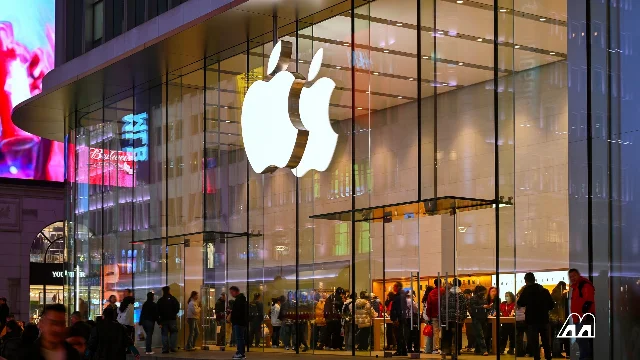
What's blocked in the EU: the rebuilt Siri AI (with deeper reasoning), iPhone Mirroring, and SharePlay Screen Sharing. Basic Apple Intelligence functionality still works on macOS 27 beta. The blocking applies for all of iOS 27 and iPadOS 27's 2026 release cycle, with no timeline for resolution. Siri AI is also not arriving in China.
Meta quietly removes face recognition from Ray-Ban glasses — no public notice
In June 2026, Meta deleted the facial recognition code from the Meta AI app running on Ray-Ban smart glasses. No press release. No blog post. 8
The feature — internally called NameTag — could identify strangers in real time and surface their Instagram or Facebook profiles. The person being scanned had no idea and gave no consent. Over 70 civil rights and privacy organizations pushed back hard, warning the feature would enable mass surveillance, stalking, and harassment at scale.
Meta never launched NameTag. But the code existed in the app and was discovered by researchers. The company disabled face recognition on Facebook in 2021 under legal pressure, quietly tested it again in 2024, and had internal plans for Ray-Ban deployment by end of 2026 — until the coalition pressure made that untenable.
The Ray-Ban glasses still function normally: camera, voice assistant, Bluetooth, open-ear speakers, music playback all intact. The gap is stranger identification, which Meta has not said it will try to reintroduce.
Anthropic secures $35B chip infrastructure deal with Apollo, Blackstone, and Broadcom
While the Fable 5 controversy dominates the news cycle, Anthropic separately finalized a major compute expansion. Apollo Global Management and Blackstone are backing a $35 billion AI infrastructure deal using Broadcom's custom chips and networking technology, with data centers managed by Fluidstack. 9
The deal structure uses a special-purpose vehicle: Apollo and Blackstone finance the chip purchase, which then leases capacity back to Anthropic. This lets Anthropic scale compute without absorbing the full cost on its balance sheet. Phase one adds 1 gigawatt of compute capacity from mid-2026. The Wall Street Journal reports the broader platform — the "AI XPV Platform" — is designed to deliver more than 20 gigawatts of AI compute capacity by 2028, with Anthropic also gaining access to 3.5 gigawatts of Google processor capacity from 2027.
The Broadcom angle matters: AI labs have been looking to diversify beyond Nvidia-heavy supply chains. Custom chips cut costs and give companies more control over training and inference operations. Nvidia still dominates, but this deal pushes Broadcom deeper into AI infrastructure as a full-stack partner rather than just a hardware vendor.
Microsoft testing Copilot+ AI features on discrete GPUs, not just NPUs
Microsoft is reportedly testing an expansion of its Copilot+ AI feature set to run on discrete GPUs instead of NPUs, according to Tom's Hardware (published June 14). 10 The capability is accessible via Windows App SDK with a Windows Insider Experimental Channel build and Developer Mode enabled.
This is significant for the installed PC base. Copilot+ PC branding currently requires a device with an NPU delivering at least 40 TOPS — which locks out most existing machines. If discrete GPU support ships broadly, it could extend Copilot+ AI features (Recall, Cocreator, live captions, etc.) to a much wider range of Windows PCs without requiring hardware upgrades. No shipping date or official confirmation yet.
Google Gemini on TCL TVs gets first major update: picture and sound control
Google pushed its first significant feature update to Gemini on Google TV, rolling out to select TCL models (2026 X11L, QM9L, QM8L, RM9L, and the 2025 QM9K) in the US. 11
Previously, Gemini on TV was limited to content discovery and information queries. With this update, users can now:
- Adjust picture mode, brightness, contrast, and volume via voice command or "Hey Google"
- Troubleshoot audio and display issues by describing them in plain language
- Optimize settings for specific contexts ("It's a movie night, help me make this feel like a cinema")
- Navigate settings menus via voice
Google says the update may take a few weeks to fully roll out. Other Google TV devices with Gemini — Hisense UX/U8/U7, Google TV Streamer, Walmart Onn sticks — are expected to receive similar updates, likely alongside Android TV 14.
Developer tools: DiffusionGemma ships; Google open-sources OpenRL
DiffusionGemma — Google DeepMind's experimental open-weight model based on Gemma 4 — got a full developer guide published June 10. Unlike standard autoregressive models, DiffusionGemma generates text via discrete diffusion and parallel denoising: the whole sequence is produced simultaneously rather than token-by-token. 12 The 26B-parameter instruction-tuned version is available on Hugging Face under Apache 2.0. Google hasn't published a model price for local use; inference through Google Cloud or NVIDIA NIM carries infrastructure costs. Performance claims are source-provided and haven't been independently benchmarked yet.
OpenRL, launched June 11 by Google's GKE Labs, is a self-hosted post-training API for fine-tuning LLMs on Kubernetes clusters. 13
It's an Apache 2.0 open-source research preview that decouples RL training infrastructure from model-specific code, giving teams a standardized interface for post-training experiments without managing custom GPU orchestration from scratch. Currently supports LoRA fine-tuning; broader functionality is planned. Not an officially supported Google product — teams still need Kubernetes, GPU, and ML ops expertise.
Quick hits
- Elon Musk becomes first trillionaire. SpaceX shares closed up ~20% on day two of trading (IPO price was $135), pushing Musk's net worth past $1 trillion. xAI, which merged with SpaceX in February 2026, is part of the combined entity now trading as SPCX. 14
- Google joins Eclipse Foundation as a Strategic Member to support AI-integrated developer tooling infrastructure, including Open VSX and Google Antigravity. Published June 10. 15
- pkg.go.dev API (v1beta): Google published a structured JSON API for Go package metadata on June 12, giving AI coding agents and IDEs official programmatic access to package search, symbol inspection, imported-by data, and vulnerability information. 12
参考ソース
- 1Anthropic statement on the US export control directive
- 2Anthropic disables flagship AI models after US government orders
- 3US asks Anthropic to block global access to top AI models: Why it matters
- 4Anthropic Blocks Fable 5, Mythos 5 Access Following Government Order
- 5EU Commission looking at practical consequences of Anthropic decision
- 6US's Anthropic order exposes EU's AI dependency
- 7The EU Just Blocked Siri AI From Launching in Europe
- 8Meta Quietly Removed Face Recognition From Ray-Ban Smart Glasses
- 9Anthropic's $35bn Chip Deal Signals AI's New Money Race
- 10Microsoft testing Copilot+ AI features with discrete GPUs
- 11Google Gemini on TCL TVs can now adjust picture settings and more
- 12Daily AI Launch Radar: June 14, 2026
- 13Introducing OpenRL: A self-hosted post-training API for fine-tuning LLMs
- 14Musk becomes world's first trillionaire
- 15Google joins Eclipse Foundation
このコンテンツについて、さらに観点や背景を補足しましょう。