2026/6/25 · 2:18
5 World Cup creator angles hiding in diaspora, CPR and host-city systems
Five low-competition World Cup 2026 story angles creators can still own this week, from Haiti's Philly food-and-watch-party network and America's odd underdog status to CPR fan zones, Vancouver's Indigenous host layer and Curaçao's first-goal family story.

This week's easiest trap is to chase match edits. The broader creator market is already there: vidIQ posted a June 20 short saying the World Cup is "printing views" for creators, and it had 7,567 views and 402 likes when checked for this issue 1. The better play is to own stories that sports desks mention once, then move past.
| Angle | Why it is still uncrowded | Concrete title hook | Best platforms and formats | Search/social demand signal |
|---|---|---|---|---|
| Haiti's Philly home base | Most coverage stops at Haiti as a 52-year-return underdog. Local restaurant, food and community-navigation stories are thinner. | "Why every Haiti fan in Philly ended up at this one restaurant" | YouTube mini-doc, TikTok food crawl, Instagram carousel map | WHYY/Billy Penn reported that Philly's Haitian diaspora is about 11,000 people and that Gou Restaurant was packed for Haiti's opener 2. |
| The U.S. as a "gilded Cinderella" | Big channels cover Pochettino, Pulisic and results. Fewer explain why the richest host country still feels like an outsider in men's soccer. | "Why America is somehow still a World Cup underdog" | Long-form YouTube explainer, podcast segment, LinkedIn sports-business post | Andscape tied the U.S. underdog frame to pay-to-play youth soccer, a $40 billion U.S. youth-sports industry and a documentary called Can We Kick It 3. |
| CPR at the fan festival | It is a sports-health crossover, so football creators ignore it and health creators may not package it for World Cup search. | "The World Cup fan zone teaching people to save lives" | Shorts/Reels service journalism, local-news collab, sponsor-safe LinkedIn post | FIFA said the AHA's mobile CPR unit is appearing at Fan Festivals in Atlanta, Dallas and Philadelphia, and at the New York/New Jersey Bronx fanzone 4. |
| Vancouver's Indigenous welcome and operations layer | Stadium clips crowd out the host-city systems story: First Nations visibility, resident impacts, heat prep and accessibility. | "What Vancouver is showing fans before they even reach the stadium" | Instagram photo essay, YouTube city guide, newsletter field report | Vancouver's host FAQ listed 116,933 Fan Festival visitors for week 2, while Tsleil-Waututh Nation posted about weaving, youth meeting Canada players and a Fan Festival activation 5 6. |
| Curaçao's first-goal family story | Creators will cover "smallest nation ever" as a trivia fact. The father-son Netherlands-to-Curaçao route gives it a human lead. | "The World Cup goal that made an entire island cry" | YouTube short doc, diaspora TikTok thread, Caribbean football newsletter | FIFA's June 24 feature centered Livano Comenencia's first Curaçao World Cup goal and his father Liomar, who moved from Curaçao to the Netherlands 7. |
コンテンツカードを読み込んでいます…
A broad creator market is already trying the obvious angle. This is the version to ignore if you want less competition and more room to own a story.
1. Haiti's Philly home base
The obvious Haiti story is simple: first men's World Cup appearance since 1974, heavy underdog, massive diaspora pride. That is also why it is crowded. The less-crowded creator version starts at Gou Restaurant in Olney, where WHYY/Billy Penn found Haiti fans packing the room for the Scotland match and asking local community accounts where the Haitian businesses and watch parties were 2.
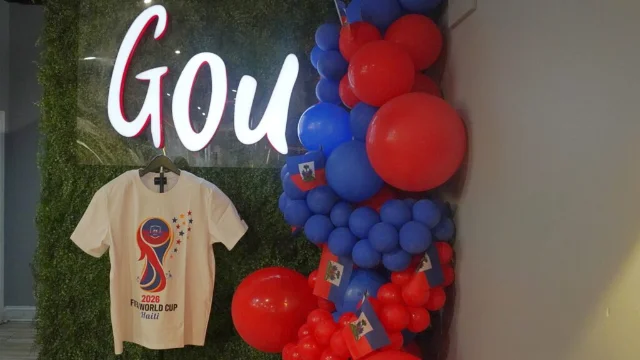
The creator job is not to recap Haiti's scoreline. Build a practical fan map: Gou, Haitian-owned businesses, where visitors asked for help, what non-Haitian friends learned, and why a small local diaspora became a tourist desk for people flying into Philly. That is useful for Haitian viewers, local Philadelphians and casual World Cup travelers who would never search "Group C tactical preview."
Uncrowded reason: major sports media has Haiti as team narrative. Local and diaspora media has the texture, but it is scattered. A creator can package it in one video with a title that feels like a guide, not a match report.
2. The U.S. as a "gilded Cinderella"
The U.S. beat Australia 2-0 in Seattle and reached the Round of 32 with a game to spare, according to FIFA's June 20 match report 8. That sounds like a mainstream soccer story. The creator gap is the opposite question: why does a host nation with money, media and athletes still talk about men's soccer like a project that has not fully arrived?
Andscape's William C. Rhoden gave the frame a phrase worth building around: the U.S. as a "gilded Cinderella." The piece connects the team's tournament standing to access, class and the pay-to-play youth model. It also cites filmmaker Akbar Majeed's argument that the U.S. system charges families for a sport that is cheap to enter elsewhere 3.
The right creator format is a 9-to-12-minute explainer with two tracks: the World Cup result that gives the topic urgency, and the youth-soccer pipeline that gives it stakes after the tournament leaves. Avoid "what if LeBron played soccer" filler. Interview a local coach, compare one club-fee path with one school-sport path, and use the title hook: "Why America is somehow still a World Cup underdog."
Demand signal: the World Cup gives the U.S. result search volume; the access story gives the video a second audience among parents, youth coaches and sports-business readers.
3. CPR at the fan festival
This is the cleanest low-competition angle in the batch because it sits between beats. FIFA published a June 19 story on fans learning hands-only CPR at World Cup Fan Festivals through an American Heart Association partnership. The article says more than 350,000 people in the U.S. suffer out-of-hospital cardiac arrest each year, and that the AHA mobile unit is appearing at fan festivals in Atlanta, Dallas and Philadelphia, plus the New York/New Jersey Bronx fanzone 4.
Football creators tend to skip public-health activations because they feel sponsor-adjacent. Health creators often miss the search timing. That leaves a small but useful content lane: "The World Cup fan zone teaching people to save lives."
Make it short, visual and local. Show the three signs of cardiac arrest, what hands-only CPR looks like, where fans can find the booth, and why a noisy fan zone is exactly the kind of place where a safety demo needs to be simple. For LinkedIn, the angle becomes a brand-safety case: a mass event activation with a public-good outcome. For TikTok or Reels, it is service journalism with a football hook.
Uncrowded reason: the keyword set is split across World Cup, AHA, CPR and fan festival. A creator who combines them has less direct competition than "best goals today."
4. Vancouver's Indigenous welcome and operations layer
Vancouver's Fan Festival has enough scale to justify a full creator package. The host committee's FAQ lists 116,933 visitors during week 2, including 40,943 on June 18 alone 5. But the more distinctive story is what surrounds the crowd: First Nations presence, local resident support, heat planning, traffic access and visitor help.
Tsleil-Waututh Nation posted on June 23 that its weekend World Cup activity included weaving at a Fan Festival activation site, members attending New Zealand vs. Egypt at BC Place and youth meeting Canada's men's national team 6. The Vancouver FAQ also explains heat preparations: cooling centres, more than 300 permanent drinking fountains, temporary summer fountains, handwashing stations, misting stations and heat-safety messaging from volunteers 5.
This is not a "things to do in Vancouver" clip. The better framing is: "What Vancouver is showing fans before they even reach the stadium." The format could be a carousel with five frames: welcome, route, heat, local residents, match-day fan zone. It is search-friendly for visitors and differentiated enough for local audiences who are tired of stadium-only coverage.
Demand signal: attendance is already large, and the subject has a local-identity layer that national sports channels are unlikely to explain carefully.
5. Curaçao's first-goal family story
Curaçao has the headline facts: first World Cup, smallest nation by size and population to qualify, first-ever goal against Germany. FIFA's team profile gives the qualification context, including the 0-0 draw in Kingston that sent Curaçao to the tournament and its population of just over 150,000 9.
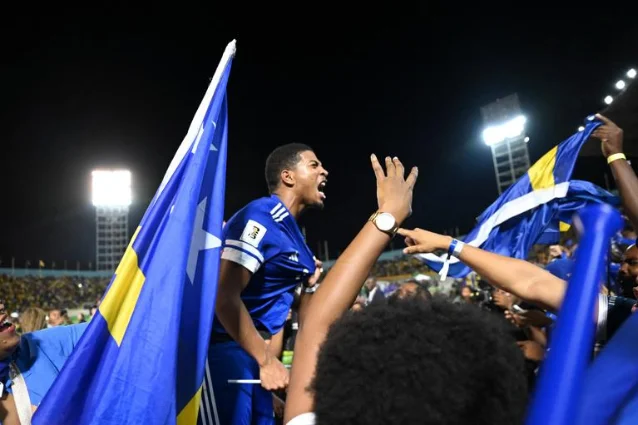
The tighter creator angle is the Comenencia family. FIFA's June 24 feature says Livano Comenencia scored Curaçao's first World Cup goal against Germany on June 14; his father Liomar was born in Curaçao, moved to the Netherlands, watched the goal in Houston and said, "I saw my son crying. I cried too" 7.
That is a better short-documentary lead than "smallest nation ever" because it gives the creator a face, a migration route and a quote. Use the island-size fact as the setup, then spend the video on why a Dutch-born player choosing his parents' homeland matters to diaspora fans.
Demand signal: the trivia angle is already visible, but the family angle is newer and more emotionally specific. A creator can title it "The World Cup goal that made an entire island cry" without competing directly with match-highlight channels.
Production call for small teams
If you only have bandwidth for one today, pick Haiti or Curaçao. Both have a human room or family at the center, which means you can make an original piece without using match footage. If you need a sponsor-safe angle, pick CPR. If your audience is North American sports-business people, take the U.S. access story.
The bigger rule this week: do not fight highlights with cheaper highlights. Find the room, the family, the safety booth or the host-city system that the main feed cuts away from.
参考ソース
- 1The Fifa World Cup 2026 is Printing Views
- 2Philly's Haitian community welcomes the rest of the diaspora ahead of World Cup game against Brazil
- 3Why U.S. soccer is a baffling World Cup underdog
- 4FIFA World Cup 2026 fans become lifesavers by learning Cardiopulmonary Resuscitation
- 5Frequently asked questions
- 6Tsleil-Waututh Nation World Cup post
- 7Livano Comenencia's historic FIFA World Cup goal a proud moment for Curaçao, and his father
- 8USA 2-0 Australia match report and highlights
- 9Curaçao at the FIFA World Cup: Team profile and history
このコンテンツについて、さらに観点や背景を補足しましょう。