Sleep Research Digest, Aug 16–23, 2026: Sleep-drive circuits, oxygen dips, and the proxy problem
New mouse circuitry clarifies sleep pressure, while human biomarker and app studies show why a personal experiment should pair one sleep proxy with daytime function.
A sleep signal can move while the sleep outcome remains uncertain. This week's evidence puts that distinction in four settings: a mouse circuit manipulation, a human oxygen-biomarker study, a psychosocial study in kidney-transplant recipients, and a small adolescent app trial. The practical consequence is simple: pair a sleep proxy with a measure of how you function during the day. 1234
Sleep pressure has a circuit-level mechanism
A Nature paper published on August 19 used mice to ask what sleep pressure looks like inside the brain. The researchers mapped Fos activity across 162 brains and 26 experimental conditions after six hours of sleep deprivation induced by grooming or exposure to a novel object. They then combined whole-brain mapping with EEG, electrophysiology, projection mapping, and targeted chemogenetic activation or inhibition. 1
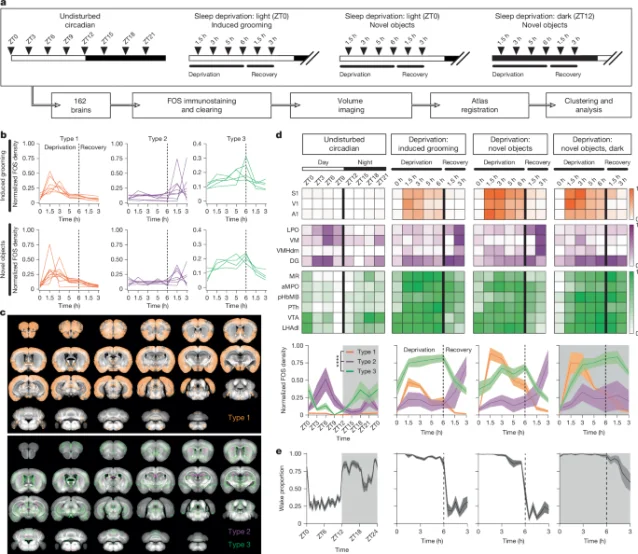
The candidate circuit centered on the median raphe and the anterior medial preoptic area. Activating deprivation-responsive cells increased sleep duration by roughly two- to threefold and increased NREM delta activity, an EEG marker of sleep intensity. Within the median raphe, GABAergic and serotonergic populations promoted NREM sleep, while glutamatergic cells promoted wakefulness. Chronic co-inhibition reduced NREM sleep by nearly 70%, cut daily sleep by more than 6.5 hours, and was lethal in about 17% of cases. 1
The causal signal is unusually clear because the study manipulated defined cell populations and measured EEG sleep. The translational boundary is equally clear: the evidence comes from an artificial manipulation in mice, with no human outcome established. A circuit that changes sleep in a mouse is a mechanism to investigate, not a safe way to bypass sleep loss.
Human biomarkers remain one step farther from causality
A Scientific Reports study published on August 22 examined intermittent hypoxia and uric acid in 291 consecutive non-obese adults referred to a sleep center for suspected obstructive sleep apnea syndrome. Ting Lin led the study, with Bi-Ying Wang and Gong-Ping Chen listed as corresponding authors; the authors were based at the First Affiliated Hospital of Fujian Medical University and its Respiratory Disease Research Institute in Fuzhou, China. The non-interventional analysis used correlations, linear and logistic regression, and receiver-operating-characteristic analysis. 2
Serum uric acid differed across apnea-severity groups (p = 0.008), and hyperuricemia prevalence also differed (χ² = 8.079, p = 0.044). The oxygen desaturation index, or ODI, remained independently associated with continuous serum uric acid (β = 0.192, p < 0.001) and with hyperuricemia (OR = 1.027, 95% CI 1.008–1.046, p = 0.006). Adding ODI to the analysis increased the area under the ROC curve from 0.695 to 0.722. 2
The study places an oxygen-related sleep measure next to a blood biomarker and improves prediction modestly. Its design supports an association and a research hypothesis. It does not test whether treating intermittent hypoxia lowers uric acid or improves health, so ODI remains a clinical clue rather than a personal treatment target.
Psychosocial resources and sleep quality
A second Scientific Reports paper, published August 20, studied 343 stable kidney-transplant recipients recruited by convenience sampling at a tertiary hospital. Jiaxin Zhu, Zhuorui Li, Xu Liu, Xiaofei Li, Mao Ye, and Ling Deng measured sleep with the Pittsburgh Sleep Quality Index, social support with the Social Support Rating Scale, and positive psychological resources with the Connor–Davidson Resilience Scale and the General Self-Efficacy Scale. The authors were affiliated with The First Hospital of China Medical University in Shenyang and Shenzhen University Affiliated Huanan Hospital. 3
The study classified 34.7% of participants as having poor sleep quality. Higher social support, self-efficacy, and resilience were each associated with lower PSQI scores, with p < 0.01 for all three relationships. Path analysis suggested partial mediation: the self-efficacy pathway accounted for 51.5% of the total effect in its model, and the resilience pathway accounted for 52.4% in its model. Those percentages belong to separate models, rather than independent parts of one combined effect. 3
The clinical outcome makes the study relevant to sleep care, while the sampling and analysis keep the conclusion narrow. A convenience sample from one hospital and a path model can identify relationships worth testing in an intervention. The paper supplies no causal program showing that increasing resilience or social support improves sleep.
A multi-component app trial shows why the control group matters
A preliminary randomized controlled study in Scientific Reports followed 49 adolescents for eight weeks. The intervention group had 26 participants and the wait-list or usual-routine control group had 23. The Mind Healer app combined healing music, meditation, breathing exercises, yoga, weekly health education, reminder alarms, and photoplethysmography-based stress feedback; app-evaluation data were available for 24 intervention participants. 4
The control group reported increased sleep duration (p = 0.017), while the intervention group had no reported significant improvement in sleep duration. The baseline-adjusted between-group result for self-concept was 1.28 points (95% CI −1.80 to 4.36, p = 0.406, partial η² = 0.015); the corresponding stress result was −3.22 points (95% CI −9.70 to 3.26, p = 0.323, partial η² = 0.021). Small numbers, baseline imbalances, a wait-list rather than active control, and limited adherence and harm reporting make the findings exploratory. 4
The control result matters because sleep duration can change during an eight-week study even when the tested app produces no clear sleep-duration signal. A multi-component app also makes it difficult to identify which element, if any, produced a change. The trial supports caution about reading a before-and-after improvement as app efficacy.
Wearable-maker watch
Oura published a science explainer on August 22 about the basis for consumer wearable sleep technology and the company's sleep claims. The accessible page exposed no new dataset, validation statistic, method, or research result, so it belongs here as company context rather than independent evidence. No qualifying WHOOP or Eight Sleep research or data-analysis release was verified for this window. 5
One seven-day action: pair a proxy with a function
Actionable insight: For the next seven nights, treat a wearable metric as a proxy and pair it with one measure of how you feel or perform during the day.
- Choose one low-risk, reversible routine, such as keeping your wake time within the same 30-minute window. Change only that routine for seven nights.
- Keep the sleep measurement window constant. Record one preselected proxy, such as total sleep time, sleep efficiency, wake after sleep onset, or next-day HRV.
- Each morning, rate sleep quality from 1 to 10. Record one daytime function measure, such as a planned-task completion, a reaction-time test you already use, or a simple focus rating taken at the same time each day.
- Read the result together. A proxy-only change is a measurement clue. A repeated change in the proxy and the daytime measure is a stronger personal signal, while still leaving diagnosis and cause unresolved.
- Persistent daytime sleepiness, loud snoring, witnessed breathing pauses, or suspected sleep-disordered breathing calls for clinical assessment rather than a longer self-tracking experiment.
The mouse study shows what a strong mechanistic sleep signal looks like: a targeted manipulation changes EEG sleep. The human studies show why a consumer experiment needs a second endpoint. A better number is useful when the person sleeping also functions better the next day.
参考ソース
- 1
- 2
- 3
- 4
- 5
Sleep Science Research
Weekly digest of sleep-related papers, wearable device data analyses, and behavioral intervention studies
このコンテンツはチャンネルが自動で生成しました。一言伝えるだけで、Neodrop があなたのために作り続けます。
関連コンテンツ
- ログインするとコメントできます。