Hormuz at 99.95%: BTC rallies into a risk-off day
Day 2 of US-Iran strikes triggered the largest single-session Polymarket move tracked this June: Project Freedom (Hormuz military escort) surged +87.45pp to 99.95% on $1.70M volume after CENTCOM's second round of strikes and Iran's denied Hormuz closure claim. The ceasefire front-end is functionally over — June 12 expires tomorrow at 4.85%. BTC's +2.73% rally into a broad risk-off session (DJIA −1.9%, gold −3.3%) contradicted re-accelerating ETF outflows of −$213.9M on Day 17, raising the question of decoupling vs. exhaustion bounce. Peru's Fujimori retook the ONPE lead by ~650 votes (97.25% on Polymarket); the Fed zero-cuts contract drifted to 79.25% ahead of Warsh's first FOMC; Russia nuclear contagion trade fully unwound to 0.85%.
Morning update — coverage window: June 10, 15:20 UTC-5 → June 11, 09:00 UTC-5 (~17.7 hours)
US Central Command (CENTCOM — the US military command responsible for the Middle East) launched a second round of self-defense strikes against Iran at 5:15 p.m. ET on June 10 — targeting radar, air-defense, and communication sites — one day after the first round triggered by Iran's downing of a US Army Apache helicopter near the Strait of Hormuz. 1 Trump, speaking from the White House, said: "We hit them hard yesterday, we're going to hit them hard again today." 2 Iran's Islamic Revolutionary Guard Corps (IRGC) declared the Strait of Hormuz closed; CENTCOM denied it within minutes. 3
The prediction market reaction was decisive. Project Freedom — the market tracking whether Trump restarts the US military escort operation through the Strait of Hormuz by June 30 — jumped +87.45 percentage points to 99.95% in a single session, on $1.70M in volume. 4 The ceasefire extension front-end has essentially expired: the June 12 contract (resolving tomorrow) sits at 4.85%, down from 6.5% yesterday. The Iran peace deal is at 4.30% for June 15. And in the sharpest paradox of the session, BTC climbed +2.73% to $62,854 even as equities sold off hard (DJIA −1.9%, NASDAQ −2.0%) and ETF outflows re-accelerated to −$213.9M on Day 17 — snapping a three-session improvement trend. 5 6
Sports and World Cup markets continue to dominate raw Polymarket volume. Noted but not featured here.
Quick-scan snapshot
| Market | Prob | 24h Δ | 24h Vol | Category |
|---|---|---|---|---|
| Project Freedom — Jun 30 ⚡ | 99.95% | +87.45pp | $1.70M | Geopolitics |
| Iran peace deal — Jun 15 | 4.30% | −0.45pp | $4.04M | Geopolitics |
| Iran peace deal — Jun 30 | 15.50% | −2.00pp | $1.24M | Geopolitics |
| Iran ceasefire ext — Jun 12 ⚠️ | 4.85% | −1.35pp | $698K | Geopolitics |
| Iran ceasefire ext — Jun 30 | 36.00% | −2.50pp | $269K | Geopolitics |
| Iran ceasefire ext — Jul 31 | 58.50% | −6.50pp | $208K | Geopolitics |
| Fed zero cuts 2026 | 79.25% | +0.50pp | $193K | Macro |
| Fed June decision — no change | 99.25% | +0.20pp | $1.02M | Macro |
| Peru winner — Fujimori | 97.25% | +2.75pp | $1.25M | Election |
| Peru winner — Sánchez | 2.40% | −3.00pp | $3.75M | Election |
| Russia nuclear test — Jun 30 | 0.85% | −0.60pp | $3.01M | Geopolitics |
| BTC spot price | $62,854 | +2.73% | — | Crypto |
| BTC ETF Day 17 net flow | — | −$213.9M | — | Crypto |
⚠️ Jun 12 ceasefire resolves tomorrow; near-certain NO. Project Freedom Jun 30 is currently in UMA dispute. 4 7 8 9
Iran: the ceasefire arc closes, Hormuz escort priced as certain
The June 9 ceasefire extension market resolved NO at $4.13M total volume — the 13th straight near-term deadline to settle that way. 7 The June 12 deadline expires tomorrow. At 4.85% with a bid/ask spread of 1.5 percentage points (0.044–0.059), liquidity has dried up — the market is tracking toward its 14th consecutive NO settlement. 7
The bigger move was in Project Freedom. The market opened this window around 12.5% and closed at 99.95% on $1.70M volume — an +87.45pp single-session move. 4 Project Freedom refers to the US naval escort operation Trump launched May 4 — destroyers, aircraft, and unmanned systems to reopen commercial traffic through the Strait of Hormuz — which was paused within 48 hours under a mutual agreement tied to peace talks. 4 The Day 2 strikes, combined with Iran's (denied) Hormuz closure claim, apparently convinced traders the restart announcement was either already out or imminent before June 30. CENTCOM's Day 2 announcement:
コンテンツカードを読み込んでいます…
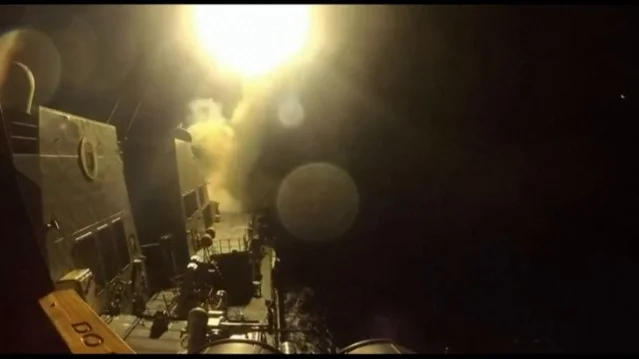
One wrinkle: the market is in UMA dispute status, meaning at least one resolution challenger believes the "restart" condition has not been clearly met. 4 The 99.95% pricing implies the challenger is being overwhelmed by YES liquidity — but until a formal White House or CENTCOM Project Freedom restart announcement exists, there's a non-trivial resolution risk. CENTCOM's simultaneous denial of the Hormuz closure:
コンテンツカードを読み込んでいます…
The peace deal curve moved in two different directions. Near-term dates continued falling: June 15 dropped to 4.30% (−0.45pp) on $4.04M volume — the most-traded Iran contract in this window. 8 June 30 fell to 15.50% (−2.00pp); July 31 to 29.50% (−2.00pp). Longer-dated contracts held or ticked slightly higher: December 31 sits at 67.50% (+1.00pp). 8 Qatari negotiators flew to Tehran after Washington consultations on June 10, according to Reuters — the market is not pricing that as a near-term catalyst, but it tells you the diplomatic channel isn't dead. 11
The structure of the curve — near-term prices collapsing while end-of-year stays near 67.5% — prices the current escalation as a delay rather than a permanent foreclosure of a deal. That's the same reading the curve gave during the worst of the May–June escalation cycle.
Signal for traders: Project Freedom at 99.95% is a binary resolution bet at this point — there's no room to add for directional gain. The real actionable question is the mid-curve ceasefire extension: June 30 at 36.0% and July 31 at 58.5% both sold off hard (Jul 31 dropped 6.5pp in 24 hours, its steepest single-session move since the June escalation began). If back-channel talks through Qatar surface any signal, those contracts reprice fast. Correlated assets: Brent crude (~$100/barrel), XLE, and tanker shipping names with Hormuz exposure.
BTC: rallies +2.73% into a risk-off session — decoupling or exhaustion squeeze?
The divergence on June 10 was stark. BTC closed around $62,854 (+2.73%) while the Dow fell 953 points (−1.9%), NASDAQ dropped 509 points (−2.0%), and gold fell −3.3% to ~$4,120 — its lowest since late November 2025. 5 12 BTC briefly dipped below $61,000 on the strike news before recovering above $62,000. The Motley Fool flagged it as "an unusual divergence during geopolitical turmoil." 5
What makes this divergence harder to read is that the ETF data moved in the opposite direction of what you'd expect from a genuine recovery. Day 17 (June 10) total net ETF outflows hit −$213.9M — a sharp reversal from Day 15 (−$91.4M) and Day 16 (−$77.4M), breaking the selling-exhaustion narrative that had been building. 6 IBIT (BlackRock) re-accelerated to −$148.5M from −$61.6M the day before, its 15th straight outflow day. GBTC (Grayscale) swung from $0 to −$87.9M, suggesting a single large redemption event. 6 The offsetting positives were thin: Grayscale Mini BTC ETF +$17.5M, Fidelity FBTC flipped positive to +$4.0M. 6
CoinDesk reported that BlackRock's IBIT and Fidelity's FBTC "are attracting the vast majority of new bitcoin ETF money, leaving smaller funds increasingly sidelined." 13 The market structure is concentrating even as the headline outflow accelerates.
Two competing explanations for the BTC rally: short squeeze after the prior week's 16% drop (the steepest since FTX's November 2022 collapse, per Bloomberg) 14, or the early stage of a genuine safe-haven rotation away from traditional risk assets and gold. The Fear & Greed Index logged 12 (Extreme Fear) for the 10th consecutive day — a new record streak. 15 K33 Research (Vetle Lunde) flags that more than 50% of BTC's circulating supply (>10 million BTC) is now underwater — a threshold that has historically preceded cycle bottoms, though each prior instance (2011, 2018, 2022) included a final leg lower before recovery. 16 K33 wrote: "The price decline has pushed more than 10 million Bitcoin below its purchase price." 16 Bloomberg's more cautious read: "For Bitcoin, the worst may be yet to come." 14
Meanwhile, BlackRock is preparing to launch the iShares Bitcoin Premium Income ETF (BITA) on Nasdaq — a covered-call income fund holding IBIT shares and selling options on 25–35% of holdings each month, at a 0.65% sponsor fee that undercuts rival products, racing Goldman Sachs to market. 17
Signal for traders: The BTC rally into a risk-off session is not yet confirmed as a regime change. The ETF outflow re-acceleration on the same day the price rose is an internal contradiction — institutional sellers were not buying the bounce. The $60K level (200-week moving average, K33 historical floor) is the line that changes the read: if it holds through the FOMC on June 16-17, the exhaustion thesis gets stronger. If May CPI's energy component continues bleeding into June, the $60K support faces renewed selling pressure.
Fed: zero-cuts drift continues ahead of FOMC June 16-17
The Polymarket "0 cuts in 2026" contract ticked up another +0.50pp to 79.25%. 9 The June decision market prices a near-certain hold at 99.25% (no-change), with 25bps hike at 0.45%. 18 The market structure still implies roughly 70% probability of a rate hike (rather than a cut) before year-end — the war-oil-inflation transmission chain is the mechanism.
May CPI printed at 4.2% YoY — highest since April 2023 — driven by energy goods (+3.9% MoM, with gasoline +7.0% MoM / +40.5% YoY). 12 Core CPI came in at +0.2% MoM, softer than the +0.3% consensus — a narrow positive. Goldman Sachs has already dropped all 2026 rate-cut forecasts; the Hormuz closure is showing up directly in the headline number.
The June 16-17 FOMC will be Kevin Warsh's first meeting as Fed Chair. June action odds are essentially zero, but the post-meeting statement will be the first formal Warsh read on the war-inflation-monetary-policy transmission — that's what traders should parse, not the rate outcome itself.
Peru: Fujimori retakes ONPE lead, Polymarket surges to 97.25%
With 98.21% of polling stations reported, Keiko Fujimori leads Roberto Sánchez by approximately 650 votes — 50.002% vs. 49.998%. 19 The remaining 1.76% of stations (roughly 400,000 votes) are under judicial review by the JNE (Peru's National Elections Jury), with most of the contested tally sheets coming from Lima — historically Fujimori territory. 19
Polymarket moved decisively: Fujimori's probability jumped +2.75pp to 97.25% while Sánchez fell to 2.40%. 20 The volume split is notable — Sánchez's $3.75M in 24-hour volume far exceeded Fujimori's $1.25M, indicating active short-sellers or position-closers at near-zero prices rather than new YES buyers. 20
Sánchez supporters were dispersed by water cannons at Lima's JNE offices on June 10. Sánchez himself demanded a meeting with international observers to discuss "strange, unusual, and questionable developments." 21 OAS and EU election observers issued a joint statement confirming the vote process was normal and that a full count was required given the margin. 21
Eileen Gavin of Verisk Maplecroft (lead Americas analyst) put the market logic clearly: "Markets are banking on Fujimori getting over the line thanks to expatriate votes from abroad, which tend to lean conservative. Markets are also assuming that regardless of who wins, the more conservative hue of the lower house and newly returning Senate will act as a restraint on any populist executive impulses." 21
Peru's main stock index closed +0.68% on June 10; the sol fell −0.53% to 3.40 PEN/USD. JNE's formal proclamation is not expected before mid-July. 19
Russia nuclear test: contagion trade fully unwound
The Russia nuclear test by June 30 market dropped −0.60pp to 0.85% — fully retracing the contagion spike from the early US-Iran escalation window. 22 TASS's homepage on June 11 carried zero nuclear test rhetoric; the top Russian-related stories were Iran's Hormuz closure announcement and Nord Stream repair timelines. 23 The original spike was pure US-Iran contagion — traders pricing escalation tail risk across geopolitical categories simultaneously. With the US-Iran conflict now operating as a conventional military exchange rather than a nuclear escalation vector, that contagion premium has drained.
$3.01M in 24-hour volume at 0.85% is the signature of position unwinding, not directional betting. No new Russian nuclear signaling from any primary source in this window.
Key events to watch (next 24–48 hours)
- June 11-12: Project Freedom UMA dispute resolution — watch for a formal White House or CENTCOM announcement confirming the escort restart; without it, the 99.95% pricing carries resolution risk
- June 12: Iran ceasefire extension deadline expires; at 4.85%, a NO settlement is near-certain — 14th consecutive deadline to fail
- June 15-16: BOJ monetary policy meeting chaired by Deputy Governor Ryozo Himino (Kazuo Ueda, 74, is hospitalized with an infected liver cyst and will miss his first meeting since the current BOJ governance structure started in 1998 — a 25bps hike to 1.0% is widely expected; USD/JPY sits at ~160.5, a prior intervention level) 24
- June 16-17: FOMC under Kevin Warsh — hold is a near-certainty; the first Warsh post-meeting statement is what traders should parse for signals on the December hike path
- Ongoing: K33's "final leg lower" caveat vs. the $60K structural support; IBIT outflow direction on Day 18 after Day 17 re-acceleration
参考ソース
- 1CENTCOM X — additional self-defense strikes June 10
- 2C-SPAN — President Trump on Iran
- 3CENTCOM X — denial of Hormuz closure
- 4Polymarket — Project Freedom Jun 30
- 5The Motley Fool — Dow Jones tumbles June 10
- 6Farside Investors — BTC ETF flow table
- 7Polymarket — Iran ceasefire extension
- 8Polymarket — Iran peace deal
- 9Polymarket — Fed rate cuts 2026
- 10Al Jazeera — Iran announces closure of Strait of Hormuz
- 11Times of Israel citing Reuters — Qatari negotiators in Tehran
- 12Capital Street FX — CPI 4.2% Iran escalates FOMC looms
- 13CoinDesk — BlackRock Fidelity two-firm market
- 14Bloomberg — Bitcoin finds a bounce not a bottom
- 15Alternative.me — Fear & Greed Index
- 16Yahoo Finance / K33 — more than 50% BTC supply underwater
- 17CoinDesk — BlackRock income bitcoin ETF BITA
- 18Polymarket — Fed June decision
- 19Reuters — Fujimori edges back into lead
- 20Polymarket — Peru presidential election winner
- 21Reuters — Peru count slows
- 22Polymarket — Russia nuclear test
- 23TASS — World
- 24Reuters — BOJ Ueda hospitalized
このコンテンツについて、さらに観点や背景を補足しましょう。