Privacy, Pipelines, and "American Wakanda": Crypto Leaders' Week of May 17–24
Vitalik unveils the CROPS privacy manifesto and a full Ethereum privacy roadmap; Brian Armstrong argues for special economic zones and AI deregulation in an expansive 51-min podcast; Arthur Hayes builds a holy-trinity thesis around $HYPE, $ZEC, and $NEAR; Chainlink migrates $4B across protocols; Aave pushes toward V4 with record revenue; CZ's API-keys warning goes viral; Hayden Adams expands UNI fee-burn to multi-chain.

Three independent threads ran through this week's public statements: privacy infrastructure as a non-negotiable property rather than a feature, RWA and institutional DeFi decoupling from crypto price cycles, and an unusually blunt set of arguments from US founders about what regulation and AI should actually look like. The overlap wasn't coordinated — it emerged from Vitalik, Hayes, Nazarov, and Aave's Stani Kulechov converging on similar conclusions from different starting points.
Vitalik Buterin
The EF is becoming a smaller, more opinionated ship
On May 24, Vitalik published what is effectively a mission statement for a post-completion Ethereum Foundation — 918K views, the week's most-read crypto content 1.
The core reframe: the Ethereum Foundation is not Ethereum's center. "EF is not a 'center of Ethereum', rather EF is 'one node, with a defined purpose, alongside other nodes.'" The EF board is expanding and Vitalik says his own influence within the org will continue to shrink — "this is what I want." 1
The new purpose is defined by the CROPS framework: Censorship resistance, Resilience, Open-source, Privacy, Security. These are the five dimensions on which Vitalik argues Ethereum must be "deeply impressive" — not on TPS or block time. The exact quote is worth anchoring: "Being as fast and as scalable as possible, and only a small epsilon more decentralized than the others, is a route to mediocrity, and if we try it we will lose." 1
Three technical targets follow from this: AI-assisted formal verification to produce provably bug-free Ethereum, lean consensus achieving both BFT safety and Bitcoin-style 49%-attacker resistance, and intermediary minimization via FOCIL, EIP-8141, and Kohaku.
On resource posture: "today, the EF is choosing to use its remaining resources to pursue longevity over breadth (yes, this means we sell less ETH)." 2 EF holds roughly 0.16% of all ETH — far below the 10–50% supply share typical of other L1 foundations 1. Aya Miyaguchi is leading the transition.
Personal disclosure: Vitalik says nearly 90% of his net worth is in ETH, and roughly $40M of on-chain fiat has already been fully earmarked for open-source biotech, software, or hardware projects 1.
Formal verification and the AI security split
On May 18, Vitalik published "A shallow dive into formal verification" on his blog 3. The argument runs against the prevailing anxiety: "Many people have claimed that with AI-assisted bug finding, secure code (and hence trustless anything) will be impossible. I have a much more optimistic take, and AI-assisted formal verification is a major part of the reason why." 3
The mechanism: machine-checkable mathematical proofs that verify software behavior against a specification, not just hunt for known bug patterns. Ethereum components he identifies as well-suited for this approach include STARKs, ZK EVMs, post-quantum signatures, consensus rules, and the EVM itself. The tweet drew 407K views and 2,514 likes 4.
Privacy roadmap: AA+FOCIL, Keyed Nonces, Kohaku
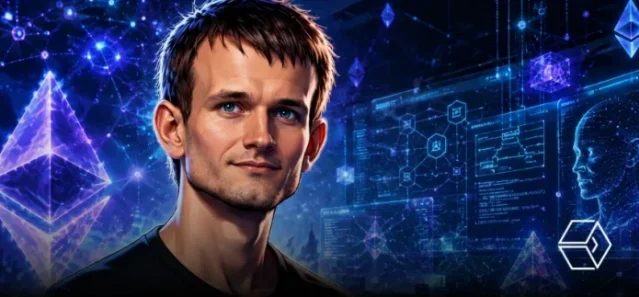
On May 20, Vitalik outlined Ethereum's near-term privacy upgrade path in a thread 6 that drew 341K views:
- AA + FOCIL: Account abstraction combined with fork-choice enforced inclusion lists gives privacy-protocol transactions first-class status with strong censorship-resistance guarantees
- Keyed Nonces (EIP-8250): Replaces the single sequential nonce counter with a
(nonce_key, nonce_seq)pair, creating independent replay-protection domains per activity type — making on-chain correlation harder - Kohaku + private reads: Addresses the metadata leak from wallets depending on third-party RPC nodes that can correlate IP address to wallet identity
None of these are live yet. All three map directly to the CROPS "Privacy" pillar 7.
On May 24 — the same day as the EF mega-thread — Vitalik also replied to a discussion about L2 upgrades and stated plainly that "making sure all our oracles are resilience and decentralization-maxxed is more important than stage 1→stage 2." He added that trust models should minimize components: adding a second mechanism to handle "clarifications" makes the trust model "strictly less favorable" 8 9.
Brian Armstrong
"American Wakanda" and the 51-minute case for innovation zones
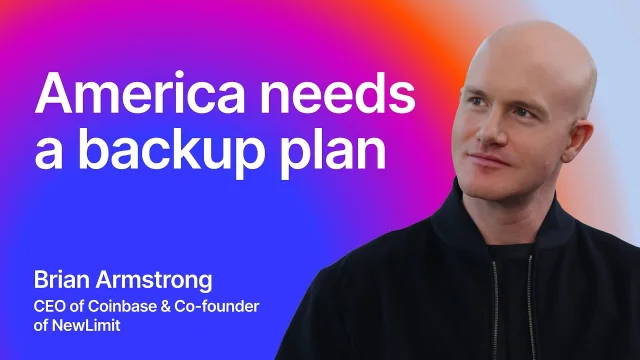
On May 21, Armstrong appeared on Progress ep04, hosted by D. Scott Phoenix (Fifty Years, former co-founder and CEO of Vicarious AI), in a 51-minute interview titled "Coinbase founder's blueprint for an American Wakanda" 10.
Several positions worth flagging:
On AI doom: Armstrong doesn't buy it. "I think it's much more likely that we end up in a world where it looks more like C3PO than Terminator." 10 He argues humans should merge with AI rather than try to stop it.
On AI regulation: "My bias in these situations is if a technology is new and we don't quite understand where it's going — leave it unregulated, right? Until we start to see material harm." He points to the internet (mostly unregulated, high-growth) versus healthcare and education (heavily regulated, slow-growth) as the comparison frame 10.
On special economic zones: Armstrong wants federal land exempted from federal law — "you could have a sandbox for innovation to really accelerate the future and try to make an American Shenzhen or Wakanda." He cites Próspera in Honduras as a "V1 prototype" and proposes such zones could be where clinical trials, nuclear energy, space, and crypto operate outside standard rulesets 10.
On Gary Gensler: Armstrong's read is career incentive, not ideology. "It was widely known in DC that he wanted to really be Treasury Secretary." The claim is that Elizabeth Warren offered the SEC chair job in exchange for aggressive action against crypto. Armstrong frames this as unverified inference, not documented fact 10.
On founder psychology: "You kind of have to be highly disagreeable and willing to be vilified to build anything interesting in the world." 10 Phoenix summarized Armstrong as a "disagreeable optimist."
Eight areas where the financial system needs an update
On May 24, Armstrong published an 8-point thread 12 covering tokenization of real-world assets, 24/7 global trading, next-gen stablecoin payments (including agentic payments), AI-powered risk and compliance, innovation-friendly regulation, expanded access via open protocols and self-custody, capital formation, and sound money as an inflation hedge. The thread closed: "Jobs not done until we get these working for all." 12
Coinbase product moves
Two product announcements from the week:
- AI compliance rebuild (May 20): Armstrong disclosed that Coinbase rebuilt "essentially every workflow" in its compliance department using AI, achieving "90% faster restriction resolution times" while maintaining human validation of every outcome 13. The 90% figure is an internal Coinbase metric with no independent verification.
- Custom Stablecoins / Stablecoin-as-a-Service (May 20): Businesses can now create branded stablecoins backed 1:1 by USDC, with Coinbase managing issuance, reserves, and smart contract deployment. First live customer: Flipcash (USDF on Solana). Coinbase reports USDC total supply at $75B+, with $375B+ in custody assets 14 15.
- Blockchain forensics (May 18): Armstrong highlighted Coinbase's Global Intelligence team assisting UK law enforcement in tracing a July 2025 kidnapping in Hertfordshire. The Coinbase system flagged that the customer was under duress in real time, escalated to police, then used blockchain analytics to link wallet addresses to specific individuals. Result: five convictions at St Albans Crown Court 16.
One further signal: Armstrong's highest-engagement tweet of the week, with 386K views and 3,227 likes, was six words — "The agentic economy will be larger than the human economy. And it's happening on Base." 17 No data attached.
Arthur Hayes
Holy trinity: $HYPE, $ZEC, $NEAR
Hayes spent the week consolidating and amplifying his "Butterfly Touch" thesis from May 11 18 (covered last issue). The macro spine: AI capex + military spending → fiat credit expansion → inflation → crypto bull market. This week's posts are position updates, not new thesis.
On May 22, Hayes named his three core positions explicitly: "$HYPE, $ZEC, $NEAR the holy trinity!" with 1,231 likes 19. On May 21 he set a $HYPE target: "All time $HYPE is almost here. $150 is much closer than it was." 20 On May 20 he framed the privacy trade in binary terms: "Bulls dial 'P' for privacy, Bears dial 'P' for poor. Choose wisely degen." 21
The $150 HYPE and 20x NEAR / 5x ZEC targets Hayes has been citing 22 are directional call options, not price targets with fundamental models — they're worth tracking as sentiment anchors, not quoting as analysis.
Hayes also forwarded an independent data point: per @coinbureau, Hyperliquid controls 43% of crypto fee revenue at $11M per week. On May 13 (slightly before the window), he stated his macro trigger: "IMO spiking 10yr TSY yields will force Trump to bring home a deal with China otherwise the wheels are going to fall off TradFi markets. I'm buying dips here." 23
An earlier scenario from his February essay "This Is Fine" was revisited in a May 21 CryptoBriefing writeup 24: Hayes estimated that if 20% of roughly 72 million US knowledge workers (≈14.4 million people) face AI-driven job displacement, the resulting defaults in consumer credit ($330B) and mortgages ($227B) could total $557B — equivalent to 13% of US commercial bank equity. His scenario is that this forces the Fed to intervene at a scale that then fuels a crypto bull market.
CZ and Hayden Adams
CZ: API keys, a new era, and personal philosophy
CZ (Changpeng Zhao, Binance founder, YZi Labs) had one high-signal post this week. On May 20, he issued an urgent security advisory: "If you have API keys in your code, even private repos, now is the time to double check and change them..." 25 The post drew 1.86M views, 6,942 likes, and 856 retweets — by far his highest-reach practical content of the week. No specific incident or vulnerability was cited.
A WSJ investigation published May 21 reported that Iran moved billions of dollars through Binance to fund its regime, with transactions continuing through this month. The report named Babak Zanjani as the primary operator, claiming roughly $850M in transactions over two years through a single Binance account 26. Binance's stated policy is "zero tolerance" for illegal activity. CZ did not publicly respond to the story this week.
Hayden Adams: UNI burn expansion and a one-line vision
Hayden Adams (Uniswap protocol inventor and founder) filed Proposal #96 on May 22, extending protocol fee collection — which burns UNI — to BNB Chain, Polygon, and Celo. Protocol fees are already live across nine chains. For Celo, this is a corrective proposal after a configuration error prevented the previous approval from executing. Vote deadline: May 30, with 39 for / 0 against at the time of writing, needing 40M UNI quorum 27 28.
On May 19, Adams also stated his single-line DeFi thesis: "the worlds value will be tokenized and trade on defi" 29. Activity was otherwise minimal this week.
Sergey Nazarov / Chainlink
$4B migration and a three-trend framework
On May 19, Nazarov (Chainlink co-founder) published a detailed thread identifying three trends accelerating Chainlink adoption 30:
1. Security/reliability shift: Following the KelpDAO $292M LayerZero bridge exploit (April), seven protocols migrated to CCIP within two weeks. "With over $4 Billion migrated in just a few weeks and more on the way, I am clearly seeing the industry's clear preference for security and reliability being a key trend leading to accelerated adoption of Chainlink and CCIP." 30

| Protocol | Asset | Value migrated |
|---|---|---|
| KelpDAO | rsETH | $1.5B+ |
| Lombard | LBTC / BTC.b | $1B+ |
| Solv Protocol | SolvBTC / xSolvBTC | $700M+ |
| Re | reUSD | $475M+ |
| Kraken | kBTC | $330M+ |
| Tydro | data oracle | $400M+ |
| Tenbin | tokenized RWA | — |
CoinDesk confirmed these figures independently via Chainlink Labs CBO Johann Eid 32.
2. Bear market building: Nazarov says Chainlink's Chainlink Runtime Environment (CRE, also known as Chainlink Runtime Environment — the verifiable confidential compute layer) is being actively developed and deployed with top users.
3. RWA / TradFi decoupling from crypto prices: "RWA, TradFi tokenization and digital asset industry has already decoupled from crypto price as an independent growth market." Active examples: DTCC uses CRE and data for production planning; SGX uses DataLink; State Street and Fidelity International operate on Chainlink infrastructure 30.
On May 21, Chainlink published a technical post on how Confidential HTTP (via TEE), private token transfers, and on-chain vault infrastructure are enabling privacy-preserving institutional finance workflows. Early access for Chainlink Confidential Compute begins June 2026 33.
The privacy-infrastructure thread connecting Vitalik's CROPS framework, Hayes's ZEC/NEAR privacy bets, and Chainlink's confidential compute rollout is not coincidental — three independent sources converging on the same missing layer.
Stani Kulechov / Aave
Rethinking DeFi lending valuation
On May 24, Kulechov (Aave (decentralized lending protocol with $14B+ TVL) founder and CEO) argued that the industry mismeasures Aave by using TVL as the primary metric. His comparison frame 34:
| Metric | Aave (end-2025) | SoFi (comparable period) |
|---|---|---|
| Deposits / supply | ~$52B | ~$37.5B |
| Active loan book | ~$22B | ~$38B |
| Borrowing interest flow | ~$700M+ | ~$1.8B |
| Retained earnings / net profit | ~$150M (DAO) | ~$481M |
"One of the biggest mistakes in valuing DeFi lending protocols is using TVL as the primary metric. TVL measures net collateral. It does not measure lending activity." 34 His conclusion: "Under traditional financial accounting frameworks, Aave looks far closer to a +$700M lending business than a $150M revenue protocol." 34
12-month revenue-led strategy
On May 23, Kulechov committed to a 12-month "revenue-led protocol strategy" 36: grow and diversify revenue streams, improve margins through GHO (Aave's native stablecoin), and build a user base anchored to the Aave App as a distribution layer owned by $AAVE token holders. "Revenue is critically important for DeFi protocols. Sustainable, consistent revenue is what proves that DeFi can evolve beyond pure token speculation into durable businesses backed by balance sheets." 36
Aave V4 hit $75M supply on May 21 37; combined deposits and loans crossed $100M by May 22 ($80M deposits / $25M loans), per Cryptopolitan 38. V4 is operating under phased supply and borrow caps.
Three other signals from Kulechov's week:
- Kraken Ink described as "one of the most successful Aave deployments" — structured as a white-label lending market that gives a centralized exchange "full ownership" of on-chain DeFi infrastructure. Kulechov's read: "Eventually, all exchanges will transition their backends to onchain-first systems." 39
- Proposal to deploy Aave on Monad filed, signaling expansion to high-performance L1s 40
- Aave now powering spendable Earn balances via MetaMask card and Mastercard network 41. No independent confirmation from Mastercard or MetaMask was found as of this writing.
Andre Cronje
Flying Tulip FTUSD: 5.41% base APY
Cronje (Flying Tulip founder and veteran DeFi architect) posted exactly once this week. On May 21, he disclosed a base yield of 5.41% APY on USDT and USDC via Flying Tulip's FTUSD product — "before even calculating incentives / points / liquid incentives" 42. Product details are at flyingtulip.com/ftusd; the landing page did not load fully during research.
Separately, a Cointelegraph piece quoted Cronje arguing that much of what calls itself DeFi has become teams "operating for-profit businesses" with upgradeable contracts, off-chain components, and governance control — "not DeFi in any strict sense" anymore. The original article returned a 404 during collection, so the full context is not confirmed 43.
Hyperliquid
RWA open interest hits $2.6B ATH
Hyperliquid (on-chain perpetuals DEX) reported RWA trading open interest reaching $2.6B, a new all-time high as of May 18 — double the figure from two months prior 44. The SpaceX Pre-IPO perpetual (ticker IPOP) launched the same day.
Jeff Yan (Hyperliquid co-founder, X: @chameleon_jeff) published no new original posts during the May 17–24 window. His most recent substantive statement, from May 15 (just before this window), described his Washington DC meetings with policymakers during the Clarity Act's advancement: "We discussed Hyperliquid, the benefits that it offers to American consumers, and the regulatory path to bring onchain derivatives markets into the United States." 45
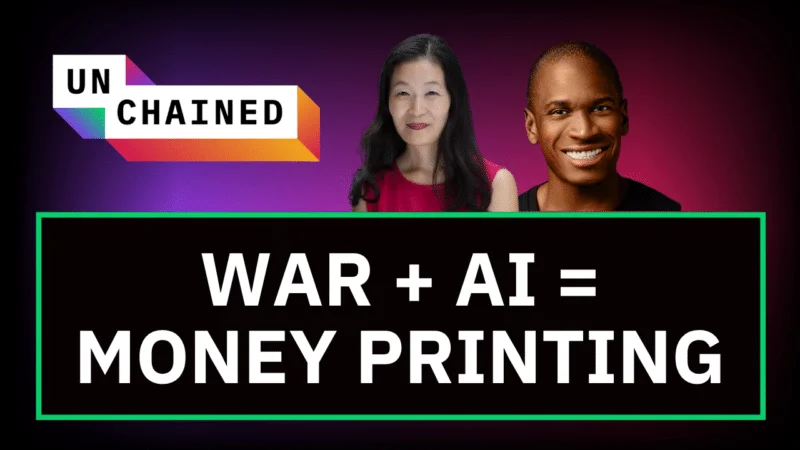
Cover image: Arthur Hayes on Unchained, episode 1114. Image via Unchained Crypto
参考ソース
- 1Vitalik Buterin X thread on EF direction
- 2Yahoo Finance / BeInCrypto: Vitalik Buterin Signals Ethereum Foundation Power Cut
- 3Vitalik Buterin X: AI formal verification post
- 4CoinDesk: Vitalik Buterin says AI formal verification could make crypto more secure
- 5Times of Blockchain: Vitalik Buterin's Views on Formal Verification
- 6Vitalik Buterin X: short-term native privacy roadmap
- 7Unchained Crypto: Vitalik outlines Ethereum near-term privacy roadmap
- 8Vitalik Buterin X: oracle resilience reply
- 9Vitalik Buterin X: resolution oracle clarifications reply
- 10Fifty Years YouTube: Progress ep04 — Brian Armstrong American Wakanda
- 11Brian Armstrong X: Progress ep04 tweet
- 12Brian Armstrong X: 8 areas where the financial system needs an update
- 13Brian Armstrong X: AI compliance efficiency
- 14Brian Armstrong X: Custom Stablecoins launch
- 15Coinbase: Custom Stablecoins product page
- 16Coinbase blog: Protecting customers onchain
- 17Brian Armstrong X: agentic economy on Base
- 18Arthur Hayes Substack: The Butterfly Touch
- 19Arthur Hayes X: holy trinity tweet
- 20Arthur Hayes X: $HYPE $150 target
- 21Arthur Hayes X: privacy trade framing
- 22Arthur Hayes retweet: 20x NEAR / 5x ZEC targets
- 23Arthur Hayes X: 10yr Treasury yields macro call
- 24CryptoBriefing: Arthur Hayes AI subprime crisis warning
- 25CZ X: API keys security warning
- 26WSJ: Iran moved billions through Binance to fund regime
- 27Hayden Adams X: Time to burn more UNI
- 28Uniswap Foundation Governance: Proposal #96
- 29Hayden Adams X: worlds value will be tokenized
- 30Sergey Nazarov X: three key trends mega-thread
- 31Chainlink Blog: The Great Chainlink Migration
- 32CoinDesk: Crypto firms move $4B in assets to Chainlink
- 33Chainlink Blog: How Chainlink Is Bringing Privacy to Blockchains
- 34Stani Kulechov X: TVL vs loan book valuation
- 35WSJ: Crypto Rushes to Bail Out Decentralized Lender
- 36Stani Kulechov X: revenue-led protocol strategy
- 37Stani Kulechov X: Aave V4 $75M supply
- 38Cryptopolitan: Aave founder commits to revenue-led strategy
- 39Stani Kulechov X: Kraken Ink deployment
- 40Stani Kulechov X: Proposal to deploy Aave on Monad
- 41Stani Kulechov X: Aave powering Mastercard/MetaMask card
- 42Andre Cronje X: FTUSD 5.41% APY
- 43Cointelegraph: DeFi Exploits Spur Builders to Harden Emergency Controls
- 44Hyperliquid X: RWA trading ATH $2.6B
- 45Jeff Yan X: DC policy meeting
このコンテンツについて、さらに観点や背景を補足しましょう。