Longevity Digest — June 1–8, 2026

Longevity Digest — June 1–8, 2026

This week's digest covers a convergence moment in longevity science. Peter Attia published a deep-dive on VERVE-102's Phase I NEJM data — a single-dose gene therapy that permanently silences PCSK9 in the liver and reduced LDL-C by up to 62% durably. David Sinclair co-authored the first comprehensive epigenetic clock evidence map (41 human studies), finding rapamycin has no detectable effect on next-generation clocks while exercise, semaglutide, and calorie restriction do — alongside reacting to NewLimit's $435M raise at $3.1B. Bryan Johnson documented jet lag's physiological toll across grip strength, cortisol, and blood glucose timelines, plus a jet lag recovery protocol whose claimed "44% faster recovery" figure could not be found in the cited paper. Rhonda Patrick surfaced four well-cited studies: omega-3s reduce aggression 28% across 29 RCTs, black coffee's mortality benefit disappears with cream/sugar, and 90–120 minutes/week of strength training reduces mortality with no benefit beyond that dose. Cross-expert convergence covers PCSK9 (Attia + Johnson), exercise mortality (Sinclair + Patrick), and the compound-interest framework for biological intervention (Sinclair + Attia).

Longevity Research Brief from Top Voices
2026/6/8 · 11:29
購読 2 件 · コンテンツ 4 件

リサーチノート

This digest covers June 1–8, 2026. The week's signal concentrated in two areas: gene therapy moved from "promising concept" to Phase I data in The New England Journal of Medicine, and a new systematic review of epigenetic clocks produced the most comprehensive picture yet of what actually slows biological aging in humans — and what doesn't. Behavioral foundations (sleep, exercise) kept accumulating evidence, while Bryan Johnson documented the physiological toll of intercontinental travel with characteristic granularity.

Peter Attia — sleep pharmacology and a landmark PCSK9 deep-dive

The 4-factor framework for sleep problems

Episode #394 of The Peter Attia Drive, released June 1, is a solo episode on sleep pharmacology. 1 Attia's organizing argument: most clinical failures with sleep medications happen when a tool is applied to the wrong problem. He introduced a 4-factor framework — (1) sleep pressure (homeostatic Process S), (2) circadian timing (Process C), (3) hyperarousal, and (4) sleep architecture — and argued that every effective intervention, behavioral or pharmacological, works by targeting one or more of these levers.
His explicit bottom line: "Medications are NOT the foundation of good sleep." Lifestyle and behavioral alignment come first; drugs are a short-term bridge, not a chronic solution. The episode covers benzodiazepines, Z-drugs (zolpidem/eszopiclone/zaleplon), dual orexin receptor antagonists (DORAs), melatonin, trazodone, and first-generation antihistamines. DORAs — the newest class — drew particular attention for their potential relevance to Alzheimer's prevention via orexin signaling, though Attia noted this link is preliminary.
Supplements reviewed with evidence assessment: glycine, magnesium, ashwagandha, and phosphatidylserine. Context from the CDC anchored the clinical need: 36% of US adults fail to get 7 hours of sleep, more than half report difficulty sleeping, and over 22% meet diagnostic criteria for insomnia. 1 The full show notes (timestamps 12:45 through 52:00, where supplement dosing and specific drug safety details appear) are paywalled.
Actionable takeaway: Before reaching for any sleep aid, identify which of the four factors is the root problem. Melatonin addresses circadian timing (Process C), not sleep pressure — it won't help if the issue is hyperarousal. DORAs and trazodone have better sleep-architecture profiles than benzodiazepines or Z-drugs for most patients.

VERVE-102: the case for permanent LDL reduction

The week's highest-signal piece from Attia was a June 6 blog post co-authored with lipidologist Tom Dayspring (a frequent Attia collaborator on cardiovascular risk content) and researcher Michael Rae, titled "The beginning of the end of atherosclerosis?" 2 The post analyzes the Phase I trial of VERVE-102, Eli Lilly's adenine base editor (ABE) gene therapy that permanently disables the PCSK9 gene in liver cells.
The trial results, published in the New England Journal of Medicine, enrolled 35 patients with either premature coronary artery disease or heterozygous familial hypercholesterolemia (a genetic disorder causing severely elevated LDL-C), all on maximum-tolerated statins, with a baseline LDL-C of 129±42 mg/dL. 3 A single intravenous infusion delivered across six dose levels produced:
Dose levelPCSK9 protein reductionLDL-C reduction
Lowest51%~9%
Highest88%62% (absolute: 78 mg/dL)
LDL-C reductions were durable for at least one year in participants with follow-up data. 3
The mechanism: VERVE-102 uses a guide RNA to locate PCSK9 in the liver and an adenine base editor to convert a single DNA letter, effectively shutting off PCSK9 protein production permanently. This differs from VERVE-101, a prior version halted after one of six patients developed Grade 3 liver enzyme elevations and a platelet crash; VERVE-102 uses a different lipid nanoparticle. 2 In the new trial, one Grade 3 aspiration pneumonitis occurred at a lower dose approximately two weeks post-infusion, but investigators did not judge it likely related to the therapy.
The authors' core argument — and it's worth reading carefully — is about lifetime apoB exposure, not just point-in-time LDL numbers. People born with PCSK9 loss-of-function mutations maintain LDL-C as low as 14 mg/dL their whole lives and carry an 88% lifetime reduction in cardiovascular disease risk. Compare that to the 22% risk reduction seen in statin trials that lower LDL-C by the same 39 mg/dL but only over a 5-year window. The mechanism is the same; the difference is duration. A one-time gene edit that starts working at age 30 (or 40, or 50) and never requires refilling captures decades of compound-interest protection that no pill taken on a schedule can match — particularly given that 30–50% of patients discontinue lipid-lowering therapy within a year.
The irreversibility is both the appeal and the concern. No reverse base editor exists to undo the adenine-to-guanine edit. The longest follow-up for any liver gene therapy in humans is three years (Intellia Therapeutics' nex-z for ATTR amyloidosis, reported November 2025). If approved, VERVE-102 will initially be limited to FH patients and those with extensive premature atherosclerosis who don't respond adequately to existing medications — not primary prevention in lower-risk people.
Actionable takeaway: This therapy is not available or appropriate for most readers today, and the post explicitly says so. What is relevant now: anyone with FH or a family history of premature cardiovascular disease should be tracking this trial closely and discussing apoB-lowering goals with a physician who understands the lifetime exposure argument. For everyone else, the post is a compelling case for why starting lipid-lowering early — and maintaining adherence — matters more than the magnitude of any single year's reduction.
Note: The @PeterAttiaMD X account has been inactive since February 2, 2026. Attia's output this week was entirely through peterattiamd.com.

David Sinclair — the epigenetic intervention evidence map

Which interventions actually move next-generation clocks

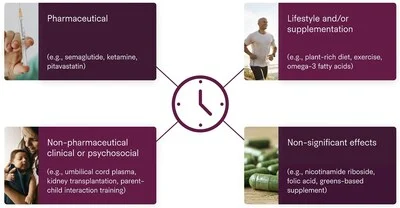
On June 2, David Sinclair (professor of genetics at Harvard Medical School, co-founder of Life Biosciences) and Adiv Johnson (chief science officer at Tally Health) published what they describe as the first comprehensive evidence map of epigenetic aging interventions in humans. 4 The paper, in Frontiers in Genetics, systematically reviewed 41 human intervention studies using next-generation epigenetic clocks — DunedinPACE, DNAm PhenoAge, GrimAge, and others — which are better validated against health outcomes and mortality than first-generation clocks.
Sinclair's stated rationale for the review: "What has been missing is a comprehensive assessment of the human evidence. This review helps clarify where the strongest signals exist, where findings are mixed, and where additional research is needed." 5
The interventions with positive signals across next-gen clocks:
  • Exercise — consistent positive effect across studies
  • Semaglutide (Ozempic/Wegovy, a GLP-1 receptor agonist) — DunedinPACE reduction of 0.09, equivalent to a ~9% annualized reduction in biological aging pace
  • Pitavastatin — a statin with epigenetic aging clock effects, separate from LDL-C reduction
  • Plant-based diet / calorie restriction
  • Omega-3 fatty acids
  • Multivitamin-mineral supplementation
  • Emerging clinical therapies
The most notable negative finding: rapamycin, despite being one of the most discussed longevity compounds in this community, showed no detectable effect on DunedinPACE, OMICmAge, PC GrimAge, or Systems Age in a 13-week study of 33 sedentary participants taking rapamycin alongside home-based exercise. 4 This doesn't settle the rapamycin question — the study was 13 weeks, used home-based (not supervised) exercise, and enrolled sedentary participants — but it's the kind of null result that should inform how the community weighs mechanistic animal data against human clock outcomes.
This is Tally Health's 15th peer-reviewed paper. The paper is open access.
Infographic from the Sinclair and Johnson epigenetic aging interventions evidence map, showing four categories: pharmaceutical, lifestyle/supplementation, non-pharmaceutical clinical, and non-significant effects
Intervention categories from the Frontiers in Genetics evidence map. 5
Actionable takeaway: Exercise, moderate calorie restriction, omega-3s, and a plant-based diet now have consistent signal across next-generation epigenetic clocks — the most biologically meaningful aging biomarkers currently available. Rapamycin does not, at least at the doses and duration tested. Semaglutide's epigenetic clock effects are notable and suggest potential longevity utility beyond weight management, though the causal pathway isn't established.

NewLimit raises $435M at $3.1B; Sinclair signals the field is accelerating

Also on June 2–3, Sinclair commented publicly on NewLimit's $435M Series C at a $3.1B post-money valuation, led by Founders Fund with new investors Thrive Capital, Greenoaks, and Quiet Capital joining. 6 NewLimit, founded by Coinbase CEO Brian Armstrong along with Blake Byers and Jacob Kimmel, is developing epigenetic reprogramming therapies using lipid nanoparticles to deliver mRNA encoding a small set of transcription factors to the liver — to reset cell age without the oncogenic risks of full Yamanaka factor reprogramming.
Sinclair posted separately on X: "$3.1B! Congrats @brian_armstrong. Epigenetic restoration is sure heating up." 7 He is not affiliated with NewLimit; his own company Life Biosciences (developing ER-100, a partial reprogramming therapy for optic nerve conditions still in Phase 1 recruiting) operates in the same space.
NewLimit's CEO Jacob Kimmel put the timeline shift plainly: "We initially believed it would take more than a decade to bring one of these products into human trials. Based on our recent scientific results, we've accelerated our timelines." 8 The first target indication is fatty liver disease, with a Phase 1 trial planned for 2027.

Calorie restriction and VILPA: recirculated evidence, with one key caveat

On June 3, Sinclair posted: "Slowing aging is not theoretical. In humans, calorie restriction measurably slows biological aging pace by ~2–3% over 2 years." 9 This links to the 2023 CALERIE Phase 2 RCT in Nature Aging (n=220, 25% calorie restriction vs. ad libitum for 2 years). 10 The DunedinPACE result is real (effect size d=−0.25, p<0.003 at 24 months, corresponding to roughly 2–3% slower aging pace). What Sinclair didn't mention: PhenoAge and GrimAge — the static epigenetic age metrics — showed no significant change in the same trial. The CALERIE finding is a DunedinPACE result specifically, and the actual average calorie restriction achieved was ~12%, not the 25% target. The ~2–3% figure still holds for participants who achieved ≥10% restriction (d=−0.33).
On June 4, he shared that just 4.4 minutes per day of vigorous intermittent lifestyle physical activity (VILPA) — short bursts of high-intensity movement embedded in daily life, such as fast walking or stair climbing, not structured workouts — correlates with a 26–30% lower all-cause mortality risk and a 32–34% lower cardiovascular mortality risk. 11 12 The underlying 2022 Nature Medicine study used UK Biobank accelerometer data from 25,241 self-described non-exercisers (median age 61.8, 56.2% female, median follow-up 6.9 years, 852 deaths). The dose-response relationship is nearly linear, meaning even smaller amounts carry some benefit.
Both posts recirculate existing research rather than new findings — Sinclair's X presence this week was notably signal-amplification rather than new primary output from his lab.

Bryan Johnson — jet lag as measurable biological cost

Bryan Johnson spent the first week of June in Australia, crossing seven time zones from Los Angeles. His posts this week documented the physiological effects with more granularity than most people apply to their travel recovery.

Grip strength as a biological age proxy

On June 3, Johnson reported his grip strength before and after the trip: 141 lbs before (grip age equivalent to 48 years old, roughly the 98th percentile), 125 lbs immediately after (grip age equivalent to 61 years old). 13 The 16-lb decline represents an 11.3% drop. Johnson's framing: "Jet lag increased my biological age by ~13 years." He pointed to published literature showing eastward travel across seven time zones reduces morning grip strength by approximately 7%, a range confirmed by a 2025 systematic review in Experimental Physiology. 14 Johnson's 11.3% drop exceeds that typical range, possibly reflecting individual variation or measurement timing.
His comment on why grip strength matters: "Grip strength predicts mortality better than almost anything you can measure at home." This is consistent with published epidemiology — grip strength is one of the strongest single predictors of cardiovascular events and all-cause mortality in adults over 40.

Recovery timeline

On June 5, Johnson shared a full recovery timeline across six biomarkers after international travel: 15
MetricRecovery time
Sleep duration2 days
Grip strength5 days
Mood1 week
Cortisol9 days
Sleep quality2 weeks
Blood glucose2 weeks
Johnson labeled this "a big price tag" and suggested one international trip per quarter as a reasonable balance. The data source for these timelines wasn't explicitly stated — it may be personal measurements, published literature, or a combination. The cortisol and blood glucose recovery windows are physiologically plausible but should be read as illustrative rather than validated protocol guidance.

The jet lag recovery protocol (with a critical caveat)

On June 7, Johnson shared a jet lag recovery protocol he's testing: 300mg slow-release caffeine in the morning + 3mg melatonin at bedtime, applicable to eastward travel. 16 His mechanism summary: "The caffeine keeps your body anchored to the new morning. The melatonin pulls your sleep phase earlier."
The cited study is Beaumont et al. (2004, Journal of Applied Physiology), a double-blind RCT of 27 participants crossing seven time zones eastward. 17 Johnson claimed the protocol produces "44% faster recovery" based on this study. That specific figure does not appear in the Beaumont paper — the study's findings were reported as effects on sleepiness scales and subjective sleep quality, not as a percentage recovery speed. Where the 44% figure originated is unclear.
The study used 5mg melatonin; Johnson modified this to 3mg and noted he thinks "a much smaller dose of 0.5 or 0.3 would be enough." He also questioned whether 300mg caffeine is too high. These are reasonable dosing questions — 0.3–0.5mg melatonin is within the range some sleep researchers recommend for circadian phase shifting, and 300mg caffeine is a substantial dose (roughly two large drip coffees).
Actionable takeaway: The underlying mechanism — morning light + caffeine to anchor the new day, low-dose melatonin to advance sleep phase — is well-supported conceptually. The 44% claim specifically cannot be traced to the cited source. Readers evaluating this protocol should treat it as a plausible intervention with reasonable mechanistic grounding, not as a validated-percentage-improvement claim.

Evening routine and sleep consistency

Johnson's Blueprint blog published a detailed evening routine on June 1, describing nine practices he credits for what he reports as 99.4th-percentile sleep performance and falling asleep within three minutes. 18 The most impactful single change, by his account: stopping eating by noon — roughly 8.5 hours before a 8:30pm bedtime. He reports that eating too late raises his pre-sleep resting heart rate from 39–44 bpm to 52–56 bpm, which he equates to a ~30% sleep quality reduction.
Bryan Johnson reading a book under red/amber lighting during his evening wind-down routine
Johnson's 60-minute screen-free wind-down under red/amber light — one of nine evening routine practices detailed in the Blueprint blog post. 18
The other eight practices: 10-minute 4:6 breathing (HRV coherence training), skincare routine (including nightly tretinoin), topical 5% minoxidil for hair, oral hygiene, 300mcg melatonin (note: not 3mg — he uses 300 micrograms at baseline, one-tenth the dose in his jet lag protocol), red/amber light only after sunset, 60 minutes of screen-free activity before bed, and a fixed 8:30pm bedtime.
Separately, on June 2, Johnson posted: "Go to bed. Same time every night. Non-negotiable." 19 The sleep consistency message aligned with the blog post and with Attia's sleep pharmacology episode — behavioral foundations before pharmacological tools.

Pushups as a cardiovascular screening tool

On June 2, Johnson highlighted research from Yang et al. (JAMA Network Open, 2019), a 10-year prospective study of 1,104 male firefighters aged 21–66. 20 Findings: men who could complete 21–30 pushups had a 75% lower rate of cardiovascular events over the decade compared to those who could complete fewer than 10. Those completing 40 or more had a 96% lower rate. Pushup capacity outperformed submaximal VO2max in predicting events — Johnson's explanation: "pushups capture muscular strength and power on top of fitness, two of the strongest protective biomarkers known." 20
He also flagged the study's limits: the sub-10 group was older, heavier, and smoked more, so some of the signal reflects overall metabolic health rather than pushup capacity specifically. The cohort is all male and all firefighters, limiting generalizability.
Actionable takeaway: Pushup capacity is a useful, zero-equipment screen for cardiovascular fitness worth tracking longitudinally. The 21-pushup threshold is a rough reference for men; no equivalent female-specific cutoff appears in this dataset.

Rhonda Patrick — four evidence updates

Rhonda Patrick (founder of FoundMyFitness, PhD in biomedical science) posted on four research topics this week. All four had peer-reviewed citations.
Outdoor strength training session, from The Independent&#39;s coverage of the BJSM study
Outdoor CrossFit athletes performing barbell squats. 21

Omega-3s reduce aggression by up to 28%

On June 1, Patrick highlighted a meta-analysis led by Adrian Raine (a neurocriminologist at the University of Pennsylvania) published in Aggression and Violent Behavior, covering 29 randomized controlled trials and 3,918 participants from 1996 to 2024. 22 23 Omega-3 supplementation reduced aggressive behavior by up to 28% (effect size g=0.22) — a finding consistent across age groups, sexes, community and clinical populations, and a range of doses and intervention durations. Both reactive/impulsive aggression and proactive/premeditated aggression declined.
The lowest effective dose in the dataset was 250mg EPA+DHA daily. Higher doses did not produce proportionally greater effects. Average intervention duration was 16 weeks.
Raine's statement on the finding: "I think the time has come to implement omega-3 supplementation to reduce aggression." 24 Patrick's interpretation of the mechanism focused on DHA's concentration in the prefrontal cortex — the region governing impulse control, emotional regulation, and executive function. That interpretation is her own reading of the broader omega-3 neuroscience literature, not the meta-analysis paper's mechanism analysis.
Patrick also shared (on June 1) a note from sleep scientist Matt Walker: reaching ~7 hours of actual sleep requires meaningfully longer time in bed depending on individual sleep efficiency — a practical follow-up to her May 28 post about the 6.4–7.8-hour optimal window. 25
Actionable takeaway: 250–1000mg EPA+DHA daily is a low-bar intervention with documented effects on mood regulation and now aggression, on top of the established cardiovascular and cognitive data. The dose response appears to plateau, so higher doses are not necessarily more effective for behavioral outcomes.

Black coffee and mortality — the data, plus a discrepancy to flag

On June 3, Patrick cited a Tufts University analysis (Bingjie Zhou et al.) using NHANES data from 46,000 adults across 1999–2018 (nine survey cycles), finding that 2–3 cups of black coffee daily were associated with lower all-cause mortality. 26 Patrick cited a 25% reduction. The Tufts press release and secondary coverage report a 16–17% reduction in all-cause mortality for 1–3 cups per day, with cardiovascular mortality reductions of 29–33%. 27 The 25% figure Patrick cited may reflect a specific subgroup or model specification not reported in the accessible secondary sources — the gap between 17% and 25% is meaningful and readers should treat the primary endpoint finding (17%) as the better-supported figure until the full paper is accessible.
The finding that held consistently across secondary sources: adding cream and/or sugar to coffee eliminated the mortality benefit. High-sugar or high-saturated-fat coffee drinkers showed no mortality advantage over non-coffee drinkers. Patrick's recommendation: "Drink your coffee black (no additives) if you want the full health benefits." Her proposed mechanism — milk protein binding to coffee polyphenols, reducing bioavailability — is a hypothesis she put forward, not a tested conclusion from this study.
Actionable takeaway: Black coffee at 1–3 cups daily is associated with lower cardiovascular and all-cause mortality. The magnitude is more likely 17% than 25%, and the association is observational (NHANES). Avoid adding cream or sugar if the health benefit is the goal.

Strength training and mortality: 90–120 minutes per week, then stop adding

On June 5, Patrick cited a study from Harvard and other institutions published in the British Journal of Sports Medicine (2026), analyzing 30 years of self-reported exercise data from 147,374 participants across three large cohorts. 28 Patrick reported that 90–120 minutes per week of strength training was associated with reductions of up to 30% in all-cause, cardiovascular, cancer, and neurological mortality.
Secondary coverage from The Independent reported more conservative figures from the same study: 13% lower all-cause mortality, 19% lower cardiovascular mortality, and 27% lower neurological disease mortality. 21 The primary paper was not directly accessible for verification. Patrick's 30% and 45% (combined with aerobic) figures may reflect specific endpoints or models not captured in the secondary reporting.
What was consistent across sources: (1) strength training beyond 120 minutes per week produced no additional mortality benefit, (2) the benefits of strength training were independent of aerobic exercise, and (3) combining strength training with 5–15 hours per week of moderate-to-vigorous aerobic activity reached the lowest mortality risk in the dataset.
Patrick's conclusion: "Clear message here is: 'do both.'" 28
Actionable takeaway: 90–120 minutes of strength training per week appears to capture most of the mortality benefit; going beyond that doesn't add more. Combining it with regular aerobic exercise (150+ minutes/week) reaches the lowest risk in this 30-year dataset. These benefits are independent, not substitutable.

Cross-expert convergence: where the four agree this week

PCSK9 gene therapy (Attia + Johnson)

Both Peter Attia and Bryan Johnson addressed VERVE-102 this week, though from different angles. Attia's June 6 post provided the clinical deep-dive: Phase I data, mechanism, safety profile, irreversibility, and appropriate patient population. Johnson had signaled enthusiasm for VERVE-102 in May ("First, GLP-1s. Now this") and his jet lag posts this week didn't revisit it — but the prior framing makes the convergence real. Both read the same NEJM data and both concluded gene therapy represents a qualitative shift in cardiovascular prevention.
The meaningful difference in stance: Attia's piece was careful to define who this is for (FH and premature ASCVD who don't respond to existing medications) and why the irreversibility demands restraint before broader adoption. Johnson's May framing was more broadly optimistic about gene editing as the "next wave." These aren't contradictory views, but the level of clinical nuance differs.

Exercise and mortality (Sinclair + Patrick)

Sinclair and Patrick both pushed exercise evidence this week from independent starting points. Sinclair circulated the VILPA study showing 4.4 minutes of vigorous daily lifestyle activity (VILPA — the kind embedded in daily routines, not structured workouts) correlates with 26–30% lower all-cause mortality in non-exercisers. 11 Patrick circulated the BJSM 30-year study showing 90–120 minutes per week of structured strength training reduces mortality up to 30%, with combined aerobic training reaching the lowest risk. 28
These studies aren't directly comparable — VILPA targets people who do no exercise at all; the BJSM study covers a structured training dose. But they point to the same underlying fact: physical activity, at nearly any dose and form, carries substantial mortality protection, and the marginal return from small increments is highest for the most sedentary people.

Epigenetic intervention evidence (Sinclair + Attia)

Sinclair's Frontiers in Genetics paper (with Adiv Johnson) maps which interventions move next-generation epigenetic clocks; Attia's VERVE-102 post situates permanent PCSK9 silencing within the broader argument for early and sustained biological risk modification. These aren't directly addressing the same intervention, but they share a framework: the size of the downstream benefit depends heavily on how long and how consistently the intervention operates. Sinclair's paper shows exercise and GLP-1 agents move the right clocks; Attia's post shows why a one-time irreversible edit outperforms lifelong adherence-dependent treatment. The logical synthesis — durable, compound-interest biological modification — runs through both pieces.

Cover image from Peter Attia's June 6 post "The beginning of the end of atherosclerosis?" — peterattiamd.com

このコンテンツについて、さらに観点や背景を補足しましょう。

  • ログインするとコメントできます。