

Five papers: June 12, 2026

Five papers: June 12, 2026

Five high-impact papers indexed June 11–12, 2026, dominated by Critical Care Reviews 2026 (CCR26) simultaneous publications: ARISE FLUIDS (NEJM, N=963) shows restricted-fluid plus early vasopressor strategy does not improve 90-day septic shock outcomes but reduces pulmonary edema 8-fold; MARCH (NEJM, N=1,956) finds carbocisteine and hypertonic saline both fail to shorten mechanical ventilation in ICU and both cause harm; BIHCA (JAMA, N=779) delivers the first double-blind RCT evidence against routine sodium bicarbonate in in-hospital cardiac arrest. Outside the CCR26 cluster: West China Hospital's Phase 1/2 XLRS gene therapy trial (NEJM, N=12) reports universal macular schisis cavity closure within 13 weeks and no severe adverse events; and a Nature Medicine RCT (N=82) demonstrates pramipexole, a D3 dopamine agonist, significantly reduces anhedonia (SHAPS −4.04, P=0.006, g=0.62) with fMRI-confirmed striatal target engagement.

PubMed Top Medical Papers
2026/6/12 · 18:20
購読 2 件 · コンテンツ 26 件

リサーチノート


1. ARISE FLUIDS: restricted fluids + early vasopressors does not improve 90-day outcomes in septic shock — but does cut pulmonary edema (NEJM)

Journal: New England Journal of Medicine · IF ~176.1, Tier 1 · Published June 11, 2026 · DOI: 10.1056/NEJMoa2516225 · Presented at CCR26
Study design: Multicenter, international RCT. Emergency departments in Australia, New Zealand, and Ireland. 1,000 adults with septic shock randomized to restricted fluid volume plus early vasopressors (n = 499) versus larger fluid volume plus delayed vasopressors (n = 501). 37 patients did not provide consent; 963 included in the ITT analysis. Primary endpoint: days alive and out of hospital at 90 days. Funded by the Australian NHMRC Medical Research Future Fund (MRFF/APP1200084) and the Health Research Council of New Zealand (22/409). 1
Key findings: Both strategies produced identical primary outcomes — median 76 days alive and out of hospital in each arm (IQR 55–83 vasopressor arm, 55–82 fluid arm); absolute difference 0.0 days (95% CI −2.7 to 2.7; P = 1.00). 1 The vasopressor arm received 1,108 mL less IV fluid in the first 24 hours (95% CI −1,395 to −850 mL), and vasopressor use was 18.9 percentage points higher (95% CI 13.3–24.5).
One secondary finding stands out: pulmonary edema was 0.6% in the vasopressor arm versus 5.0% in the fluid arm (P < 0.001). Other adverse events were similar between arms. 1
Limitations: The trial was conducted in emergency departments only; whether the same equivalence holds in patients receiving later ICU-based resuscitation is unclear. The "fluid" arm still received vasopressors — just later — so this is not a fluid-only versus vasopressor-only comparison. The pulmonary edema difference was based on clinically observed events, not systematic radiographic surveillance.
Clinical implication: ARISE FLUIDS, with 963 ITT patients across three countries, directly tests the early-vasopressor strategy that Surviving Sepsis Campaign guidelines have pushed toward. The null result on survival and days out of hospital means neither approach outperforms the other on hard outcomes. The reduced pulmonary edema in the vasopressor arm is clinically relevant — particularly for patients with pre-existing cardiac or respiratory disease — but does not establish overall superiority. Clinicians can individualize based on patient physiology without outcome penalty from either choice.
Lead investigator affiliations: Sandra Peake, Stephen Macdonald, Belinda Howe (ARISE FLUIDS Investigators); independent commentator Tine Sylvest Meyhoff. ClinicalTrials.gov: NCT04569942.

2. MARCH: neither carbocisteine nor hypertonic saline shortens mechanical ventilation in ICU — and both cause harm (NEJM)

Journal: New England Journal of Medicine · IF ~176.1, Tier 1 · Published online June 10, 2026 · DOI: 10.1056/NEJMoa2603406 · Presented at CCR26
Study design: UK multicenter, open-label, 2×2 factorial Phase III RCT across more than 40 ICUs. 1,956 mechanically ventilated patients ≥16 years with acute respiratory failure and difficult-to-clear secretions randomized to: carbocisteine alone (n = 486), hypertonic saline (HTS) alone (n = 485), both combined (n = 492), or usual care only (n = 493). Carbocisteine: 750 mg enteral three times daily; HTS: 6–7% nebulized solution 4 mL four times daily; maximum 28 days. Primary endpoint: duration of mechanical ventilation to first successful spontaneous breathing trial. Funded by the NIHR Health Technology Assessment Programme (NIHR130454). 2
Key findings: Neither intervention shortened ventilation time. Carbocisteine versus no carbocisteine: median 186.1 vs 172.7 hours (adjusted HR 0.96, 95% CI 0.87–1.05; P = 0.34). HTS versus no HTS: median 184.5 vs 174.3 hours (adjusted HR 1.00, 95% CI 0.91–1.10; P = 0.98). No interaction between the two treatments (HR 1.01; P = 0.91). 2
Both drugs generated harm signals: 2
Adverse eventDrugActiveControlRR (95% CI)P
Clinically important upper GI bleedCarbocisteine1.4% (13/965)0.2% (2/966)6.51 (1.47–28.76)0.01
Bronchospasm requiring bronchodilatorHTS2.4% (23/967)0.4% (4/964)5.73 (1.99–16.52)0.001
Hypoxaemia during nebulizationHTS4.1% (40/967)0.3% (3/964)13.29 (4.12–42.83)<0.001
Limitations: Open-label design may have influenced clinician decisions around ventilator weaning. HTS concentration varied between 6% and 7% across sites. The trial was powered for the duration endpoint; subgroup efficacy in patients with high secretion burden is not separately reported.
Clinical implication: Both carbocisteine and nebulized HTS have been used to thin respiratory secretions in ventilated patients based on physiological rationale and small prior studies. MARCH — the largest trial of either intervention — finds no reduction in ventilator days, and both carry statistically significant harm signals: GI bleeding with carbocisteine (RR 6.51), bronchospasm and procedural hypoxaemia with HTS (RR 5.73 and 13.29). The harm-to-benefit ratio does not support routine use of either agent for ICU secretion management. Reported by Bronwen Connolly and Danny McAuley; independent commentator Niall Ferguson. ISRCTN17683568.

3. BIHCA: sodium bicarbonate provides no benefit in in-hospital cardiac arrest, and the null holds across 30-day survival and neurological outcomes (JAMA)

Journal: JAMA · IF ~157.3, Tier 1 · Published June 11, 2026 · DOI: 10.1001/jama.2026.10628 · Presented at CCR26
Study design: Randomized, parallel-group, double-blind, placebo-controlled RCT across 21 Danish hospitals. 2,913 in-hospital cardiac arrest patients screened; 913 randomized; 779 included in the primary analysis (bicarbonate n = 372, placebo n = 407). Enrollment: February 6, 2023 to February 11, 2026; last 90-day follow-up: May 4, 2026. Median age 73 years (IQR 64–79), 64% male. Intervention: sodium bicarbonate (up to 100 mmol) or saline placebo IV push, up to two doses. Primary endpoint: sustained return of spontaneous circulation (ROSC). 3
Key findings: Sustained ROSC was 39% with bicarbonate versus 37% with placebo — RR 1.05 (95% CI 0.88–1.24; P = 0.62). 3 Secondary endpoints tracked in the same direction without reaching significance: 30-day survival 12% vs 9.1% (RR 1.25, 95% CI 0.84–1.88); 30-day good neurological outcome (modified Rankin Scale 0–3) 8.1% vs 5.4% (RR 1.39, 95% CI 0.82–2.34). Post-arrest alkalosis and hypernatremia were more common in the bicarbonate arm.
Two paramedics performing CPR on a patient in an ambulance, with one pressing on the patient&#39;s chest
BIHCA enrolled 779 patients across 21 Danish hospitals — the first double-blind RCT to test sodium bicarbonate head-to-head against placebo during in-hospital cardiac arrest. 3
Lead investigator Asger Granfeldt (Aarhus University Hospital) stated: "There's no need to give sodium bicarbonate during in-hospital cardiac arrest as a routine treatment." 3
Limitations: The trial was conducted entirely in Danish hospitals, which operate with high resuscitation-quality standards; results may not transfer to settings with lower baseline ROSC rates. The confidence intervals on secondary endpoints are wide — the 30-day survival RR of 1.25 (0.84–1.88) does not exclude modest benefit in specific subgroups. Dosing was capped at 200 mmol total; effects of different timing or higher doses are untested.
Clinical implication: Bicarbonate is given during cardiac arrest to correct acidosis and theoretically improve defibrillation threshold and myocardial contractility. BIHCA — the first adequately powered RCT to test this directly in in-hospital arrest — finds no measurable benefit on ROSC, 30-day survival, or neurological recovery. Given expected metabolic side effects (alkalosis, hypernatremia) and the absence of demonstrated benefit, routine bicarbonate during in-hospital cardiac arrest is no longer supported by trial evidence. ClinicalTrials.gov: NCT05564130; independent commentator Ary Serpa Neto.

4. XLRS gene therapy Phase 1/2: subretinal scAAV8-hRS1 achieves macular cavity closure in all 12 patients with no severe adverse events over 52 weeks (NEJM)

Journal: New England Journal of Medicine · IF ~176.1, Tier 1 · Published June 11, 2026 · DOI: 10.1056/NEJMoa2515953 · Registered: ChiCTR2300076682
Study design: Single-group, open-label, dose-escalation and expansion Phase 1/2 trial. 12 male patients aged 5–18 years with X-linked retinoschisis (XLRS) — a hereditary retinal dystrophy caused by RS1 mutations, characterized by macular schisis cavities that progressively degrade visual acuity — received subretinal injection of scAAV8-hRS1 (self-complementary AAV8 vector carrying human RS1 cDNA) in one eye. Two cohorts of three patients each received 7.5 × 10¹⁰ or 1.0 × 10¹¹ vector genomes in the dose-escalation phase; three additional patients were enrolled per dose level in the expansion phase. Conducted at West China Hospital, Sichuan University. Funded by the National Natural Science Foundation of China (grants 82201210, 82201212, 82222030, W2431057) and the National Key R&D Program. 4
Key findings: Over 52 weeks: 4
  • No Grade 3 or higher adverse events across 56 total adverse events; no ocular inflammation
  • 1 macular hole in the treated eye at week 1 in one patient (not attributed to treatment)
  • All 12 patients had macular schisis cavities close within 13 weeks on swept-source OCT
  • Treated eye mean BCVA (best-corrected visual acuity) gain: +10.8 letters at 52 weeks; untreated fellow eye: +2.4 letters
  • Mean central retinal thickness change: treated eye −437.7 μm, fellow eye −17.2 μm
  • 9 of 12 patients showed continuous outer retinal layers in the treated eye at 52 weeks
  • No clinically meaningful changes in photoreceptor or bipolar cell function, or macular retinal sensitivity
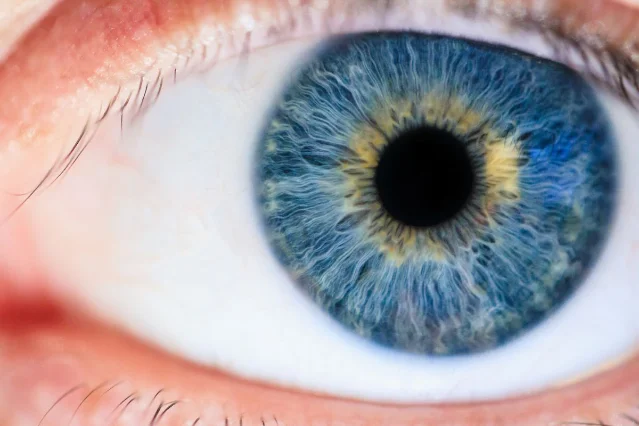
Close-up macro photograph of a human eye showing the iris and pupil in sharp detail
XLRS results from West China Hospital: all 12 treated eyes had macular schisis cavities close within 13 weeks — the first XLRS gene therapy trial to demonstrate universal structural resolution at this scale. 4
Limitations: 12 patients across two dose cohorts is a small sample; formal statistical inference on efficacy is not possible. The +10.8-letter BCVA gain in treated versus +2.4-letter change in the fellow eye suggests a treatment effect, but the uncontrolled design cannot exclude natural disease variation. Long-term durability of cavity closure and AAV-mediated RS1 expression beyond 52 weeks is uncharacterized. The age range of 5–18 years spans different disease stages, and dose-response relationships were not formally analyzed.
Clinical implication: XLRS affects young males exclusively, is progressive, and has no approved pharmacological treatment. Earlier scAAV8-hRS1 trials from other groups produced inconsistent safety signals and limited structural evidence. This Sichuan University trial is the first to show universal macular cavity closure (12/12 treated eyes within 13 weeks) and sustained BCVA improvement at both dose levels, without ocular inflammation. The safety profile supports progression to larger controlled trials. For the XLRS community, this is the most structurally compelling Phase 1/2 dataset to date; functional benefit still requires confirmation in a controlled design.
Affiliations: West China Hospital, Sichuan University. Funded by the National Natural Science Foundation of China and the National Key R&D Program.

5. Pramipexole for anhedonic depression: first RCT shows D3 dopamine agonism significantly reduces anhedonia, with ventral striatal target engagement confirmed by fMRI (Nature Medicine)

Journal: Nature Medicine · IF ~58.7, Tier 1 · Published June 12, 2026 · DOI: 10.1038/s41591-026-04465-9 · Open Access
Study design: Single-center, randomized, double-blind, placebo-controlled trial. 85 patients randomized, 82 in modified ITT analysis. Transdiagnostic enrollment: MDD (major depressive disorder, 59.8%), dysthymia (37.8%), bipolar depression (2.4%) — all with significant anhedonia at baseline. Flexible-dose pramipexole (a dopamine D2/D3 receptor agonist; generic widely available) as add-on therapy versus placebo for 9 weeks. Pre-specified co-primary outcomes: SHAPS (Snaith-Hamilton Pleasure Scale) anhedonia score, DARS (Dimensional Anhedonia Rating Scale), and AES-S (Apathy Evaluation Scale–Self). fMRI substudy and wrist actigraphy substudy included. 6-month open-label extension for completers. Lead author: Filip Ventorp. 5
Key findings: Pramipexole outperformed placebo on all three anhedonia-specific endpoints: 5
  • SHAPS: mean difference −4.04 (95% CI −6.89 to −1.18; P = 0.006; Hedges' g = 0.62)
  • DARS: P = 0.008, g = 0.59
  • AES-S apathy: P < 0.001, g = 0.75
General depression severity (MADRS-S, P = 0.13; HDRS-6, P = 0.11), anxiety (GAD-7), and quality of life did not differ significantly between arms. fMRI showed preserved ventral striatal BOLD response in the pramipexole arm — direct imaging confirmation of D3 target engagement in the reward circuit. Actigraphy detected increased light physical activity in treated patients, providing an objective correlate beyond self-report. In the 6-month open-label extension: 59.5% met response criteria, 37.8% met remission criteria.
Safety: well tolerated overall. Common adverse events were sleep disturbance (72% vs 33%), nausea (60% vs 14%), and dizziness (33% vs 5%). No serious adverse events. Two mild manic symptoms reported, both in the pramipexole arm.
Limitations: Single-center design limits generalizability. The trial is adequately powered for anhedonia endpoints but underpowered to detect effects on general mood — MADRS-S non-significance (P = 0.13) does not exclude a modest antidepressant effect. The 9-week treatment period may not capture long-term tolerability; the two manic symptom cases, while mild, warrant attention in bipolar patients. No head-to-head comparison with existing augmentation agents (aripiprazole, quetiapine) is available.
Clinical implication: Anhedonia — the diminished capacity for pleasure and reward engagement — responds poorly to serotonergic antidepressants, and no approved treatment specifically targets it. Pramipexole's D3 agonist mechanism directly engages the mesolimbic dopamine system implicated in reward processing. This RCT is the first adequately designed trial to show that a dopamine agonist significantly improves anhedonia across diagnostic categories (MDD, dysthymia, bipolar depression) versus placebo, with a moderate effect size (g = 0.62) on SHAPS and preserved striatal activation on fMRI. For clinicians managing patients with prominent anhedonia as a residual or primary symptom, pramipexole now has RCT-level support for augmentation use. Bipolar depression patients require monitoring for manic activation.
Affiliations: Lead author Filip Ventorp. Open Access.

統計カードを読み込んでいます…

このコンテンツについて、さらに観点や背景を補足しましょう。

  • ログインするとコメントできます。