Five Pieces Worth Your Time This Week
This week: Heidi Blake's massive New Yorker investigation into how Andrew Tate built a criminal trafficking enterprise and became a political force; Idrees Kahloon in The Atlantic on how Britain became as poor as Mississippi through sequential self-sabotage; Caity Weaver's hilarious and tender essay about garage sales and what Americans do with their excess; the Guardian's deep portrait of Claudia Sheinbaum, the world's most popular left-wing leader; and Jacob Mikanowski on the barely-explored deep sea, full of creatures with no names.

This week's five come from The New Yorker, The Atlantic (twice), and The Guardian (twice). The range is deliberately wide: a massive investigative piece on Andrew Tate, an economic autopsy of Britain, a hilarious and sad essay about garage sales, a portrait of Mexico's wildly popular president, and a dispatch from the barely-explored bottom of the ocean.
1. Andrew Tate's Empire of Abuse — The New Yorker, June 15
Author: Heidi Blake | Read time: ~75 min
What it argues: Blake spent years compiling this — thousands of private messages, sealed prosecutorial files, court records, and interviews with more than a dozen alleged victims. The piece constructs, in meticulous and often sickening detail, how Andrew Tate built a criminal franchise around the systematic exploitation of women: recruiting them through romance, wearing them down psychologically, tattooing them with his name, and turning them into performers in his online-pornography operation. But the piece is equally interested in how this enterprise became politically legible — how Tate forged alliances with Barron Trump and Donald Trump Jr., cut a deal worth at least six million dollars a year with Rumble (a platform with investments from Peter Thiel and J.D. Vance), and, by his own account, shifted the Overton window on gender and power in a direction Kamala Harris later named as a factor in her 2024 defeat.
Blake traces the origin story with real attention to the family dynamics that shaped Tate — his father Emory, a brilliant and terrifying chess master with narcissistic personality disorder who beat his sons and abandoned the family, leaving Andrew to absorb a framework in which domination and fear are love. The psychological architecture Blake uncovers doesn't soften the portrait. It makes it worse.
Why read it: This is a standard-setting investigative piece about one of the most influential figures most serious readers have probably looked away from. It takes a subject that could easily be written off as internet tabloid material and demands you reckon with what it actually means that such a person became a political force.
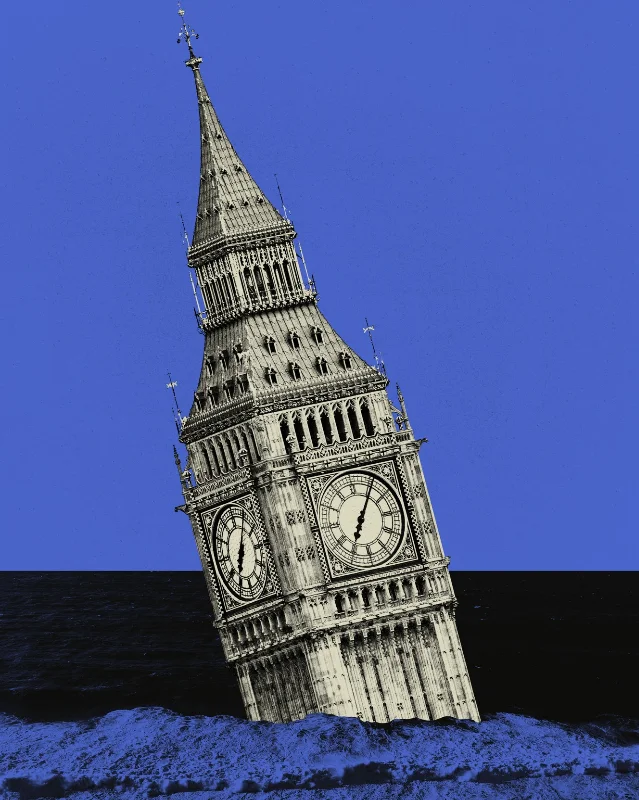
12. How Britain became as poor as Mississippi — The Atlantic, July 2026
Author: Idrees Kahloon | Read time: ~35 min 2
What it argues: In 2007, median British household income had just surpassed Germany's. Today, output per person in Britain is barely above that of Mississippi — and that slight lead is carried entirely by London. Outside the capital, living standards fall below Mississippi's. 2
Kahloon's case is that Britain's decline is not a story of bad luck — other countries absorbed the 2008 crash, COVID, and the Ukraine energy crisis — but of self-sabotaging choices made in sequence: Cameron's austerity (which cut local government grants by 40 percent and left the NHS eating its capital budget), Brexit (which a five-economist paper now estimates reduced GDP per capita by 6 to 8 percent, double earlier projections), 2 a revolving door of six prime ministers in sixteen years, and most recently a surge of Reform UK — a party whose solutions to these problems are more Brexit and fewer immigrants.
He reports from Stoke-on-Trent, once the ceramics capital of the world, where two out of every five children now live in poverty and the last continuously operating Victorian-era pottery factory employs eighteen people, down from four hundred. A generation ago, Stoke voted 69 percent for Brexit. "There's now a third generation almost coming through," a local charity worker tells him, "whose parents were unemployed, their grandparents were unemployed, and they don't see any future for themselves."
Why read it: The best economic journalism makes structural forces feel concrete and human. This does that. It also raises an uncomfortable question for Americans: a country that went down the path of austerity, nativism, and managed industrial decline as solutions to the damage from austerity, nativism, and managed industrial decline — how is that different from the path being taken in Washington right now?
3. The whimsy and heartbreak of America's garage sales — The Atlantic, July 2026
Author: Caity Weaver | Read time: ~35 min
What it argues: Weaver sets herself a task: spend $100 at garage sales, estate sales, and thrift stores across America and see what she learns about her countrymen's lives. What unfolds is part cultural history — drawing on Jennifer Le Zotte's scholarship on how postwar suburban spaciousness and mass production made Americans accumulate enough stuff to sell it back to each other — and part deadpan personal essay about her own condition (she owns approximately 2,000 Christmas ornaments and discovers this mid-article). 3
The piece traces the origins of American thrift retail to two surprising sources: a Boston minister named Edgar J. Helms, who began distributing donated clothing to immigrants in 1890s, creating what would become Goodwill; and the Salvation Army, whose early American success partly depended on restrictions on immigrant street vendors. The buried history of secondhand shopping turns out to be tangled with class, anti-Semitism, and Protestant reform.
But what elevates this above a history lesson is Weaver's eye for the human encounter. She meets a woman selling Precious Moments figurines at prices no one will pay because she has to move to Texas to care for her mother with dementia. She meets a man selling a single button-down shirt for fifty cents, nearly silent. "If you don't have the stomach to witness people's lives up close," she writes, "do not ever stop at a yard sale." 3
Why read it: The funniest essay in this week's batch, and quietly the saddest. Weaver has a gift for comedy that doesn't cancel out tenderness, and the piece earns its cultural-history dimension because the history actually explains something about why she owns two thousand Christmas ornaments.
4. How did Mexico's president become the world's most popular leftwing leader? — The Guardian Long Read, June 11
Read time: ~40 min 4
What it argues: Claudia Sheinbaum's approval rating hovers at 70 percent or above — a fact that looks startling against the backdrop of conservative and far-right victories across the Americas. This profile begins with her dressmaker, who works in a pink-walled room in a working-class Mexico City neighborhood and has never once managed to get Sheinbaum to stand still for a fitting (the wedding dress was fitted on the dressmaker's eleven-year-old granddaughter instead). It unfolds from there into a portrait of a woman who is deeply unusual in the history of Mexican politics: a female president in a famously macho country, a climate scientist with a PhD in energy engineering who texts government functionaries at 4 a.m., a protégé of the left-populist Andrés Manuel López Obrador who is, by almost every account, more careful, data-obsessed, and technocratic than her mentor.
The piece takes her early activism seriously — at fifteen she joined a group of mothers searching for children disappeared by the Mexican state, and was forcibly evicted by police from an encampment in support of them. It is from this history that the profile's central tension derives: how does someone who came up fighting against the state now justify military-heavy policing and a crisis of ongoing disappearances? The piece doesn't pretend this contradiction is resolved.
Why read it: A portrait journalism masterclass, and an antidote to the North American tendency to treat Latin American politics as noise. The comparison to Zohran Mamdani's admiration for Sheinbaum is worth your attention on its own.

5. Ping-pong sponges, 'black smokers' and floating somethings: the secrets of the deep sea — The Guardian Long Read, June 9
Author: Jacob Mikanowski | Read time: ~30 min 5
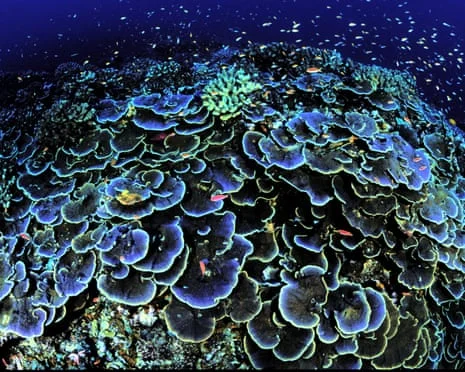
What it argues: Less than 25 percent of the ocean floor has been mapped in any detail. Every journey to the deep returns with lifeforms that don't fit any existing category — sponges the size of ping-pong balls, hydrothermal vents ("black smokers") hosting chemosynthetic bacteria-based ecosystems that have nothing to do with sunlight, and creatures researchers log simply as "floating somethings" because they have no adequate description yet.
The piece is structured around what we stand to lose: deep-sea mining is accelerating as demand for battery metals (cobalt, manganese, nickel) increases, and the regulatory frameworks governing extraction of these resources are being decided right now — largely without input from the scientists who have actually been down there. The irony being examined is pointed: we are about to industrialize one of Earth's last genuine wildernesses at a pace that guarantees we will destroy ecosystems we have not yet described.
Why read it: A reminder that the natural world still contains places that exceed our vocabulary. Also a useful corrective to climate coverage that focuses almost entirely on the atmosphere — the deep ocean is where much of the Earth's carbon regulation happens, and almost nobody talks about it.
このコンテンツについて、さらに観点や背景を補足しましょう。