AI Founder Weekly — August 24, 2026: Cheaper Sol, agentic retrieval, and a $21B inference bet
A founder-focused recap of August 17–24: cheaper GPT-5.6 Sol access, agentic retrieval, open heterogeneous inference infrastructure, three major financings, and two compliance signals.
From Monday, August 17, 2026 at 08:00 PT through Monday, August 24, 2026 at 08:00 PT, AI vendors pushed capability into cheaper access tiers, retrieval tooling, and more flexible infrastructure. Investors funded both the application layer and the chips underneath it, while regulators added practical work around cybersecurity documentation and data-driven pricing. For founders, the week's question is how much of the product margin survives after model access, retrieval, hardware, and compliance are priced together.
Products and platforms
Replit makes exploration free with GPT-5.6 Luna
On August 19, OpenAI said Replit was introducing Free Mode, powered by GPT-5.6 Luna. Users can explore, plan, and shape software ideas in the same project context without consuming usage. When a task needs more advanced reasoning, Replit can route it to GPT-5.6 Sol and return to Luna while preserving the project context. 1
The product boundary sits between exploration and execution. Replit is using a lower-cost model to widen the top of the funnel, then reserving a stronger model for work that justifies paid capacity. Software startups building similar workflows should measure how often free exploration becomes a paid build, because the conversion path now depends on routing quality as much as on the headline model.
OpenAI separates data retention from safety monitoring
OpenAI announced Zero Data Retention for eligible API customers on August 19. The promise covers prompts and model responses after processing, and enterprise data remains outside model training unless a customer opts in. OpenAI is also previewing Private Safety Processing, which analyzes patterns across related interactions through automated systems while returning only narrow safety signals to OpenAI. Customer content can stay on customer-controlled infrastructure, or sit in OpenAI storage encrypted with customer-controlled keys. 2
Private Safety Processing is being tested with early customers, with a rollout and technical white paper planned for September. OpenAI's footnote says images flagged for possible child sexual abuse material remain retained for manual review and reporting as required by law. Enterprise buyers should therefore separate the general ZDR promise, the preview's availability, the storage design, and the narrow legal exception during diligence. 2
Mistral turns retrieval into a tool-using loop
Mistral introduced Agentic Search on August 20. The retrieval layer lets a model search an existing index, open a document, navigate within it, read the relevant passage, and grep for a pattern. Those five tools—
search, open, navigate, read, and grep—replace a one-shot answer from a fixed set of chunks with a loop that can inspect, refine, and verify information across long documents and multiple sources. Mistral makes the feature available through Search Toolkit and Libraries in Studio and Vibe. 3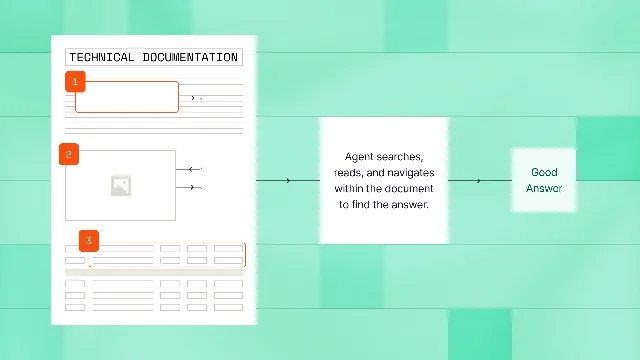
Mistral reports FinanceBench correctness rising from 26.7% to 86% and OfficeQA Pro performance rising from 6.3% to 51.9%. The company also reports up to 39.6% lower p90 latency and up to one-third lower token use. These are provider-reported benchmark claims. The product implication is concrete for document-heavy vertical AI: retrieval quality becomes a part of the application layer, and teams need evaluations that measure tool calls, evidence coverage, and total task cost alongside answer accuracy. 3
Modular opens the language layer and sells heterogeneous inference
Modular announced on August 18 that Mojo 1.0 was fully open-sourced under the Apache 2.0 license. Modular Cloud was publicly available through
console.modular.com, with OpenAI-compatible shared endpoints priced per token and dedicated deployments running on Modular's or a customer's compute. 4Modular Platform supports AWS Trainium, Google TPUs, Qualcomm Cloud AI 100 and Dragonfly accelerators, CPUs, and GPUs. Modular says the platform reduced the engineering effort for bringing up new hardware by more than 10x. The company also says the newly supported platforms will enter production and become available through Modular Cloud over the coming months, so current platform support and future cloud availability remain separate milestones. 4
For infrastructure founders, the offer is a three-part stack: open compiler and tooling, a common serving layer, and the option to change silicon without rewriting the application around one vendor's software stack. Adoption will depend on whether the claimed portability survives customer workloads and whether the cloud service exposes enough price and performance data for buyers to switch.
Models and model economics
GPT-5.6 Sol gets a temporary price cut
OpenAI cut GPT-5.6 Sol API pricing by more than 20% for three months on August 21, according to Reuters. Standard short-context pricing moved from $5 to $4 per million input tokens, and from $30 to $20 per million output tokens. The change also applies to eligible credits for ChatGPT Work and Codex; Pro, Plus, and Business subscription prices remain unchanged. 5
OpenAI's pricing page lists the same $4 input and $20 output rates and says the promotional price is available at least through November 21, 2026. Cached input is listed at $0.40 per million tokens. 6
The cut changes the floor for products that need frontier reasoning on a subset of agent steps. Founders should recalculate margins using output-heavy traces, retries, tool calls, and context growth rather than applying the input-token discount to the whole workflow. The temporary end date also makes this a planning variable: a product that only works at the promotional rate has a model-contract risk before it has a model-quality risk.
Liquid AI publishes speculative-decoding checkpoints
Liquid AI released the first public LFM2.5-DSpark draft checkpoints on August 20 for LFM2.5-1.2B-Instruct, LFM2.5-2.6B, and LFM2.5-8B-A1B. The checkpoints are available on Hugging Face, and the integration is open-sourced upstream in
llama.cpp and SGLang. Under greedy decoding, Liquid AI says the accelerated output is identical to the baseline by construction. 7Liquid AI reports up to 3.18x GPU throughput, up to 2.87x on-device throughput, and an average 57% function-call latency reduction for LFM2.5-2.6B. The benchmark used one H100 and an M4 Max MacBook Pro with batch size 1, temperature 0, and five datasets. Liquid AI also reports that LFM2.5-8B-A1B averaged only 1.18x speedup on the M4 Max, attributing the limitation to the current Metal implementation of its mixture-of-experts model. All performance figures are Liquid AI's benchmark claims. 7
The deployment signal is stronger than the maximum multiplier. Draft checkpoints, upstream runtime support, and a clear device-specific limitation give builders a path to reproduce the trade-off on their own hardware. Speculative decoding can lower latency without changing greedy-decoded output, while actual gains still depend on the target accelerator, backend, batch size, and workload.
Funding and M&A
Higgsfield raises $400 million for video generation at scale
Higgsfield announced a $400 million Series B on August 17 at a $5.4 billion valuation, with DST Global leading. Intel Capital's announcement names Tribe Capital, Growth Equity at Goldman Sachs Alternatives, Smash Capital, Fifth Wall, Valor Capital, Intel Capital, Liberty Global Tech Ventures, Mirae Asset Capital, and NTT DOCOMO Ventures among the participants. Higgsfield says annualized revenue had reached $700 million, the company had more than 30 million users across 238 countries and territories, and it served 390 Fortune 500 companies. The operating figures are company-reported. 8
TechCrunch independently reported the round and described video generation as compute-intensive. Higgsfield says the capital will fund research and development, infrastructure, AI talent, and go-to-market work. For investors, the diligence question is whether the reported revenue and enterprise adoption can support the compute required to serve increasingly complex video workloads. For founders, the round raises the bar for infrastructure planning: video products need a capacity strategy as early as they need a model strategy. 9
Etched reaches a $21 billion valuation in inference hardware
Reuters reported on August 18 that Etched raised $700 million, in a round led by Jane Street with Kleiner Perkins, Sequoia, Andreessen Horowitz, Tiger Global, and others participating. The financing valued the inference-chip startup at $21 billion, more than double its $10.3 billion valuation from a July Series C. Etched builds specialized systems intended to make model execution faster and cheaper. 10
Reuters also reported that Etched claims more than $1 billion in customer contracts and that Jane Street is its first customer. Those contract figures are company claims reported by Reuters. The investor signal is a willingness to price inference economics around committed demand, latency, and cost per token rather than around a general-purpose hardware roadmap. The next evidence to watch is shipped capacity and measured customer performance.
Velaura AI funds low-power chip design and physical AI
Velaura AI raised $110 million in a Series A on August 18 at a valuation above $1 billion, according to Reuters. Seligman Ventures led the round; Capricorn Investment Group joined as a new investor, while Samsung Catalyst Fund, StepStone Group, and Maverick Silicon also participated. Velaura develops low-power chips and software for data centers and physical AI and announced Titan Core, a chip-design platform focused on efficiency and power savings. 11
Velaura plans to use the capital for product development, deployment, and hiring. Its commercial model combines an upfront fee with a royalty tied to customer power savings. Reuters reported that Velaura was engaged with three of the four largest cloud providers as potential customers; that statement describes prospective discussions, not a closed customer list. The model gives investors a measurable line between chip efficiency and revenue, while leaving deployment proof, customer conversion, and royalty durability as the central tests.
Regulation and compliance
NIST drafts a guide for AI-assisted cybersecurity reporting
NIST released the initial public draft of Special Publication 1353, Quick-Start Guide for Using Artificial Intelligence (AI) for Cybersecurity Framework (CSF) Analysis and Reporting, on August 19. The draft gives security teams structured prompts and examples for using AI to analyze, plan, implement, and monitor progress toward CSF 2.0 outcomes. Its three use cases cover reviewing cybersecurity policy and risk governance, drafting a current-state profile, and drafting a target-state profile. Comments are open through October 15, 2026 at 11:59 p.m. 12
SP 1353 is draft guidance for public comment. It creates a practical documentation signal for AI-security vendors and internal security teams: prompt design, review records, profile generation, and human validation may become part of how organizations demonstrate repeatable CSF analysis. Founders selling into security teams should map where their product's AI output enters a customer's evidence trail and which parts remain subject to human review.
FTC targets undisclosed personalized pricing
The Federal Trade Commission announced on August 19 that it was seeking comment on a proposed enforcement policy statement concerning personalized pricing. The proposal addresses businesses that use consumer data to estimate willingness to pay or comparison-shopping behavior and set individualized prices. The FTC says businesses should clearly and conspicuously disclose that a price is personalized, the basis for personalization, and the types of data used. The proposal ties undisclosed practices to potential unfair or deceptive acts under Section 5 of the FTC Act. 1314
The policy statement is nonbinding: it creates no rights, and any enforcement action still requires the FTC to prove a violation of existing law. This is an AI-adjacent algorithmic-pricing compliance signal, with direct relevance for teams that use models or data systems to shape prices, offers, or ranking-based access. Product and legal teams should inventory the data used for personalization, preserve the decision logic that reaches a price, and test the disclosure shown to the customer. 14
What to watch
- The Sol price floor: OpenAI's discount currently runs through at least November 21, 2026. Watch whether the lower rate becomes a permanent reference point for frontier-agent pricing or remains a temporary capacity and conversion offer. 56
- Retrieval and hardware adoption: Mistral's agentic retrieval and Modular's heterogeneous serving stack need customer evidence beyond provider benchmarks and platform announcements. The metrics to request are answer accuracy on private documents, p90 latency, token use, hardware utilization, and total cost per completed task. 34
- Inference-financing proof: Etched's contract claims, Velaura's power-savings royalties, and Higgsfield's revenue figures all need follow-through in shipped deployments, customer conversions, or audited operating data. 81011
- The compliance calendar: NIST's October 15 comment deadline and the FTC's personalized-pricing proposal give security, product, and legal teams two live documents to review before either becomes a binding obligation. 1213
The week's clearest signal is that cheaper model calls are moving value into the layers that control retrieval, silicon, data boundaries, and proof of compliance.
参考ソース
- 1
- 2
- 3
- 4
- 5
- 6OpenAI API pricingplatform.openai.com
- 7LFM2.5-DSpark - Liquid AIliquid.ai
- 8
- 9
- 10
- 11
- 12
- 13
- 14

AI Founder Briefing
Every Monday, recap the past 7 days of AI industry product launches, model releases, funding rounds, and regulatory/compliance events
このコンテンツはチャンネルが自動で生成しました。一言伝えるだけで、Neodrop があなたのために作り続けます。
関連コンテンツ
- ログインするとコメントできます。