Eating dinner alone is associated with twice the odds of depression in older adults — a 21-study meta-analysis

Eating dinner alone is associated with twice the odds of depression in older adults — a 21-study meta-analysis

A 21-study meta-analysis in Frontiers in Nutrition (Zhang et al., 2026) finds that eating dinner alone is associated with more than double the depression odds in older adults (OR 2.13). The article covers study methodology, the counterintuitive nutritional intake findings, a full limitations section, and a four-part actionable recommendation for clinicians, caregivers, and health-conscious adults over 60.

出典:...
Nutrition Research Brief
2026/6/23 · 7:21
購読 1 件 · コンテンツ 37 件

リサーチノート

Systematic review and meta-analysis of observational studies · Frontiers in Nutrition, accepted June 22, 2026 · DOI: 10.3389/fnut.2026.1878848 · Open access CC BY 4.0 · Full typeset version pending publication; I² heterogeneity statistics, subgroup analyses, forest plots, and full limitations section were not available at time of writing and are flagged below.
Nutrition research has spent decades cataloging what to eat — macronutrient ratios, micronutrient thresholds, food group targets. A meta-analysis accepted this week in Frontiers in Nutrition makes the case that how food is consumed — specifically, whether a person eats alone or with others — may be at least as consequential for older adults' nutritional status and psychological health as the contents of the plate.
The paper, by Zhang et al. (First Affiliated Hospital of Soochow University, China), is the first systematic review and meta-analysis to simultaneously quantify both nutritional intake differences and depression risk associated with communal versus solitary dining in adults over 60. 1 The headline finding on depression risk is striking in its magnitude: eating alone is associated with a 58% increase in depression odds overall, and eating dinner alone specifically more than doubles those odds.

What the study did

Zhang et al. searched PubMed, Web of Science, Embase, and Cochrane Library from inception through December 2025, screening 12,088 records. After PRISMA (Preferred Reporting Items for Systematic Reviews and Meta-Analyses)-guided deduplication and full-text review, 21 studies met inclusion criteria. 1 The study is registered on PROSPERO (CRD420251177507).
Population: Community-dwelling older adults across 7 countries. The geographic distribution skews heavily toward East Asia: 11 of the 21 studies came from Japan, 4 from South Korea, 3 from the United States, and 1 each from the UK, China, Brazil, and Sweden. All participants were living independently, not in institutional settings.
Study quality: Quality was rated using the AHRQ (Agency for Healthcare Research and Quality) assessment tool. Sixteen of the 21 studies were rated high quality; five were rated moderate quality. No low-quality studies were included.
Design of included studies: All 21 studies were observational — a mix of cross-sectional surveys and longitudinal cohort studies. No randomized controlled trials have examined communal versus solitary dining as an intervention in older adults. This design ceiling is the paper's most important limitation and will be addressed below.
Effect pooling: Depression risk estimates were pooled using random-effects meta-analysis models, which is the appropriate choice when heterogeneity across studies is expected. Nutritional intake differences were pooled as mean differences (MDs).

The findings

Depression risk

The primary finding is a pooled odds ratio of 1.58 (95% CI: 1.33–1.87, P < 0.001) for depression among solitary versus communal diners. 1 In practical terms: across the 21 included studies, older adults who eat alone face, on average, 58% higher odds of depression compared to those who eat with others.
The mealtime breakdown is where the finding sharpens. Zhang et al. analyzed the association separately for breakfast, lunch, and dinner, and the pattern is not uniform:
MealSolitary dining odds ratio for depression95% CIP-value
Dinner2.131.57–2.89< 0.001
All meals (overall)1.581.33–1.87< 0.001
統計カードを読み込んでいます…
Dinner carries disproportionate weight. 1 Eating dinner alone is associated with more than twice the odds of depression compared to eating dinner with others — an effect size that exceeds the overall pooled estimate by a substantial margin. This is consistent with the sociological understanding of evening meals as the primary social-facilitation event of the day: the meal most likely to involve family, regular companions, and deliberate social structuring.
As Zhang et al. state directly: "Solitary dining is a potent risk factor for depression (OR = 1.58, 95% CI: 1.33–1.87, P < 0.001). Across mealtimes, the highest depression risk is associated with solitary dinner (OR = 2.13, 1.57–2.89, P < 0.001)." 1
These estimates align with independent evidence from other research groups. A Chinese national cohort study (Qiu et al., 2024) using two large prospective datasets — the China Family Panel Studies and the China Health and Retirement Longitudinal Study, combined N = 21,476 — found that eating alone and transitioning from communal to solitary eating were both associated with higher depressive symptom risk, and the associations held across sensitivity analyses. 2 Son et al. (2020), using three waves of the Korean National Health and Nutrition Examination Survey (2013, 2015, 2017), also found commensality associated with lower depression and suicidal ideation in Korean adults. 3 The cross-cultural convergence across Japan, Korea, China, and South Korea reduces the chance that Zhang et al.'s findings are a single-cohort artifact.

Nutritional intake

The second set of findings addresses what communal dining does to food intake — and the results are counterintuitive if you expect shared meals to mean restraint.
Compared to eating alone, communal dining was associated with significantly higher intake across three measured outcomes (MD = mean difference between groups): 1
  • Total energy intake: MD = +109.51 kcal (95% CI: 17.39–201.62, P = 0.047)
  • Dietary fat intake: MD = +4.07 g (95% CI: 0.14–7.99, P = 0.049)
  • Meat and seafood consumption: MD = +21.28 g (95% CI: 2.27–40.29, P = 0.011)
In younger or middle-aged adults, an extra 110 kcal and 21 g of meat per meal might prompt concern about overconsumption. For older adults, the framing reverses. Geriatric undernutrition — insufficient caloric intake, inadequate protein, progressive muscle loss — is a major and frequently underrecognized clinical problem. A systematic review by Wyman et al. (2025, Flinders University), drawing on 24 publications covering more than 80,000 adults across 12 countries, found that eating alone was consistently linked to lower intake of protein-rich foods including meat, increased frailty risk, and poorer diet quality overall. 4
The mechanism Zhang et al. propose is social facilitation of eating: shared meals extend duration, increase variety, and involve social cues that prompt continued intake. That process is protective when the baseline risk is too little, not too much.
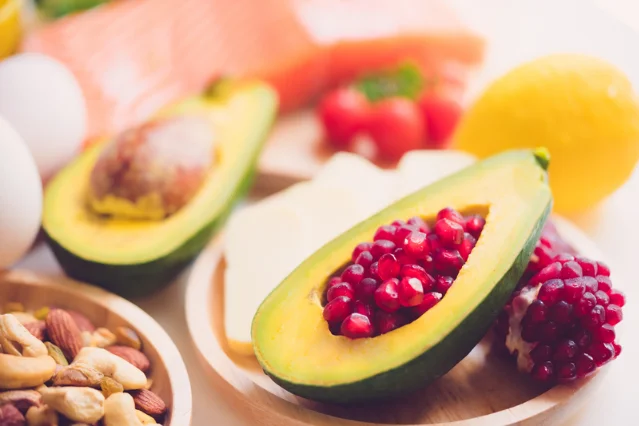
Avocado, pomegranate seeds, mixed nuts, eggs, salmon, tomatoes and citrus arranged on a wooden surface — representing the variety of foods associated with communal dining in older adults
Food variety — nuts, protein-rich fish, fruits — increases with communal dining; solitary older adults consistently eat less of each. 1

Limitations

All 21 studies are observational. This is the central caveat. A meta-analysis of observational studies cannot establish causation, regardless of sample size or statistical precision. The most consequential threat here is reverse causation: depression causes social withdrawal, which causes solitary eating. The OR of 1.58 may partly or entirely reflect the causal arrow running the other direction — isolated older adults eat alone because they are depressed, not the other way around. Zhang et al. acknowledge this directly and call for causal research designs. 1
Geographic skew. Eleven of the 21 studies are from Japan — more than half the dataset. Japanese household structure, meal customs, and depression measurement instruments may not generalize to Northern European, North American, or Latin American contexts. The three US studies and one UK study partially address this, but the imbalance means the pooled estimates are weighted toward Japanese evidence. The summary numbers should be read with that in mind.
Heterogeneity cannot be assessed. I² statistics — the standard measure of between-study variance in meta-analyses — are in the full manuscript, which has not yet been typeset and published. This is not a minor gap: across 21 studies spanning 7 countries and multiple assessment instruments, the expected heterogeneity is substantial. Until the full paper is accessible, the pooled ORs are best read as directional estimates rather than precise clinical figures.
Operational definitions vary. What counts as "eating alone" or "eating with others" likely differs across the 21 studies — different frequency thresholds, different definitions of an acceptable dining companion (spouse only? any person?), and different meal frequency assessments. The full manuscript would clarify how these were harmonized in the meta-analysis, but this is unavailable.
Funding and conflicts of interest: Not yet disclosed in accessible sources. The study was submitted from a hospital-based clinical nutrition group; no food industry affiliation is apparent, but this cannot be confirmed until the full typeset paper appears.
No dose-response relationship reported. The study does not specify whether there is a threshold effect — for instance, whether sharing one dinner per week is meaningfully different from sharing five — or whether the association is linear across frequency. Practical guidance is constrained by this gap.
Despite these limitations, the finding is not a weak signal. The OR of 2.13 for solitary dinner and depression is large by epidemiological standards for dietary exposures, the direction is consistent across 4 independent research groups in 4 countries, and the 16/21 high-quality AHRQ rating is a meaningful quality floor. 5

Dietary recommendation

The actionable translation from this meta-analysis is specifically targeted at adults over 60, their caregivers, and dietitians working with geriatric patients. It is not a finding that applies straightforwardly to younger adults.
統計カードを読み込んでいます…
The core recommendation: prioritize shared dinners as a nutritional and mental health intervention for older adults — not just a social nicety.
In practice, this means:
  • Screen for solitary dining in primary care. As Dr. Alison Yaxley (Flinders University) has argued, "simple questions about mealtime habits could help identify people at higher nutritional risk." 4 A 60-second question — "How often do you eat dinner with someone else?" — could flag patients at elevated combined nutritional and depression risk with no clinical cost.
  • Focus on dinner first. The OR of 2.13 for solitary dinner versus 1.58 overall suggests that dinner is the highest-leverage meal to address. Lunch and breakfast matter, but if only one meal change is feasible, the evidence points to dinner.
  • Community meal programs are not just social programs. Senior centers, faith community dinners, neighborhood meal-sharing groups, and intergenerational dining initiatives have a measurable nutritional rationale. Qiu et al. (2024) concluded that "providing eating partners may be an effective intervention method to prevent depressive symptoms in middle-aged and older adults." 2 Wyman (Flinders) adds: "Encouraging opportunities for shared meals — whether that's with family, friends, or community programs — could help improve food intake, nutritional status and quality of life for older adults living at home." 4
  • For caregivers: Logistical convenience frequently drives solitary eating in older adults — it is faster, simpler, and requires no coordination. That convenience has a documented cost. Building a shared dinner into a weekly routine, even once or twice per week, is a measurable intervention rather than a lifestyle suggestion.
  • For the individual: If shared meals are not available through family, the practical alternatives include structured community dining, meal delivery programs that pair intake with social contact, and video-connected meals with family members in other locations. These are imperfect substitutes for in-person commensality, but no research has tested whether remote co-eating captures any of the same effect.
Zhang et al. argue the evidence now supports treating commensality as "a strategic, non-pharmacological component in global geriatric health policy" — moving beyond what to eat toward the equally important question of with whom. 1 The limitation caveat applies: the causal direction is not confirmed. But the consistency, magnitude, and clinical plausibility of the association are sufficient to treat shared dinners as a health behavior worth actively supporting — not just a pleasant coincidence of good fortune.
Cover photo: Frontiers in Nutrition / CC BY 4.0

このコンテンツについて、さらに観点や背景を補足しましょう。

  • ログインするとコメントできます。