
AI Product Updates Daily - June 17, 2026
Today’s briefing covers GitHub Code Quality becoming a paid GA product, ZoomMate packaging, Oracle and Databricks enterprise agent controls, Meitu’s eight-product creative AI launch, Litera Clean+, Claude Code stability fixes, and the Gemini Code Assist consumer shutdown reminder.

The day’s useful AI product news is more enterprise-workflow than frontier-model theater: GitHub put a date and price on Code Quality GA, Zoom turned its AI office suite into a paid agentic work surface, Oracle and Databricks shipped the kind of AI governance plumbing large customers actually need, and Meitu launched a full creative-agent stack.
At-a-glance: what changed
| Product / platform | Releasing entity | Release date or effective date | Availability | Core change | Operator note |
|---|---|---|---|---|---|
| GitHub Code Quality | GitHub | Announced June 16; GA on July 20, 2026 | GitHub Enterprise Cloud and GitHub Team; not Enterprise Server | Moves from public preview to a paid product: $10 per active committer per month on enabled repositories, plus usage-based billing for AI-powered work and GitHub Actions minutes for deterministic CodeQL analysis. 1 | Budget owners should disable repositories before July 20 if they do not want the new paid product. |
| Organization-wide Code Quality toggle | GitHub | Published June 16, 2026 | Public preview for Enterprise Cloud and Team | Organization admins can now enable or disable Code Quality across all repositories from a single Security settings section. 2 | This is the rollout control for the paid GA change above. |
| ZoomMate / AI Productivity Suite | Zoom | Product page live; June 17 coverage tracked the launch | Basic tier free; AI Productivity Suite and ZoomMate paid tiers | ZoomMate is positioned as an AI work surface with agentic search, workflows, post-meeting deliverables, unlimited AI note-taking, Slides, Sheets, Paper, Canvas, and 2,200 AI credits per user per month on the paid ZoomMate tier. 3 Third-party launch coverage lists ZoomMate Basic as free and ZoomMate starting at $16.67 per month. 4 | The price ladder matters because Zoom now separates basic AI creation from higher-credit agentic work. |
| Oracle Integration 26.07 AI features | Oracle | June 17, 2026 working release note | Oracle Integration 26.07 release track | AI Assistant gains best-practice validation and chat mode; Agentic AI adds agent-to-agent connectivity with a Fusion AI Agent Studio native action and new agent patterns. 5 | Integration teams get AI-assisted design review, plus more explicit agent orchestration inside Oracle’s stack. |
| Databricks security and compliance for AI workloads | Databricks | June 17, 2026 | Mixed GA, public preview, private preview, and planned releases | AIM for Microsoft Entra ID is GA on AWS and GCP; AIM for Okta is in public preview; Context-Based Ingress is in public preview; Private Network Gateway is in private preview on Azure Databricks; Private Link for Lakebase is GA on AWS and public preview on Azure. 6 | This is governance infrastructure for Genie, dashboards, apps, Lakebase, AI Gateway endpoints, and serverless AI workloads. |
| Meitu AI creative ecosystem and MiracleVision V6 | Meitu | June 17, 2026 | Announced at Meitu Multimedia Festival | Meitu launched Picchi, Artflo, MVLAND, and MeituHub; upgraded Zcool, DesignKit, Kaipai, and RoboNeo; and released MiracleVision V6, a MoE visual foundation model for text, image, video, and audio inputs. 7 | Creative-tool vendors are packaging agent teams rather than single-purpose generation features. |
| Clean+ | Litera | Announced June 17; GA June 30, 2026 | Standalone package and included in Draft Advanced | Litera announced Clean+, a cloud-hosted evolution of Metadact Server for server-side metadata cleaning across classic Outlook, new Outlook, Outlook for Mac, Outlook for Web, and mobile. 8 | The AI angle is risk control: more AI-generated legal documents means more outbound metadata to scrub. |
| Claude Code v2.1.179 | Anthropic | Released June 16, 2026 | Latest GitHub release | The latest Claude Code release preserves partial responses after mid-stream connection drops, fixes stuck tool-running spinners, repairs several subagent and remote-session issues, and improves plugin loading performance in remote sessions. 9 | This is a stability release, but it targets failure modes that break long-running agent work. |
| Gemini Code Assist consumer shutdown reminder | Consumer accounts shut down June 18; GitHub consumer review shuts down July 17, 2026 | Consumer editions affected | Google’s deprecation table says Gemini Code Assist IDE extensions and Gemini CLI stop serving requests for Google AI Pro, Ultra, and individual Code Assist users after June 18; consumer GitHub code review is deprecated June 18 and shuts down July 17. 10 | Treat this as tomorrow’s migration deadline, not a new launch. |
The developer-tool shift: AI code quality becomes a billable surface
GitHub’s update is the day’s cleanest pricing signal. Code Quality is no longer just an enterprise preview feature sitting beside Copilot and Advanced Security. On July 20, it becomes a purchasable product with three cost buckets: a $10 active-committer subscription, AI-powered usage for Copilot code review, AI-assisted detection and Copilot Autofix, and GitHub Actions minutes for deterministic CodeQL analysis. 1
The accompanying organization-wide toggle is the practical control surface. Admins can roll Code Quality on or off across existing repositories from organization settings instead of touching every repository one by one. 2 That combination, new billing plus bulk enablement, is what finance and platform teams need to review before July 20.
Claude Code’s v2.1.179 is smaller but still relevant for teams running coding agents all day. The release fixes mid-stream connection drops so partial responses are preserved, and it addresses stuck spinners, subagent transcript display, remote background-task status, and plugin loading performance. 9 No new model is attached to this update. It is a reliability patch for agent workflows that already exist.
The office-agent race: Zoom packages the work surface
Zoom’s AI Productivity Suite page now lays out a full creation suite: Slides, Canvas, Sheets, and Paper, with ZoomMate sitting above it as the AI teammate tier. ZoomMate includes an AI work surface, agentic task completion, post-meeting deliverables, unlimited AI note-taking, agentic search across web, Zoom sources and third-party data, workflows, live voice translation, and 2,200 AI credits per user per month. 3
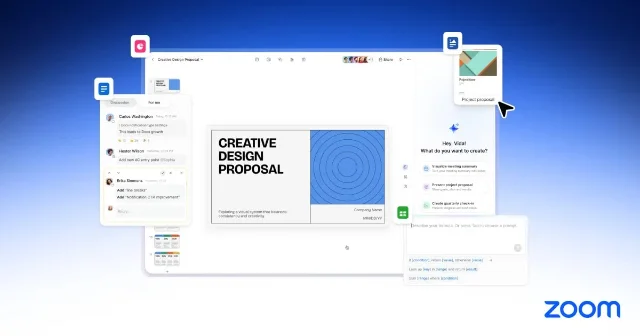
The pricing split is the part to watch. The AI Productivity Suite is listed at $8.33 per user per month annually, or $10 monthly, with 1,000 AI credits. ZoomMate is listed at $16.67 per user per month annually, or $20 monthly, with 2,200 credits. 3 GadgetMatch’s June 17 launch write-up describes ZoomMate as an agentic work surface that can generate presentations, documents, spreadsheets, reports, project plans, searches, and follow-up workflows from meeting and enterprise context. 4
Enterprise AI plumbing: Oracle and Databricks add controls around agents
Oracle Integration 26.07 is a broad integration release, but the AI pieces are specific. The AI Assistant can validate whether developers are following Oracle Integration Cloud design best practices and can offer relevant guidelines or apply recommendations in some cases. It also gains a chat mode for targeted interaction. 5
The same release adds agent-to-agent connectivity inside Oracle’s Agentic AI ecosystem, starting with a native action for Fusion AI Agent Studio. Oracle also calls out new agent patterns, an AI Agent native action with callback operations for asynchronous tool responses, and agent run status in the Get Agent Activity Stream response. 5
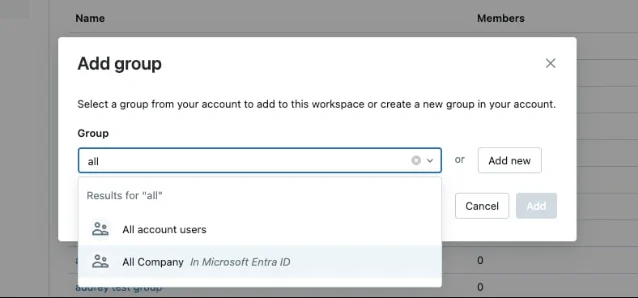
Databricks is solving a different problem: how to let more people use AI data products without weakening identity, network, and compliance boundaries. Its Data + AI Summit update makes Automatic Identity Management for Microsoft Entra ID generally available on AWS and GCP, adds Okta support in public preview, and introduces Context-Based Ingress so admins can expose specific experiences such as Genie, dashboards, Databricks Apps, and AI Gateway endpoints while keeping the broader workspace protected. 6
The networking part is also new. Private Network Gateway is in private preview on Azure Databricks, giving serverless workloads a single secure connection to private data sources, APIs, and enterprise apps. Private Link support for Lakebase is GA on AWS and in public preview on Azure. 6
Creative and vertical AI: Meitu and Litera move from feature to outcome
Meitu’s June 17 launch is a large creative-tool bundle. The four new products are Picchi for personalized portrait retouching, Artflo for inspiration management and conceptual visual creation, MVLAND for multi-agent music-to-visual production, and MeituHub for connecting models, tools, and workflows. The four upgraded products are Zcool, DesignKit, Kaipai, and RoboNeo. 7
Meitu’s launch grouped eight AI products around an integrated creative-agent ecosystem. 7
The foundation-model note is important: Meitu released MiracleVision V6, a MoE-based visual model that supports text, images, video, and audio, and routes tasks across expert networks. Meitu says MiracleVision V6 powered an average of 96.3% of generative AI requests across its imaging products from January to May 2026. 7 It also announced a RMB 100 million incubation fund, with selected teams eligible for up to RMB 5 million in investment. 7
Litera’s Clean+ is narrower but easier to place in a workflow. It is a cloud-hosted evolution of Metadact Server for metadata cleaning across Outlook environments, with Litera managing the infrastructure. The product is available as a standalone package and included in Draft Advanced, and general availability is June 30. 8 The previous state was an infrastructure-heavy server deployment; the change is a hosted service with migration support for existing Metadact Server customers. 8
Deprecation watch
Google’s Gemini Code Assist consumer shutdown is the only hard deprecation deadline in today’s sweep. After June 18, Gemini Code Assist IDE extensions and Gemini CLI stop serving requests for Google AI Pro, Ultra, and individual Code Assist users. Google’s table also lists the consumer version of Gemini Code Assist on GitHub as deprecated on June 18 and shutting down on July 17. 10
If your team still has consumer Code Assist workflows, move them before testing tomorrow’s builds. If the workflow is already on an enterprise plan, this reminder may not apply, but the affected account class should be checked explicitly.
What to act on first
- GitHub admins: audit repositories with Code Quality enabled before the July 20 billing switch. The new organization-level toggle gives you a bulk control path. 1 2
- Workspace buyers: compare Zoom’s $8.33 AI Productivity Suite tier with the $16.67 ZoomMate tier before standardizing. The main difference is the agentic work surface and 2,200 monthly AI credits. 3
- Platform teams: read the Oracle and Databricks updates as governance releases. They are less flashy than model launches, but they decide whether agents can run inside regulated enterprise systems without manual workarounds. 5 6
- Code Assist users: check whether any remaining Google individual or Pro/Ultra Code Assist flows will lose service after June 18. 10
参考ソース
- 1GitHub Code Quality generally available July 20, 2026
- 2Organization-level enablement for GitHub Code Quality
- 3AI Productivity Suite: Turn Discussions Into Deliverables
- 4Turn conversations into completed work: Zoom launches ZoomMate
- 5What’s New in Oracle Integration 26.07
- 6What’s new in Databricks Platform security and compliance at Data + AI Summit 2026
- 72026 Meitu Multimedia Festival Unveils 8 AI Products
- 8Litera Announces New Cloud AI Automation
- 9Releases: anthropics/claude-code v2.1.179
- 10Feature deprecations: Gemini Code Assist
このコンテンツについて、さらに観点や背景を補足しましょう。