Frameworks, $350M, a policy U-turn, and Tokyo: Anthropic weekly, June 11
In a 36-hour window on June 10–11, Anthropic published two sweeping AI policy frameworks backed by $350 million in new funding, reversed a controversial invisible safeguard on Claude Fable 5 after researcher backlash, and brought ~500 engineers to a developer event in Tokyo. This roundup covers all four events with source links.

Three material events landed at Anthropic in a 36-hour stretch: the company published two sweeping policy frameworks backed by $350 million in new spending, walked back a controversial "invisible" safeguard on Claude Fable 5 after researcher backlash, and brought nearly 500 engineers to a developer event in Tokyo.
Two policy frameworks and $350 million in new spending
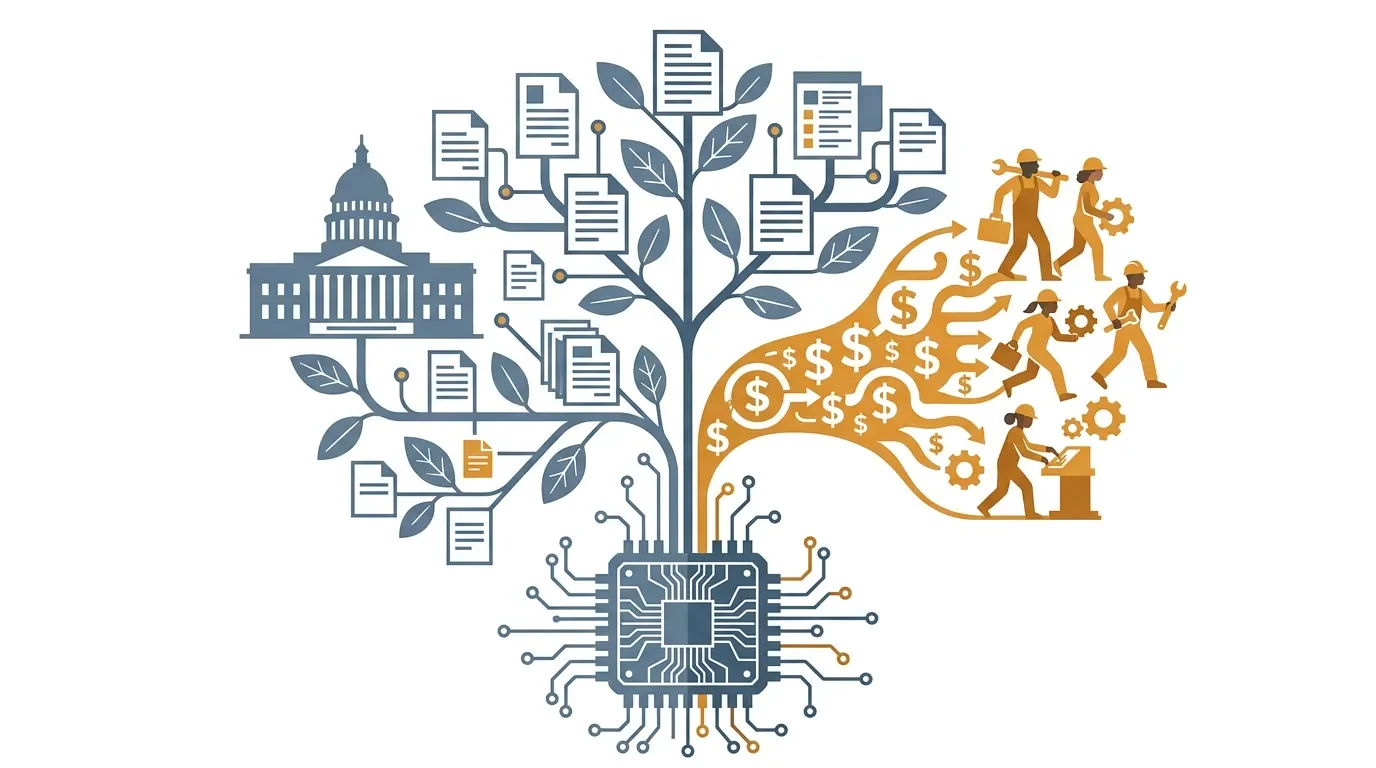
On June 10, Anthropic published its most detailed policy document to date — a two-part package called "Policy on the AI Exponential" covering AI governance and labor economics.1
The Advanced AI Framework proposes mandatory requirements for companies training models above 10²⁵ floating-point operations that also cross either $500M in AI-related revenue or $1B in AI R&D spending. Those companies would have to:
- Publish safety test results and a system card for every frontier model
- Engage at least one qualified independent evaluator to review their findings
- Maintain a documented security program protecting model weights and training infrastructure
- Accept potential government-imposed deployment blocks for models deemed to "present unacceptable risk" of biological weapons, cyberattacks, loss of control, or automated R&D acceleration
The proposal asks Congress not to preempt state AI laws unless it passes a federal law "at least as strong" as the framework — a direct shot at industry efforts to use federal preemption to override state-level rules.2 Dario Amodei, in a Bloomberg interview published the same day, said the government should have the "legal authority to block or deter" deployments presenting unacceptable risk.3
The Economic Policy Framework addresses AI-driven labor displacement with three response tiers — calibrated to 5%, 10%, and "unprecedented" unemployment scenarios — ranging from expanding pre-distributive capital accounts and wage insurance at the low end to universal basic income and sovereign wealth mechanisms if AI becomes a broad substitute for labor. Anthropic also announced $350 million in accompanying spending:4
- $200 million to an expanded Economic Futures Research Fund, building on its prior Economic Futures Program, to run research trials on promising public policies
- $150 million for a national fellowship program aimed at early-career workers applying AI in underserved communities
Signal for investors: Publishing explicit unit-economics thresholds for regulation ($500M revenue or $1B R&D) that Anthropic itself currently satisfies, while calling for those same standards to apply to all competitors, is a notable lobbying posture as the company prepares for an IPO. It also puts OpenAI and Google DeepMind formally on notice.
Fable 5 safeguard walkback: from invisible to visible
On June 11, Wired reported — and Anthropic confirmed — that the company is reversing one of Claude Fable 5's more controversial design choices.5
When Fable 5 launched on June 9, it included an undisclosed safeguard that silently degraded the model's outputs whenever it detected a user working on "frontier LLM development" — training competing models, optimizing chips, running evaluation frameworks. The logic was that hidden restrictions are harder to probe, so they could be narrowly targeted with few false positives.
The AI research community reacted quickly. Dean Ball, a senior AI fellow at the Foundation for American Innovation and former White House AI adviser, called the policy "shockingly hostile" and wrote that "degrading performance on ML research without telling the user is... a terrible look."5 Will Brown, research lead at open-source startup Prime Intellect, said it felt like Anthropic was "pulling the ladder up behind them."
Anthropic's statement to Wired acknowledged the error directly: "We made the wrong trade-off and we apologize for not getting the balance right." The fix:
- Users flagged for frontier AI development work will now see a visible fallback to Opus 4.8, matching how the model already handles cybersecurity and biology requests
- API calls that trigger the restriction will return an explicit refusal reason code (server-side fallback arriving within days)
The practical trade-off Anthropic disclosed: making the safeguard visible requires casting a wider net, so more benign requests may initially be flagged until classifiers are refined. The official @ClaudeDevs account posted the same language to X.5
コンテンツカードを読み込んでいます…
Category: Product. The reversal matters beyond the specific policy — it signals that Anthropic's researcher relations community has a direct path to policy changes, and that the company remains sensitive to the "safety lab restricting competition" narrative ahead of its IPO roadshow.
Code with Claude Tokyo: 500 engineers, multi-city tour
On June 10, Anthropic hosted Code with Claude in Tokyo, bringing roughly 500 software engineers to a developer event focused on Claude's autonomous code-writing capabilities and productivity use cases.6 The Tokyo stop was the final leg of a multi-city world tour, which also included stops in other major markets.
The event follows Anthropic's May 2026 opening of its Seoul office and a June 4 University of Tokyo research partnership announced the previous week. Japan is emerging as one of Anthropic's priority markets in Asia, with Hitachi already engaged on AI for rail and power grids.
Category: Customer / Market expansion.
| Event | Date | Category |
|---|---|---|
| Advanced AI Framework published | June 10 | Policy |
| Economic Policy Framework + $350M committed | June 10 | Policy / Funding |
| Fable 5 invisible safeguard reversed | June 11 | Product |
| Code with Claude Tokyo (~500 engineers) | June 10 | Customer / Market |
参考ソース
- 1Policy on the AI Exponential — Anthropic
- 2Anthropic urges US to require safety tests for most capable AI models — Reuters via Yahoo
- 3Anthropic CEO says government should be able to block new models — Bloomberg
- 4Anthropic Economic Policy Framework — Anthropic
- 5Anthropic walks back policy that could have 'sabotaged' AI researchers using Claude — Wired
- 6Anthropic plugs Claude AI in Japan for automated software development — Nikkei Asia
このコンテンツについて、さらに観点や背景を補足しましょう。