EOS / Block.one: The $4.1 Billion Founders' Allocation

EOS / Block.one: The $4.1 Billion Founders' Allocation

Block.one raised $4.1 billion in crypto's largest-ever ICO, kept 10% of all EOS tokens for itself on a no-cliff ten-year vest, settled SEC charges for 0.58% of proceeds, then funneled its treasury into a private exchange while EOS stagnated. A forensic walkthrough of the cap table, the vesting mechanics, and how it aged.
Coin Provenance
2026/6/12 · 3:28
購読 1 件 · コンテンツ 1 件
Of the 1 billion EOS tokens created at genesis, Block.one kept 100 million for itself — no vesting cliff, just a ten-year linear drip starting June 2018 — while simultaneously holding $4.1 billion in cash raised from the other 900 million. The pitch was a "fair distribution." The cap table told a different story.

The mechanics of the sale

Block.one began distributing ERC-20 tokens on Ethereum on June 26, 2017 and ran the sale for 341 consecutive days, closing June 1, 2018. 1 The structure was unusual: each 23-hour window offered a fixed tranche of tokens for auction, with buyers receiving EOS in proportion to their ETH contribution to that day's pool. Price was therefore unknowable in advance.
By the end of the first five days the sale had already cleared $185 million. 2 By December 2017, six months in, Block.one had raised $700 million — at which point there was still no live product. 3 The final tally: 7.12 million ETH, worth approximately $4.1 billion at the time of collection. 4 This made the EOS ICO the largest in history, surpassing the next-biggest by a factor of roughly four.
Block.one was registered in the Cayman Islands. It never registered the offering with the SEC, and did not qualify for or seek an exemption. 1

The allocation table

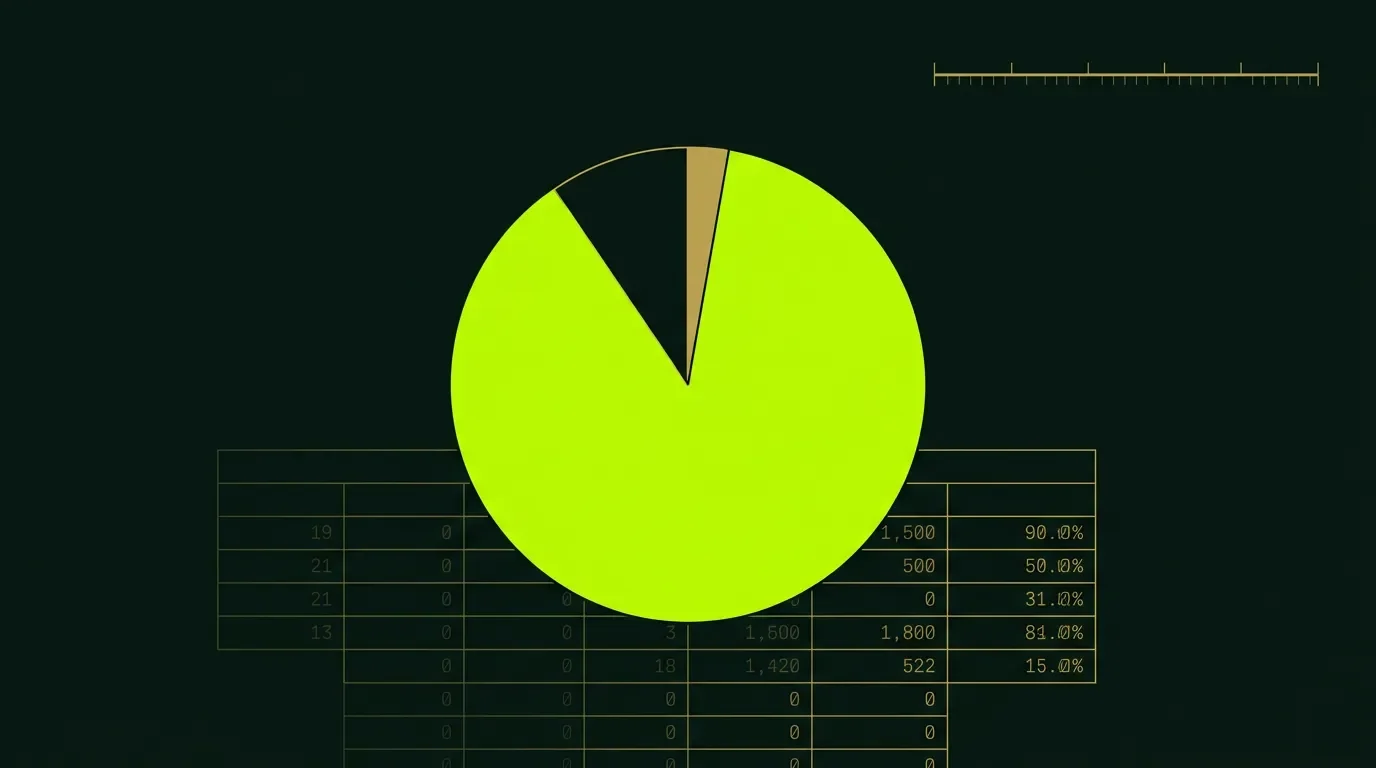
The total supply at genesis was 1,000,000,000 EOS.
RecipientTokensShareNotes
Public ICO buyers900,000,00090%Sold over 341 days; ERC-20 tokens on Ethereum
Block.one ("founders' tokens")100,000,00010%Reserved for own account; 10-year linear vest from June 6, 2018
Block.one contributed no ETH to buy its 100 million tokens. They were written into the genesis block at launch. 1 The vesting schedule — one-tenth unlocked per year over ten years — imposed no cliff and no performance condition. Block.one simply waited for the calendar.
統計カードを読み込んでいます…
チャートを読み込んでいます…
Estimated cumulative unlock before community vote halted the schedule in December 2021. Final figure before halt was approximately 33 million tokens out of the 100 million total founders' allocation. Source: altfins.com vesting data 5, Crypto Briefing / TradingView 6

The regulatory gap

On September 30, 2019, the SEC announced settled charges against Block.one for conducting an unregistered securities offering. 1 The penalty: $24 million. Block.one consented without admitting or denying the findings. The order required no restitution to investors, no token registration, and no disqualification of Block.one officers.
The fine amounted to 0.58% of the capital raised. The SEC imposed no requirement that the money be returned or reinvested in the EOS ecosystem. The recipient of the $24 million civil penalty was the U.S. Treasury, not EOS token buyers.
In June 2021, Block.one separately settled a class action lawsuit brought by U.S. purchasers of EOS tokens for $27.5 million — again without admitting liability. 7
チャートを読み込んでいます…

Where the $4.1 billion went

Block.one's stated use of proceeds in the ICO documents was general operating expenses and software development. 1 The EOSIO software was released open-source on June 1, 2018. After that, Block.one's material capital deployment diverged sharply from ecosystem development.
In 2021, Block.one announced Bullish, a regulated crypto exchange. Bullish was initially valued at approximately $9 billion and received funding from a consortium that included Peter Thiel, Moore Capital's Louis Bacon, and Christian Angermayer — several of whom had also backed Block.one. 7 Block.one channeled ICO proceeds into this venture. The EOS Network Foundation (ENF), formed in August 2021 by community advocate Yves La Rose, publicly contested this allocation and demanded Block.one redirect resources to EOS development. Block.one declined.
Dan Larimer, CTO and the architect of the EOSIO codebase, announced his departure from Block.one on January 10, 2021, stating that "all good things must come to an end." 8 EOS fell roughly 30% in the 18 hours following the announcement.

The recycled ETH allegation

In September 2021, financial analysis firm Integra FEC published a 14-page report alleging that the equivalent of $814.6 million in ETH was "recycled" through potentially connected exchange accounts during the ICO. 7 According to Integra, these accounts purchased EOS from the daily auction, then quickly sold the EOS back for ETH, before using those ETH proceeds to purchase more EOS — creating artificial buying pressure and inflating apparent demand.
University of Texas finance professor John Griffin, who led the research, stated that the scheme "created the false impression of value of the token, which enticed others to want to purchase the ICO token."
Block.one denied the findings, citing a separate report commissioned from London law firm Clifford Chance, which "found no evidence of any arrangements between Block.one and third parties." Block.one did not specify which errors Integra allegedly made. This allegation remains contested and unproven in court. The Integra findings have not resulted in additional regulatory action as of this writing (June 2026).

The vesting halt

By late 2021, EOS token holders had watched the price trade at roughly $3.75 — 83.6% below its 2018 peak — while Block.one retained billions and was preparing to launch a separate exchange. 6 The EOS Network Foundation proposed blocking Block.one from its remaining founders' token releases.
On December 8, 2021, EOS's top 25 block producers voted to halt vesting of the remaining 67 million EOS scheduled for release to Block.one over the following six to seven years. 6 Co-founder Brock Pierce, who had purchased 45 million EOS from Block.one, publicly offered a "mutually beneficial proposal." Block.one CEO Brendan Blumer commented, then deleted his post without explanation. The vote proceeded.
Block.one had already received approximately 33 million of its 100 million founders' tokens by the time of the halt. At EOS prices prevailing in late 2021, those tokens were worth hundreds of millions of dollars. The 67 million tokens that remained in the vesting schedule — worth roughly $290 million at then-current prices — were effectively clawed back by the community.

The gap between the pitch and the ledger

The EOS whitepaper described a platform that would scale to millions of transactions per second and render transaction fees obsolete — a challenge to Ethereum's dominance. The decentralization narrative was central: block producers would be elected by token holders, no single party would control the chain.
Block.one's 10% founders' allocation, combined with its $4.1 billion treasury, gave it structural leverage that no decentralized governance design could easily neutralize. Its tokens made it one of the largest single voters in block producer elections. Its cash allowed it to allocate resources to ventures — Bullish, Voice, various VC bets — entirely at its own discretion, with no enforceable accountability to EOS token holders.
The SEC settlement formalized the legal exposure but resolved it cheaply. The class action settlement added $27.5 million. Neither forced any redistribution of the original capital raise. The EOS community's December 2021 governance vote was the only mechanism that actually clawed back any value — and it worked only because of the specific technical architecture of EOSIO's delegated proof-of-stake system, which gave block producers the power to alter vesting schedules.

Historical analysis only. This article contains no investment advice, price predictions, or buy/sell recommendations. All figures are as of stated dates. The recycled ETH allegation is contested; it is presented as a documented claim, not a proven fact.

このコンテンツについて、さらに観点や背景を補足しましょう。

  • ログインするとコメントできます。