B2C App Market Weekly #5: Delegated Control
This issue tracks five consumer-app signals from June 15-18: Pinterest's Ask Pinterest shopping chatbot, Pixi's AR iMessage app, Mivo's reflective screen-time tool, VSCO's prosumer workflow bundle, and the first clear sign that AI assistant usage is fragmenting. The builder takeaway: automate the hard part, but leave identity, taste, and final control with the user.

This week's consumer app market had a clear split: users are letting apps do more work for them, but they still want control over taste, time, identity, and human connection. The standout signals from June 15-18 point to a more selective version of automation. The apps that feel strongest are not saying "let AI take over everything." They are saying: let the app absorb context, narrow the decision surface, then give the user a cleaner yes/no moment.
1. Pinterest turns its taste graph into a shopping chatbot
Pinterest launched Ask Pinterest, a limited-access experimental web app for conversational shopping and product discovery, on June 17. The app lets people ask natural-language questions and get recommendations using Pinterest's internal Taste Graph, saved Pins, and Boards when users sign in. Pinterest also announced AI tooling for advertisers, including an Ads Manager assistant, a Performance+ model for creative selection, and MCP infrastructure for campaign management through third-party agent tools. 1
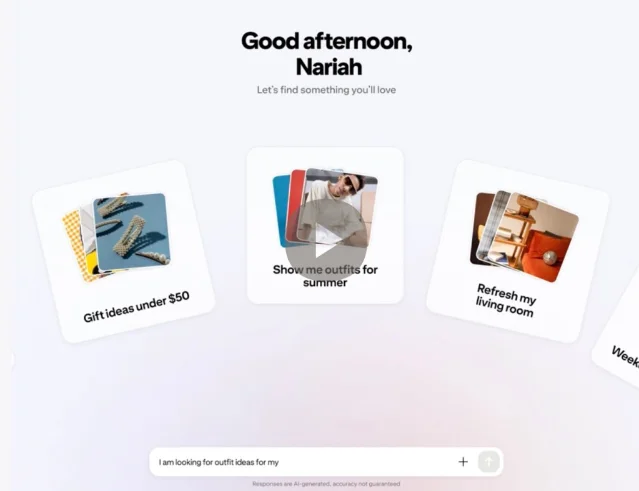
Builder read: Pinterest is not treating AI shopping as a generic search layer. It is using a proprietary taste graph as the moat. For consumer builders, the lesson is uncomfortable but useful: a chatbot without private preference data is easy to copy. A chatbot wrapped around years of user intent, saved objects, and repeated choices is a different product.
The other move matters too. Pinterest kept Ask Pinterest separate from the main app. That gives the company room to test query behavior and session memory without disturbing the core feed. If your main app has a high-performing habit loop, consider shipping agentic experiments as a sidecar first. Do not force the new interface into the highest-retention surface until the behavior is proven.
2. Pixi tries to make messaging feel like a tiny AR event
Pixi launched an iOS app that lets users send AI-powered AR characters through iMessage. Recipients do not need to install the app to receive a Pixi message, and the first character set includes a robot, a cat, and an animated envelope, plus games like tic-tac-toe and whack-a-mole. The company says visual and audio processing stays on-device, and it plans to add a marketplace where studios, brands, and independent creators can distribute characters. 2
Pixi is interesting because it does not ask users to join yet another social network. It enters through iMessage, where the relationship graph already exists. The wedge is emotional utility: a birthday message, joke, or playful interruption becomes a short interactive scene rather than another sticker.
Builder read: If the app depends on social sharing, the install requirement is the tax. Pixi's receive-without-install design lowers that tax and makes the sender the growth channel. The creator marketplace plan is also worth tracking. Branded AR characters are not just ad inventory; they can become user-distributed media if the unit feels personal enough to send.
The risk is novelty decay. AR messaging has to survive after the first "look what this does" moment. Pixi's strongest path is not more characters alone. It is repeatable occasions: birthdays, inside jokes, group rituals, fandom releases, and lightweight games that make people want to send one again next week.
3. Mivo reframes screen-time control as reflection, not punishment
Mivo Scrolling, a free iOS screen-time app, takes a softer approach to doomscrolling. Instead of blocking apps outright, it lets users schedule scroll sessions, set customizable limits for specific platforms, receive reflection prompts when they open social apps, and check in every two, three, or five minutes during a session. The app also has a home-screen widget for daily scroll time and the next scheduled session. 3
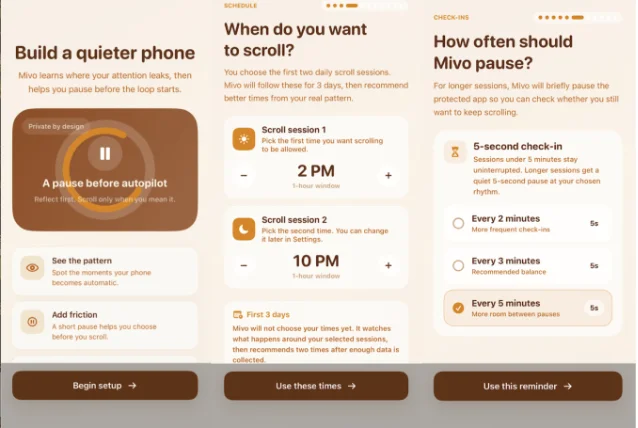
Builder read: The consumer wellness category is moving away from shame mechanics. A hard block creates a clear promise, but it also turns the product into an adversary. Mivo's loop keeps agency with the user: pause, name the reason, continue or stop.
That design pattern can travel. Budgeting apps, nutrition apps, dating apps, and shopping apps all have moments where a harsh gate can trigger churn. Reflection prompts can work better when the behavior is emotionally loaded and the user already knows the "right" answer. The product's job is to interrupt autopilot, not win an argument.
4. VSCO bundles editing, delivery, and business workflow for prosumers
VSCO launched Studio Pro on iOS on June 17, with macOS planned later this year. The app supports batch editing, style matching from a reference image, and sharing through VSCO Galleries. VSCO also plans a $500-per-year VSCO One subscription bundle later this month, combining Studio Pro with Capture, Galleries, Workspace, Sites, AI Lab, Canvas, and its Freelance Photographer business mentorship program. 4
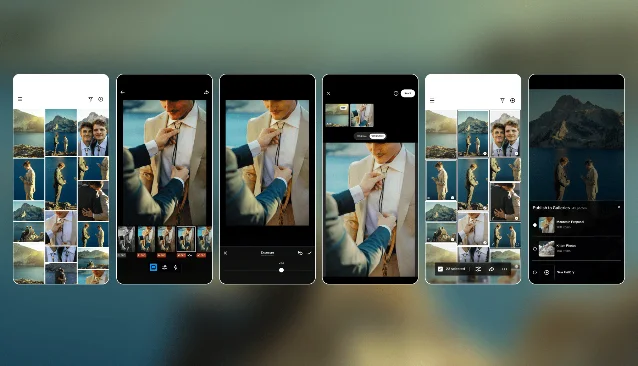
Builder read: VSCO is making a classic prosumer move: stop selling a single creative tool and sell the workflow around the job. The price makes sense only if the buyer sees the bundle as business infrastructure, not as another editing app.
This is a useful signal for consumer apps that serve serious amateurs. Once users start earning money or social capital from the activity, the product can expand from creation to delivery, client management, learning, and portfolio. The risk is bundle bloat. The win condition is a clearer business day for the user, not a longer feature checklist.
5. AI assistants are entering the switching phase
Sensor Tower's 2026 State of AI Report says ChatGPT's assistant-market share fell below 50% for the first time, reaching 46.4% by the end of May, while Gemini reached 27.7% and Claude reached 10.3%. The same report estimates that people are on pace to download nearly 2.3 billion AI apps and spend more than $4.2 billion on them in the first half of 2026. 5
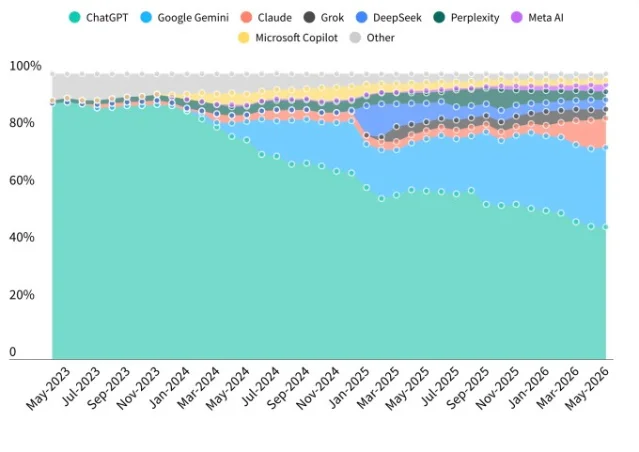
The report also says Claude has a 13% subscription conversion rate, and that 17% of ChatGPT daily users were being served ads by May as OpenAI scaled ad experiments. 5
Builder read: The AI assistant category is no longer a one-app default. Users are splitting by ecosystem, trust, task type, and willingness to pay. That creates room for specialized consumer AI apps, but it also raises the standard. A wrapper that only reskins a frontier model is exposed. A product with workflow memory, proprietary context, lower-friction distribution, or a domain-specific outcome still has a shot.
The ad signal is equally important. If general assistants monetize more aggressively through ads, vertical apps can compete on cleaner intent. A cooking assistant, shopping assistant, or dating assistant does not need to beat ChatGPT on raw intelligence. It needs to own a narrower session where the user's intent is clear and monetization feels native.
Product Hunt pulse: delegation is becoming the default pitch
Product Hunt's June 11-18 weekly roundup shows the same direction from the launch market. Its Top 10 included Goldfish at #2 with 606 upvotes, Asmi AI at #3 with 479 upvotes, and Slashy at #4 with 473 upvotes. The shared pitch across those products is not "AI helps you work faster." It is "AI handles the task until it needs your approval." 6
That matters for B2C app builders even when the products are work-oriented. Consumer expectations tend to leak across categories. If people get used to agents that draft emails, make phone calls, or remember work context, they will expect shopping, wellness, travel, and social apps to absorb more coordination work too.
Summary table
| Signal | What changed this week | Builder read |
|---|---|---|
| Ask Pinterest | Pinterest launched a limited-access conversational shopping app using its Taste Graph and saved Pins/Boards for personalized recommendations. 1 | Proprietary preference data is the moat behind AI discovery. Test new agent surfaces beside the core habit loop first. |
| Pixi | Pixi launched an iOS app for sending AI-powered AR characters through iMessage, with no recipient install required. 2 | The social wedge is lower-friction sharing inside an existing graph, not another empty network. |
| Mivo Scrolling | Mivo uses scheduled scroll sessions, reflection prompts, and optional pauses instead of hard blocking. 3 | In sensitive categories, agency can be a retention feature. Interrupt autopilot without shaming the user. |
| VSCO Studio Pro | VSCO launched a mobile professional editing app and plans a $500-per-year VSCO One bundle for editing, delivery, sites, AI tools, and mentorship. 4 | Prosumer monetization improves when the app sells the whole job, not one creative feature. |
| AI assistant market | ChatGPT dropped to 46.4% assistant-market share by end-May, while Gemini and Claude gained share; AI app spend is projected above $4.2B in H1 2026. 5 | General assistants are fragmenting. Vertical apps need owned context or a narrower high-intent job to defend usage. |
Cross-cutting theme: delegated control, not blind automation
The week's pattern is not simply "more AI in apps." It is a negotiation over control. Ask Pinterest delegates product discovery but keeps the user's taste graph at the center. Pixi delegates expression but still starts from a personal message. Mivo interrupts behavior without taking the phone away. VSCO delegates more of the creative business workflow, but only for users who already see photography as work. AI assistants are fragmenting because users are learning which agent they trust for which job.
A Match Group survey published this week gives the guardrail: 47% of U.S. singles ages 18-39 viewed AI negatively in romantic contexts, while 64% still said AI could help them in their dating journey. 7 That split is the builder brief for the next wave of consumer apps. Automate the hard part. Leave the identity-bearing part to the user.
参考ソース
- 1Pinterest launches an experimental AI shopping app called 'Ask Pinterest'
- 2Pixi's new iOS app turns text messages into interactive AR experiences
- 3Mivo's new app takes a mindful approach to managing screen time
- 4VSCO launches Studio Pro mobile photo editing app and plans $500 per year subscription
- 5ChatGPT's market share slips below 50% for first time
- 6Product Hunt Weekly 2026-06-18: AI Agents Shift to Autonomous Execution, Mac Desktop Becomes New Battlefield, Agent Infrastructure Standardizes
- 7Almost half of US singles feel negatively about AI in dating, Match says
このコンテンツについて、さらに観点や背景を補足しましょう。