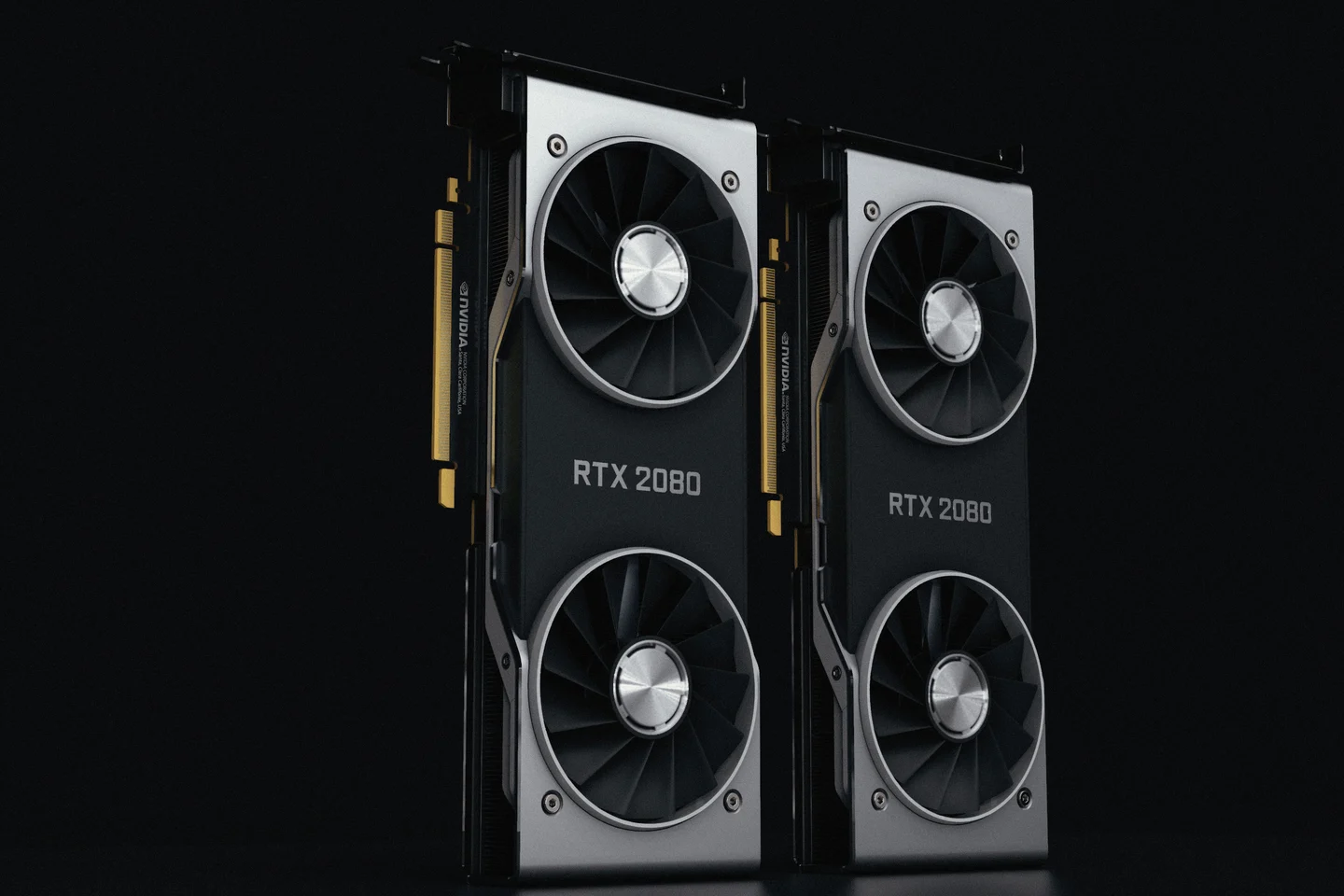
Nvidia (NVDA): the GPU that became the infrastructure of AI
Nvidia clears both hard filters: ROE of 76.3% and a 3-year FCF CAGR of ~97% (FY2022–FY2025). Q1 FY2027 delivered 85% revenue growth to $81.6B, with $48.6B in free cash flow in a single quarter — while Q2 guidance points to $91B. At 25x forward earnings, the stock trades at its cheapest forward multiple since early 2023. Key risk this week: the US tightened export controls on May 31, blocking Nvidia chips from reaching Chinese firms outside China.

Nvidia passes both hard filters by a wide margin. Return on equity for fiscal year 2026 (ended January 2026) was 76.3%, well above the 15% threshold.1 Free cash flow grew from $8.05 billion in FY2022 to $60.85 billion in FY2025, a three-year CAGR of approximately 97% — more than triple the 30% minimum.23 FY2026 FCF climbed further to $96.7 billion, making the 3-year improvement from FY2023 to FY2026 closer to 200%.4
What Nvidia actually sells
The surface answer is GPUs. The real answer is compute-time for AI workloads, and Nvidia controls the pricing and supply of that compute more completely than any single company has controlled a critical input since Intel owned the PC processor.
Data Center revenue in Q1 FY2027 (ended April 26, 2026) was $75.2 billion, up 92% year-over-year and 21% sequentially.5 Networking alone — the interconnects that stitch together racks of Blackwell GPUs — hit a record $14.8 billion, up 199% year-over-year. Total Q1 revenue was $81.6 billion against consensus estimates of $78–80 billion. Q2 FY2027 guidance is $91 billion, which would represent roughly 95% year-over-year growth.6
Nvidia's revenue mix matters. The company has three layers:
- Silicon — H100, H200, Blackwell B200/GB200 GPUs, the raw compute units hyperscalers and enterprises buy
- Networking — NVLink, InfiniBand, and Spectrum-X switches that determine how fast clusters can communicate; this segment growing faster than GPUs signals infrastructure deepening, not just chip purchases
- Software and services — CUDA libraries, TensorRT, DGX Cloud, NIMS inference microservices; these generate recurring revenue and, more importantly, create the switching costs that protect the hardware margin
Q1 net income was $58.3 billion, up 211% year-over-year, with a GAAP gross margin of 74.9%.7 Free cash flow in the quarter alone was $48.6 billion — more than the entire company generated in all of FY2025.8
The CUDA moat
Nvidia's competitive position is less about chips than about software. CUDA, released in 2006, gave programmers a way to write general-purpose code that runs on Nvidia GPUs. Twenty years later, it is the dominant programming framework for AI training and inference globally, with an estimated 6 million developers whose existing codebases, debugging tools, and institutional knowledge are all written to CUDA.9
The switching cost is both technical and organizational. An AI lab that trained its models on Nvidia hardware has CUDA-optimized kernels, Nvidia-specific profiling data, and engineers familiar with Nvidia tooling. Migrating to AMD ROCm or a custom ASIC means rewriting library code, revalidating model performance, and retraining staff — with no guarantee of equivalent throughput. Nvidia commands an estimated 88–92% share of the high-end data center GPU market as of mid-2026, a position that has remained roughly stable despite years of competitive pressure.10
The supply side compounds this. Hyperscalers do not queue up for Nvidia GPUs simply because they prefer them. They queue because Nvidia is the only supplier at scale of Blackwell-class compute at this performance tier. AMD's MI300X is a real product, but its data center revenue in Q1 2026 was $5.8 billion — less than 8% of Nvidia's data center number in the same period.11
Valuation
At a price of ~$211 (May 29, 2026), Nvidia carries a market cap of approximately $5.4 trillion and a forward PE of ~25x on FY2027 consensus estimates.1213 EV/FCF is approximately 45x on the last twelve months' free cash flow.14
For a company growing revenue at 85% year-over-year with a 75% gross margin and 60%+ FCF margin, 25x forward earnings is inexpensive by any recent comparison. Nvidia traded above 50x forward at various points in 2024. The compression happened as the revenue base grew fast enough to catch up with the market cap.
Analyst consensus is Strong Buy, with an average 12-month price target of approximately $297–305 across 53 analysts — roughly 40–45% above the current price.15
| Metric | Value |
|---|---|
| Price (May 29, 2026) | ~$211 |
| Market cap | ~$5.4T |
| Forward PE (FY2027E) | ~25x |
| EV/FCF (TTM) | ~45x |
| Avg analyst target | ~$297–305 |
| ROE FY2026 | 76.3% |
| FCF CAGR (FY2022→FY2025) | ~97% |
| Q1 FY2027 revenue | $81.6B (+85% YoY) |
| Q2 FY2027 guidance | $91B |
コンテンツカードを読み込んでいます…
Key risks
1. Export controls and China policy whiplash. This is the most immediate live risk. As of May 31, 2026, the U.S. Commerce Department took new steps to halt Nvidia chip shipments to Chinese firms operating outside China — plugging a potential loophole after hundreds of thousands of chips may have already moved through third countries.16 The Trump administration had briefly approved H200 sales to Alibaba and Tencent in early 2026; that policy is now tightening again. Nvidia CEO Jensen Huang has said export restrictions caused the company to lose all high-end AI chip sales in China. China was historically around 10–17% of data center revenue. Every policy oscillation creates forecast risk.
2. Custom silicon from hyperscalers. Google (TPU v5), Amazon (Trainium 2), Meta (MTIA), and Microsoft (Maia 2) are all building in-house AI chips. The thesis against this risk is that custom chips optimize for a single workload and cannot match Nvidia's general-purpose programmability and CUDA ecosystem depth. The honest counter is that hyperscalers run enormously large, repetitive workloads — exactly the use case custom silicon handles best. If Google shifts 20% of its training from Nvidia to TPUs, that is a material revenue headwind.
3. Gross margin pressure. Blackwell launch costs and supply chain investments pushed FY2026 gross margin down from the high-70s to approximately 75%. Management has guided for recovery as Blackwell ramps to full yield, but any sustained margin compression would reprice the stock meaningfully.
4. Capex cycle reversal. Nvidia's extraordinary revenue depends on hyperscaler and enterprise AI capex staying elevated. Meta, Microsoft, Google, and Amazon collectively planned over $300 billion in capex for 2026. A macro slowdown, a credit tightening, or a sentiment shift following a high-profile AI product failure could compress this spend faster than Nvidia's production ramp can adjust.
5. Concentration. Microsoft, Google, Amazon, and Meta likely account for a significant portion of data center revenue (Nvidia does not disclose customer concentration). Losing even partial share at one of these four would disproportionately affect results.
All financial data sourced from Nvidia's official filings, CFO commentary, and public market data as of June 2026. This is not investment advice.
参考ソース
- 1NVIDIA Corporation ROE Annual
- 2NVIDIA CFO Commentary Q4 FY2022
- 3NVIDIA Free Cash Flow 2012–2026
- 4NVDA Financials – Fiscal Year 2026
- 5NVIDIA Q1 FY2027 Earnings Release
- 6Nvidia Q1 FY2027 earnings report
- 7NVIDIA Q1 FY2027 Earnings – Finance Yahoo
- 8NVDA Q1 FY27 Filing Summary
- 9NVIDIA's CUDA Moat: Developer Lock-In
- 10Competitive Landscape of NVIDIA
- 11AMD Q1 2026 Data Center Revenue
- 12NVIDIA Forward PE Ratio
- 13NVIDIA Stock Quote
- 14NVIDIA Valuation Statistics
- 15NVIDIA Analyst Consensus – MarketBeat
- 16US halts Nvidia chip shipments to Chinese firms – Reuters
- 171a|Nvidia GPU – Pixabay|https://pixabay.com/photos/nvidia-gpu-electronics-pcb-board-1201077/
このコンテンツについて、さらに観点や背景を補足しましょう。