AI Application-Layer Startup Radar — Week of May 26–June 1, 2026
Six application-layer AI funding rounds closed or surfaced this week, totaling roughly $1.2B. Highlights: Cognition's $1B Series C at a $26B valuation (2.5× in 8 months), three competing physical-AI training-data startups drawing $99M+ combined, H1's data-moat play backed by CVS Health Ventures, and Ethos's a16z-led expert network round.

Six funding rounds closed or surfaced publicly this week, spanning AI-native coding infrastructure, physical AI training data, healthcare data platforms, and expert-matching networks. Cumulatively they put roughly $1.2 billion into application-layer plays — from a $1B Series C that more than doubled its valuation in eight months, to an $8.2M seed backed by angels from OpenAI, Nvidia, and Google. Below is the full picture: amounts, stages, lead investors, and what we know about the founding teams.
Cognition — $1B at $26B post-money (Series C)
Announced: May 27, 2026
What it does: Cognition makes Devin, an autonomous AI software engineer that takes on end-to-end coding tasks within enterprise environments. Customers include Mercedes-Benz, NASA, Goldman Sachs, and Santander.
Round: $1B+, led by Lux Capital, General Catalyst, and 8VC; new investors include Ribbit Capital, Atreides, and Layer Global; existing backers Elad Gil, Soma Capital, Founders Fund, and others followed on.
Valuation: $26B post-money — a 2.5× increase from its $10.2B valuation set just eight months earlier, in September 2025.
Revenue: $492M annualized run-rate, with enterprise usage growing 50% month-over-month for six consecutive months.
Founders: CEO Scott Wu led the founding team. The company also absorbed the remaining engineering assets of Windsurf (the AI coding assistant acquired in mid-2025) after Google acqui-hired most of the Windsurf team.
The jump from $10.2B to $26B in eight months is the clearest data point this week on how quickly enterprise AI coding infrastructure is repricing. Cognition's argument — that an independent AI coding layer can coexist with model-maker offerings like Anthropic's Claude Code and OpenAI Codex — is now backed by both the revenue figure and the investor list.1
コンテンツカードを読み込んでいます…
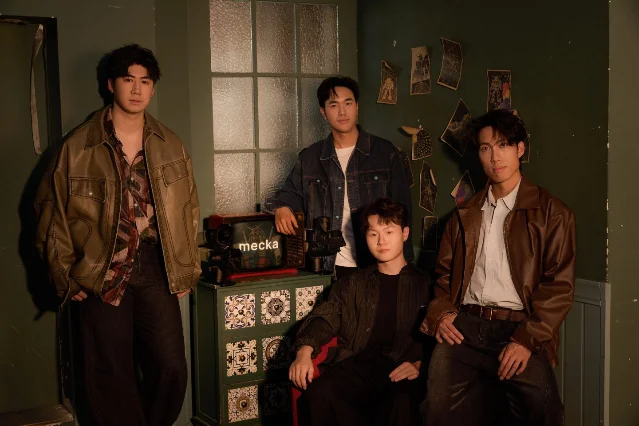
Mecka AI — $60M total across two rounds (Series A + extension)
Announced: June 1, 2026
What it does: Mecka AI (NYC, 40 employees) collects human motion data — body gestures, gait, fine motor tasks — via body sensors and iPhones, then uses that data to train robotics models. It also helps companies integrate and fine-tune their robot models. Based on signed contracts, the company projects $100M ARR.
Round structure: $25M Series A closed November 2025 (previously unannounced), followed by a $35M extension; both led by Framework Ventures, the crypto-focused VC firm.
Co-investors: Menlo Ventures, SV Angel, Kindred Ventures; angel Ted Xiao (former Google DeepMind researcher and founding member of Jeff Bezos's Project Prometheus).
Founders: Four co-founders with fintech backgrounds — CEO Josh Gao; Mogen Cheng (previously co-founded a restaurant payments startup with Gao, sold in 2023); Jason Chong (founder of a company acquired by Coinbase); Duy Nguyen (serial sneaker reseller who built a multi-million-dollar operation). None came from AI labs or elite CS graduate programs — they met through mutual friends and judged robotics as the clearest near-term AI opportunity.
Framework Ventures' lead role is notable: the fund is best known for crypto/Web3 bets, making Mecka AI a deliberate pivot toward physical AI infrastructure. Ted Xiao's involvement as an angel — given his DeepMind and Bezos AI backgrounds — functions as a technical credibility marker.2
Human Archive — $8.2M seed
Announced: May 26, 2026
What it does: Human Archive (Silicon Valley) deploys gig workers in India — primarily in home services, hotel, and restaurant sectors — with camera-equipped caps and multi-modal sensor rigs (including tactile gloves, full-body motion capture suits, and wrist cameras) to collect egocentric video and physical data for training physical AI and robotics models. More than 1,000 active headsets are currently deployed.
Round: $8.2M seed from Wing Venture Capital, NVP Capital, and Y Combinator; angels from OpenAI, Nvidia, Google, Mercor, and several university labs (Berkeley AI Research, Stanford AI Lab).
Founders: Four students — three from UC Berkeley (Samay Maini, Rushil Agarwal, Shloke Patel) and one from Stanford (Raj Patel, CEO; Shloke and Raj are cousins). All have research backgrounds in robotics, hardware, and tactile data.
Current friction: Urban Company (India's largest on-demand home services platform) publicly refused a data collection partnership; Pronto also declined. Human Archive is instead working with smaller home-services startups that offer customers a discounted rate in exchange for consenting to recording. India's Ministry of Electronics and Information Technology has opened an inquiry into consent mechanisms used by these egocentric data startups.
Zach DeWitt of Wing VC told TechCrunch: "No one else in the world has been able to synchronize and collect headset RGB-D, force feedback, full-body motion capture, and synchronized chest and wrist camera data at scale."3
コンテンツカードを読み込んでいます…
H1 — $40M growth round
Announced: May 28, 2026
What it does: H1 (founded 2017) is a healthcare data platform that maps and sells detailed physician-level data to pharma companies, hospital systems, and health insurers. It has grown through acquisitions of competitors and complementary businesses.
Round: $40M, led by CVS Health Ventures (the corporate VC arm of CVS/Aetna). H1 was not actively seeking capital — it turned cash flow and EBITDA profitable in 2025 and projects 40%+ revenue growth this year.
Previous financing: $100M Series D led by Altimeter Capital at a $750M valuation in November 2021 — before valuations compressed in 2022.
Founder: Co-founder and CEO Ariel Katz.
Positioning argument: Katz argues that AI can replicate workflow SaaS ("you could vibe code that") but cannot replicate a proprietary data asset — and that AI model builders are more likely to become H1 customers than competitors, given the value of physician data for training medical AI.
H1 is the one company this week that fits the "data moat vs. AI disruption" frame explicitly. The CVS Health Ventures lead reflects a strategic bet by a major healthcare incumbent rather than a traditional growth-VC decision.4
Luel — $31M seed
Announced: May 29, 2026
What it does: Luel (San Francisco, founded 2026) is a consent-based AI training data marketplace, connecting data contributors (humans) with AI developers who need licensed voice, video, and text data generated specifically for model training.
Round: $31M seed, led by General Catalyst and Lightspeed Venture Partners; Y Combinator also participated. (Valuation not disclosed.)
Founders: William Namgyal and Inigo Lenderking.
Note: Funding details are from a single secondary source; no SEC Form D or official press release has been independently verified at time of publication.
Luel and Human Archive are pursuing the same underlying demand — raw human-generated training data for AI and robotics models — through different collection methods: Human Archive uses deployed hardware in physical workplaces; Luel uses a marketplace model for contributed digital media. Both closed in the same week.5
Ethos — $22.75M Series A
Announced: ~May 27–28, 2026
What it does: Ethos (London) is an AI-driven expert network that uses voice-based onboarding and precision matching to connect professionals with consulting and advisory opportunities.
Round: $22.75M Series A, led by Andreessen Horowitz (a16z), with General Catalyst participating.
Founder: Based in London; additional founder detail not publicly disclosed at time of publication.6
New vehicle: Meridian Ventures — $35M fund for MBA-deferred founders
Announced: ~May 26–28, 2026
What it is: Meridian Ventures is a new $35M fund co-founded by two Harvard MBA alumni who deferred their programs to build startups. The fund targets enterprise tech companies founded by founders who have chosen to defer or forgo traditional MBA programs.
Focus: Enterprise technology; investment thesis anchored in founder profile rather than sector.6
Pattern read
Three of the six company-level deals this week (Mecka AI, Human Archive, Luel) are competing to supply raw human-generated training data to physical AI and robotics labs. That's a non-obvious application-layer cluster — the infrastructure for robot training is attracting $99M+ in one week, from investors who span crypto VC (Framework), traditional top-tier VC (General Catalyst, Lightspeed, Wing), and university lab angels. The founders in this cluster are not AI lab alumni: they're ex-fintech operators and university researchers, suggesting the market is early enough that domain access (India's gig workforce, India's home services supply chains, digital media contributors) matters more than model research pedigree.
Cognition's round, at the other end of the size spectrum, represents the enterprise AI coding category consolidating around a smaller number of independent players at larger scale — one that now claims customers across automotive, aerospace, finance, and banking.
Coverage window: May 26–June 1, 2026. Deals sourced from public announcements, TechCrunch, Fortune, and OriginBrief. Luel funding details are single-source; all others have at least two corroborating reports.
参考ソース
- 1Cognition raises $1B at $25B pre-money valuation — TechCrunch
- 2Mecka AI raises $60 million to train robots with human data — Fortune
- 3This startup is betting India's gig economy can train the world's robots — TechCrunch
- 4H1 secures $40M from CVS, proving SaaS startups can still attract investment — TechCrunch
- 5Luel Raises $31M Seed to Build a Consent-Based AI Training Data Marketplace — TechJack Solutions
- 6Venture Capital & Startup Funding — June 1, 2026 Weekly — OriginBrief
このコンテンツについて、さらに観点や背景を補足しましょう。