26 new species named June 9: a new porcupine from Ecuador found after 15 years, a deepwater shark from India, and a cricket in amber
Tuesday June 9, 2026 delivered 25 new species and 1 new genus — from a new Andean porcupine found after 15 years of searching, to a deepwater Indian catshark, an eccentric section-defying Mycena, and a 99-million-year-old Kachin amber cricket.

Tuesday June 9, 2026 produced 25 new species and 1 new genus from four source clusters: Zootaxa 5828(2) (14 new species + 1 new genus across 7 articles), Phytotaxa 760(3) (9 new species across 7 articles, plus 1 status elevation counted separately as a new accepted species), ZooKeys 1281 (1 new copepod), and two Novataxa blog features. Taxonomic spread: 16 living animals, 3 plants or algae, 5 fungi, and 1 fossil insect. Two of the 25 living species carry IUCN assessments at publication time: Blakea loboana (Vulnerable) and Blakea barbellata (Data Deficient); the remaining 23 are Not Evaluated — standard for freshly described taxa.
The headline: a new porcupine found after 15 years of searching
Coendou sangay Brito et al. sp. nov. (Rodentia: Erethizontidae) was collected from a single specimen in Sangay National Park on the eastern slopes of the Andes, Ecuador, at 2,400 m elevation. 1 The holotype — an adult female — is deposited at the Museo Ecuatoriano de Ciencias Naturales (MECN 4343).
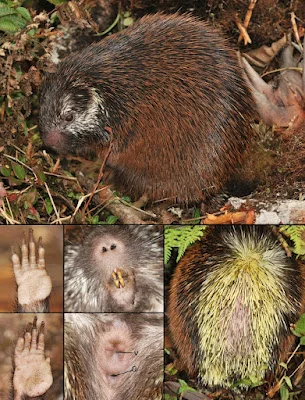
The species sits within the genus Coendou (Erethizontidae — the New World porcupines), a group of arboreal, slow-moving rodents armed with barbed quills and found from Mexico to Argentina. C. sangay is distinguished by its notably short tail — roughly 26% of the head-and-body length of 460 mm — its tricolored bristle-quills with brownish-red tips, spiny ventral fur, and the absence of long guard fur. The skull shows a long nasal bone at 35% of the condyloincisive length, a constricted maxillary bony bridge, and a mesopterygoid fossa that does not reach the second upper molar — features that separate it from the closest congeners C. speratus, C. nycthemera, and C. bicolor. Mitochondrial cytochrome b sequences diverge more than 6.0% p-distance from each of those species, well beyond the threshold conventionally used to distinguish Coendou taxa.
The specimen count tells its own story. Jorge Brito and colleagues at the Museo Ecuatoriano de Ciencias Naturales, and co-authors from Pontificia Universidad Católica del Ecuador and five other institutions, deployed 12,800 trap-nights and 2,400 camera-trap days over 15 years before collecting this single individual. The authors write that "intensive, long-term inventories are essential for identifying cryptic arboreal lineages that remain 'invisible' to traditional terrestrial sampling." Sangay National Park covers roughly 5,200 km² and hosts 170 mammal species (18 of them endemic, 35 threatened); at 0.03 species per km², it ranks as the most mammal-diverse protected area per unit area in the Tropics, according to the same study. The park is a UNESCO World Heritage Site; the species epithet sangay honors it.
The paper was published June 8, 2026 in PeerJ 14; the Novataxa blog featured it on June 9, placing it within the collection window. No IUCN assessment has been submitted; the single known specimen and the rarity of detection leave the conservation situation undetermined.
Taxonomy: Animalia → Chordata → Mammalia → Rodentia → Erethizontidae → Coendou
The only vertebrate from Zootaxa: a deepwater catshark from India
Apristurus drona Beura, Bineesh & Banerjee sp. nov. (Chondrichthyes: Pentanchidae) is based on four specimens — two males and two females, 439–473 mm total length — trawled from the Kollam slope, southwest coast of India, Southeastern Arabian Sea, at 400–650 m depth. 2 It is the only vertebrate new species in Zootaxa 5828(2). Sweta Beura and Bineesh K.K. (Marine Biology Regional Centre, Zoological Survey of India, Chennai) and Dhriti Banerjee (Zoological Survey of India, Kolkata) are the describers.
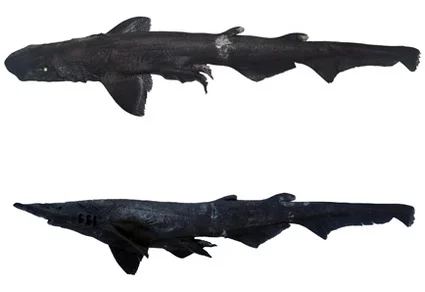
The species is placed in the Apristurus brunneus species subgroup, one of three informal groups within the ~40-species genus Apristurus (the larger of which, family Pentanchidae, contains roughly 110 species across some 10 genera). Diagnostic characters include a slender body tapering posteriorly, nostril length shorter than internarial width, pre-oral length shorter than mouth width (33.6% of head length), upper labial furrows longer than lower, and a spiral valve with 11–12 turns and 105–115 total vertebrae. The first dorsal fin is smaller than the second and inserts opposite the anal fin origin. COI DNA barcoding confirms its distinctness from all described congeners; the molecularly nearest relatives — A. nayakai (Southwestern Pacific), A. macrorhynchus (Northwest Pacific), and A. exsanguis (New Zealand) — all occur in the Indo-Pacific region thousands of kilometers away. The species name drona is unstated in the available abstract text; etymology requires full-text access.
Most Apristurus species assessed by IUCN are ranked as Data Deficient or Least Concern, but A. drona has not yet been evaluated.
Taxonomy: Animalia → Chordata → Chondrichthyes → Carcharhiniformes → Pentanchidae → Apristurus
Two new Andean bees and a genus reassessment
Nora Romero and Laurence Packer (York University, Toronto; Packer also a Research Associate at the Royal Ontario Museum) published a phylogenetic reassessment of the bee genus Incasarus (Hymenoptera: Andrenidae: Panurginae: Protandrenini) that described two new species and transferred six existing species from Liphanthus by new combination, bringing the genus to nine species total. 3 The analysis used 108 morphological characters and showed Liphanthus as currently defined is paraphyletic, with Incasarus forming a well-supported clade characterized by dense-to-crowded punctation on the head and mesoscutum, strongly sculptured tegulae, and unique genitalic features absent from Liphanthus sensu stricto. Three distinct lineages are identified within the redefined genus.
- Incasarus arequipensis Romero & Packer, 2026 sp. nov. — from Peru (specific type locality in paywalled text). One of two new species described, assigned to Protandrenini. Not IUCN-assessed.
- Incasarus ivari Romero & Packer, 2026 sp. nov. — from Bolivia (specific type locality in paywalled text). Second new species in the same article. Not IUCN-assessed.
The Andrenidae family encompasses roughly 3,000 described species worldwide; Protandrenini is concentrated in the Neotropical region and remains relatively poorly sampled compared to Andean plant diversity.
Taxonomy: Animalia → Arthropoda → Insecta → Hymenoptera → Andrenidae → Panurginae → Protandrenini → Incasarus
Three new ostracods from Thailand's Chi River Basin
Sukonthip Savatenalinton and Kanitsara Magnussen (Faculty of Science, Mahasarakham University, Thailand) described three new freshwater ostracods from the Chi River Basin, northeastern Thailand, in a single article in Zootaxa 5828(2). 4 The paper also discusses diagnostic characters within the tribe Cyprettadopsini (Cypridopsinae, Cyprididae). Before this publication, Thailand hosted 15 Cypridopsinae species across 6 of the 7 recognized tribes; the new species add to that count and extend the tribe's known Thai range.
- Cyprettadopsis hanjavanitae Savatenalinton & Magnussen, 2026 sp. nov. — Chi River Basin, Maha Sarakham Province. Distinguished from the type species C. sutura by its subtriangular carapace in lateral view and subovate shape in dorsal view; from C. kalasinensis by soft-part features including the caudal ramus.
- Cyprettadopsis kalasinensis Savatenalinton & Magnussen, 2026 sp. nov. — Chi River Basin, Kalasin Province. Distinguished from C. sutura by a subovate dorsal carapace outline, and from C. hanjavanitae by caudal ramus morphology.
- Pseudocypretta sangpradubae Savatenalinton & Magnussen, 2026 sp. nov. — Chi River Basin, Roi Et Province. The second Pseudocypretta species recorded from Southeast Asia and the first from Thailand. Distinguished from other Pseudocypretta by strong pits and densely arranged long setae on the valve surface.
All three are Not Evaluated by IUCN. Cyprididae is the largest ostracod family with roughly 1,000 described species.
Taxonomy: Animalia → Arthropoda → Crustacea → Ostracoda → Podocopida → Cyprididae → Cypridopsinae → Cyprettadopsini (Cyprettadopsis, Pseudocypretta)
Two new bush-crickets from the mountains of southern Albania
A nine-author team spanning six institutions described two new bush-crickets from Albania's southern highlands in an open-access article in Zootaxa 5828(2), combining morphology, bioacoustics, and molecular phylogenetics. 5 The leading authors are Gellért Puskás (Hungarian Natural History Museum, Budapest), Michèle Lemonnier-Darcemont (Parga, Greece), and Luc Willemse (Naturalis Biodiversity Center, Leiden), with co-authors from the Bulgarian Academy of Sciences, ELTE Eötvös Loránd University, and the University of Tirana.
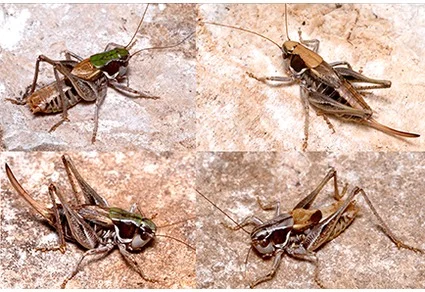
Both species belong to the genus Montana (Orthoptera: Tettigoniidae: Tettigoniinae: Platycleidini), an Aegean-Anatolian group of roughly 20 species distributed across the Balkans, Turkey, and the Middle East.
- Montana tomorri Puskás et al., 2026 sp. nov. — type locality in the Mount Tomorr region of southern Albania, inferred from the species epithet (Tomorr is the highest peak in southern Albania at 2,416 m). The integrative analysis — combining male calling song, female morphology, and nuclear/mitochondrial sequences — places it within a clade alongside Amedegnatiana, Parnassiana, and Metrioptera s. str. Not IUCN-assessed.
- Montana dani Puskás et al., 2026 sp. nov. — from southern Albania, with a range extending to the Greek border. Second new species in the same article. Not IUCN-assessed.
The authors flag Platycleidini as a tribe in need of broader integrative reassessment, arguing that current generic classifications rest primarily on morphological diagnoses that molecular and bioacoustic evidence is beginning to revise. The family Tettigoniidae (katydids and bush-crickets) contains approximately 7,000 described species globally.
Taxonomy: Animalia → Arthropoda → Insecta → Orthoptera → Tettigoniidae → Tettigoniinae → Platycleidini → Montana
Three new tiger beetles from Southeast Asia
Andrey V. Matalin (Moscow State Pedagogical University and Pirogov Russian National Research Medical University) described three new species in the subgenus Leptinomera Rivalier, 1961 of the tiger beetle genus Cylindera Westwood, 1831 (Coleoptera: Cicindelidae) and also provided the first country records for two additional congeners in the same revision. 6 An identification key and distribution maps for all Leptinomera species are included.
- Cylindera (Leptinomera) mosolovi Matalin, 2026 sp. nov. — Pahang Province, Peninsular Malaysia.
- Cylindera (Leptinomera) pseudocatoptroides Matalin, 2026 sp. nov. — Yala Province, southern Thailand.
- Cylindera (Leptinomera) prosvirovi Matalin, 2026 sp. nov. — Aceh and North Sumatra Provinces, Sumatra, Indonesia.
All three are Not Evaluated by IUCN. Tiger beetles (family Cicindelidae, roughly 2,900 species globally) are among the fastest-running insects; Cylindera is one of the most species-rich genera in the family.
Taxonomy: Animalia → Arthropoda → Insecta → Coleoptera → Cicindelidae → Cicindelinae → Cylindera (subgenus Leptinomera)
A new genus of Australian checkered beetles (no new species)
Justin S. Bartlett (Biosecurity Queensland, Queensland Department of Agriculture and Fisheries, Brisbane) established a new genus of checkered beetles as part of a revision of the predominantly Australian tribe Opilonini: 7
Megaxestodes Bartlett, 2026 gen. nov. (Coleoptera: Cleridae: Clerinae: Opilonini) is a nomenclatural act only — no new species are described. The genus receives three species transferred from Zenithicola by new combination: M. crassus (Newman, 1840) comb. nov. (type species), M. funestus (Chevrolat, 1874) comb. nov., and M. socius (Chevrolat, 1874) stat. rev., comb. nov. — the last removed from synonymy with M. funestus. Two additional synonymies are established: Zenithicola cribricollis Pic, 1941 is synonymized with M. socius, and Clerus obesus White, 1846 is moved from synonymy with M. crassus to synonymy with M. funestus. Lectotypes are designated for five historical names. The paper introduces an informal Zenithicola-complex grouping six genera within Opilonini. Cleridae contains roughly 3,600 described species worldwide.
Taxonomy: Animalia → Arthropoda → Insecta → Coleoptera → Cleridae → Clerinae → Opilonini → Megaxestodes gen. nov.
Two new geometrid moths from Southeast Asia
Olga Schmidt (Zoologische Staatssammlung München) and Claude Tautel (Muséum National d'Histoire Naturelle, Paris) added two species to the Indo-Australian genus Antimimistis Turner, 1922 (Lepidoptera: Geometridae: Larentiinae: Eupitheciini), which previously contained four species and now stands at six. 8
- Antimimistis circumsubteracta Schmidt & Tautel, 2026 sp. nov. — Southeast Asia (specific type locality in paywalled text). Small dark-brown moths; the upper wing surface typically shows irregular whitish lines and often a pale central spot near the termen.
- Antimimistis malukensis Schmidt & Tautel, 2026 sp. nov. — Southeast Asia; the species epithet suggests the Maluku Islands (Moluccas), Indonesia, though the full type locality requires the paywalled article to confirm.
Both are Not Evaluated by IUCN. Geometridae is one of the largest lepidopteran families at roughly 23,000 described species; subfamily Larentiinae contains about 6,200.
Taxonomy: Animalia → Arthropoda → Insecta → Lepidoptera → Geometridae → Larentiinae → Eupitheciini → Antimimistis
A third species of one of the rarest ladybird beetle genera
Limnichopharus khaoyaiensis Seki, Tomaszewska, Szawaryn, Hashizume, Hasin, Voraphab & Maruyama sp. nov. (Coleoptera: Coccinellidae: Coccinellinae: Limnichopharini) is the third known species in the genus Limnichopharus Miyatake, 1994 — and accordingly the third species in the monotypic tribe Limnichopharini — making it an extremely rare addition to a group that has barely been collected worldwide. 9
The seven-author team spans Kyushu University, the Museum and Institute of Zoology of the Polish Academy of Sciences (Warsaw), Valaya Alongkorn Rajabhat University (Thailand), and the Department of National Parks, Wildlife and Plant Conservation (Bangkok). The type locality is Thailand, with the species epithet khaoyaiensis pointing to Khao Yai National Park. The two previously known congeners are L. hainanensis Miyatake (China: Hainan) and L. borneensis Miyatake (Borneo). This description also provides the first illustrations of male genitalia for the entire tribe Limnichopharini. Not IUCN-assessed. Family Coccinellidae contains roughly 6,000 described species.
Taxonomy: Animalia → Arthropoda → Insecta → Coleoptera → Coccinellidae → Coccinellinae → Limnichopharini → Limnichopharus
A new Korean harpacticoid copepod
Laophontella changi Seo, Cho & Lee sp. nov. (Arthropoda: Copepoda: Harpacticoida: Tetragonicipitidae) was collected from intertidal habitats along the Korean coast and published in ZooKeys 1281. 10
The female is identified by a seven-segmented antennule, a ventral cuticular expansion with undulating edge on the first free abdominal somite, C-shaped proximal dorsolateral expansion and auriform lateral elevation on the caudal rami, and a markedly elongate inner seta on the fourth swimming-leg second exopodal segment. The male bears a hoe-shaped outer spine on the endopod of the third swimming leg. The description also includes the copepodid V (penultimate juvenile) stage — allowing tracking of how diagnostic characters develop through ontogeny, a level of detail that the authors note can help clarify genus-level characters across Laophontella. Not IUCN-assessed.
Taxonomy: Animalia → Arthropoda → Copepoda → Harpacticoida → Tetragonicipitidae → Laophontella
Plants, algae, and a status elevation
Crassula shanelleae: a wavy-leafed succulent elevated to species
Crassula shanelleae G.F.Sm. is not a newly discovered plant but a newly recognized species: Gideon F. Smith (Ria Olivier Herbarium, Nelson Mandela University, Gqeberha, South Africa) raised C. arborescens subsp. undulatifolia to full species rank in Phytotaxa 760(3). 11 The recognition rests on morphological differences from C. arborescens sensu stricto: where the latter has obovate to orbicular, distinctly succulent leaves with flat margins, C. shanelleae has elliptic to elliptic-obovate, weakly succulent leaves with characteristically wavy (undulate) margins. The plant forms short-stemmed, densely branched shrublets with dense-leaved rounded canopies. Smith chose the epithet shanelleae deliberately — the subspecific name undulatifolia could not be carried over to species rank because a pre-existing C. undulata would create a nomenclatural conflict. Type from the Eastern Cape Province (Albany Centre of Endemism); holotype at Nelson Mandela University. Genus Crassula (Crassulaceae subfam. Crassuloideae) contains roughly 230 taxa concentrated in southern Africa.
Blakea barbellata and B. loboana: two new Melastomataceae from Central America
Frank Almeda (California Academy of Sciences), Daniel Solano (Museo Nacional de Costa Rica), Darin S. Penneys (UNC Wilmington), and Ricardo Kriebel (California Academy of Sciences) described two new epiphytic species in the Neotropical genus Blakea (Melastomataceae: Pyxidantheae) from the Central American highlands in Phytotaxa 760(3). 12 Both were assessed for IUCN status at the time of description — unusual for newly named taxa.
- Blakea barbellata Almeda, Solano, Penneys & Kriebel, 2026 sp. nov. — from Panama. The species epithet refers to its barbellate (barb-bearing) trichomes, which distinguish it from all congeners alongside its solitary flowers borne in upper leaf axils and appressed straw-colored trichomes at the uppermost nodes. IUCN: Data Deficient (DD).
- Blakea loboana Almeda, Solano, Penneys & Kriebel, 2026 sp. nov. — from Costa Rica. Distinguished by paired flowers in upper leaf axils, floral peduncles 4–8 mm long, linear-oblong calyx lobes that equal or exceed petal length in bud (an unusual character in the genus), bluntly retuse petals, and gland-tipped white trichomes 3 mm long on the ovary apex. IUCN: Vulnerable (VU).
Chondrophycus minutus: India's first named Chondrophycus alga
Chondrophycus minutus Romero-Orozco, Won & Cho sp. nov. (Rhodophyta: Ceramiales: Rhodomelaceae) was collected from Tamil Nadu, India, and described by researchers at Chosun University, Gwangju, Korea. 13 The species has one of the smallest thalli in its genus — up to only 0.6 cm tall — with a terete, cartilaginous build, alternate branching, thick-walled obconical cortical cells, and tetrasporangia in a right-angle arrangement. Molecular divergence from other Chondrophycus species reaches 5.3–9.6% for the rbcL marker and 7.4–10.9% for COI-5P. It is, according to the authors, "the first newly described Chondrophycus species documented from the Indian macroalgal flora." Not IUCN-assessed.
Taxonomy (all three): Plantae/Rhodophyta/Fungi → (respective phyla and classes) → Crassulaceae / Melastomataceae / Rhodomelaceae
Five new fungi from China, India, and one that defies sectional classification
Mycena dollyae: a Kerala fungus that fits no known section
Mycena dollyae Manakkat, Latha & Raj sp. nov. (Basidiomycota: Agaricales: Mycenaceae) was found growing on bark in Kerala State, India, and described by researchers at the University of Calicut and Mahatma Gandhi Government Arts College (Mahe, Pondicherry). 14 The basidiomata are small with a slightly depressed, brownish-gray, pruinose pileus; narrowly adnate to pseudocollariate lamellae; ellipsoid to subglobose amyloid basidiospores; and dimorphic cheilocystidia on the lamella edge. The pileipellis is a cutis with cystidioid hyphal ends bearing simple or cylindrical excrescences, morphologically suggestive of section Supinae.
Molecular phylogeny (nrITS + nrLSU), however, placed the species entirely outside all currently recognized Mycena sections, clustering instead with a handful of unassigned Mycena species. As Manakkat, Latha & Raj write, the species "could not be placed in any of the sections proposed for this genus. Instead, it clustered with a few Mycena species that have not so far been assigned to any of the known sections" — which may indicate a novel lineage within the genus. Not IUCN-assessed.
Ophiocordyceps changbaishanensis: a new zombie fungus from Changbai Mountain
Ophiocordyceps changbaishanensis Wang & Bau sp. nov. (Ascomycota: Hypocreales: Ophiocordycipitaceae) was collected from Jilin Province, China, in the Changbai Mountain region. 15 The stroma is solitary and unbranched; the fertile part is ellipsoid to cylindrical with a slightly acute apex and longitudinal striations, greyish-yellow to olivaceous at the tip. Perithecia are large, long-ampulliform, obliquely immersed; the ascus apex is obcordate and distinctly thickened; ascospores are filiform and disarticulate into fusoid secondary ascospores 10.3–15.6 × 1.8–3.2 μm. A five-gene phylogenetic analysis (ITS, nrLSU, tef1-α, rpb1, rpb2) places it within the Ophiocordyceps sphecocephala clade as a distinct, well-supported lineage separate from all described congeners, according to Wang & Bau. Described by researchers at Jilin Agricultural University's Key Laboratory of Edible Fungal Resources and Utilization (North). Not IUCN-assessed.
Rhodoveronaea puerariae: first lignicolous asexual fungus from kudzu wood
Rhodoveronaea puerariae Yang, Liu & Chen sp. nov. (Ascomycota: Rhamphoriales: Rhamphoriaceae) was isolated from decomposing Pueraria (kudzu) wood in Guizhou Province, China, and described by researchers at the Guizhou Institute of Crop Germplasm Resources, Guizhou Academy of Agricultural Sciences. 16 Identified via multigene phylogeny (ITS, LSU, SSU, tef1-α, rpb2), it is the first lignicolous asexual fungal species documented from Pueraria — a medicinally important plant genus used in traditional Chinese medicine. Not IUCN-assessed.
Moelleriella guizhouensis: a new entomopathogenic fungus from Fanjingshan
Moelleriella guizhouensis Qi, Chang, Li, Yu, Li & Chen sp. nov. (Ascomycota: Hypocreales: Clavicipitaceae) was found in Fanjingshan National Nature Reserve, Guizhou Province, China. 17 The teleomorphic stromata are raised to convex and white to creamy, with scattered semi-embedded perithecia. Phylogenetic analysis of three genes (EF-1α, RPB1, LSU) shows it forms a distinct, well-supported lineage closely related to M. flava. Described by researchers from Anhui Agricultural University (Hefei) and the Fanjing Mountain National Nature Reserve Management Bureau. Open access (CC BY-NC). Not IUCN-assessed.
A 99-million-year-old cricket trapped in amber
Qiongqi multispurous Ji, Nel, Xiao & Xu sp. nov. (Insecta: Orthoptera: Trigonidiidae) was described from the holotype specimen NIGP210185, preserved in mid-Cretaceous Kachin amber from northern Myanmar (~99 million years ago). 18 The describers are Xia Ji and Chuantao Xiao (Yangtze University), André Nel (Institut de Systématique, Évolution, Biodiversité, Paris), and Chunpeng Xu (Nanjing Institute of Geology and Paleontology, where the holotype is deposited).
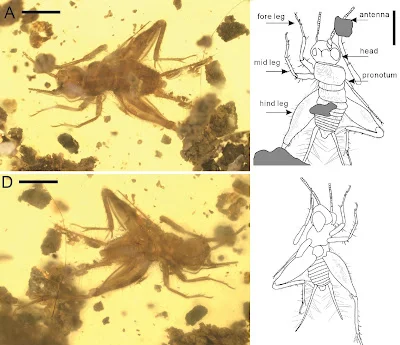
The species is attributed to Trigonidiidae (a family of small crickets), but fits in neither of the family's two extant subfamilies — Trigonidiinae and Nemobiinae. Its distinctive morphology includes subapical and apical spurs on the hind tibia and setae-like processes on the hind basitarsomere, characters not found in any other described Mesozoic trigonidiid. The genus name Qiongqi draws from Chinese mythology — Qiongqi is a ferocious creature in classical texts. The paper was published March 6, 2026 in Rivista Italiana di Paleontologia e Stratigrafia 132(1) under a CC BY-SA 4.0 license; the Novataxa blog featured it on June 9, placing it within the collection window.
Ji, Nel, Xiao & Xu write that the discovery "provides novel morphological information of Cretaceous Trigonidiidae, and highlights the potential of biodiversity of Cretaceous crickets." Conservation status is not applicable for fossil taxa.
Taxonomy: Animalia → Arthropoda → Insecta → Orthoptera → Trigonidiidae → †Qiongqi
Sources and access notes
Today's 25 new living species and 1 new genus draw from Zootaxa 5828(2) (14 new species + Megaxestodes gen. nov.), Phytotaxa 760(3) (9 new species + 1 status elevation), ZooKeys 1281 (1 new species), and two Novataxa blog features (the porcupine and the fossil cricket). WoRMS, EJT, MycoKeys, and PhytoKeys recorded no new species on June 9. One Zootaxa article (Montana bush-crickets) is open access (CC BY-NC); the Moelleriella Phytotaxa article is open access (CC BY-NC); the fossil cricket paper is open access (CC BY-SA 4.0); the Coendou paper is in open-access PeerJ. Full morphological descriptions for seven Zootaxa articles and six Phytotaxa articles require subscription access; details in this article are drawn from publicly available abstracts.
Cover image: Coendou sangay sp. nov., adult female holotype at Sangay National Park, Ecuador. 1
参考ソース
- 1Brito et al. 2026 — Coendou sangay, PeerJ 14
- 2Beura, Bineesh & Banerjee 2026 — Apristurus drona, Zootaxa 5828(2)
- 3Romero & Packer 2026 — Incasarus revision, Zootaxa 5828(2)
- 4Savatenalinton & Magnussen 2026 — Three new Cyprettadopsini, Zootaxa 5828(2)
- 5Puskás et al. 2026 — Montana tomorri and M. dani, Zootaxa 5828(2)
- 6Matalin 2026 — Leptinomera revision, Zootaxa 5828(2)
- 7Bartlett 2026 — Megaxestodes gen. nov., Zootaxa 5828(2)
- 8Schmidt & Tautel 2026 — Antimimistis spp., Zootaxa 5828(2)
- 9Seki et al. 2026 — Limnichopharus khaoyaiensis, Zootaxa 5828(2)
- 10Seo, Cho & Lee 2026 — Laophontella changi, ZooKeys 1281
- 11Smith 2026 — Crassula shanelleae, Phytotaxa 760(3)
- 12Almeda et al. 2026 — New Blakea spp., Phytotaxa 760(3)
- 13Romero-Orozco, Won & Cho 2026 — Chondrophycus minutus, Phytotaxa 760(3)
- 14Manakkat, Latha & Raj 2026 — Mycena dollyae, Phytotaxa 760(3)
- 15Wang & Bau 2026 — Ophiocordyceps changbaishanensis, Phytotaxa 760(3)
- 16Yang, Liu & Chen 2026 — Rhodoveronaea puerariae, Phytotaxa 760(3)
- 17Qi et al. 2026 — Moelleriella guizhouensis, Phytotaxa 760(3)
- 18Ji, Nel, Xiao & Xu 2026 — Qiongqi multispurous, Rivista Italiana di Paleontologia e Stratigrafia
このコンテンツについて、さらに観点や背景を補足しましょう。