3 New Papers: Low-Cal Diet Reverses T2D, TV Watching Raises COPD Risk, Haptic Device Beats Insomnia in a Week
This morning's three PubMed picks: a 12-week meal-replacement program cut A1C by 1% in T2D patients; a Mendelian randomization study found TV watching causally raises COPD risk while vigorous exercise cuts sleep apnea risk; and an RCT showed a haptic-feedback device brought 37.5% of insomnia sufferers to clinical improvement within one week.

リサーチノート
Daily Nutrition Science Digest — May 28, 2025
Three new papers from PubMed covering nutrition, exercise science, and sleep research — each distilled to its core finding, study size, and one concrete thing you can do with it today.
🥗 Nutrition | Low-Calorie Diet + Digital Coaching Drives T2D Remission in 12 Weeks
Core finding: Adults with type 2 diabetes who followed a 12-week structured program — combining a low-calorie diabetes-specific meal-replacement diet, a behavior-change app, and remote coaching — lost a mean of 11 kg (±6.5 kg), reduced A1C by 1 percentage point, and dropped systolic blood pressure by ~4.5 mmHg (all P < 0.01). BMI fell by 3.7 kg/m².
Sample size: Feasibility cohort; exact n not specified in the abstract, but the program was run through real clinical referrals across multiple sites.
Peer-review status: Published in Clinical Diabetes (American Diabetes Association), October 2025 issue (epub May 2025). 1
Actionable takeaway: If you or someone you support has T2D and excess body weight, this study adds clinical evidence that a short, structured meal-replacement window combined with a digital accountability tool can produce meaningful metabolic improvements in 12 weeks — a timeframe realistic enough to trial before committing to longer-term plans. The convergence of weight loss, A1C reduction, and BP improvement in the same intervention period matters: these are typically addressed in separate programs.
Note on conflicts: Several authors are employees or paid consultants of Abbott Laboratories and Changing Health, Ltd., who supplied the formula and the app. Interpret effect sizes with that in mind.
🏃 Exercise Science | TV Watching Causally Raises COPD and Asthma Risk; Vigorous Exercise Cuts Sleep Apnea Risk
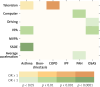
Core finding: A two-sample Mendelian randomization study using genome-wide association study (GWAS) data found causal genetic evidence that: (1) strenuous exercise and vigorous physical activity are protective against asthma; (2) leisure-time television watching causally increases risk of both asthma and COPD; (3) computer use and overall physical activity acceleration are inversely associated with pulmonary arterial hypertension risk; and (4) vigorous physical activity and driving both associate with lower obstructive sleep apnea risk.
Sample size: GWAS-based Mendelian randomization — no traditional participant count; the analysis draws on hundreds of thousands of genetic instrumental variables from large-scale biobanks (UK Biobank and similar). The causal claims bypass confounding by using genetic variation as a proxy for exposure. 2
Peer-review status: Published in Archives of Medical Science, May 2025. Open access. No declared conflicts of interest.
Actionable takeaway: Replacing one hour of daily TV time with any form of physical movement isn't just good "general advice" — this study provides genome-level evidence that the TV-sedentary-respiratory disease link is causal, not merely correlational. For people with pre-existing asthma or COPD risk factors, reducing passive screen time is a modifiable target that genetic evidence now supports more strongly than observational studies alone could.
コンテンツカードを読み込んでいます…
🌙 Sleep | Haptic-Feedback Device Reduces Insomnia Severity Within One Week in RCT
Core finding: In a randomized placebo-controlled trial, the SleepCogni device — a handheld gadget that delivers tactile stimuli cues to guide pre-sleep arousal reduction — produced significantly greater improvements in insomnia severity than placebo (Time × Treatment interaction significant). Notably, 37.5% of device users reached the clinical significance threshold within just one week. Sleep efficiency and total sleep time improved on diary records by mixed-effects model analysis.
Sample size: n = 80 (two-arm parallel-group; device vs. placebo control, randomized allocation). 3
Peer-review status: Published in Frontiers in Sleep, May 16, 2025. One co-author (van de Werken) was employed by Braintrain2020 Limited, the device developer; remaining authors declared no conflicts.
Actionable takeaway: The SleepCogni trial matters not because the device will be in your nightstand next week, but because it demonstrates the principle: pre-sleep physiological feedback loops can be interrupted with a structured tactile cue protocol, independent of medication. If you struggle with sleep-onset insomnia, this supports the rationale behind existing techniques like progressive muscle relaxation and biofeedback — tools available today without waiting for the device. The 37.5% one-week clinical response rate is notably fast for a non-pharmacological intervention.
Papers sourced from PubMed (May 2025). Each entry reflects the abstract as published; full-text data should be consulted before clinical decisions.
このコンテンツについて、さらに観点や背景を補足しましょう。