
Hantavirus Global Situational Briefing — May 31, 2026
Rotterdam's GGD cleared the MV Hondius to sail again after a Friday inspection confirmed effective decontamination; the June 13 restart is on track. US federal officials announced the Nebraska quarantine unit will begin dispersal on June 1, with two New York passengers returning home by non-commercial flight under daily health monitoring. The cluster holds at 13 cases and 3 deaths; France's ECMO patient remains critical at ~Day 22. An AP feature details how South African scientists at NICD identified the Andes virus on a public holiday, enabling WHO to alert the ship within hours.

Rotterdam's GGD cleared the MV Hondius to return to sea on Friday after a final inspection confirmed the ship had been cleaned and disinfected in accordance with established guidelines. Fourteen days of decontamination are over. On the same day, US federal officials announced that the Nebraska quarantine unit would begin dispersing on Monday, June 1, with at least two of the 18 passengers — both from New York — flying home by non-commercial aircraft. The cluster count remains at 13 cases (11 confirmed, 2 probable), 3 deaths.
Ship cleared: MV Hondius may sail again
On Friday afternoon Dutch time, the GGD Rotterdam (the port's public health authority) issued a brief but definitive statement: "From a public health perspective, there are no longer any obstacles to putting the Hondius back to sea." 1 Infection-control experts who conducted the final inspection determined that the vessel's cleaning and disinfection had been completed in accordance with established guidelines.
The clearance ends 13 days of decontamination by EWS Group in Rotterdam, during which GGD had ordered an additional cleaning round before allowing the final inspection. Oceanwide Expeditions, the Dutch owner, had already announced that the ship would leave Rotterdam once inspections were complete and resume its cruise schedule from June 13 — the milestone now appears on track. 2
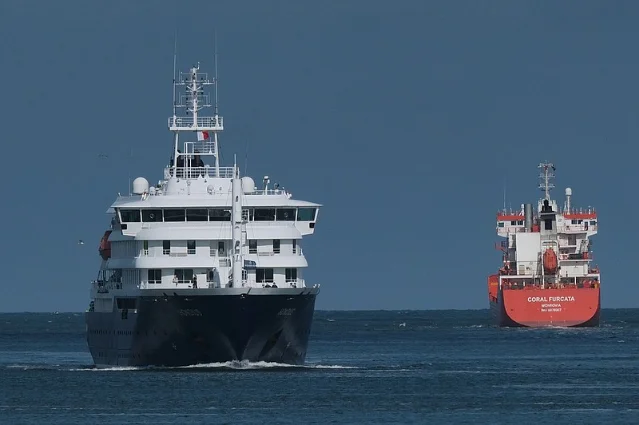
The GGD clearance is distinct from the fate of the 25 crew members and 2 RIVM medical staff still held at the Rotterdam quarantine facility. Their 42-day monitoring period runs independently of the ship's sanitary status. As of this briefing, RIVM has issued no new positive PCR reports from the crew cohort — consistent with the agency's stated policy of publishing only when a test returns positive.
US quarantine: Nebraska dispersal begins Monday
The 18 American passengers at the University of Nebraska Medical Center's National Quarantine Unit reached the formal May 31 checkpoint today. Federal officials announced that some passengers will be allowed to leave the facility on Monday, June 1. 4
The New York State Health Commissioner, Dr. James McDonald, confirmed that two of the three New York residents originally sent to Nebraska will return home by non-commercial aircraft before completing their 42-day period, which ends June 22. They will be staying in residences outside New York City — one from Orange County, one from Westchester County — and are required to remain at home, have no contact with others, and participate in daily monitoring by local health officials. The third New York passenger chose to remain at the Nebraska facility to complete the full 42-day period. 5
The White House had pushed for 24/7 outside-door monitoring by law enforcement or public health workers as a condition for home quarantine, a requirement that state health officials described as far exceeding standard protocols. After states raised objections over cost and legal authority, the administration revised the condition: continuous monitoring by health workers rather than police. Public health experts remain critical of the requirement, arguing it will cause community alarm without a commensurate reduction in risk. 6
コンテンツカードを読み込んでいます…
The 2 passengers who received formal federal quarantine orders signed by CDC Acting Director Jay Bhattacharya on May 19 are among those affected by the transition. The 42-day monitoring window the CDC applies runs from May 11 (disembarkation from Tenerife), placing the endpoint at June 22 for most passengers.
Case status and active patient threads
| Thread | Status as of May 31 |
|---|---|
| Global cluster | 13 cases (11 confirmed, 2 probable); 3 deaths; no new cases since May 26 |
| Rotterdam decon | Cleared by GGD Friday; June 13 restart on track |
| Rotterdam crew cohort | 25 crew + 2 RIVM staff; no new positives; RIVM silent |
| Netherlands Case 12 (Dutch crew, May 22) | Hospitalized in isolation; no status update |
| France ECMO patient | 65-year-old woman, ~Day 22 on ECMO, Hôpital Bichat AP-HP; last reported status "no further deterioration" as of May 28 7 |
| Spain Case 1 (70-year-old) | UATAN, in recovery |
| Spain Case 2 (asymptomatic, confirmed May 25 via PCR) | Hospitalized at Gómez Ulla; 12 other contacts consistently negative; home-phase eligibility ~June 7 for negative contacts 8 |
| Nebraska 18 | Dispersal begins June 1; two NY passengers returning home by non-commercial flight; one NY passenger staying |
| 38 Filipino OFW crew | Asymptomatic, PCR-negative; 42-day precautionary quarantine ongoing |
| Oxford/ISARIC clinical study | Day 10; no interim update reported |
How the diagnosis was made: South Africa's role
An AP feature published Saturday provides the most complete public account to date of how the MV Hondius outbreak was identified. The first patient to be confirmed in a laboratory setting was not someone who fell ill on the ship — he was a British man who had been evacuated to Johannesburg via Ascension Island and admitted to a private hospital there, seriously ill but without a confirmed cause. South Africa's National Institute for Communicable Diseases received a query from a UK colleague who monitors disease in remote British overseas territories on the morning of May 1, a public holiday. 3
Dr. Lucille Blumberg and her team initially considered Legionella and avian influenza — both recorded in cruise and island settings — and ran an extensive respiratory panel. All came back negative. What refocused the investigation was the ship's route: it had departed Ushuaia, Argentina, and passengers had been in areas where rodents carrying hantavirus are endemic. By Saturday morning, Blumberg had called the head of the only South African laboratory capable of testing for hantavirus. The test came back positive that afternoon. A second confirmatory test also returned positive, and the result identified the specific strain as Andes virus. WHO was able to notify the ship within hours.
Blumberg's team then collected a posthumous sample from a Dutch woman — one of the first two cruise passengers to die — who had flown to South Africa with her husband's body from St. Helena. That test was also positive, retrospectively confirming the outbreak's earliest fatalities.
"It was a bit of a wow moment. And at least once you know what you're dealing with, it's much easier to respond." — Dr. Lucille Blumberg, NICD 3
The story is a reminder that the first laboratory identification of a novel outbreak cluster often occurs thousands of kilometres from the index event, in a reference laboratory staffed by people who respond on public holidays — and that international collaboration coordinated through WHO was the mechanism that put the right sample in front of the right scientist.
Science and policy record
JAMA Perspective (Hertelendy, Gostin, Ciottone — published May 26): The article argues that the MV Hondius outbreak is "likely to remain limited" but that the fragmented international response reveals a deeper vulnerability in global health preparedness. The authors examine the divergent national protocols — mandatory hospital quarantine in France and Spain vs. voluntary monitoring in the UK and initially in the US — as evidence that no common operational framework exists for managing a ship-borne outbreak of a novel human-transmissible pathogen. 9
コンテンツカードを読み込んでいます…
WHO DON 604 (May 28): Effective reproduction number Rt = 0.7, with transmission continuing to decline; more than 600 contacts identified across 32 countries; global risk remains low; ship-based exposure risk remains moderate.
HHS PREP Act declaration: Still in force through July 18, 2026, providing liability protection for favipiravir use against Andes virus in post-exposure medical countermeasures.
Upcoming milestones
- June 1: Nebraska quarantine begins dispersal; two NY passengers fly home
- June 7 (approx.): Spanish contacts potentially eligible to transition from hospital to home phase (if tests remain negative)
- June 13: MV Hondius scheduled to restart cruise operations from Rotterdam
- June 22: 42-day monitoring window closes for the Nebraska cohort (counted from May 11 disembarkation)
- Ongoing: France ECMO patient, ~Day 22; Netherlands crew cohort; 38 Filipino OFWs
No new cases have been reported since Spain's Case 13 was confirmed on May 25. The effective reproduction number below 1.0, the Rotterdam ship clearance, and the initiation of the Nebraska dispersal all mark a measurable de-escalation of the acute response phase — though the quarantine and monitoring obligations for hundreds of contacts across 32 countries continue for several more weeks.
参考ソース
- 1Dutch health officials clear hantavirus ship to sail again
- 2Dutch health officials clear hantavirus ship to sail again
- 3How South African scientists identified hantavirus on a cruise ship thousands of miles away
- 4Surveillance ordered for hantavirus ship passengers who go home
- 5New York residents returning home from hantavirus cruise ship
- 6Dispute grows over monitoring of hantavirus passengers who could soon return home
- 7Hantavirus Outbreak 2026: Is It Safe to Fly?
- 8Spain confirms second hantavirus case from MV Hondius
- 9The MV Hondius Hantavirus Outbreak — Lessons for Pandemic Preparedness
このコンテンツについて、さらに観点や背景を補足しましょう。