AI Briefing — Week of May 11, 2026
A Monday-morning digest for AI founders and early-stage investors covering May 8–15, 2026: OpenAI's voice API trio, Anthropic Dev Day's persistent-memory agents, Cerebras' $5.5B IPO, EU AI Act Omnibus extension to 2027, and the talent exodus reshaping frontier labs.
Coverage: May 8–15, 2026 | For AI founders and early-stage investors
Five areas competed for attention this week: OpenAI and Anthropic released competing voice APIs and agentic platforms; seven notable AI funding rounds closed including Cerebras' $5.5B IPO; the EU and Colorado moved in opposite directions on AI compliance timelines; and two high-profile AI labs — SpaceXAI and Thinking Machines Lab — continued losing senior researchers faster than they can replace them.
Product launches
OpenAI shipped three new Realtime API voice models on May 7. 1 The most capable, GPT-Realtime-2, runs GPT-5-class reasoning with a 128K context window (up from 32K), parallel tool calling, and adjustable reasoning effort across five levels. In adversarial testing, Zillow reported a 26-point jump in call success rate — 95% versus 69% — using the model for Fair Housing compliance calls. 1 Voice AI platform BolnaAI reported 12.5% lower word error rates than competing models on Hindi, Tamil, and Telugu. 1 All three models are API-only via WebSocket; none are in the consumer ChatGPT app yet. Pricing: GPT-Realtime-2 at $32/1M audio input tokens, GPT-Realtime-Translate at $0.034/min, Whisper at $0.017/min. 1
On May 12, OpenAI launched Daybreak, a cybersecurity platform pairing GPT-5.5 models with Codex Security for automated vulnerability discovery and patch generation. Three access tiers and competing capabilities are covered in the Model releases section below.
Codex went mobile on May 14, landing as a preview on iOS and Android for all plan tiers including Free. 2 Users can monitor threads, approve commands, and review diffs from a phone. The same release promoted Remote SSH and Hooks to general availability, and added programmatic access tokens for CI/CD pipelines on Enterprise and Business plans. More than 4 million people use Codex weekly. 2
Anthropic's "Code with Claude" developer day on May 11 shipped six managed agent platform features with no new model. 3 The most structurally different is Dreaming — a scheduled background process that reviews past agent sessions, extracts patterns, and curates memories so agents improve across runs without manual memory management. Outcomes adds a separate rubric-grading agent that checks task output against success criteria; Anthropic says this lifted PowerPoint generation quality by 10.1% and Word documents by 8.4% on internal benchmarks. 3 The multi-agent orchestration feature lets a lead agent decompose jobs and delegate to parallel specialist sub-agents on a shared filesystem, with a full audit trail in Claude Console. Claude Code creator Boris Chernny told attendees: "There is literally no manually written code anywhere in the company anymore." 3
On May 13, Anthropic released Claude for Small Business, a toggle install that connects Claude to QuickBooks, PayPal, HubSpot, Canva, Docusign, Google Workspace, and Microsoft 365, with 15 ready-to-run agentic workflows covering payroll planning, invoice chasing, contract review, and lead triage. 4 Every task requires explicit user initiation and approval before execution. Anthropic says it does not train on business data by default.
On May 14, Anthropic announced a Programmatic Credit Pool, effective June 15. 5 Paid plans receive a monthly pool ranging from $20 (lowest Pro tier) to $200 (Max 20x) for Agent SDK and third-party agent tools. Unused credits don't roll over. The move separates interactive chat usage from agentic usage — a structural acknowledgment that running multi-step agents at scale is economically different from chatting. One power user, @arckollect, characterized it as "a downgrade dressed up as a feature" for users running heavy automation. 5 For context, GitHub Copilot is moving to usage-based AI Credits on June 1 — this shift is not unique to Anthropic.
NVIDIA showcased Ising, the first open-source quantum AI model family (Apache 2.0), at the Quantum Computing Summit on May 10. 6 Three models cover combinatorial optimization, probabilistic sampling, and integer factorization. NVIDIA claims the error-correction decoder runs 2.5x faster and 3x more accurately than pyMatching, the current open-source standard. For now, Ising runs on GPUs via simulation, not real quantum hardware; direct quantum compilation is planned for 2027. Jensen Huang framed the bet plainly: "We want Nvidia to be the brain of quantum computing." 6
Model releases
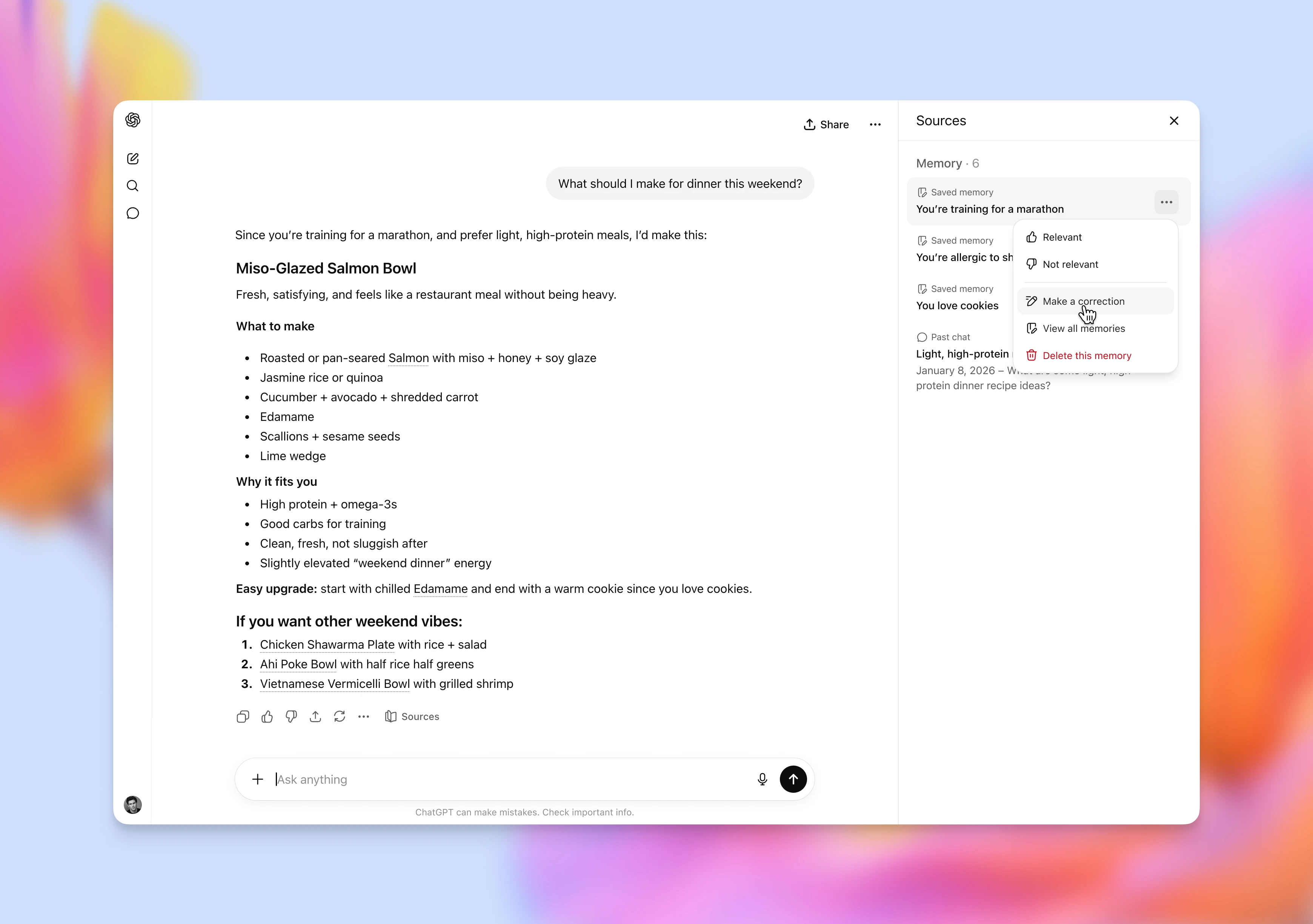
OpenAI launched Daybreak on May 12 — a cyber defense platform that pairs GPT-5.5 with Codex Security for automated vulnerability discovery, patch generation, and threat modeling. 7 Three model tiers: GPT-5.5 (standard safeguards), GPT-5.5 with Trusted Access for Cyber (verified defensive work), and GPT-5.5-Cyber (authorized penetration testing). The platform builds on GPT-5.4-Cyber, which contributed to fixing more than 3,000 vulnerabilities, and positions directly against Anthropic's Project Glasswing, which already counts Apple, Microsoft, Google, and Amazon as adopters. 8 Sam Altman described the goal as working with "as many companies as possible now to help them continuously secure themselves." 8
GPT-5.5 Instant became ChatGPT's default model for all users on May 5, replacing GPT-5.3 Instant. 9 OpenAI reports 52.5% fewer hallucinated claims on high-stakes prompts (medicine, law, finance) and 37.3% fewer inaccurate responses on user-flagged conversations versus GPT-5.3 Instant. 9 Responses are also 30.2% shorter in word count and 29.2% fewer lines, with a new "memory sources" feature showing users exactly what context — past chats, saved memories, connected Gmail — shaped a given response. Available as
chat-latest in the API; GPT-5.3 Instant stays accessible for paid users for three more months. Third-party analyst Daniel Ball (Meta engineer) notes the shift turns the default assistant into a "context router" — a signal that builders need to define what context the AI can use and show.Google released Gemini 3.1 Flash Lite to general availability on May 7, replacing the March 3 preview. 10 Positioned as Google's most cost-efficient Gemini model, it carries a 1M token context window, supports text, code, images, audio, video, and PDF input, and offers four levels of adjustable thinking (minimal/low/medium/high). The preview version (gemini-3.1-flash-lite-preview) will be discontinued May 25. 10
Zyphra (Palo Alto open-source AI lab) released ZAYA1-8B on May 6 — an Apache 2.0 Mixture-of-Experts (MoE — an architecture that activates only a fraction of parameters per inference step) reasoning model with 8.4B total parameters and fewer than 1B active per token, trained end-to-end on 1,024 AMD MI300X GPUs rather than NVIDIA hardware. 11 It scored 89.6 on the HMMT 2025 (Harvard-MIT Math Tournament) math benchmark, matching or exceeding DeepSeek-R1-0528 on challenging math and coding tasks. 11 A vision-language variant, ZAYA1-VL-8B, followed on May 8 (arXiv 2605.08560v1). Note: Zyphra's official blog was inaccessible during research; the benchmark figures above come from a third-party roundup and have not been independently verified from the primary source.
Xiaomi released MiMo v2.5 and MiMo v2.5 Pro on May 8 — native omnimodal models handling text, image, video, and audio. 12 MiMo-V2.5-Pro carries 1.02 trillion total parameters (42B activated per token, MoE), with a 1M token context window; MiMo-V2.5 runs 310B total parameters (15B activated). Both include dedicated vision and audio encoders. Weights are available on HuggingFace.
xAI launched Grok Build on approximately May 14–15 — an agentic CLI coding tool running on the Grok 4.3 beta model with a 2M token context window, up to 8 parallel coding agents, plan mode, MCP support, and mouse support. 11 Available to SuperGrok Heavy subscribers at $99/month. Independent coding benchmark scores place Grok 4.3 at 72/100 (Tier B) — below Kimi K2.6 (87/100), GPT-5.5, and Claude Opus 4.7 per buildfastwithai's May 2026 comparison. 13 xAI's official blog was inaccessible during research; Grok 4.3 specs are drawn from secondary sources and community reports.
Subquadratic released SubQ 1M-Preview on May 5 — described as the first commercially available LLM built on sparse subquadratic attention architecture (not a standard transformer), with a 12M token native context window. 11 The company raised $29M in seed funding concurrent with launch, also releasing SubQ Code, a repo-wide coding agent. Vendor claims of ~1/5 the cost and 52x faster attention on long-context workloads have not been independently verified.
Funding & IPOs
The week's capital story was Cerebras Systems' May 14 IPO on Nasdaq, which raised $5.5B at $185 per share — already above the revised $150–$160 guidance range — then opened Day 1 at $385 (a 108% premium) before closing at $311, for a market cap of roughly $66B. 14 Cerebras, known for its wafer-scale AI chips positioned as an NVIDIA alternative, reported 2025 revenue of $510M (up 76% year-over-year) and net income of $237.8M, reversing a near-$500M loss the prior year. 14 Customers include OpenAI, G42, and AWS.
Isomorphic Labs (Alphabet's AI drug design spinout, founded by DeepMind's Demis Hassabis) closed a $2.1B Series B on May 12, led by Thrive Capital (Josh Kushner's firm, also an OpenAI investor), with Alphabet, GV, MGX, Temasek, CapitalG, and the UK Sovereign AI Fund participating. 15 Proceeds go toward expanding the IsoDDE AI drug design engine and advancing multi-disease pipelines.
Recursive Superintelligence emerged from stealth on May 13, raising $650M at a $4.65B valuation. 16 The company, co-founded by former Salesforce chief scientist Richard Socher alongside researchers from Meta FAIR, Google DeepMind, and the Vision Transformer paper (Alexey Dosovitskiy), targets recursively self-improving AI systems and aims to ship a Level 1 autonomous training system by mid-2026. GV and Greycroft led; NVIDIA and AMD both participated — an unusual pairing of competing chip vendors in the same cap table. The company has fewer than 30 employees and no product shipped to date.
Other notable closes this week:
- Exaforce (AI security platform using autonomous "Exabots" to detect and block attacks in real time): $125M Series B at a $725M valuation, one year after a $75M Series A. Participants include HarbourVest, Peak XV, Mayfield, Khosla Ventures, and Seligman Ventures; lead investor not disclosed. 17 CEO Ankur Singla says customer conversations shifted after recent high-profile breaches from "Why do I need this?" to "How do I deploy it?" 17
- Vapi (AI voice platform, Y Combinator alumni): $50M Series B at a ~$500M valuation led by Peak XV, with M12, Kleiner Perkins, and Bessemer participating. 18 Amazon Ring adopted Vapi to route 100% of its inbound calls after evaluating 40+ competing platforms. The system has handled over 1 billion calls to date. 18
- Gridcare (AI-powered grid capacity mapping for data center developers): $64M Series A (oversubscribed), led by Sutter Hill Ventures, with John Doerr, National Grid Partners, and Future Energy Ventures. 19 The company says its approach — running what SVP Alaina Bookstein described as "a quadrillion scenarios" to model grid capacity — was not feasible 18 months ago due to compute constraints. 19 It helped Portland General Electric unlock grid access for five data centers in Hillsboro, Oregon.
- Sarvam AI (Bengaluru startup building generative AI models for Indian languages): in negotiations on a $300M round at a $1.5B valuation, with HCLTech leading at $150M and Bessemer, NVIDIA, and others participating. 20 This round has not formally closed.
- Wirestock (multimodal AI training data supplier, pivoted from photographer distribution): $23M Series A led by Nava Ventures, with SBVP (co-founded by Sheryl Sandberg) participating. 21 ARR: $40M; the platform has paid $15M to over 700,000 contributing creators.
- Stitch (Riyadh fintech, cloud-native core banking platform): $25M Series A led by Andreessen Horowitz — a16z's first investment in the GCC region. 22 Revenue grew 20x in 2025; transaction volume exceeded $5B in the past six months.
- Synthetic (fully autonomous AI bookkeeping service): $10M seed from Khosla Ventures (Jon Chu led), Basis Set Ventures, and Shopify CEO Tobias Lütke. 23 Founded by Ian Crosby, whose prior startup Bench collapsed in 2024. The product remains in design; Crosby says the approach is "fully autonomous or not at all." Chu's take: "I tend to run towards controversy a little bit." 23
Two AI-focused SPACs priced this week: Berto Acquisition Corp. II (Harry You's 10th SPAC, prior deals include IonQ and Planet Labs) raised $274M on Nasdaq targeting AI infrastructure acquisitions 24, and Starlink AI Acquisition Corporation (unrelated to SpaceX Starlink) closed a $100M NYSE SPAC targeting AI deals. 25 Robinhood filed a confidential IPO registration for its second retail venture fund, RVII, on May 11, intending to invest in growth-stage and early-stage startups (the first fund, RVI, held OpenAI, Databricks, Stripe, and seven others; its share price has doubled since its March 2026 NYSE listing). 26
Regulation & policy

Image from: ComplexDiscovery: EU AI Act deal would delay high-risk rules to 2027, ban abusive AI content
The EU AI Act got a significant rewrite on May 7. EU Council and Parliament negotiators reached a provisional agreement on the "Omnibus VII" package, delaying high-risk compliance deadlines by 16 months: standalone high-risk AI systems (Annex III, covering employment, credit scoring, biometrics, education, law enforcement) now face a compliance deadline of December 2, 2027 instead of August 2, 2026. AI systems embedded in regulated products (medical devices, machinery) move to August 2, 2028. 27 Penalties remain up to €35M or 7% of global annual turnover.
Two tightening moves accompanied the extensions. Article 5 gains explicit bans on AI systems generating child sexual abuse material (CSAM) and AI systems generating identifiable intimate content without consent — directly targeting nudifier apps and similar products. 27 General-purpose AI providers can be held liable if they fail to implement reasonable safeguards against such content. The AI content transparency deadline — watermarking and labeling obligations — was shortened from a 6-month window to 3 months, landing on December 2, 2026. 27 Formal adoption is expected by end of June 2026.
Colorado moved in the opposite direction. Governor Jared Polis signed SB 26-189 on May 14, making Colorado the first US state to fully repeal and replace a comprehensive AI law. 28 The 2024 Colorado AI Act — which required algorithmic impact assessments and risk management programs — is out. In its place: a narrower "Automated Decision-Making Technology" (ADMT) framework requiring pre-use disclosure that ADMT is in use and a plain-language explanation of ADMT's role within 30 days of any adverse consequential decision (in employment, housing, lending, healthcare, or essential government services). 29 No private right of action; enforcement is by the Colorado Attorney General only. Effective January 1, 2027. The bill passed 34-1 in the Senate and 57-6 in the House.
At the federal level, four developments stand out:
The Commerce Department's CAISI (Center for AI Standards and Innovation) announced pre-deployment AI model testing agreements with Google DeepMind, Microsoft, and xAI on May 5. 30 By May 11, that announcement page had been removed from the Commerce website with no official explanation. The Washington Post reported that a person familiar with the decision said the removal reflected "sensitivities within the White House." 30 The original text survives via the Internet Archive.
The Trump administration is reportedly studying an executive order that would require AI companies to submit new models for pre-release government safety review, modeled on FDA drug approval. 31 National Economic Council Director Kevin Hassett publicly confirmed the administration is examining such a mechanism. No executive order has been signed as of May 14; White House Chief of Staff Susie Wiles separately stated that the government's goal is "the fastest deployment of best, safest technology." 31 The trigger appears to be Anthropic's Mythos model (released earlier in May), which demonstrated the ability to discover and exploit zero-day vulnerabilities.
NIST plans to release an AI cybersecurity framework profile and overlay guidance "sometime this summer," targeting different AI system types — predictive, agentic, and generative — with final guidance expected in 2027. 32 A state-level counterpoint: nine states have introduced 12 bills to preempt local AI regulation, most built on the American Legislative Exchange Council (ALEC) "Right to Compute Act" model legislation; Montana has already enacted one into law. 33 A GOP federal data privacy bill — the SECURE Data Act, introduced by Rep. John Joyce (R-PA) — would preempt all state privacy laws but lacks Democratic co-sponsors and no Senate companion bill exists; analysts put passage prospects as low. 34
Talent, layoffs & capital signals
SpaceXAI (the combined SpaceX-xAI entity, renamed in May) has shed more than 50 researchers and engineers since SpaceX completed its acquisition of xAI in February 2026. 35 All 11 of xAI's original co-founders except Elon Musk have now left. The core pre-training team — which lost its lead, Juntang Zhuang — has shrunk to a handful of people. 36 At least 11 former xAI employees moved to Meta; at least 7 joined Thinking Machines Lab (the startup led by former OpenAI CTO Mira Murati). CFO Anthony Armstrong and infrastructure head Heinrich Kuttler also announced departures in early May. 35
Thinking Machines Lab has itself lost 13 of its 42-person founding team — nearly one-third — since launching about a year ago. 37 Departures include three of six co-founders: Andrew Tulloch (to Meta), Barret Zoph — the CTO — (to OpenAI), and Luke Metz (to OpenAI). The acceleration coincided with the one-year equity cliff, when founding employees unlocked their first tranche of vested shares. Meta has been the most active acquirer of TML talent, bringing in seven founding team members; OpenAI hired five. Some competing offers reportedly reached well into nine figures over multi-year packages. 37 Despite the losses, TML has grown total headcount to over 150.
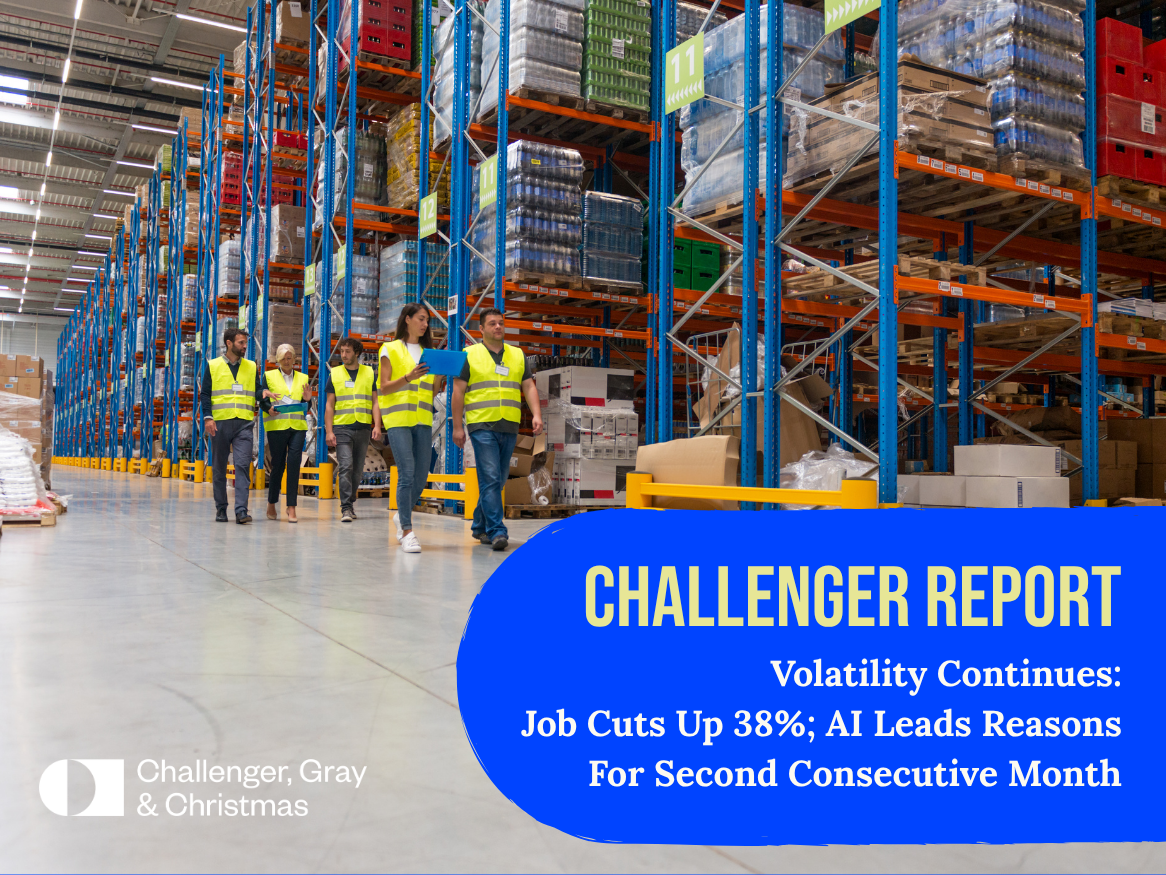
On the layoff side: Cisco announced cuts of fewer than 4,000 jobs (under 5% of its workforce) on May 13 to redirect investment toward AI chips, fiber optics, and security — the same quarter it reported record revenue of $15.8B, up 12% year-over-year. 38 Stock rose over 17% in after-hours trading on the announcement. For broader context (reported this week, data covering April): Challenger, Gray & Christmas found that US employers cited AI as the reason for 21,490 of 83,387 planned job cuts in April 2026 — 26% of the total — marking the second consecutive month AI led all cited causes. 39 The US technology sector has now had 16 straight months of net payroll losses, with tech employment at its lowest since March 2021. 40
On the funding side, Anthropic is reportedly in early talks to raise at least $30B at a valuation exceeding $900B — which would put it above OpenAI's $852B mark from its $122B April 2026 round. 41 This would be Anthropic's second large round in under three months: the company raised $30B at a $350B valuation in February. Anthropic's annualized revenue reached over $30B by April 2026, up from roughly $9B at end of 2025. 41 No deal has been announced; Bloomberg's reporting is based on sources familiar with the discussions.
Cover image: OpenAI GPT-Realtime-2 official art — soundwave and circuit board fusion on dark background.
Cover image from OpenAI: Advancing voice intelligence with new models in the API
参考ソース
- 1OpenAI: Advancing voice intelligence with new models in the API
- 2OpenAI: Work with Codex from anywhere
- 3MindStudio: Anthropic Dev Day: 6 New Managed Agent Features
- 4Anthropic: Introducing Claude for Small Business
- 5SiliconANGLE: Anthropic announces 'programmatic credit pool' as agentic tool use rises
- 6ExplainThisTech: Why Nvidia Is Betting on Quantum AI
- 7OpenAI: Daybreak
- 8Forbes: OpenAI Daybreak
- 9OpenAI: GPT-5.5 Instant: smarter, clearer, and more personalized
- 10Google Cloud: Gemini 3.1 Flash-Lite
- 11WhatLLM: New AI Models May 2026
- 12HuggingFace: unsloth/MiMo-V2.5
- 13BuildFastWithAI: Best AI Models May 2026
- 14TechCrunch: Cerebras raises $5.5B, then stock pops $108%
- 15Isomorphic Labs: Series B announcement
- 16The Next Web: Recursive Superintelligence raises $650M
- 17TechCrunch: Exaforce raises $125M Series B
- 18TechCrunch: Vapi hits $500M valuation
- 19Latitude Media: Gridcare raises $64M Series A
- 20CNBC TV18: HCLTech to lead $300M Sarvam AI round
- 21TechCrunch: Wirestock raises $23M
- 22AFP/BusinessWire: Stitch Raises $25M Series A
- 23TechCrunch: Khosla Ventures bets $10M on Ian Crosby
- 24StockTitan: Berto Acquisition Corp. II prices $274M IPO
- 25Tech Jack Solutions: Starlink AI Acquisition Corp $100M IPO
- 26TechCrunch: Robinhood preps second retail venture IPO
- 27Council of the EU: AI Act Omnibus agreement
- 28Colorado General Assembly: SB 26-189
- 29Nixon Peabody LLP: Colorado AI Act repeal analysis
- 30Gizmodo: Government's AI vetting page removed
- 31The Hill: White House scrambles to tame AI fears
- 32Nextgov/FCW: NIST aims for summer release of AI cyber guidelines
- 33Route Fifty: States look to preempt local AI laws
- 34Roll Call: GOP data privacy bill
- 35TechCrunch: SpaceXAI has been bleeding staff since its merger
- 36Fast Company: Inside the xAI exodus
- 37Business Insider: Thinking Machines Lab key talent departures
- 38TechCrunch: Cisco cuts jobs to spend more on AI
- 39CBS News: AI accounts for 26% of April job cuts
- 40Fortune: The job market is healing for everyone except in the office
- 41Bloomberg: Anthropic in talks to raise $30B at $900B valuation
このコンテンツについて、さらに観点や背景を補足しましょう。