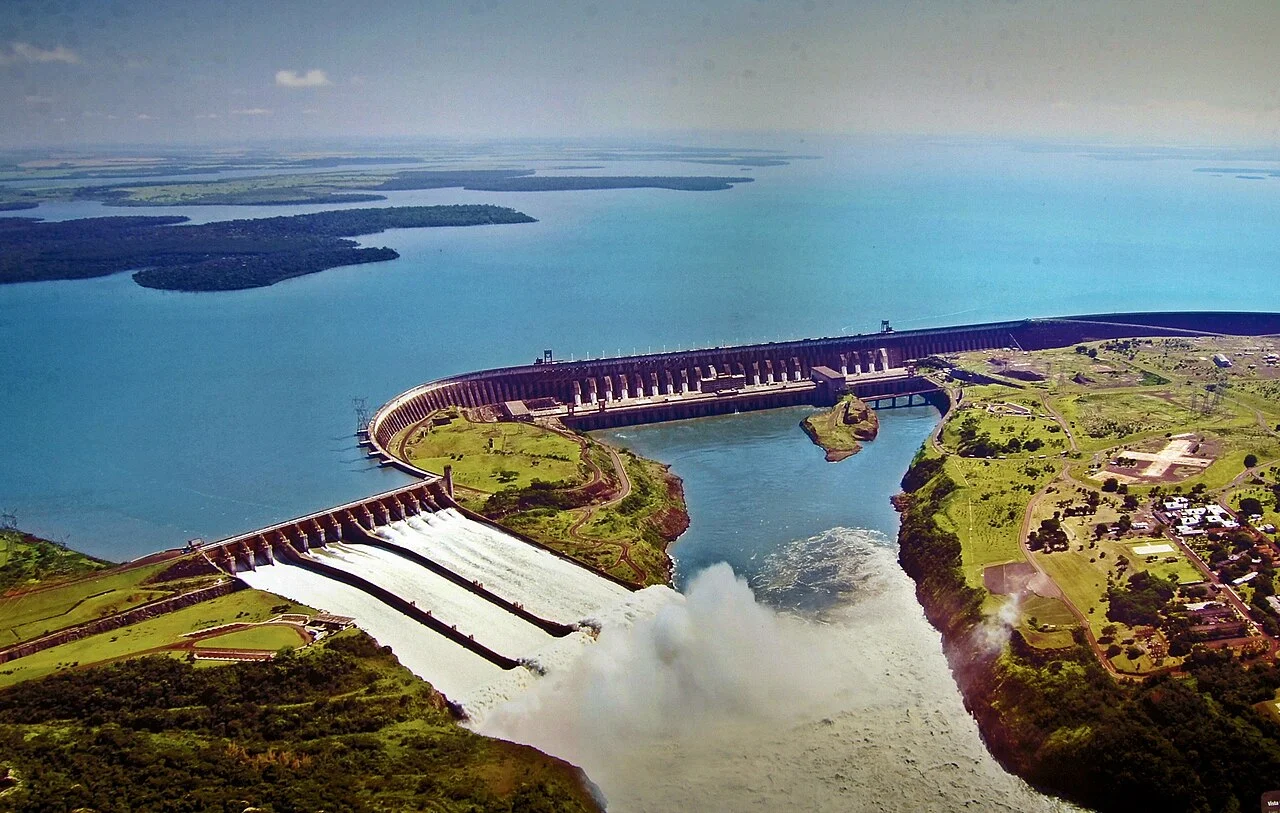
Itaipu Dam: how two grid frequencies forced every engineering decision
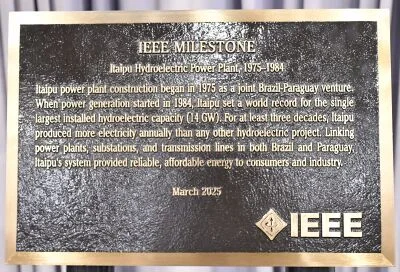
In 1973, a single treaty clause — equal 50/50 energy ownership between Brazil (60 Hz grid) and Paraguay (50 Hz grid) — forced every major engineering choice at the Itaipu Dam into unusual territory. This case study traces the cascade: from the hollow gravity hybrid dam design that saved 4.3 million m³ of concrete, through the three-year diversion of the Paraná River, the 20 × 700 MW Francis turbines split across two frequencies, and the record-breaking ±600 kV HVDC bipoles that solved the frequency conversion problem at gigawatt scale. It covers Itaipu's 32-year world record for annual generation (103.1 TWh in 2016), the 2025 IEEE Milestone designation, the ongoing $649M GE Vernova digital modernization (2022–2036), and the unresolved Annex C treaty renegotiation suspended by an espionage scandal and resumed in November 2025 — with no final agreement as of June 2026.

The treaty constraint: engineering for two sovereigns
Moving the seventh-largest river
Four dams in one: the hollow gravity decision
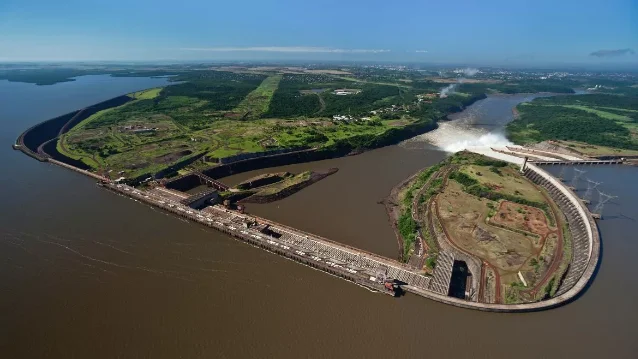

Twenty turbines, two frequencies
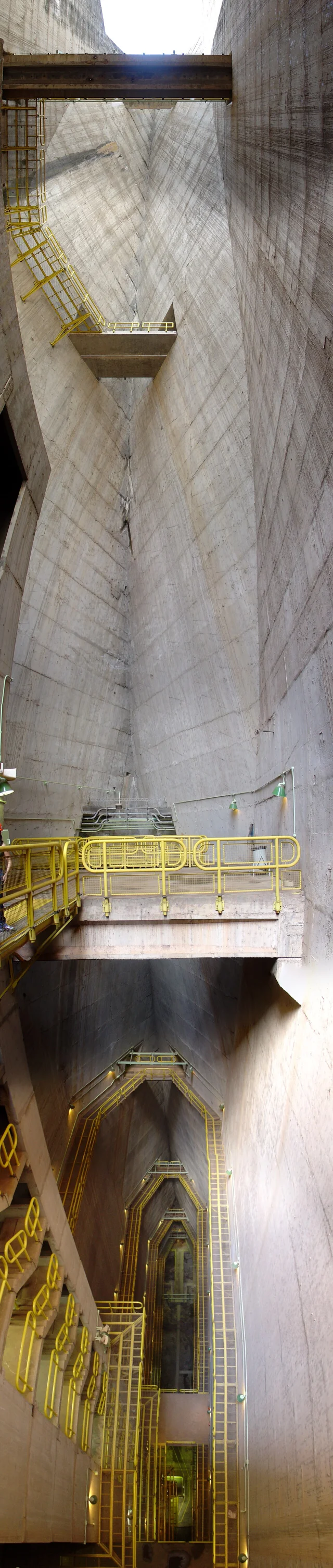
Construction at scale: 14 years and 12.3 million m³
Generation record and engineering legacy
- River diversion methodology: The strategy used on the Paraná — excavating a bypass channel through the adjacent basalt, then gating it closed after the main dam was complete — was studied and adapted for the Three Gorges Yangtze diversion (1997–2002), where similar logic applied to a river of comparable magnitude.
- Large Francis turbines: Itaipu's runners, at approximately 8.5 m diameter, were the largest manufactured at the time and pushed both casting technology and dynamic balancing capability to their limits. Three Gorges' runners reached 10.4 m — a direct extension of the manufacturing envelope first proven at Itaipu.
- HVDC for frequency bridging: The Foz do Iguaçu–Ibiúna bipoles established that HVDC transmission could reliably handle frequency conversion at gigawatt scale and long distances. That precedent directly informed subsequent continental interconnections — including several AC/DC hybrid schemes in Europe and China — where asynchronous grids needed to exchange power.
- Construction Consultants Board: The four-year independent safety review cycle, established by Itaipu Binacional in 1974, became a model for dam safety governance globally, influencing ICOLD (International Commission on Large Dams) guidelines for independent review of major hydraulic structures.
What's actively changing: modernization, drought, and a renegotiation under espionage shadow
The GE Vernova modernization (2022–2036)
Drought operations and the "Water Windows" protocol
Annex C renegotiation: espionage, asymmetric costs, and no resolution yet
What Itaipu changed
参考ソース
- 1Wikipedia: Itaipu Dam
- 2ETHW: IEEE Milestone — Itaipu Hydroelectric Power Plant
- 3GI Hub: Itaipu Hydroelectric Dam
- 4Itaipu Binacional: Energy
- 5PBS Building Big: Itaipu Dam
- 6ENR: GE Renewables leads $650M upgrade
- 7Structurae: Itaipu Dam
- 8Power Technology: Itaipu Hydroelectric Dam Project
- 9Hitachi Energy: Itaipu Customer Story
- 10IEEE Spectrum: IEEE Recognizes Itaipu Dam's Engineering Achievements
- 11GE Vernova: Nov 2025 feature
- 12GE Vernova: 2022 press release
- 13Dialogue Earth: Energy, cash and climate shape talks
- 14Frontiers in Climate: International law and ITAIPU
- 15Brazil Reports: espionage fallout
- 16Agência Brasil: Brazil and Paraguay to resume talks
- 17Valor International: Itaipu cost mismatch intensified in 2025
このコンテンツについて、さらに観点や背景を補足しましょう。