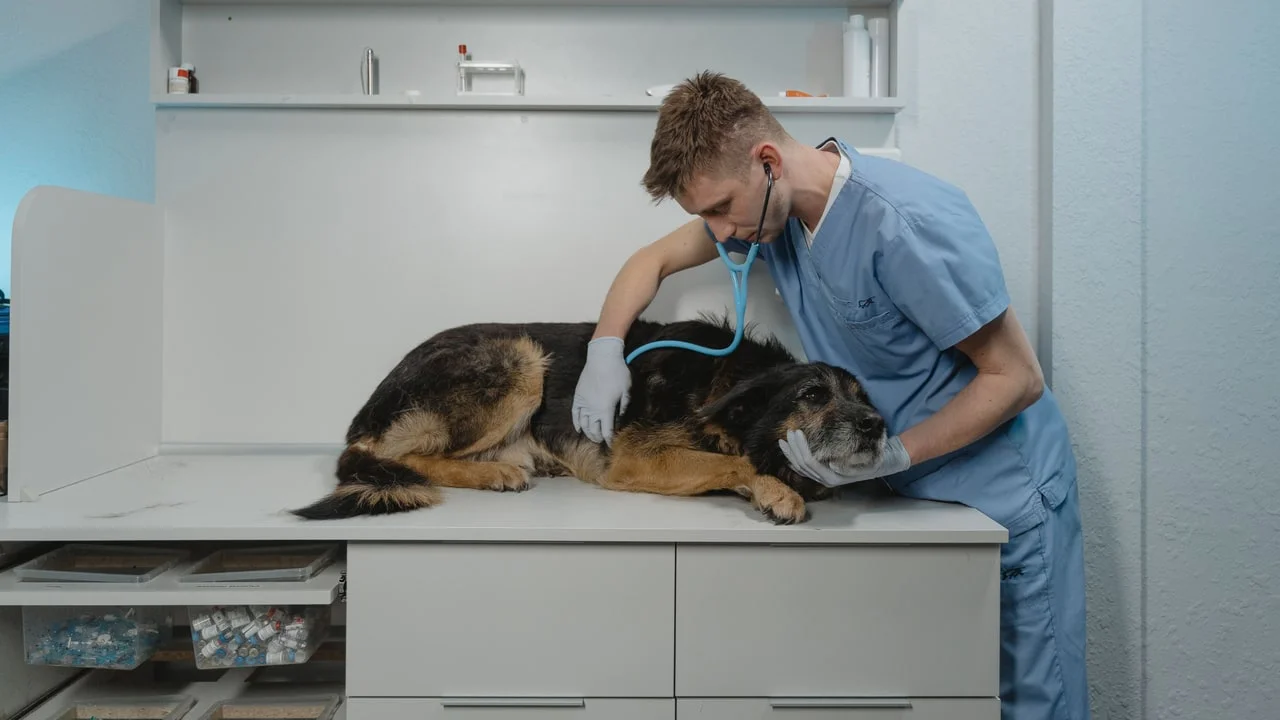
IDEXX Laboratories (IDXX): the diagnostics monopoly hiding inside every vet clinic
IDEXX Laboratories passes both hard filters: ROE above 57% in each of the past three fiscal years and a 3-year FCF CAGR of ~39% (FY2022–FY2025). With ~50% global veterinary diagnostics market share, 90%+ customer retention, and a new AI cytology instrument cycle underway, the stock sits 27% below its 52-week high after Q1 2026 delivered 14% revenue growth and a guidance raise.

IDEXX Laboratories passes both hard filters with room to spare: ROE above 57% in each of the past three fiscal years, and a 3-year free-cash-flow CAGR of ~39% (FY2022–FY2025). The company owns roughly 50% of the global veterinary diagnostics market, generates nearly 90% recurring revenue from consumables and software subscriptions, and is now on the steeper part of an AI-driven instrument adoption curve. At ~$562, the stock sits 27% below its 52-week high while the underlying business just raised full-year guidance after a 14% revenue quarter.
Filter verification
| Metric | FY2022 | FY2023 | FY2024 | FY2025 | Pass? |
|---|---|---|---|---|---|
| ROE | 104.6% | 80.7% | 57.7% | 66.2% | ✓ |
| FCF | $394M | $773M | $808M | $1,057M | — |
| 3-yr FCF CAGR (FY22→FY25) | — | — | — | ~39% | ✓ |
Both hard filters — ROE > 15% and 3-year FCF CAGR > 30% — are confirmed from IDEXX's audited income statements and cash-flow statements.12
コンテンツカードを読み込んでいます…
Business model
IDEXX sells veterinary diagnostics hardware, consumables, reference laboratory services, and practice-management software — almost exclusively to companion animal clinics. The revenue mix matters because ~86% of Companion Animal Group revenue is recurring: veterinarians who place an IDEXX Catalyst or hematology analyzer on their counter buy IDEXX reagents and test kits every week for the life of the machine.3
The three revenue streams inside the Companion Animal Group (CAG) are:
- VetLab consumables — reagents and test kits for in-clinic analyzers; grew 17% in Q4 2025, aided by a 12% expansion in the global premium instrument installed base.
- Reference laboratory services — samples shipped to IDEXX's 80+ reference labs for complex diagnostics; grew 11% in Q4 2025.
- Veterinary software and imaging — cloud-native PIMS (practice-management software), VetConnect PLUS data platform, and diagnostic imaging hardware; grew 13% organically in Q4 2025.
Total FY2025 revenue was $4.304B, up 10.4% year-over-year, with operating margins expanding 270 basis points to 31.6%.1
The moat
IDEXX's competitive position rests on three layers that compound each other:
Installed-base lock-in. Once a clinic places an IDEXX analyzer, it is essentially contractually tied to IDEXX reagents. Switching costs include retraining staff, re-establishing reference ranges for a new platform, and migrating patient-record integrations. Customer retention in CAG diagnostics runs above 90%.3
Scale in reference laboratories. IDEXX runs one of the largest veterinary reference lab networks in the world. Throughput advantages reduce per-sample cost, turnaround times are hard for regional competitors to match, and the lab network feeds back into IDEXX's AI training data sets — a feedback loop that small competitors cannot replicate.
Software ecosystem stickiness. VetConnect PLUS integrates in-clinic diagnostics, reference lab results, and practice-management workflows into one view. Once a clinic migrates to this cloud-native stack, ripping it out is operationally disruptive. Nearly all new software placements in 2025 and 2026 are on the cloud-native version.5
On top of these layers sits a new product cycle. In 2025 IDEXX launched IDEXX inVue Dx — an AI-powered cytology analyzer for in-clinic use — and placed over 1,900 units in Q4 2025 alone, beating its initial 5,500-unit full-year 2026 target ahead of schedule. The companion Cancer Dx panel, which detects canine lymphoma at point-of-care, had ~70% of Q1 2026 tests running as bundled panels within months of launch. IDEXX is in the early innings of converting every routine blood draw into a multi-test diagnostic event.
Current valuation
At $562 (June 5, 2026 close), IDXX trades at roughly 38x its raised 2026 EPS guidance midpoint of $14.67, and ~41x trailing-twelve-month free cash flow of $13.45 per share.2
| Metric | Value |
|---|---|
| Share price | ~$562 |
| Market cap | ~$44.3B |
| Forward PE (2026 guidance midpoint) | ~38x |
| P/FCF (TTM) | ~41x |
| EV/EBITDA | ~29x |
| 52-week range | $497–$770 |
| Analyst consensus target | ~$713 (9 buy / 5 hold / 1 sell)6 |
The stock is currently ~27% below its 52-week high, compressing the forward PE toward the lower end of its three-year range. IDEXX's guidance raise after Q1 2026 — when revenue grew 14% and EPS came in at $3.47 against consensus estimates — suggests the premium is not contracting because the business is slowing.7 It is contracting because the broader market sold off healthcare compounders through Q1 2026.
A TIKR analysis from May 2026 estimated IDXX could deliver ~11% annualized total returns through 2028 on base-case assumptions: 9% revenue CAGR, operating margin expanding to ~33%, and a 38x exit PE — roughly where the stock sits today.8

Key risks
U.S. clinical visit softness. U.S. same-store wellness visits declined roughly 1% in Q1 2026. This is the demand input that powers IDEXX's consumable pull-through — fewer visits mean fewer tests. If pet owners continue deferring routine checkups under economic pressure, the volume-driven components of IDXX's recurring revenue will grow slower than the instrument installed base suggests.5
CEO transition. Jay Mazelsky — who has run IDEXX since 2019 — is stepping back to Executive Chairman. Mike Erickson takes over as CEO. The August 14, 2026 Investor Day is the first forum where Erickson will articulate the long-term strategy. Execution risk during management transitions is real, even at companies with strong institutional processes.
Competitive pressure from Zoetis and Mars Antech. Zoetis has been expanding its diagnostics portfolio aggressively since acquiring Abaxis in 2018, and Mars Antech runs the Banfield/VCA clinic network as a captive channel for competitive diagnostic platforms. IDEXX's 50% market share is durable but not unchallenged, and the inVue Dx launch puts AI cytology on the competitive map for the first time — competitors will respond.
Tariff and FX exposure. IDEXX sources some instrument components internationally and generates ~40% of revenue outside the U.S. The 2026 earnings guidance already embeds ~$0.22 of FX headwind per share. An escalation in US-China tariffs — particularly on medical devices and consumable inputs — would compress margins further than the current guidance assumes.1
Premium multiple requires continued execution. At ~38x forward earnings, IDEXX prices in consistent double-digit EPS growth. A single quarter of meaningful guidance miss would likely compress the multiple more than the underlying business deterioration warrants.
Why it passes this screen
IDEXX is not a cyclical growth story. It owns infrastructure that 30,000+ veterinary practices depend on daily, generates recurring cash flow with a capital-light profile (CapEx ~$180M against $1B+ in FCF), and is entering a product refresh cycle driven by AI cytology that extends its diagnostic moat into new testing categories. The ROE has been above 57% in every recent year. The FCF grew at 39% annually for three years. The stock is $200 below where it was twelve months ago, and the business just raised its forecast.
参考ソース
- 1IDEXX Q4 & Full Year 2025 Earnings Release
- 2IDEXX Laboratories Financial Ratios — StockAnalysis
- 3IDEXX Investor Day 2025 Presentation
- 4Pexels — Tima Miroshnichenko
- 5What Can Investors Expect from IDEXX's 2026 Investor Day
- 6IDEXX Analyst Estimates — Directorstalkinterviews
- 7Should IDEXX's SDMA-Enhanced Catalyst Panels Prompt Action — Yahoo Finance
- 8IDEXX Could Deliver ~11% Annual Returns Despite 15% YTD Pullback — TIKR
- 9Pexels — Tima Miroshnichenko
このコンテンツについて、さらに観点や背景を補足しましょう。