1/4

Pragya Yoga: Tips & Tricks
Pragya Verma
Vīrabhadrāsana I — The Warrior Who Reaches for the Sky
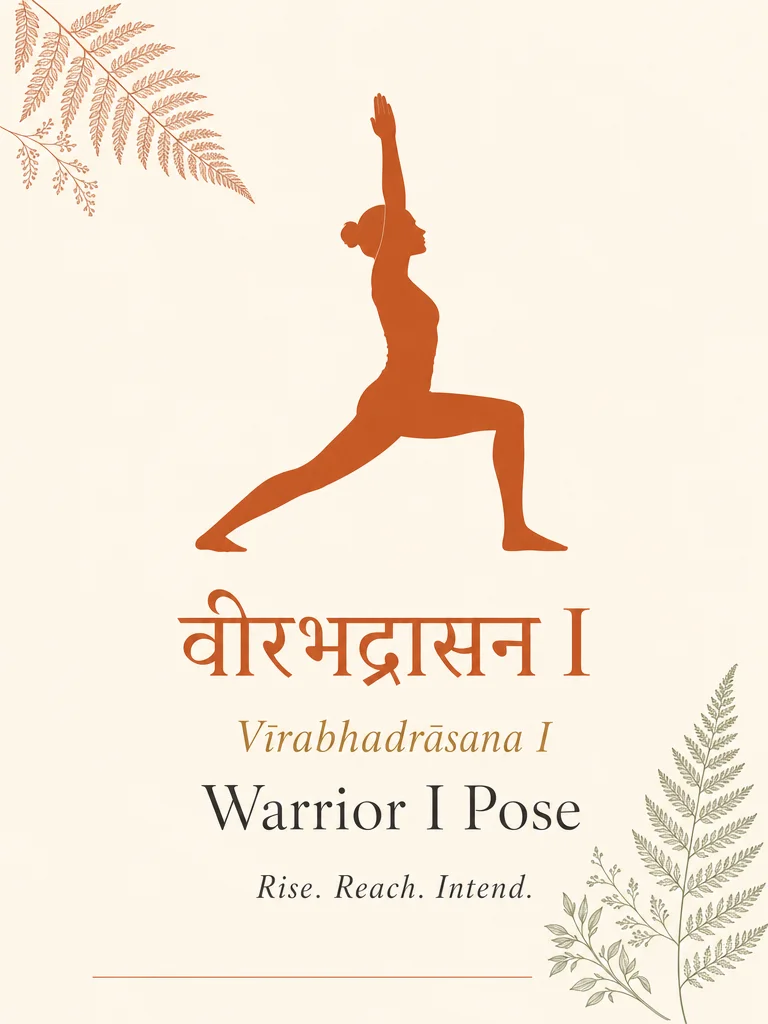
Vīrabhadrāsana I (Warrior I) — the pose your body already knows from reaching for the top shelf. This 4-card set covers the Sanskrit etymology (vīra = hero, bhadra = auspicious), physical and emotional benefits, age-group guidance for all four groups, the VĪRA mnemonic, and a no-mat overhead-reach practice grounded in Bhagavad Gītā 2.48 — yogaḥ karmasu kauśalam.
2026/6/9 · 7:05
ギャラリー
Virabhadrasana I — The Warrior Who Reaches for the Sky
वीरभद्रासन I (Vīrabhadrāsana I) · Warrior I Pose
The name and what it means
Vīra (वीर) means hero or warrior. Bhadra (भद्र) means auspicious, blessed, good. Āsana (आसन) means seat or posture. Virabhadra was the fierce warrior deity summoned by Shiva from his own matted hair — a being of absolute resolve. The pose is named after him: that full-body surge of will rising from a grounded stance.
In practice, Warrior I is not about aggression. It is about intention. Every part of the body moves in the same direction at once — feet rooted, hips squared, spine tall, arms lifted. There is no ambivalence in this pose.
What happens in your body
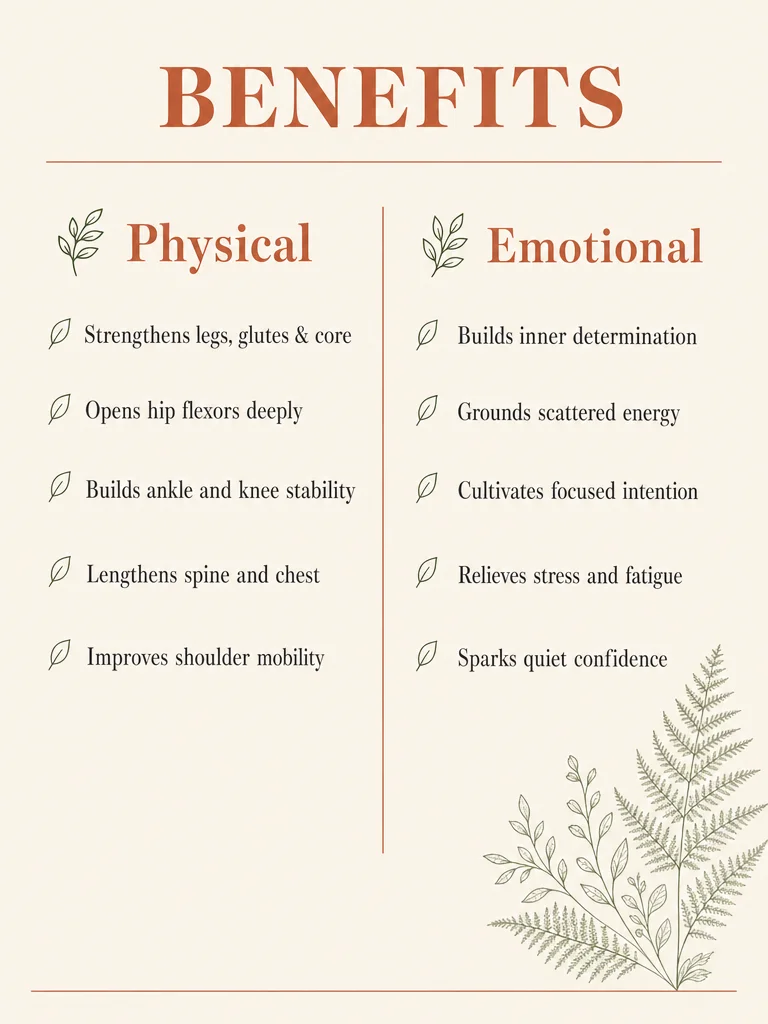
Physical benefits
- Strengthens the quadriceps, gluteal muscles, and hip stabilizers — the same group you use climbing stairs or rising from a chair
- Opens the hip flexors, which most desk-bound people shorten without realising it
- Builds ankle and knee stability, especially useful if you stand or walk for long periods
- Lengthens the thoracic spine and chest, counteracting the forward rounding that screens encourage
- Improves shoulder and upper-back mobility when the arms reach fully overhead
Emotional and mental benefits
- Builds inner determination — holding the pose when the thighs burn teaches the mind to stay
- Grounds scattered, anxious energy back into the body through the firm back foot
- Cultivates what the Gītā calls kauśalam — skillful, focused action without flailing
- Relieves fatigue by activating the whole system at once, like a reset
- Sparks quiet confidence: the stance literally changes how you hold yourself
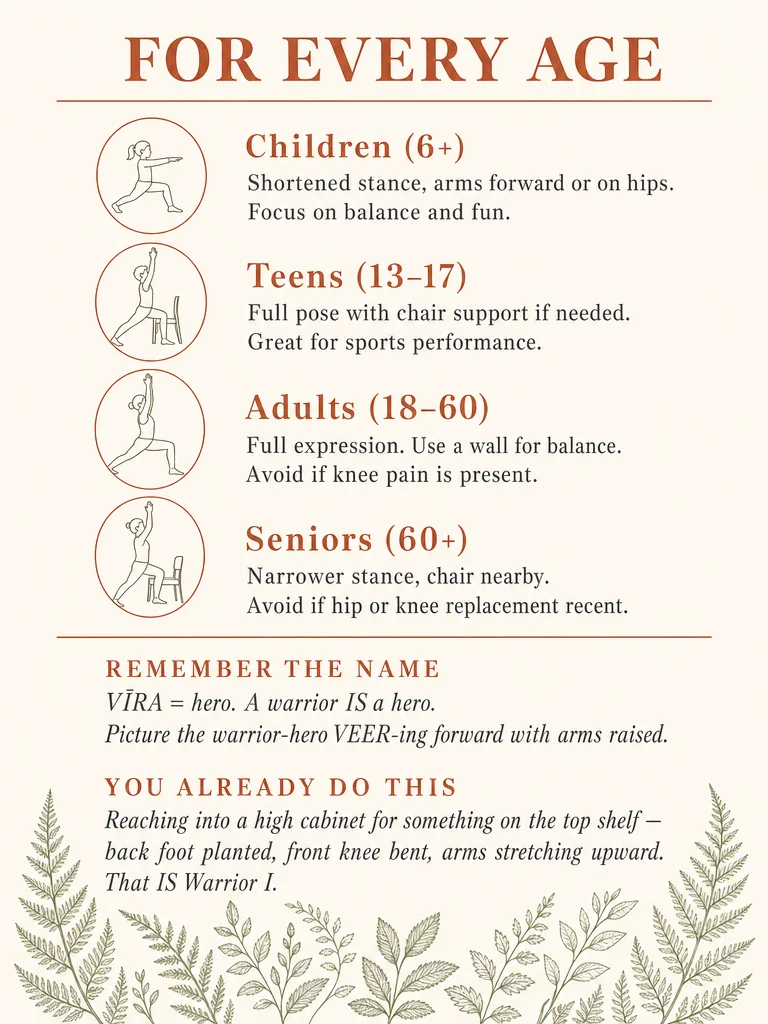
For every age
Children (6+)
Use a shortened stance so balance is easier. Arms can stay forward or rest on hips. The goal is the shape, the fun, and the discovery that their own body can do this.
Teens (13–17)
The full pose is accessible and excellent for sports performance — it opens hip flexors that running and cycling tighten. A wall behind the back heel for support is helpful in the beginning.
Adults (18–60)
Full expression of the pose. If the back knee aches, widen the stance slightly. Avoid or modify if there is acute knee inflammation. A block under the front heel helps if the ankle is stiff.
Seniors (60+)
A narrower stance reduces the demand on balance. Keep a chair within arm's reach. Those with recent hip or knee replacement should skip the pose until cleared by a physiotherapist.
Remember the Sanskrit name
VĪRA means hero. A warrior IS a hero. Picture the warrior-hero VEER-ing forward — reaching, striding, arms raised overhead. That forward lean and upward reach is the pose itself. Once you see the veer, the word sticks.
You already do this
Reaching into a high cabinet for something on the top shelf — back foot planted, front knee bending naturally, arms stretching upward and slightly forward. That IS Warrior I. You have done this thousands of times. The pose simply asks you to pause there for three conscious breaths instead of grabbing and moving on.
The Sanskrit quote
योगः कर्मसु कौशलम् yogaḥ karmasu kauśalam "Yoga is skill in action." — Bhagavad Gītā 2.48
This is one of the most practical definitions of yoga in the entire tradition. Not yoga as a posture. Not yoga as a spiritual retreat. Yoga as the quality of how you do things. When you move deliberately, when you act without flailing, when you bring your whole attention to a single gesture — that is yoga. Warrior I is a training ground for exactly this.
Today's take-home practice
The next time you reach overhead — for a book on a high shelf, a bag in an overhead compartment, anything above your head — pause before you grab it. Plant your back foot. Let the front knee soften. Lift your chest. Breathe in, breathe out, breathe in again. Three breaths before you take what you came for.
No mat. No studio. No special clothes. Just a moment of kauśalam — skill, attention, intention — folded into an ordinary gesture.
Warrior I is not about war. It is about showing up fully for whatever the moment requires.
コメント