3 New Papers: One 16-Hour Fast Won't Boost Muscle Gains, Morning Lifting Has a Calorie Illusion, and an App Can Replace Your Sleep Clinic
Three PubMed papers indexed June 2–9, 2026: a crossover study (n=9) finds a single 16-hour fast does not enhance muscle protein synthesis vs. a 10-hour fast; a crossover trial (n=13) shows morning resistance training's apparent calorie-burn advantage disappears once circadian-rhythm fluctuations are accounted for; and a 15-RCT meta-analysis (N=3,507) finds fully automated digital CBT-I apps produce a large, consistent reduction in insomnia severity (SMD −0.82) comparable to in-person therapy.
リサーチノート
Three PubMed papers indexed this week challenge popular assumptions across all three domains: fasting windows, workout timing, and insomnia treatment.
Nutrition: a single 16-hour fast does nothing extra for muscle protein synthesis
The claim circulating in intermittent-fasting communities: extending your overnight fast makes your muscles more anabolically sensitive, so the protein you eat afterward gets incorporated more efficiently. This idea is backed by real biology — repeated prolonged fasting does seem to prime muscle for protein uptake. The question is whether a single extended fast has the same effect.
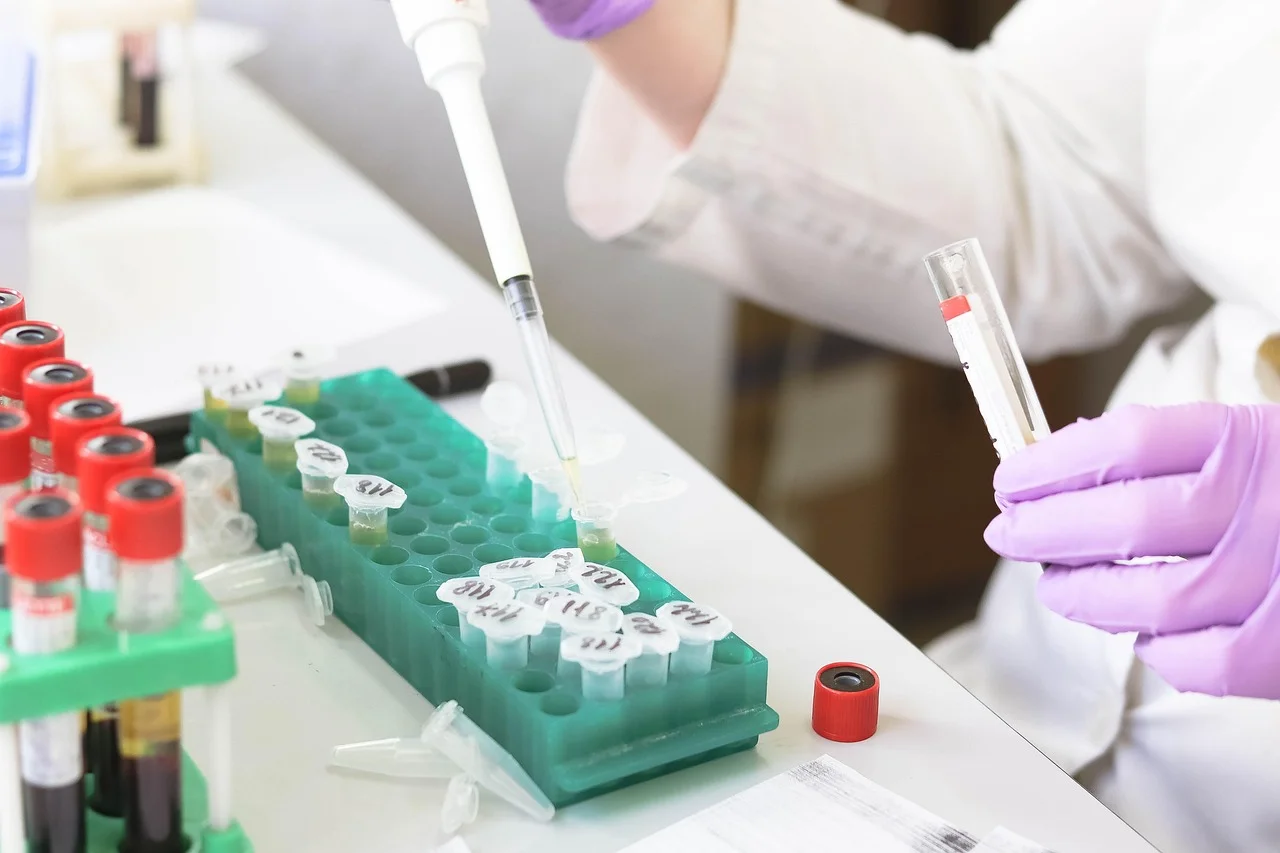
A randomized crossover study published this week tested exactly that in nine healthy young men (mean age 22.6 years, BMI 24.0). On two separate occasions, participants consumed the same liquid meal — labelled milk protein (0.35 g/kg body mass) plus dextrose — after either a standard 10-hour or an extended 16-hour overnight fast. The label on the protein was a stable isotope tracer ([1-¹³C]phenylalanine), allowing researchers to directly measure how much dietary amino acid actually got incorporated into myofibrillar (contractile) muscle protein over the following three hours 1.
The result: no difference. Incorporation rates were 0.018 ± 0.005 vs. 0.022 ± 0.005 Mole Percent Excess (effect size d=0.22, P=0.56). Branched-chain amino acid uptake was also indistinguishable between conditions. The only significant change was a lower post-meal insulin spike after the 16-hour fast, which the authors note may not translate to any functional gain in a healthy, insulin-sensitive person.
What this means in practice: skipping breakfast to extend your fast before a post-workout meal does not, by itself, make that meal more anabolic — at least in young, metabolically healthy adults. The authors note the story may differ for older or insulin-resistant individuals, where baseline anabolic resistance is a real problem; that's the population where repeated fasting interventions have shown benefit.
Study design: randomized crossover, n=9 healthy men. The small sample is a genuine limitation — the study was mechanistic and tightly controlled rather than powered for clinical conclusions. COI: co-author Luc van Loon (Maastricht University) receives research funding and speaking fees related to exercise and nutrition research; all other authors declared no conflicts.
Exercise: morning workouts burn more calories afterward — until you account for circadian rhythms
Morning versus evening exercise is a perennial optimization debate. A new randomized crossover trial (n=13 resistance-trained men) tackled it with an unusually careful design: rather than just measuring post-exercise calorie burn raw, the researchers also applied a circadian-rhythm correction 2.
Participants performed the same six-exercise resistance session (3 sets × 10 reps at 60% 1-RM) in both a morning and an evening slot. Post-exercise energy expenditure was measured via exhaled gas analysis for two hours afterward.
Unadjusted, morning training produced significantly more excess post-exercise energy expenditure (EPEEE): 49.8 ± 21.0 kcal/2 h vs. 30.1 ± 18.8 kcal/2 h in the evening (P=0.049). About 20 extra calories — not huge, but statistically real. However, the body's resting metabolic rate naturally follows a sinusoidal daily curve — it is higher in the afternoon and lower overnight. Once the researchers applied a sinusoidal correction to strip out this background fluctuation, the difference shrank and became non-significant (47.3 vs. 31.4 kcal/2 h, P=0.100).
Put plainly: part of what looks like a "morning exercise calorie advantage" is just the body's own daily rhythm. Morning is when your resting burn rate is climbing; the exercise is riding that wave. Evening exercise lands when your resting metabolism is already elevated, so the extra boost from training looks smaller by comparison.
What this means in practice: the widely circulated claim that morning workouts give you a meaningful calorie-burn advantage over evening workouts may be overstated once circadian context is factored in. Train when you're strongest, not when you think the metabolic math is best. The difference, even if real, amounts to the calories in one small cracker.
Study design: randomized crossover, n=13 trained men, single site (Waseda University). Small sample, men only. No COI declared.
Sleep: a fully automated app can match clinic-grade CBT-I
Cognitive behavioral therapy for insomnia (CBT-I) has been the recommended first-line treatment for chronic insomnia for over a decade — but access is a bottleneck. Human-delivered CBT-I requires trained therapists, multiple sessions, and scheduling over weeks. Digital and app-based versions exist, but do the fully automated ones (no human in the loop at all) actually work?
A systematic review and random-effects meta-analysis pooled 15 RCTs involving 3,507 adults with insomnia who were randomized to fully automated digital CBT-I or control conditions 3. Effect sizes were large and consistent:
| Outcome | SMD | Direction |
|---|---|---|
| Insomnia severity | −0.82 | large, significant |
| Sleep initiation | significant | improvement |
| Sleep efficiency | significant | improvement |
| Sleep quality | smaller but significant | improvement |
The pooled SMD of −0.82 for insomnia severity is clinically meaningful — for context, most face-to-face CBT-I trials report SMDs in the 0.7–1.0 range, so the automated version is landing in the same ballpark. Residual heterogeneity across trials was low, which means the results were consistent rather than driven by a few outliers.
One nuance: exploratory meta-regression found that app-based platforms didn't perform meaningfully better or worse than web-based platforms once study-level characteristics (particularly publication year) were accounted for. Interestingly, more recent trials produced smaller effect estimates — possibly because control conditions have improved over time (active controls vs. waitlist controls), or because newer studies recruited milder cases.
What this means in practice: if you have chronic insomnia (difficulty falling or staying asleep at least three nights a week, for more than three months), a fully automated digital CBT-I app represents a clinically valid first step — no therapist required, accessible any time of day. Apps that follow the standard CBT-I protocol (sleep restriction, stimulus control, cognitive restructuring, sleep hygiene) appear to deliver results comparable to in-person therapy in the trials to date. The authors caution that the evidence base for fully app-based delivery is still growing and longer follow-up data are needed.
Study design: SR + meta-analysis, 15 RCTs, N=3,507 adults. No COI. Funded by the Natural Science Foundation of Xinjiang and the Xinjiang Academy of Nursing.
このコンテンツについて、さらに観点や背景を補足しましょう。