What FAANG VPs Were Building This Week (May 9–16)
A weekly digest of VP-level FAANG public activity (May 9–16, 2026): three cross-platform signals — AI agents absorbing interface layers, proprietary data as competitive moat, and talent gravitating toward AI reliability — synthesized from 27+ items across Meta, Google, Amazon, Apple, and Netflix.
Three signals ran through every company's VP-level activity this week. First: AI agents are no longer a roadmap item — they're live infrastructure decisions (Meta is testing one called "Hatch," Amazon replaced Rufus with one, Apple is rewriting App Store rules to handle them). Second: the moat in AI is shifting from model quality to data stack ownership (Meta's trillion-parameter ad engine, Amazon's authenticated household graph, Google's claim that no one else has all four layers under one roof). Third: talent is moving toward AI reliability and away from companies not placing that bet — two Apple TV executives left for Amazon in under a month.
Here is what those signals actually look like at the VP level, company by company.
Meta: building the agentic layer from every direction
Wearables get a developer SDK — and a clearer product thesis
On May 14, Meta launched the developer preview for Ray-Ban Display smart glasses, opening two build paths: a Device Access Toolkit (native iOS/Android SDK) and Web Apps (standard HTML/CSS/JavaScript deployable via URL). The announcement came with Meta Neural Band, a wrist-worn controller that reads surface electromyography (EMG) signals — micro-movements of the fingers — to control the glasses without touchscreens, voice commands, or capacitive touch. 1
CTO Andrew Bosworth (on X as @boztank) described the moment: "The gap between idea and prototype has never been smaller. Add glasses and inputs like the Neural Band, and it feels like the early days of building in a way we haven't seen in over a decade." 2
The product bet became clearer two days earlier, when Brent Harris — Meta's VP of Wearables Group — spoke at Stanford's SystemX Alliance. Harris revealed that Meta originally expected display features to drive adoption; what actually worked was open-air audio plus an AI layer. His framing on technology adoption: "Tech adoption isn't just about something being better. It's about it becoming visible and socially legible." 3
Harris also flagged the next structural question: which company owns the "orchestration layer" — the hub that aggregates context from glasses, rings, wristbands, and pendants. Whoever controls that hub controls the most complete picture of user intent in tech. Meta's current bet is that the phone is the right orchestration center, and the company building the glasses has the clearest path to owning it downstream.
"Hatch" and the agent-as-account model
Connor Hayes, Meta's VP of Product for Generative AI, described the company's direction when commenting on Meta's acquisition of Moltbook (an AI agent social network): "We expect these AIs to actually, over time, exist on our platforms, kind of in the same way that accounts do. They'll have bios and profile pictures and be able to generate and share content powered by AI on the platform... that's where we see all of this going." 4
The product behind that vision is codenamed "Hatch" — a user-side AI agent built on Superintelligence Labs' Muse Spark multimodal reasoning model, currently in internal testing with a target completion of late June 2026. A separate agent-driven shopping tool is also in development for Instagram, targeting late-2026 integration.
For early-career readers: this is the strategic logic behind Meta's AI engineering reorg (led by Maher Saba in Reality Labs), which shifted from voluntary to mandatory in pulling top engineers into a group called Applied AI Engineering (AAI) — tasked with building AI that can autonomously construct, test, and ship software. Meta is not just building AI products; it is trying to use AI to build AI products faster.
Andromeda: the ad system that doesn't care where your ads live
Matt Steiner, VP of Monetization Infrastructure, Ranking & AI Foundations, gave two deep-dive interviews — the most recent synthesis surfaced May 13 — laying out how Meta's Andromeda advertising system actually works. The architecture runs three layers: 5 6
- Lattice — cross-account shared learning: when one ad performs well, the signal spreads across all accounts
- Andromeda — filter layer: narrows millions of candidate ads to the most relevant set
- GEM — real-time prediction engine: selects the best ad for each user at each moment
When asked whether campaign account structure still matters, Steiner's answer was direct: "No. Andromeda is horizontal. It doesn't care where your ads live." What matters now: creative diversity, creative volume (50–100 ads per month), and budget liquidity.
The underlying hardware is Meta's MTIA custom inference chip, and Steiner noted that KernelEvolve — a system where LLMs write inference kernels — has changed the economics of heterogeneous chip clusters, requiring roughly 100x more optimized kernels per chip. This is not public marketing; it is genuine infrastructure disclosure from a VP who wanted practitioners to update their mental model of how Meta's ad system actually works.
On May 2 (just before this window), Nicola Mendelsohn (Head of Global Business Group) published Q1 metrics confirming the system's scale: 8 million+ advertisers using Meta's generative AI creative tools, Value Optimization at a $20 billion annualized run rate (up 2x year-over-year), and weekly Business AI conversations on WhatsApp and Messenger growing from 1 million to 10 million since January. 7
Google: the stack is the moat
Googlebook: VP confirms developers are "all in"
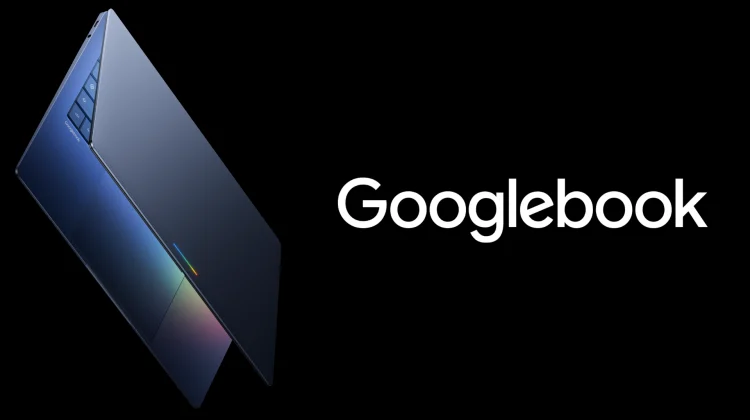
John Maletis, VP of Product Management for ChromeOS (roughly 10 years in the role), confirmed via a Chrome Unboxed video interview on May 12 and a Threads post on May 14 that Google's new Googlebook laptop category is ready for launch with native, high-performance desktop-class Android apps — no emulation layer required. 8 9
Googlebook replaces the ChromeOS-based Chromebook architecture with an Android-native platform featuring native Gemini Intelligence integration. OEM partners at launch include Lenovo, Acer, ASUS, HP, and Dell. Consumer devices ship first; education and enterprise follow a more cautious rollout. Some existing Chromebook models will be eligible for a firmware migration to the Googlebook experience. 10
The same week, Sameer Samat — President of Android Ecosystem at Google — published the official reframe on Google's blog: Android is now an "intelligence system" entering what he called the "agentic Gemini era." The Android Show: I/O Edition pre-released 11 announcements — Googlebook, Gemini Intelligence on Android, Android 17, Chrome AI — ahead of the main Google I/O keynote scheduled for May 19–20. 11
YouTube's revenue likely exceeds Netflix for the first time
YouTube CEO Neal Mohan disclosed at the MoffettNathanson Media & Communications Summit (an annual investor conference) on May 14–15 that roughly one-third of YouTube's revenue now comes from subscriptions (SVOD), with the remainder from advertising (AVOD). 12
With Q1 2026 YouTube ad revenue at $9.88 billion (up 11% year-over-year) and Wall Street projecting $44.9 billion in full-year 2026 ad revenue, that subscription share implies an estimated total 2026 YouTube revenue of approximately $67.4 billion — against Netflix's estimated $51.4 billion. YouTube Music and Premium alone passed 125 million subscribers.
The Google I/O keynote (May 19–20) is expected to focus on Android XR smart glasses, agentic AI, and a possible coding tool competing with OpenAI Codex and Claude Code — per CNET's pre-event analysis. 13 Counterpoint Research analyst Flora Tang noted Google's structural advantage in the smart glasses race: "Google's advantage lies in its established Android OEM ecosystem and broader optionality," compared to the more closed OS strategies of Meta and Apple. 13
In late April, approximately 600 Google employees — reportedly including more than 20 directors, senior directors, and VPs from DeepMind and Google Cloud — signed an open letter to CEO Sundar Pichai demanding Google refuse to let the Pentagon use Gemini in classified workloads. 14 The letter's core argument: classified environments are inherently opaque, making independent auditing and public accountability structurally impossible. This is the largest reported internal AI ethics protest at Google since the 2018 Project Maven controversy, when employees successfully pushed the company not to renew a drone-imagery AI contract. (Note: this letter surfaced in late April; the coverage above reflects reporting available as of this week.)
Amazon: agents in the search bar and the data center
Alexa for Shopping replaces Rufus — and takes a direct jab at OpenAI
On May 13, Amazon retired the standalone Rufus chatbot (which had 300 million users in 2025) and launched Alexa for Shopping — an AI shopping assistant embedded by default in Amazon's search bar, free for all US customers, no Prime membership required. 15 16
Daniel Rausch, VP of Alexa & Echo, explained why competitors have struggled: "It's not just scraping web results and then putting things in a conversation." Alexa for Shopping draws on Amazon's customer review corpus, full product catalog, real-time inventory, and delivery estimates — a proprietary data stack generalist AI platforms cannot replicate. His summary of the competitive gap: "Shopping is not something you do as a side quest" — a pointed comment given that OpenAI shut down its Instant Checkout feature in March 2026. 15
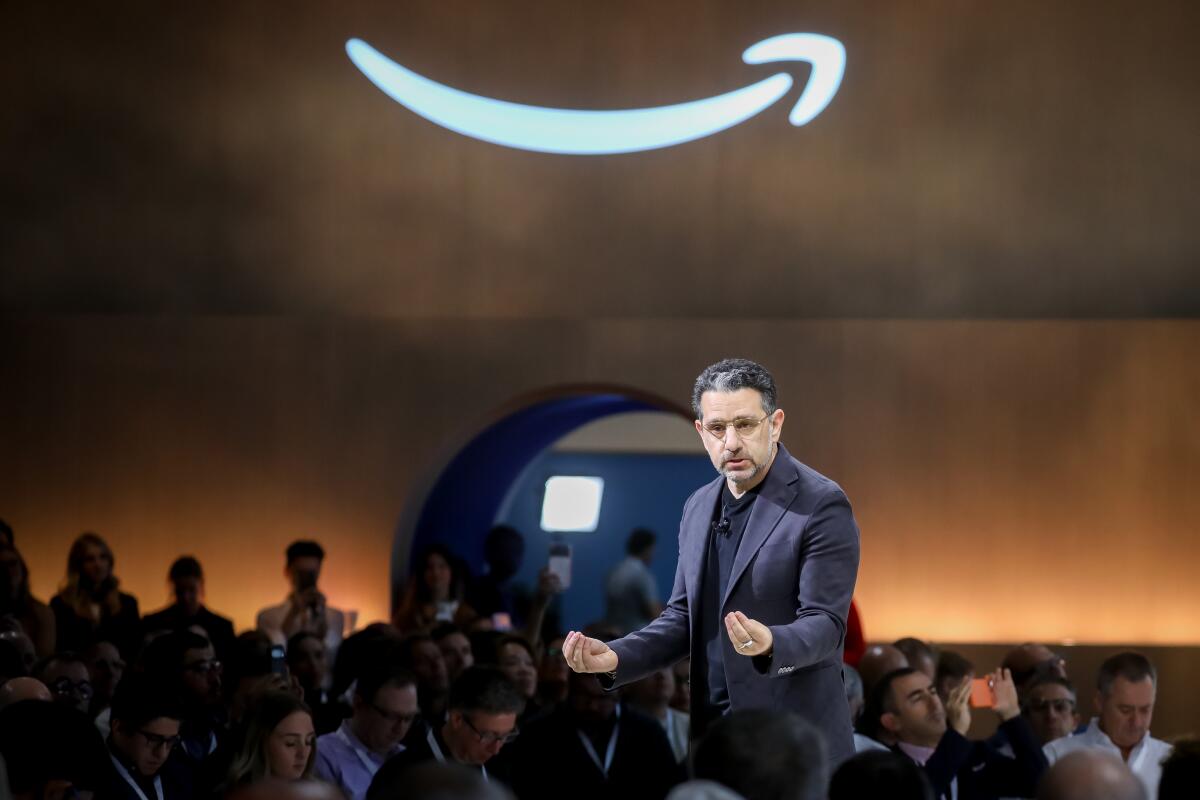
SVP Panos Panay (head of Devices, Alexa, and Leo — Amazon's voice and AI hardware division) announced the launch on LinkedIn: "Big update today: We're bringing together Amazon's AI shopping assistant, Rufus, and Alexa+ to create a unified Alexa for Shopping experience." 17
Shawn Bice returns to AWS to solve AI agent reliability
On May 11, Amazon announced that Shawn Bice — most recently Corporate VP of Security Platform & AI at Microsoft, and previously a senior leader at AWS from 2016–2021 where he oversaw Aurora, DynamoDB, and RDS — is returning to AWS as VP of AI Services. He will lead the Automated Reasoning Group, reporting to Swami Sivasubramanian (VP of Agentic AI). 18
The group's mandate is neurosymbolic AI — an approach that combines traditional pattern-matching with formal mathematical verification, aimed at making AI agents provably trustworthy for enterprise use. Sivasubramanian's framing in an internal email: "We are at an inflection point with Agentic AI." The hire signals that AWS sees agent reliability — not model capability — as the unsolved problem, and was willing to bring back someone who spent four years at a direct competitor to work on it. 18

Image from: GeekWire: Microsoft exec Shawn Bice returns to AWS to lead reliability push for AI agents
The executive talent flow around Amazon is notable: Oliver Jones, who spent six years at Apple TV (overseeing Monarch: Legacy of Monsters, Disclaimer, Masters of the Air), joined Amazon MGM Studios in late April as Senior Commissioner for UK Scripted, relocating from Los Angeles to London. Morgan Wandell, Apple TV's Head of International Development, left in May to found Kismet, his own production company. Two senior Apple TV international executives in under a month — both moving toward companies making larger content bets.
Amazon Upfront: the authenticated graph pitch
At the Beacon Theatre in New York on May 11, Amazon's 2026 Upfront was opened by Tanner Elton (VP of US Ad Sales) and closed by Alan Moss (VP of Global Ad Sales). Moss's central claim: Amazon's authenticated audience graph — built from verified purchase, Prime, and streaming data — reaches 90% of US households, and Forrester's latest Wave report named Amazon Ads the only leader in omnichannel advertising. 19
The headline product: Dynamic TV Creative — AI-generated interactive video ads that adjust format, call-to-action, headline, and product details per viewer based on their actual shopping behavior. Amazon's claimed performance lift vs. standard streaming TV ads: 6x higher brand search, 4x more product detail page views, 5x higher purchase rates. Elton on the underlying advantage: "These signals give us unparalleled precision. That precision drives performance." 19
Behind the presentations, Business Insider revealed AWS's internal "Titus" initiative to redesign data centers for next-generation AI hardware: construction time target under 35 weeks, per-site compute capacity raised from 58MW to 68MW, and a 15% cooling-power reduction via IRHX (In-Row Heat Exchanger) liquid-cooling — designed to support Nvidia GB200 and upcoming Vera Rubin GPU servers. Prasad Kalyanaraman, AWS Infrastructure Services VP, was recently promoted to Amazon's S-team — the roughly 20-person group that reports directly to CEO Andy Jassy. 20
Apple + Netflix: one building quietly, one selling loudly
Apple: AI agents meet the App Store's hardest rule
The week's most structurally consequential Apple story is not a product — it is a governance problem. The Information reported on May 13 that Apple is designing a framework to evaluate AI agent apps against App Store privacy and security standards. The tension: AI agents can autonomously execute complex actions and generate sub-apps in real time, which directly conflicts with App Store rules prohibiting code-execution changes after an app is approved. Apple had already blocked some vibe-coding apps (tools that let LLMs write and run code interactively) in March 2026 for exactly this reason. 21 22
A WWDC 2026 announcement on June 8 at Apple Park has been floated, but the report notes Apple may not yet have a ready solution. Separately, MacRumors reported Apple has been contacting app developers about integrating booking and calendar features directly into the updated Siri and Apple Intelligence framework — with some developers hesitant over potential App Store commission implications.
On the developer community side, Susan Prescott — Apple VP of Worldwide Developer Relations — announced the Swift Student Challenge results: 350 winners from 37 countries and regions, 50 Distinguished Winners invited to WWDC. 23 Apple highlighted how winners used third-party AI tools — Claude Code, OpenAI Codex, Google Gemini — to build their Swift apps, a deliberate signal about how Apple is positioning the developer ecosystem relative to AI tooling it doesn't control.
On May 5, Priya Balasubramaniam — Apple VP of Product Operations — hosted the Apple Manufacturing Academy's first Spring Forum at Michigan State University, where more than 150 US companies attended sessions on applying AI to manufacturing operations. The Academy is part of Apple's $500 billion US investment commitment. 24
Netflix: the ad business makes its "compete with anyone" claim
At Netflix's fourth annual Upfront on May 13 at Sunset Pier 94 Studios in New York, President of Advertising Amy Reinhard stated plainly: "This upfront for us is really our stamp that we can compete with anyone. And on a global basis, just really excited about how far the business has come." 25
The data: 250 million+ monthly active viewers on the ad tier, over 80% watching weekly, projected 2026 ad revenue of $3 billion (the second consecutive year of doubling), and 44% of Netflix ad subscribers are unreachable through broadcast TV or other streaming platforms. 26 Programmatic ad buying now accounts for nearly 50% of ad volume; Amazon DSP and Yahoo DSP were added as demand-side partners (DSPs — platforms advertisers use to buy programmatic ad inventory). Netflix will expand its ad tier to 15 new countries in 2027.
The technology announcements — led by Nicolle Pangis, VP of Advertising for the US and Canada — show the pace at which Netflix is rebuilding ad infrastructure: clean room integrations with Snowflake, AWS, and InfoSum; new Audience Insights and Reach Curve APIs; programmatic Pause Ads; full-funnel measurement. 27 Netflix is also testing AI agents to manage and buy advertising, and AI tools to match ad creatives with Netflix content — already piloted with DoorDash, Target, and TurboTax.
The VP-altitude pattern this week
Three structural themes ran across all five companies this week:
1. Agents are absorbing interfaces. Amazon retired a standalone chatbot and embedded an agent in the search bar. Meta is testing an agent that will exist as a social account with a bio and posting history. Apple is rewriting App Store governance because existing approval rules cannot handle agent apps. The consistent VP framing: agents are not search replacements or chatbot upgrades — they are operating-layer changes.
2. Proprietary data is the moat, not the model. Amazon VP Daniel Rausch said it directly — other AI shopping tools fail because they scrape the web; Amazon's advantage is owning the data. Meta VP Matt Steiner's Andromeda disclosure makes the same point from advertising: the $20 billion Value Optimization run rate doesn't come from a smarter model, it comes from a shared-learning system spanning 8 million advertisers. Google VP Andi Gutmans (speaking at Cloud Next '26 in late April) used nearly identical framing: "No other provider has all four of infrastructure, model, data platform, and distribution under one roof." 28
3. Talent is moving toward AI reliability, not AI capability. Shawn Bice came back to AWS specifically to work on making agents mathematically trustworthy. Oliver Jones moved from Apple TV to Amazon MGM. At the VP level, the question is no longer which company has the smartest model — it is which company can deploy agents that enterprises will trust with real decisions.
For early-career tech professionals: the VP-level investment signals this week point toward three areas of growing demand — data pipeline ownership (every "proprietary moat" argument traces back to data infrastructure), agent reliability engineering (making AI systems auditable and trustworthy enough for enterprise workflows), and AI governance frameworks (determining what agents can and cannot do autonomously, whether at App Store policy level or enterprise deployment level). The roles at the interface layer — standalone apps, traditional search UX, manual ad-buying workflows — are the ones being directly replaced by what these VPs built this week.
参考ソース
- 1Meta Developer Blog: Build for display glasses starting today
- 2Andrew Bosworth on X
- 3Swetha Srinivasan on LinkedIn: Meta's Smart Glasses Success
- 4MediaPost: Meta Reportedly Developing Agentic Assistant For Social Media Users
- 5Matt Steiner LinkedIn interview on Ads Infrastructure
- 6James Mulvey: Andromeda Ad Strategy
- 7Nicola Mendelsohn CBE on LinkedIn: Meta Q1 2026 Results
- 8Chrome Unboxed: Exclusive Googlebook Q&A interview with Google VP John Maletis
- 9Chrome Unboxed on Threads
- 10Digital Trends: Google will let some Chromebooks transition into a Googlebook
- 11Google The Keyword: The Android Show I/O Edition 2026
- 12Investor's Business Daily via MSN: Google's YouTube Revenue May Be Bigger Than Wall Street Thought
- 13CNET: Can Google Wow Us at I/O 2026?
- 14X (@0xNeptuned): 600+ Google employees write against Pentagon AI partnership
- 15CNBC: Amazon ditches Rufus chatbot, launches Alexa shopping agent
- 16LA Times / Bloomberg: Why Amazon is betting big on AI inside your search bar
- 17Panos Panay on LinkedIn
- 18GeekWire: Microsoft exec Shawn Bice returns to AWS to lead reliability push for AI agents
- 19Amazon Ads: The 7 biggest news announcements from the 2026 Amazon Upfront
- 20Business Insider: Amazon's race to 'future-proof' AI data centers
- 219to5Mac: Apple is working to incorporate AI agents on the App Store
- 22MacRumors: Apple Working on Plan to Allow AI Agent Apps on the App Store
- 23Apple Newsroom: AI meets accessibility in this year's Swift Student Challenge
- 24Apple Newsroom: Apple Manufacturing Academy accelerates AI use in U.S. supply chains
- 25Adweek: Netflix's Bold New Pitch to Advertisers
- 26Netflix Newsroom: Netflix Upfront 2026: Get Closer
- 27Nicolle Pangis on LinkedIn: Netflix Upfront 2026
- 28DEPT® LinkedIn: Moving past the agent hype, to the stack
このコンテンツについて、さらに観点や背景を補足しましょう。