FAANG VP Radar: Agents Take the Wheel (May 10–17, 2026)
Microsoft dominated the week with 7 active VP signals — Nadella's MDASH multi-agent security system, Hanselman's viral GitHub Copilot App (2.38M views), Kevin Scott's OpenAI trial testimony. Cross-platform theme: agentic AI reliability as the real production bottleneck.
リサーチノート
This week's VP-level activity across Microsoft, Google, Meta, Netflix, Amazon, and Apple broke along a single fault line: who is serious about making AI agents actually reliable — and who is still building the tools that will run on top of them.
Microsoft dominated in volume and signal strength. Seven VP-or-above leaders posted, testified, or shipped. Google announced two product launches in 48 hours. Meta's CTO shipped a developer platform while a new executive stepped onto the global stage. Netflix ran its most confident advertiser pitch to date. Amazon quietly hired a VP whose entire mandate is making agents trustworthy. Apple's marketing chief gave his first major interview in a decade.
The agentic reliability thread — running from Redmond to Seattle — is worth tracking closely. Details below.
Microsoft: seven voices, three signals
Satya Nadella: from spreadsheets to security agents
On May 10, Satya Nadella (Microsoft Chairman & CEO) posted a characteristically light observation about Excel: the software has been Turing-complete for years, and is now edging toward what he called "AI-complete" — meaning stochastic gradient descent, attention mechanisms, and next-token prediction can all be implemented inside spreadsheet cells. 1 The tweet landed 1,185 likes, 211K views, and a wave of developer replies confirming the idea works.
Three days later the tone shifted. On May 13, Nadella announced MDASH (Microsoft's new multi-model agentic security system) — a system that fields more than 100 specialized agents running across frontier and custom models to find exploitable software vulnerabilities. 2 In Nadella's words:
"Our new multi-model agentic security system brings together more than 100 specialized agents across frontier and custom models to find exploitable bugs, delivering top performance on the CyberGym benchmark."
MDASH's lead architect is Taesoo Kim — Microsoft VP of Agentic Security and VP of Security Research, who is on leave from Georgia Tech and previously led Team Atlanta to first place at DARPA's AIxCC competition. The system found and patched 16 vulnerabilities before May's Patch Tuesday cycle, and is now open for private-preview signups. 3
The gap between the Excel tweet and the MDASH announcement captures something real: the same "AI-complete" tooling Nadella finds charming as a party trick is the substrate that security teams are now deploying at enterprise scale to hunt bugs automatically.
Scott Hanselman: 2.38 million reasons to use the Copilot app
Scott Hanselman, Microsoft's VP of Developer Community, had the week's single most-engaged post — and it wasn't even his own content.
On May 14, Hanselman announced the GitHub Copilot App entering technical preview. 4 His original announcement post drew 541 likes and 83K views. Then he retweeted a creative post by @CameronFoxly celebrating the launch, and that retweet pulled 2.38 million views, 39,802 likes, and 3,750 bookmarks — the highest engagement signal across all monitored executives this week by a significant margin. 5
Earlier in the week, Hanselman was in a different kind of spotlight. From May 9–12, he defended Windows' new "Low Latency Profile" feature — which temporarily boosts CPU frequency by 1–3 seconds during user-critical interactions, claiming up to 40% faster app launch times. Critics called it "cheating." Hanselman pushed back directly: "Apple does this and y'all love it." 6 PCMag covered the exchange under the headline "Microsoft Pushes Back on Complaints of 'Cheating' With Low Latency Feature." 7
His core argument — that this is how every modern OS works, including macOS and Linux — is technically accurate. The controversy is less about the feature and more about the double standard that often follows Microsoft announcements, particularly in developer communities.
Brad Smith: AI safety is a team sport
On May 15, Brad Smith (Microsoft President and Vice Chair) announced a formal collaboration between Microsoft, CAISI (the Center for AI Safety and Innovation, the U.S. government's AI standards body) and the UK AI Security Institute. 8 His framing was deliberate:
"The science of AI evaluation is too important to advance alone."
For early-career readers: this is VP-altitude language for "we are trying to establish standards before regulators impose them." Microsoft has learned, from GDPR and antitrust proceedings, that companies which help write the evaluation framework tend to fare better than those who wait for it to arrive.
Kevin Scott: the $100 billion trial
On May 13, Kevin Scott (Microsoft CTO) testified in the Elon Musk v. OpenAI/Sam Altman lawsuit in San Francisco federal court. 9 The hearing surfaced details that hadn't been public before.
The centerpiece was a 2018 email Scott wrote questioning whether OpenAI had the right to pitch Microsoft on a commercial plan:
"I wonder if the large donors at OpenAI are aware of these plans? Ideologically, I can't imagine them funding an open project to aggregate ML talent, only to build a closed for-profit project on top of it."
At trial, Scott said he wasn't questioning OpenAI's mission — he was worried the commercial discussions would become a distraction. The donor he mentioned was not Musk, but Reid Hoffman, who then sat on Microsoft's board.
More consequential was the financial picture that emerged. A 2019 confidential memo by Scott and CFO Amy Hood, presented to Microsoft's board, acknowledged that the company faced an "experience and talent gap" in AI and that building in-house would take too long and carry too much risk. Microsoft needed OpenAI's frontier workloads to put real load on Azure.
The numbers: Microsoft has spent more than $100 billion on the OpenAI relationship (including $13 billion in committed investment and infrastructure costs). Through March 2025, Microsoft had received approximately $9.5 billion in direct revenue attributable to the partnership. The most recent deal structure gives OpenAI roughly 27% equity-equivalent stake at Microsoft, commits OpenAI to $250 billion in Azure cloud spend, and extends Microsoft's license to 2032 — now non-exclusive after OpenAI won the right to deploy on other cloud platforms. The jury is expected to begin deliberations next week. Musk is seeking up to $134 billion in damages.
This testimony matters to early-career technologists less for the legal outcome and more for what it reveals about how large AI partnerships actually work: the deal was made because Microsoft's leadership was honest with its board about a capability gap, not because Azure was strong enough to attract OpenAI on its own merits.
Shawn Bice exits; WinHEC returns
On May 11, Shawn Bice — Microsoft Corporate VP of Security Platform & AI — officially joined AWS as VP of AI Services, reporting to Swami Sivasubramanian (AWS VP of Agentic AI) and leading the AWS Automated Reasoning Group.
10 11 The Automated Reasoning Group uses neurosymbolic AI — combining neural network pattern-matching with formal mathematical verification — to make AI agents provably reliable. More on this in the convergence section below.
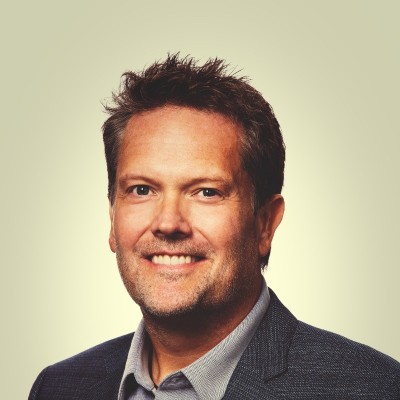
Also on May 14, Robin Seiler (Corporate VP, Windows Ecosystem and Commercial Engineering) and Ian LeGrow (CVP, Windows + Devices) unveiled the Driver Quality Initiative (DQI) at WinHEC 2026 in Taipei — the first WinHEC since 2018. 12 DQI covers four pillars: architecture (pushing kernel drivers toward user-mode), trust certification, lifecycle management, and extended quality metrics beyond crash rates. Dell and AMD both issued support statements at the event.
Google: two launches, one hardware reveal
Sundar Pichai: a 48-hour product sprint
On May 11, Sundar Pichai (CEO, Google and Alphabet) announced that end-to-end encryption for RCS messaging was beginning to roll out between Android and iPhone users. 13
"Today, we're starting to roll out end-to-end encryption for RCS messaging between Android and iPhone users!"
The post drew 543K views and 6,206 likes — Pichai's highest-engagement tweet of the week. This closes a long-standing security gap: SMS messages between Android and iPhone have historically been unencrypted, a vulnerability both security researchers and regulators have flagged. The scale of the rollout: Sameer Samat (President, Android Ecosystem) noted at the Android Show that 2.5 billion RCS messages are sent every day. 14
The next day, May 12, Pichai announced Gemini Intelligence at the Android Show (I/O Edition). 15 The system brings Gemini's capabilities to Android devices through four features: multi-step cross-app task automation, one-tap form filling, Rambler (voice-to-text), and custom widgets. The rollout starts this summer on Samsung Galaxy and Google Pixel phones, then expands to Wear OS, Android Auto, Android XR (glasses), and Chromebooks.
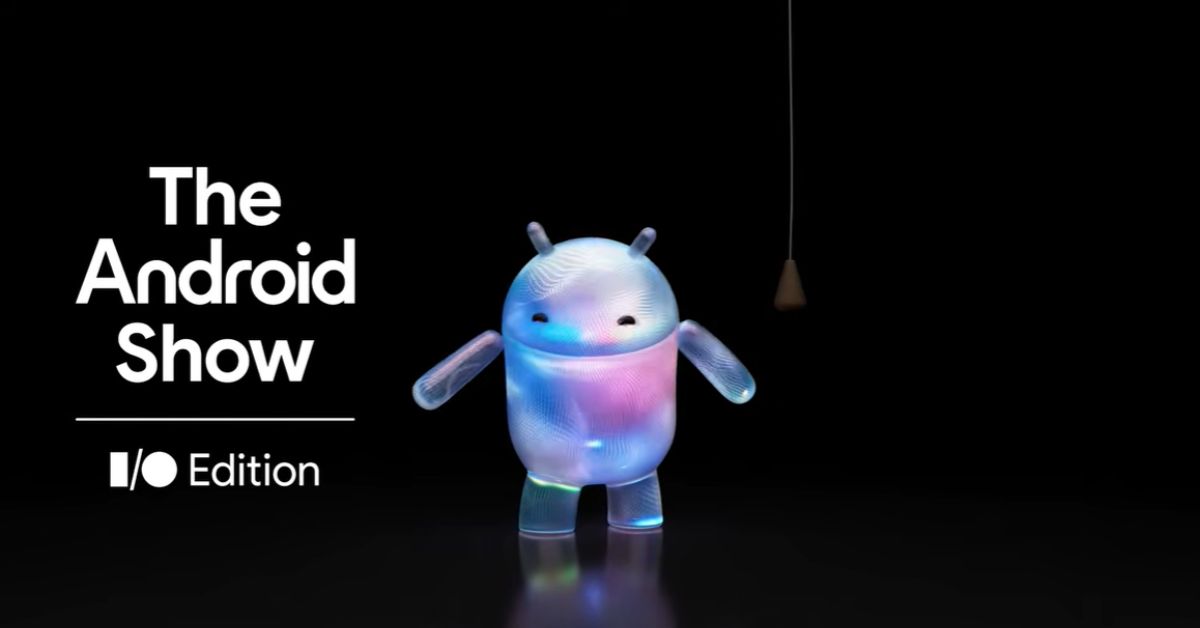
Google I/O itself (May 19–20) falls just after this window, so the full VP-level announcement wave from that event will be covered next week.
Demis Hassabis: $2.1 billion for drug discovery
On May 12, Demis Hassabis (Nobel Laureate, co-founder and CEO of Google DeepMind, CEO of Isomorphic Labs) announced that Isomorphic Labs — DeepMind's drug discovery spinout — had raised $2.1 billion in new funding. 16 The post drew 2.79 million views and 19,316 likes — the second-highest single-post engagement across all monitored executives this week.
"I've always believed the No.1 application of AI should be to improve human health. We are turbocharging that goal with $2.1B in new funding."
Isomorphic Labs builds on AlphaFold (the protein-structure prediction system that earned Hassabis his Nobel) and is focused on computational drug discovery. The $2.1B raise signals institutional confidence that AI-driven drug discovery is moving from research to clinical pipeline — a different kind of "agentic reliability" story than MDASH, but one that addresses the same underlying question: can AI systems do consequential real-world work with acceptable error rates?
John Maletis: Googlebook is coming in fall 2026
John Maletis, Google VP of Product Management for ChromeOS, gave an exclusive video interview to Chrome Unboxed confirming that Googlebook — Google's rebranded, redesigned laptop platform — will launch in fall 2026. 17 Hardware partners include HP, Dell, Lenovo, Acer, and ASUS, and the platform carries a new "Glow" brand identity with a distinctive glowing light-strip design.
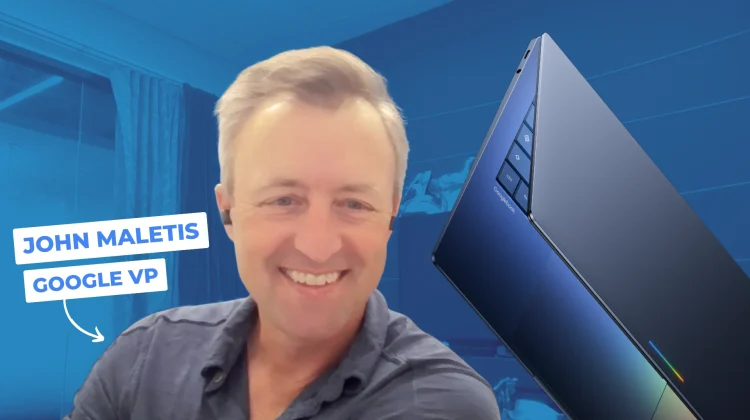
Maletis confirmed that developers are fully committed to the platform, and that the goal is native, desktop-quality apps — not the Android-app-running-in-a-window experience that frustrated early Chromebook users. Some existing Chromebook Plus devices will be upgradeable to Googlebook software via firmware update. (Note: the full interview transcript is behind a paywall; the above is drawn from cross-referenced coverage by 9to5Google, Android Authority, Digital Trends, and Yahoo Tech.)
Meta: a hardware bet, a global debut, a calendar drop
Andrew Bosworth: building for Ray-Ban Display
On May 14, Andrew "Boz" Bosworth (CTO, Meta) launched a developer platform for Meta's Ray-Ban smart glasses, which now feature a built-in display. 18 The release includes a web app and a mobile SDK, both in developer preview.
"The gap between idea and prototype has never been smaller. Add glasses and inputs like the Neural Band, and it feels like the early days of building in a way we haven't seen in over a decade."
As a demonstration of what's now possible, Bosworth showed Darkroom Buddy — an app that walks users through film photography development with AR overlays visible only in the glasses. The point he's making: this category only makes sense when the output is glasses-native, not ported from a phone. For developers tracking hardware platforms, Meta's strategy with Ray-Ban Display is to seed the ecosystem before the hardware hits critical mass — the same pattern Google used (unsuccessfully) with Glass but that Meta is trying with a form factor that looks like regular eyewear.
Dina Powell McCormick: Meta's new global face
Between May 13–15, Dina Powell McCormick joined the U.S. business delegation accompanying President Trump on a state visit to China, meeting with President Xi Jinping. 19 20 The delegation included Elon Musk (Tesla/SpaceX), Tim Cook (Apple), Jensen Huang (Nvidia), and Larry Fink (BlackRock). She was Meta's representative; Google had none.
On May 15, GuruFocus reported her appointment as Meta President and Vice Chair. 21 Her Instagram post from the trip: "Honored to join President Trump and the U.S. business delegation in China this week."
Powell McCormick had a long career in government — she served in the George W. Bush and Trump administrations — before moving into finance at Goldman Sachs. The role she's filling at Meta is one Sheryl Sandberg held: the executive who represents the company at the level of heads of state and sovereign wealth funds, translating geopolitical risk into business relationships. Her presence on the China delegation in the same week as her appointment reads as a deliberate introduction of her to that audience — though Meta has not commented on the sequencing.
Zuckerberg: Meta Connect 2026 is September 23–24
On May 12, Mark Zuckerberg posted a save-the-date for Meta Connect 2026 — the company's annual AR/VR developer conference — on Facebook and Instagram. 22 The Instagram post drew 224K likes. He also published a Spotify playlist called "Connect 2026 Vibes" featuring Jack Harlow, Tame Impala, and Doja Cat — Fast Company described it as "the vibe of a startup accelerator hosting a college party."
If you're tracking Meta's hardware roadmap, September 23–24 is the date to watch for announcements related to Ray-Ban Display, Quest 4, and whatever Boz has been building.
Netflix: advertising ambitions, M&A discipline, sports clarity
Ted Sarandos: what Netflix won't bid on
On May 13, Ted Sarandos (Netflix Co-CEO) appeared on Fox Business's Mornings with Maria and gave a clear answer to a question that had been floating in streaming industry circles: will Netflix bid on NFL full-season rights? 23
"We're not bidding on whole season of sports, including the NFL."
Netflix's 2026 NFL package expanded to five games — up from two in 2025 — including an Australia-based Week 1 game and a Thanksgiving Eve matchup. Sarandos positioned this as the right model: selective live events at high visibility moments, not the anchor-tenant commitment that comes with full-season rights and their associated content restrictions. He also addressed DOJ scrutiny of NFL streaming fragmentation by arguing that multiple bidders are better for leagues, rights holders, and ultimately consumers.
Greg Peters: "Godspeed" to the Warner Bros. deal
In a TIME magazine interview published May 17, Greg Peters (Netflix Co-CEO) explained, for the first time at length, why Netflix walked away from its offer to acquire Warner Bros. Discovery. 24
Netflix had valued Warner — including HBO — as a "really exciting opportunity." But when Paramount Skydance submitted a counterbid of $111 billion against Netflix's $82.7 billion offer, Netflix declined to match it. Peters:
"We thought of Warner as a really exciting opportunity — incredible IP, HBO as a brand — [and] we thought we would have been amazing stewards of those properties... But, just like in all those other cases, we size the opportunity based on the value back to our members in the business. And when someone's willing to go with a number that's bigger than that value to us, we say, 'Great, good luck, and Godspeed.'"
Netflix received a $2.8 billion termination fee from Paramount. By the numbers: Netflix's 2025 revenue was $45.2 billion (+16% year-over-year), with 325 million+ paid global subscribers. Peters described Netflix's competitive advantage as occupying both the creative and technology domains simultaneously: "They can be as good as us in one. But being as good in both is tough."
Amy Reinhard and Nicolle Pangis: the advertising era
Netflix's fourth annual Upfront on May 13 in New York marked a shift in tone. Amy Reinhard, Netflix President of Advertising, framed it plainly: 25
"If the last couple of years were about proving we're a durable player, this year is about establishing ourselves as a formidable one. We've got cutting-edge technology, we've got great entertainment across shows, movies, podcasts, and live events, and we've got the most engaged and attentive audience."
Nicolle Pangis, Netflix VP of Advertising, presented the Netflix Ads Suite — the company's own ad tech stack, which replaced the Microsoft Advertising partnership in 2025. Key numbers: 26
| Metric | Figure |
|---|---|
| Monthly active ad-supported viewers | 250 million |
| New sign-ups choosing ad-supported tier | 60%+ |
| Ad viewers unreachable on linear TV or other streamers | 44% |
| Countries with ad tier by 2027 | +15 new markets |
A Dove partnership around Bridgerton generated 1 billion+ impressions across seven markets and roughly 60% new shopper growth. New capabilities include agentic AI for ad buying, personalized ad loads, and frequency caps.
Amazon and Apple: constrained signals
Tor Myhren: ten years of not testing ads
The week's most personal VP-level interview came from Apple. Tor Myhren, Apple VP of Marketing Communications, spoke to Fast Company in an exclusive piece marking his tenth year at the company. 27
Apple does not market-test its advertising. Myhren's "nail theory" — one product feature per ad — is the organizational principle behind a decade of campaigns. He developed what he calls the AirPods formula: "music-plus-magic-plus-dance-equals-AirPods." He addressed the May 2024 "Crush" iPad Pro ad — the one that depicted creative instruments being crushed by a press — directly: "If we start to play this game with fear, or get soft on our marketing, it's going to hurt the brand a lot more." He apologized for it publicly within 48 hours of release.
On where marketing is going:
"I'm super optimistic about the future of marketing. Forget five years. I think it's going to be radically different in three years. Radically, radically different. And anyone who says they know what that's going to be, they're lying."
Myhren joined Apple in 2016 from Grey Advertising, where he was Chief Creative Officer. During his tenure, Apple's market capitalization grew from approximately $540 billion to approximately $4.3 trillion. He is preparing for a CEO transition from Tim Cook to John Ternus in September 2026.
Werner Vogels: traveling, unavailable
Amazon CTO Werner Vogels (@Werner) posted one tweet during May 10–17: a note to his 340K followers that he would be less responsive for the next three weeks because he was traveling in Europe to follow Arsenal FC. 28 His last substantive AWS-related post was April 7. No AWS product announcements, no re:Inforce previews, no agentic AI commentary — consistent with a pre-planned travel absence rather than a strategic silence.
Cross-platform convergence: agentic reliability
Three independent signals from this week, each from a different company, point to the same conclusion: VP-level attention has converged on the question of whether AI agents can be trusted to act autonomously in consequential contexts.
Microsoft's MDASH deploys 100+ specialized agents that find exploitable security vulnerabilities before human teams do — the premise being that AI can be more reliable than people at systematic vulnerability hunting if the agent design is disciplined. Taesoo Kim's team found 16 bugs before Patch Tuesday.
AWS's Automated Reasoning Group, now led by Shawn Bice, applies neurosymbolic AI — combining neural pattern matching with formal mathematical proof — to the problem of agent reliability. Swami Sivasubramanian (AWS VP of Agentic AI) put it this way in the internal memo leaked to CRN: 10
"I can't stress enough how critical AI and Automated Reasoning needs to come together to build reliable and trustworthy agents. This is the fundamental premise that drives our investment in Neurosymbolic AI."
Demis Hassabis at Isomorphic Labs is working on a related problem in the domain of drug discovery: agents that can navigate the biochemical search space to generate viable drug candidates — a context where failure is literally fatal. The $2.1 billion raise signals that institutional investors believe this is tractable.
These three signals are not directly comparable — security bug-finding, cloud service reliability, and drug discovery involve different risk profiles. But the shared framing at the VP level is consistent: the bottleneck for agentic AI deployment is not capability, it's trust. Every dollar flowing into this space this week was aimed at making agents accountable for their outputs.
For early-career engineers and PMs: the "can I trust this agent's output enough to act on it without a human review step" question will likely determine which AI products cross from demos to production deployments over the next 18–24 months. The VPs paying attention this week are working on the infrastructure layer that answers that question.
参考ソース
- 1Satya Nadella on X
- 2Satya Nadella on X
- 3Microsoft Security Blog
- 4Scott Hanselman on X
- 5Scott Hanselman retweet on X
- 6Scott Hanselman on X
- 7PCMag
- 8Brad Smith on X
- 9GeekWire
- 10CRN
- 11GeekWire
- 12Microsoft Windows Blog
- 13Sundar Pichai on X
- 14TechCabal
- 15Sundar Pichai on X
- 16Demis Hassabis on X
- 17Chrome Unboxed
- 18Andrew Bosworth on X
- 19BBC News
- 20CNBC
- 21GuruFocus
- 22Fast Company
- 23Fox News / Fox Business
- 24TIME via AOL
- 25Netflix official
- 26Marketing Dive
- 27Fast Company
- 28Werner Vogels on X
このコンテンツについて、さらに観点や背景を補足しましょう。