
AI sector daily digest — May 27, 2026
Today's five: Cognition raises $1B at a $25B valuation; Snowflake commits $6B to AWS for AI chips; ElevenLabs ships Music v2 with mid-track genre switching; YouTube automates AI-content labeling; Beijing extends travel restrictions to private-sector AI researchers.

The five stories that moved the AI industry in the past 24 hours: a $1B coding-agent round, a $6B infrastructure deal, a new music model, YouTube's enforcement shift, and Beijing's tightening grip on its best researchers.
1. Cognition raises $1B at a $25B pre-money valuation
Cognition, maker of the autonomous coding agent Devin, closed more than $1 billion at a $25B pre-money ($26B post-money) valuation, the company announced Wednesday. 1
The round was led by Lux Capital, General Catalyst, and 8VC, with returning investors including Founders Fund, Elad Gil, and Soma Capital, and new entrants Ribbit Capital and Atreides. The $26B post-money figure represents more than a 2.5× jump from the $10.2B post-money valuation Cognition carried just eight months ago, when it closed a $400M round in September 2025.
The company attributes the re-rating to enterprise traction: $492M in annualized revenue run rate, with Devin usage growing 50% month-over-month for six consecutive months. Customers named publicly include Mercedes-Benz, NASA, Goldman Sachs, and Santander. Cognition also absorbed the remaining assets of Windsurf last year, after Google acqui-hired most of that team.
The raise signals that top-tier VCs still believe independent AI coding startups can hold ground against model makers — even as Anthropic's Claude Code, OpenAI's Codex, and Google's Jules compete directly in the same market.

2. Snowflake locks in a $6B, five-year deal with AWS for AI compute
Snowflake and Amazon Web Services announced a $6 billion five-year agreement on Wednesday, centered on AWS's Graviton ARM-based CPU chips. 2
For context on the scale: Snowflake has generated roughly $7 billion in total sales through the AWS Marketplace since its founding in 2012. The new contract is nearly equivalent to that entire historical total in a single five-year window. Customer spending on AWS through Snowflake doubled in 2025 to $2B for the calendar year alone.
The chip focus is notable. As AI transitions from training to daily inference and agent workloads, CPU usage surges — GPUs handle training and reasoning, but CPUs carry the bulk of orchestration, data retrieval, and agent coordination. AWS's Graviton chips, which Amazon has positioned as offering better price-performance than Nvidia's comparable offerings, are now attracting multi-billion-dollar commitments: Meta signed a separate Graviton deal with AWS in April.
The deal adds to a broader pattern of cloud providers using proprietary silicon to deepen enterprise lock-in and compete with Nvidia, whose CEO Jensen Huang last week described a "brand new" $200B CPU market — claiming $20B in Vera CPU chip orders already in hand. 3

3. ElevenLabs ships Music v2 with mid-track genre switching
ElevenLabs launched Music v2, a new version of its music-generation model that can switch genres within a single track — moving, for instance, from opera to heavy metal and back without losing coherence. The model was released May 27, roughly 10 months after ElevenLabs debuted its first music-generation model. 4
Key capabilities in the new version: fast rap without phoneme degradation, non-musical sound effects layered into tracks, section-level regeneration (re-prompt a verse without touching the rest of the song), and improved consistency across multiple languages, vocal arrangements, and lyric delivery. Artists can now structure a track by building intro, verse, and chorus sections separately, then stitch them.
ElevenLabs says Music v2 is built on fully licensed data and cleared for commercial use. That licensing posture matters: competitors Suno and Udio are currently defendants in copyright lawsuits filed by Universal Music Group and Sony over alleged training-data infringement. The model is live in ElevenLabs' ElevenCreative and ElevenMusic tools, with API availability coming shortly.
4. YouTube switches to automatic AI-content labeling
YouTube began automatically applying AI labels to videos on May 27, shifting enforcement responsibility from creators to the platform itself. 5
Under the updated rules:
- Videos using significant photorealistic AI get a persistent label displayed directly below the player on long-form videos, and overlaid on Shorts — a more prominent placement than the previous "expanded description only" default.
- Content with C2PA metadata confirming full AI generation receives a permanent label that creators cannot remove.
- Creators who self-disclose AI use can still update disclosure status if the automatic detection mislabels their content.
- Labels carry no penalty: they do not affect recommendation ranking or monetization eligibility.
YouTube has had voluntary AI-disclosure requirements since March 2024. The shift to automatic detection responds to widespread non-compliance. The policy change does not affect clearly fantastical or animated content, which remains exempt.
5. China expands travel restrictions to private-sector AI researchers
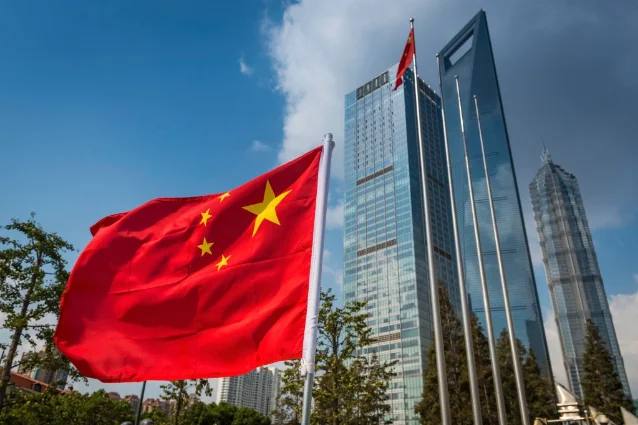
Chinese authorities have extended travel restrictions — previously applied to state-affiliated researchers — to researchers, founders, and executives at private AI firms, Bloomberg reported May 26. 6
The tightening follows Beijing's intervention in Meta's $2B acquisition of AI startup Manus, announced in April. China barred Manus' two co-founders from leaving the country while regulators investigate the deal under foreign investment rules; the founders are now reportedly exploring a $1B fundraise to buy the company back from Meta.
The restrictions are part of a broader set of controls: government sign-off is now required before firms like Moonshot AI, StepFun, and ByteDance can accept U.S. capital, per an April Bloomberg report. China has also imposed export controls on 14 rare-earth materials and barred state-funded data centers from deploying foreign AI chips.
The backdrop is a narrowing performance gap. Stanford's 2026 AI Index puts the capability distance between the top U.S. and Chinese models at just 2.7% as of March 2026, down from roughly 31% in 2023. 7 China now leads on publication volume, citations, and patent count; the U.S. retains the lead on model quality benchmarks and high-impact patents. Beijing's talent and capital controls are a direct response to that competitive position — keeping the gap from widening in either direction.
参考ソース
- 1Cognition raises $1B at $25B pre-money valuation
- 2Snowflake signs $6B deal with AWS for AI CPU chips
- 3Jensen Huang says Nvidia found a brand new $200B market
- 4ElevenLabs' new music-generation model can switch genres mid-track
- 5YouTube will now automatically label AI videos
- 6China is increasingly keeping its best AI talent to itself
- 7Stanford 2026 AI Index
このコンテンツについて、さらに観点や背景を補足しましょう。