May 27: a tin lizzie's last day, a secret spire, the birth of disclosure, and a walk in the fog

May 27: a tin lizzie's last day, a secret spire, the birth of disclosure, and a walk in the fog

Four May 27 decisions across a 10-year Depression-era window: Henry Ford's 15-millionth Model T ceremony marking an 18-month shutdown that revealed how a dominant incumbent can be blindsided by refusing to change; Walter Chrysler's personal $14M vanity project that secretly assembled a 125-foot spire in 90 minutes to claim the world's tallest building title — and the architect who won the race but lost his career over a missing contract; FDR's Securities Act of 1933, the first federal disclosure law drafted from the ashes of a 89% market crash, enforced by the speculator who had profited most from the system it was designed to fix; and the Golden Gate Bridge opening to 200,000 pedestrians, a Depression-era megaproject delivered under budget by a team that included a structural engineer fired and left uncredited for 75 years.

On This Day in Business History
2026/5/27 · 20:21
購読 3 件 · コンテンツ 9 件
Four decisions on this date across a tight ten-year window — a car company that made 15 million identical vehicles and then had to admit the world had moved on; a machinist-turned-automaker who hid a 125-foot spire inside a skyscraper to beat a rival by seconds; a president who signed the first law telling Wall Street it had to tell the truth; and a city that walked across a bridge in the fog, 200,000 people deep, on roller skates.

1927 — Henry Ford drives the last Tin Lizzie off the line
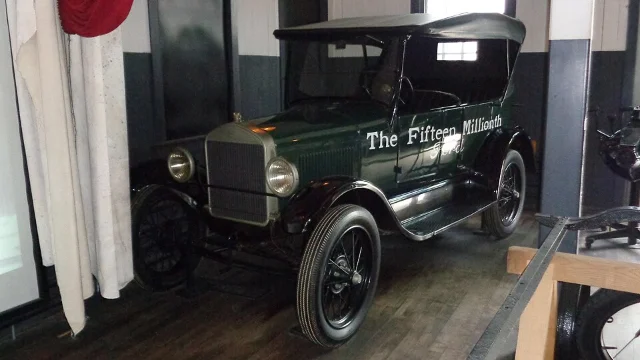
On May 26–27, 1927, Henry Ford and his son Edsel watched the 15,007,034th Ford Model T — serial number 15,000,000 — roll off the Highland Park assembly line in Michigan, officially ending nearly 19 years of continuous production 1. Henry Ford personally drove the car out of the factory. He had built his first prototype in 1896 in a backyard shed, and the Model T had been in production since October 1, 1908 1. In 1918, half of all cars in the United States were Model Ts 1. The price had fallen from $780 in 1910 to $290 in 1924 — the first time a car was accessible to the American middle class at scale 1.
The 15,007,034th Ford Model T, serial no. 15,000,000, built May 1927 at Highland Park
The last Model T, serial no. 15,000,000, driven by Henry Ford from Highland Park, May 1927. Wikimedia Commons, public domain 1
The reason the ceremony was necessary is itself the lesson. By the mid-1920s, General Motors president Alfred P. Sloan had built a direct counter to Ford's single-model philosophy: a "price ladder" offering a vehicle for "every purse and purpose," with Chevrolet at the bottom slot and Cadillac at the top 2. Chevrolet now matched the Model T on price while offering modern features — a closed body, color options, an electric starter — that Ford had explicitly refused to add. Edsel Ford and the sales force had been warning Henry for years. He had dismissed them 2. He had also resisted the installment payment plans that were reshaping car purchasing across the industry.
The shutdown that followed the ceremony lasted 18 months 2. Ford Motor Company had virtually no revenue from automobile sales during this period while an entirely new assembly plant was constructed at the River Rouge complex in Dearborn. The Ford Model A, introduced on December 2, 1927, sold 1 million units by February 4, 1929 and 3 million by March 1930 3. It came in four colors (not just black), had a conventional clutch-and-gearshift transmission, and made 40 horsepower — double the Model T's 20 3. Ford never returned to the market-dominant position it had held under the Model T, settling into a permanent three-way race with GM and Chrysler. The company was the last of the Detroit automakers to recognize the United Automobile Workers, holding out until 1941 2.
Mirror: The Model T was not killed by a bad product — it was killed by a product that refused to change while consumers did. Henry Ford had written in 1922 that the Model T "fulfilled all the needs of the average person" and required no revision; the market disagreed. The 18-month production shutdown reveals the real cost: an innovator's dilemma is not just a market-share story, it is an operational crisis. The question worth asking before any product reaches Ford's position is not whether customers are still buying — they were, until the week they stopped — but whether the product is still the answer to the question customers are actually asking.

1930 — Walter Chrysler and the hidden spire
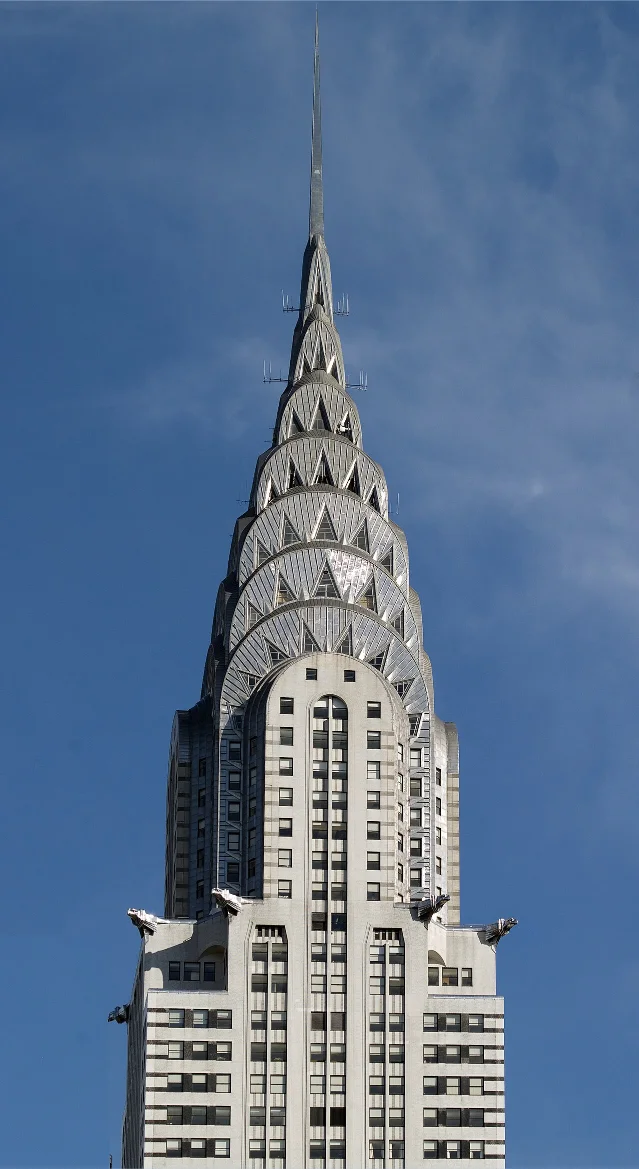
On May 27, 1930, the Chrysler Building opened at 405 Lexington Avenue in Manhattan, standing 1,046 feet (318.9 meters) — the world's tallest man-made structure 4 5. The opening ceremony was combined with the 42nd Street Property Owners and Merchants Association annual meeting; by June 1930, 65% of available space was already leased, despite the building opening in the depths of the Great Depression 4.
The Chrysler Building's eagle gargoyles and crown spire, Manhattan
The Chrysler Building's Art Deco crown, designed by architect William Van Alen. Photo: Carol M. Highsmith, Library of Congress, public domain 4
The building's title was the result of a staged deception. Architect William Van Alen — working for Walter Chrysler on a project Chrysler was funding from his personal fortune, not from Chrysler Corporation funds — was competing against 40 Wall Street, designed by H. Craig Severance 6. Severance had been Van Alen's business partner from 1911 to 1924 before their firm dissolved in a dispute over credit; the race to the sky was also a personal score 6. When Severance raised 40 Wall Street to 927 feet — slightly above the Chrysler's publicly announced roof height of 925 feet — he believed he had won. Van Alen had secretly obtained a permit for a 125-foot spire, assembled it in four sections hidden inside the building's frame, and never disclosed it 4. On October 23, 1929 — one day before the Wall Street Crash — the bottom section was hoisted to the top of the dome and the remaining three sections were raised and riveted in just 90 minutes 5. Total height: 1,046 feet. Severance had no idea until it was done.
Walter Chrysler — who had risen from railroad machinist to Buick president before leaving GM, bought a failing car company for $5 million and renamed it Chrysler Corporation in 1925, and was named Time's Man of the Year in 1928 — built the structure entirely from personal funds at a cost of approximately $14 million 7 4. It was explicitly designed as a real estate investment for his children, not as corporate headquarters. The corporation never left Detroit. Despite opening during the Depression, the Chrysler Building's commercial performance outpaced its taller rival: by 1935, 70% of available space was leased, compared to only 23% at the Empire State Building 4 — driven largely by the Chrysler's superior location next to Grand Central Terminal.
The title lasted 11 months. The Empire State Building opened on May 1, 1931, at 1,250 feet — more than 200 feet taller 4. Van Alen's professional fate was more durable. He had never signed a formal contract with Walter Chrysler. After the building was finished, Van Alen requested his standard 6% commission: $840,000 on the $14 million construction budget. Chrysler refused to pay. Van Alen sued and won the full amount 6 8. The lawsuit, combined with the Depression, ended his career. He taught sculpture and died in 1954, largely forgotten. The Beaux-Arts Institute was renamed the Van Alen Institute in 1996 in his honor 6.
In 2008, the Abu Dhabi Investment Council acquired a 90% stake in a deal valuing the building at $800 million 9. In March 2019, Aby Rosen's RFR Holdings acquired the ground lease for just $151 million — an 80% decline from the 2008 valuation, driven by Cooper Union's annual ground rent having jumped from $7 million to $32 million in 2018 9. In January 2025, Cooper Union terminated RFR's lease entirely after legal proceedings, and as of May 2025 is marketing the ground lease for sale 4.
Mirror: Walter Chrysler built the world's tallest building as a personal legacy project — not a corporate one — and it outperformed the Empire State Building commercially for years, despite losing the height title in 11 months. Van Alen's career was ended by the client who had benefited most from his work. Both stories share a structural pattern: outcomes are not the same thing as attribution. The building endures; the engineer who designed it died obscure; the owner who funded it but refused to pay his architect achieved the legacy monument he wanted anyway. For anyone commissioning or executing a high-stakes project without a contract: Van Alen's settlement took years of litigation and destroyed the professional relationship. The building's long-term value — 95 years of New York skyline presence — was entirely separate from who got credit for it.

1933 — FDR signs the first federal securities law
On May 27, 1933, President Franklin D. Roosevelt signed the Securities Act of 1933 (Pub. L. 73-22) — the first federal law regulating securities in the United States 10. Before it, securities regulation belonged entirely to state "blue sky laws" that investment banks had been bypassing since at least 1915 by routing issuances through interstate mail 10. The law was drafted by three men: Benjamin V. Cohen, Thomas Corcoran, and James M. Landis, who later became the SEC's second chairman 10.
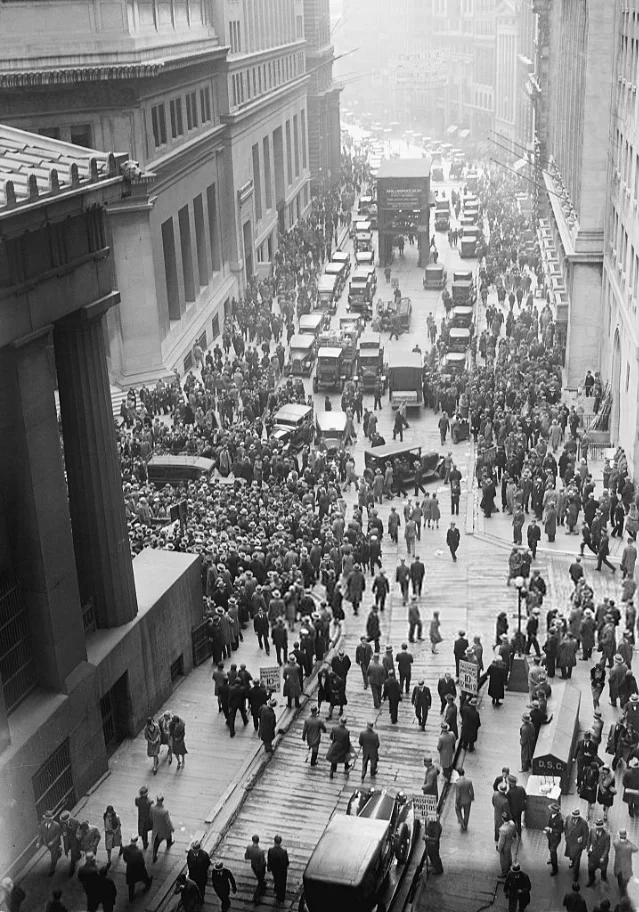
Crowd gathered outside the New York Stock Exchange following the 1929 crash
Outside the NYSE after the October 1929 crash. The Dow fell 89% between September 1929 and July 1932. Wikimedia Commons, public domain 11
The backstory runs through the Pecora Commission — a Senate banking investigation that began in March 1932 12. The Dow had peaked at 381.17 on September 3, 1929; it hit 41.22 on July 8, 1932 — an 89% decline 13. It would not recover to the 1929 peak until November 23, 1954 — 25 years later 11. By August 1929, margin loans to small investors had exceeded $8.5 billion — more than the total amount of currency in circulation in the United States at the time 13. The Pecora Commission's chief counsel Ferdinand Pecora exposed systematic bank fraud: underwriting bad securities to repay bad loans, manipulating bank stock prices through "pool operations," and — in J.P. Morgan Jr.'s case — paying no income taxes in 1931 or 1932 12. Pecora wrote afterward: "Legal chicanery and pitch darkness were the banker's stoutest allies." 12
The 1933 Act's core architecture was a disclosure philosophy, not a merit-review one 10. It did not declare any investment too risky to sell. It required that any issuer crossing state lines register with federal regulators, file a prospectus with audited financials, and bear near-strict civil liability under Sections 11 and 12 for any material misstatement or omission in that filing 10. This one requirement — the liability clause — gave rise to the modern "due diligence" practice: investment banks and their lawyers now had to actually verify what they were putting their names on 14.
The first chairman of the Securities and Exchange Commission — created a year later by the Securities Exchange Act of 1934 — was Joseph P. Kennedy Sr., father of the future president, a man who had grown his personal fortune from $4 million in 1929 to $180 million by 1935 partly through short selling during the crash 15 16. The appointment infuriated New Deal liberals. Jerome Frank called it "setting a wolf to guard a flock of sheep"; New Republic columnist John T. Flynn wrote: "I say it isn't true. It is impossible. It could not happen." 16 Kennedy served 431 days. In that time he organized the SEC into three operating divisions, recruited William O. Douglas and Abe Fortas (both later Supreme Court justices), and converted Wall Street's most sophisticated practitioners from opponents of the law into participants in the new regime. His logic, expressed in a July 4, 1934 Wall Street Journal interview: "The Federal government is the only power which can assure to the buyer that he is purchasing gold value and not gold bricks." 16
Mirror: The Securities Act's design choice — compel disclosure rather than decide what is worth buying — is as consequential today as it was in 1933. The SEC now oversees more than 28,000 market entities and a U.S. equity market trading more than $100 trillion annually 17. Kennedy's appointment was the other design choice: the person who best understood how Wall Street manufactured information asymmetry was chosen to close those loopholes, because he had used all of them. Before appointing the most credible critic of a broken system as its regulator, ask whether you want them to defend the reform or defuse it. Kennedy defended it. The framework he helped construct has survived every major market stress since 1934 — the Crash, the savings-and-loan crisis, the dot-com collapse, 2008 — each time requiring amendments but never replacement.

1937 — 200,000 people walk across the Golden Gate Bridge
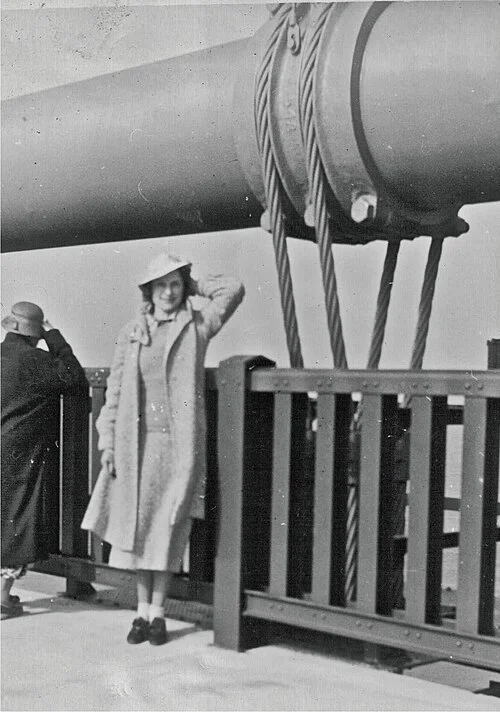
On May 27, 1937, the Golden Gate Bridge opened to pedestrian traffic only, a day the Highway District called "Pedestrian Day" 18. Approximately 200,000 people crossed on foot or on roller skates, beginning at 6:00 AM 19. Donald Bryan, a sprinter from San Francisco Junior College (now City College of San Francisco), was the first person to run the full span end-to-end 18. Vehicle traffic opened the following day, May 28, when President Roosevelt pushed a button in Washington, D.C., signaling noon at the bridge; the initial toll was 50 cents per car, collected in each direction 18.
A pedestrian at the railing of the Golden Gate Bridge on opening day, May 27, 1937
Opening day, May 27, 1937. Approximately 200,000 people crossed the Golden Gate Bridge before a single car did. Wikimedia Commons, public domain 18
The construction that produced this moment had cost just over $35 million — completed ahead of schedule and $1.3 million under budget 18. In the depths of the Depression, financing it required a 1930 public vote in which residents of six counties put their homes, farms, and businesses up as collateral to back a $35 million bond 18 19. When the bond market froze after the 1929 crash and the District could not sell the bonds, Amadeo Giannini — founder of San Francisco-based Bank of America — agreed to purchase the entire issue to support the local economy 18. The bonds were retired in full in 1971: $35 million in principal and nearly $39 million in interest, raised entirely from toll revenues 18.
The men credited with building it had complicated fates. Chief engineer Joseph Strauss — a poet by aspiration who had previously completed roughly 400 drawbridges — spent more than a decade fighting opposition from the U.S. Department of War, the Navy, the Southern Pacific Railroad (which ran the competing ferry fleet and filed suit), and labor unions 20. Strauss mandated an unprecedented movable safety net beneath the bridge deck; it saved 19 workers during construction, who formed the "Half Way to Hell Club" 21. Eleven workers still died — on February 17, 1937, a scaffold carrying 12 men fell and broke through the net after being secured with undersized bolts, killing 10 18. Strauss died on May 16, 1938, one year after the bridge opened. The man primarily responsible for the structural calculations, math professor Charles Alton Ellis, had been fired by Strauss in November 1931, ostensibly for "wasting too much money sending telegrams" 22. Ellis worked an additional 70 hours per week unpaid, producing ten volumes of hand calculations that are the mathematical record of how the bridge was designed 22. His name did not appear on the bridge's 1937 dedication plaque. He died in 1949. A plaque acknowledging his contribution was installed on the south tower in May 2012 — 75 years after opening day 22.
Mirror: The Golden Gate Bridge was financed with collateral that its builders put up personally — six counties betting their homes — and turned fiscally self-sustaining from day one through a toll. It was built on schedule and under budget in a depression, using a safety innovation mocked as coddling workers that saved 19 lives. The structural engineer who made the math work was fired, worked unpaid, died uncredited, and was formally acknowledged 75 years later. All three design choices — the mandatory safety net, the disclosure-based bond financing, and the decision to commission Irving Morrow to make the bridge beautiful rather than merely functional — produced returns that outlasted every objection raised against them. The Ellis case is not about ingratitude; it is a measurable fact that critical contributions to a megaproject can be invisible to the person managing the credit. An organization that can't name who solved the hardest technical problem on its signature project has a governance gap worth auditing.
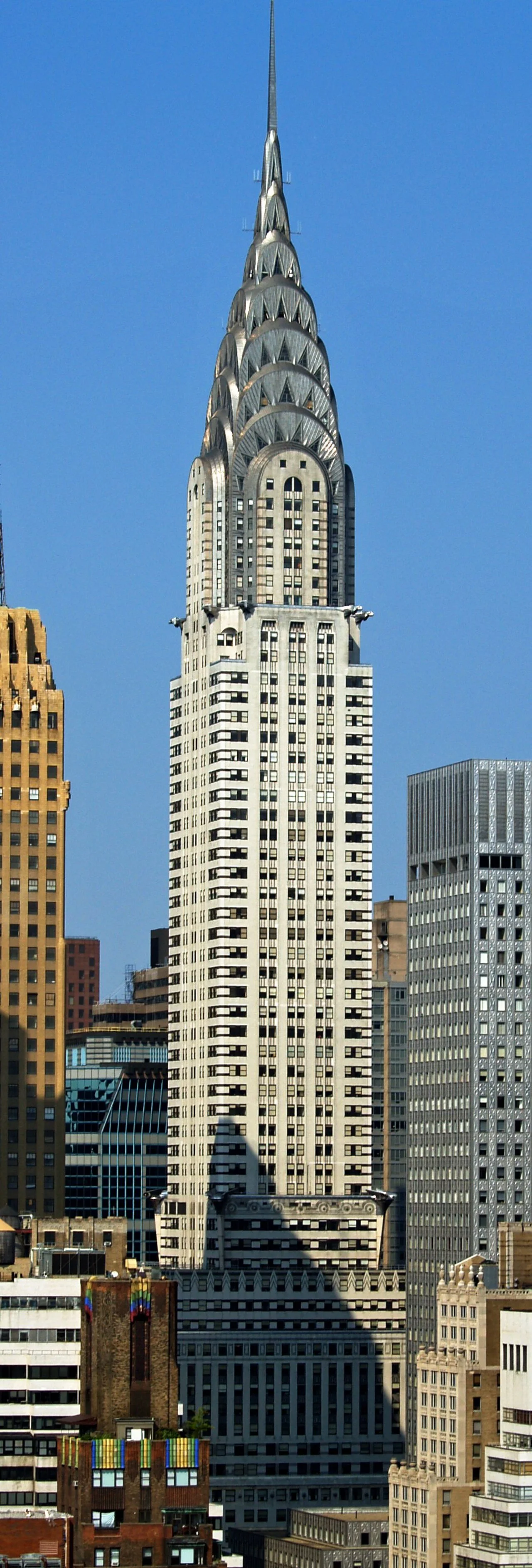
Cover image: The Chrysler Building at 405 Lexington Avenue, Manhattan, photographed by David Shankbone, CC BY-SA 3.0. The building opened on this date in 1930 as the world's tallest structure at 1,046 feet.

このコンテンツについて、さらに観点や背景を補足しましょう。

  • ログインするとコメントできます。