
Howard Marks — It's not what you buy

Howard Marks — It's not what you buy

Marks' March 2026 podcast: mispricing logic, the Nifty 50 lesson, and why the tide is now going out in private credit.

Shareholder Letter Excerpt
2026/5/23 · 20:15
購読 1 件 · コンテンツ 9 件
Published: 2026-03-24 — Oaktree Capital Management podcast, "The Insight: Conversations with Howard Marks"

In March 2026, Howard Marks (co-founder and co-chairman of Oaktree Capital Management, the $200 billion credit-focused alternative asset manager) recorded a reflective conversation with Harry Whitelaw about Oaktree's annual client conference. The episode is organized around clips from five of Oaktree's portfolio managers, with Marks commenting after each one — less a formal memo than a live audit of the firm's investment philosophy across markets that are, as Marks put it, now visibly shifting.
The passage that anchors the entire conversation is one he first learned in 1969:
"It's not what you buy, it's what you pay that matters. And there is nothing that's a good idea in the absence of price." 1
That sentence sounds simple. Fifty-seven years of practice confirm that almost no one consistently acts on it.
リンクプレビューを読み込んでいます…

Excess returns require someone else's mistake

The podcast opens with Oaktree's foundational premise, which Marks traces to a 2012 conference presentation by Bob O'Leary (now co-CEO of Oaktree). O'Leary argued that Oaktree's job is simply "to take advantage of the mistakes of others." Marks says he "almost never hears about this from others" in the investment world — which is itself a telling observation about how the industry prefers to frame its edge. 1
The logic is plain: if every security in an efficient market is priced to offer a fair risk-adjusted return, then by definition no one can do better than fair. To generate returns that are "more than commensurate with risk," the buyer has to find assets priced below fair value.
"We want to get returns that are more than commensurate with risk. And to do that, you have to buy assets, not at fair prices, but at unfair prices. We want to buy things for less than they're worth." 1
That requires a seller who is making a mistake — and a buyer willing to reach the opposite conclusion about value. Marks calls this "second-level thinking": the ability to conclude that the price a motivated seller believes is fair is, in fact, too low to reflect the underlying value.
Portfolio manager Steve Tesoriere catalogs five conditions under which such mispricings appear: assets whose value is obscured by messy or off-balance-sheet disclosure; assets that mandated buyers simply cannot hold; assets that are genuinely difficult to locate; assets sold by owners under time or liquidity pressure; and assets that technical market plumbing forces out of certain hands regardless of fundamental value. Marks gives a crisp historical example of the last category: a rule that required certain holders to sell any bond downgraded below investment grade — at any price. 1
What this means in practice: before evaluating any credit position, the first question is not "what is the yield?" but "why is this selling at this price?" If no structural, behavioral, or technical impairment is present on the seller's side, a spread that looks wide is probably fairly priced — and chasing it is not what Oaktree would call buying cheap.

The Nifty 50 and the symmetry of price

The podcast's most memorable section comes when Madelaine Jones — Oaktree's head of European Liquid Performing Credit — flags healthcare as a leading driver of defaults in European credit. The reason: "everyone loved to lend to healthcare," borrowers were given more debt than their cost structures could support, and when cost inflation arrived, there was no room to maneuver. 1
Marks recognizes the pattern immediately. His first job on Wall Street, in 1969, coincided with the peak of the Nifty 50 — the fifty companies widely considered the greatest businesses in America. Institutional investors paid any price for them, reasoning that quality was its own justification.
"If you bought the stocks the day I got to work in '69 and you held them for five years, the greatest companies in America, you lost about 95% of your money." 1
This is where the anchor passage becomes a rule rather than a preference. The Nifty 50 companies were not frauds. Many of them — IBM, Xerox, Coca-Cola — went on to compound wealth over the following decades. The problem was purely valuation: the market had priced perfection at the point of maximum enthusiasm, leaving no margin for anything short of perfect.
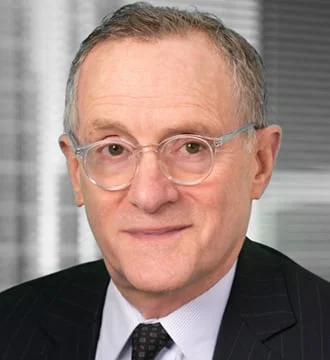
Howard Marks, co-founder and co-chairman, Oaktree Capital Management
Howard Marks at Oaktree Capital Management 1
Marks frames the symmetry clearly. Steve Tesoriere's job in Oaktree's opportunistic credit business is to find assets that are "hated too much" — unfairly cheap. Madelaine Jones's job in performing credit is to avoid assets that are "loved too much" — unfairly expensive. "Avoiding things that are looked on with favor is just as important as buying up the things that people are mistakenly selling too cheap." 1
Jones adds a second-order point that deserves attention: when a sector is loved, lenders don't just tighten spreads — they extend more leverage, as if the quality of the business suspends the laws of credit risk. An extra unit of leverage felt "just fine" in healthcare because every lender was competing to win the deal. That is precisely when it should have felt least fine.
Jones also notes that sector-level top-down analysis is becoming less reliable as AI disrupts established business models across industries. She now focuses on balance-sheet liquidity and the room a borrower has to maneuver, regardless of sector label. 1
What this means in practice: in any sector that has attracted consensus enthusiasm — from private credit to AI infrastructure — the first diagnostic question is not "is this a good business?" but "what is the current lender or equity buyer getting paid for the risk they are accepting?" The quality of the underlying asset does not protect against overpaying for it.

Leverage plus volatility equals dynamite

The podcast's third sustained theme revisits a December 2008 memo Marks titled Leverage + Volatility = Dynamite. The formula is mechanical: leverage amplifies returns in both directions. The more capital borrowed, the larger the gain when things go well — and the higher the probability that a rough patch becomes terminal. 1
What makes this section timely is Marks' assessment of where the current cycle stands. From March 2009 to roughly January 2026, investors experienced an extended stretch of low volatility and no significant drawdown — roughly 17 years of conditions that, as Marks observes, cause people to forget that bad times are possible. Long good times do not eliminate risk; they relocate it into the balance sheets of borrowers who have been given more rope than they can handle.
"It's only when the tide goes out that we find out who's been swimming naked." 1
Marks is quoting Warren Buffett (chairman and chief executive of Berkshire Hathaway, Marks' most-cited reference point for investor character). He applies the image directly to private credit in early 2026:
"In the last few months, the tide has been going out, especially in areas like private credit and we start to see which structures may have been unwise." 1
As of the recording date (March 24, 2026), default counts in private credit were still limited. Marks notes this with deliberate care: the absence of defaults so far does not confirm that loans were prudently structured — it confirms only that the problems have not yet been forced to the surface. "We haven't had a chance yet to see who made bad loans. That's coming too." 1
Oaktree's positioning reflects this read. Marks says the firm was "reserved in 2025" — declining to deploy aggressively when credit spreads were tight and terms were weak — and is "ready for shakiness in '26." The tactical implication of the dynamite formula is that knowing when to refuse to dance matters as much as knowing what to buy.
リンクプレビューを読み込んでいます…
What this means in practice: the relevant diagnostic when reviewing a credit portfolio or evaluating new positions is not the spread alone, but the leverage multiple behind the spread. A 600-basis-point yield on a loan to a company carrying 8x EBITDA leverage is a different exposure than the same spread on 4x leverage. When good times have been long, lenders tend to confuse the first for the second. The tide going out is the process by which that confusion gets corrected.

Why the cycle keeps repeating: emotion over analysis

The podcast closes on the theme Marks considers the hardest to solve — and the one he is actively writing about. He describes a new memo in progress, tentatively titled "Fans and Fancies," focused on the influence of human emotion on the investment business. 1
The reason cycles keep recurring — despite being well-documented and widely studied — is that the driver is not ignorance but emotion. Marks cites Demosthenes (via Charlie Munger, the late vice-chairman of Berkshire Hathaway): "For that which a man wishes, that he will believe." And historian Charles Kindleberger's Manias, Panics, and Crashes:
"There's nothing so injurious to your mental wellbeing as to watch your friend get rich." 1
This is the mechanism by which prudent investors eventually capitulate to bull markets: not because they have changed their analysis, but because watching others profit from risks they declined to take erodes the conviction required to hold the line. Fear of losing money transitions, gradually and painfully, into fear of missing out. At the top, the second fear has completely displaced the first.
Marks draws a direct institutional lesson from the way Bruce Karsh (Oaktree's co-CEO) structures the firm's opportunistic credit funds: as closed-end vehicles where clients commit capital before a crisis arrives. When markets are distressed and every instinct says to wait for clarity, clients in these funds are contractually required to put up money to buy the assets panicked sellers are dumping. The structure forces the right action at the moment when emotion makes the right action feel most wrong. 1
Marks' conclusion on the role of emotion tracks directly with what he credits to Buffett and Munger:
"To be a great investor, you have to have your emotions under control. You can't get excited when things go well and depressed when things go poorly, which causes people to buy high and sell low. You have to do the opposite if you can." 1
He raises one open question worth carrying forward: if AI were given discretion over investment decisions, it might suppress greed and fear more effectively than any human investor can. He frames this as a possibility, not a conclusion — and notes that the question of whether AI can outperform on the emotional axis is distinct from whether it can outperform on the analytical one. The upcoming "Fans and Fancies" memo is where he intends to explore it.
What this means in practice: if the emotional mechanisms that drive the cycle are structural — not curable by more education or better intentions — then the most actionable response is to put in place constraints that remove the decision at peak emotion. Pre-committed capital deployment rules, drawdown-triggered rebalancing, or written investment theses that define exit conditions before entry are imperfect substitutes for Karsh's fund structure, but they operate on the same principle: remove the decision from the moment when the decision is most likely to be wrong.

リンクプレビューを読み込んでいます…
Cover image: from Reflections on Oaktree Conference 2026 — Oaktree Capital Management

このコンテンツについて、さらに観点や背景を補足しましょう。

  • ログインするとコメントできます。