China Tech Startup & Funding Brief — May 25, 2026

China Tech Startup & Funding Brief — May 25, 2026

CXMT enters STAR Market listing review (¥29.5B raise, ¥3T+ projected market cap); Huawei server spinout Chaojibian files China's largest 2026 SZSE IPO (¥8B); YMTC starts A-share counseling; Junaopanshi closes ¥100M+ for Huawei "embodied brain" founder's cognitive world model startup; OriginFlow's 25-year-old Tsinghua PhD raises ¥500M+ in five months for robotics data infra; Ziguang Guowei acquires Ruineng Semi for ¥1.9B.

Chinese Tech Startup & Funding Morning Brief
2026/5/25 · 21:39
購読 6 件 · コンテンツ 5 件
Monday brings a batch that skews heavily toward the public markets: two memory chip giants inching toward listings that could each hit a trillion-yuan market cap, a Huawei server spinout filing China's largest 2026 SZSE IPO, and fresh private rounds for a Huawei "embodied brain" founder and a 25-year-old Tsinghua PhD who cracked a data bottleneck that has plagued the robotics industry. State capital continues to dominate the anchor-investor role across the board.

Deals at a glance

CompanySectorRoundAmountLead Investor(s)
CXMT (长鑫科技)DRAM / Memory chipSTAR Market IPO (review week)RMB 29.5B (~$4.1B)State-backed RMB funds, CICC, Legend, Yunfeng
Chaojibian (超聚变)AI server / Computing infraChiNext IPO filingRMB 8B (~$1.1B)Henan state-owned assets (31.4%), China Mobile
YMTC (长江存储)NAND flash memoryPre-IPO counseling startedUndisclosedChangcun Group (state-owned)
Junaopanshi (具脑磐石)Embodied AI / Cognitive world modelNew roundRMB 100M+ ("亿元级")Undisclosed top-tier industrial VC
OriginFlow (渊澈太初)Embodied AI data infraPre-A1RMB 500M+ (cumulative 5-month total)Monolith Capital (lead), Yuanhe Puhua
Unipath / Ziguang Guowei × Ruineng SemiPower semiconductorsM&ARMB 1.9BZiguang Guowei (acquirer)

1. CXMT heads to STAR Market review — a ¥3 trillion valuation story

CXMT (长鑫科技), China's fourth-largest DRAM maker, is scheduled for its STAR Market listing committee review this week. The company filed a RMB 29.5 billion (~$4.1B) fundraise — the second-largest STAR Market IPO since the board opened.1
The financial case is stark. Q1 2026 revenue hit RMB 50.8 billion, up 719% year-on-year; net profit rose 1,268% to RMB 33 billion — roughly ¥400 million in profit per calendar day. Analysts projecting ¥150–200 billion in full-year 2026 net profit and applying a 20× P/E arrive at a ¥3–4 trillion market cap at listing, which would make CXMT one of the most valuable public companies in China on day one. Pre-IPO backers include Anhui and Hefei state-owned assets, China Structural Reform Fund, CICC Capital, Legend Capital, China Merchants Capital, Tencent, and Alibaba.2
The memory upcycle driving these numbers is real: AI training and inference infrastructure requires exponentially more high-bandwidth memory per server generation. Morgan Stanley's BOM analysis of Nvidia's upcoming Vera Rubin (VR200 NVL72) server shows memory cost rising 435% versus the current GB300 generation, with storage's share of total rack cost jumping from 9% to 26%. CXMT's timing couldn't be better.

2. Chaojibian files ChiNext IPO — ¥80B raise, ¥800B implied valuation

Chaojibian Digital Technology (超聚变), the X86 server unit Huawei carved out in September 2021, had its ChiNext IPO application accepted by the Shenzhen Stock Exchange on May 22. The planned ¥8 billion raise is the largest SZSE IPO filed in 2026 so far.3
The company's financials show rapid scale with tightening margins:
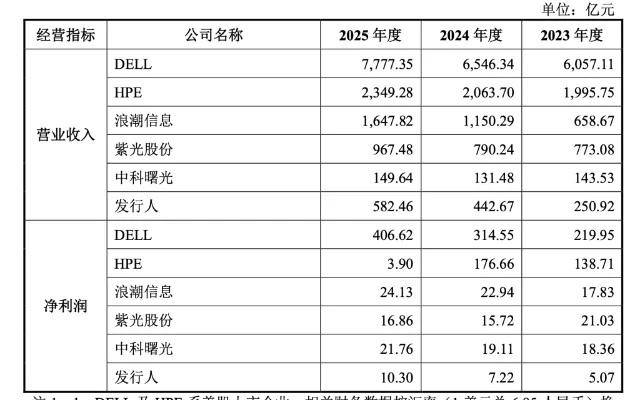
YearRevenue (¥B)Net profit (¥B)Gross margin
2023250.95.114.3%
2024442.77.210.0%
2025582.510.38.6%
Chaojibian revenue and net profit vs. global server peers (Dell, HPE, Inspur, Unisplendour, Dawning)
Chaojibian vs. global server peers: revenue and net profit comparison 3
AI servers now account for 50.9% of revenue (¥29.6B), up from a negligible base. Henan provincial state-owned assets controls 31.4% via holding company Chaojuneng; China Mobile Capital holds a further 13.8%. At the implied ¥800B valuation (10× FY2025 revenue), that puts Chaojibian in the same tier as the global server incumbents Dell and HPE in earnings multiple terms — a high bar to clear given the margin compression trend.
The ¥8B raised will fund next-gen compute infrastructure R&D (¥4.08B), an intelligent manufacturing park in Zhengzhou (¥2.03B), and AI/power architecture R&D (¥0.89B).

3. YMTC starts A-share counseling

One day after CXMT's IPO review was scheduled, YMTC (长江存储 / Yangtze Memory) confirmed it has begun domestic A-share IPO counseling, with CITIC Securities and CSC Financial as sponsors.1 YMTC is China's sole domestic NAND flash producer at competitive scale, using its proprietary Xtacking 3D stacking architecture.
Post-restructuring valuation of parent Changcun Group was approximately ¥160B in September 2025; market consensus puts YMTC's post-IPO market cap at ¥500B–1T, contingent on revenue disclosures.
Two Chinese memory champions moving simultaneously toward domestic listings in the same week is not coincidental. The AI memory super-cycle — driven by inference demand growing faster than supply — gives both companies a revenue story they can sell to domestic institutional investors who previously had no liquid path into the sector.

4. Junaopanshi (具脑磐石) raises ¥100M+ for "cognitive world model" robotics brain

Junaopanshi (具脑磐石), founded in 2025 by Zhu Senhua, completed a new round exceeding RMB 100M. Zhu previously served as Director of Huawei Cloud's AI Algorithm Innovation Lab, where he led the Pangu embodied foundation model and the Global Embodied Intelligence Industry Innovation Center — which earned him the informal title "Huawei's embodied brain lead."4
The company's technical bet is on a "Cognitive World Model" — a layer above current VLA (vision-language-action) architectures that lets robots internally simulate the physical consequences of actions before executing them, using active inference drawn from cognitive neuroscience (free-energy minimization, predictive coding, Bayesian brain theory). Zhu maps current world model approaches across five layers — 3D spatial perception, physical simulation, interactive training, abstract representation (JEPA-style), and active inference — and targets the fifth layer as the real differentiator.
The approach addresses three practical problems VLA models have struggled with: high annotation cost (models fail when objects, lighting, or layouts shift), poor generalization to open-ended environments, and the inability to accumulate task experience across sessions. Junaopanshi's four technical pillars are brain-inspired multimodal encoding, cognitive dynamic prediction, lifelong memory, and low-power sparse compute for edge deployment.
Lead investor is described as a "top industrial capital with deep embodied-AI sector background." Advisor firm: Duowei Capital. An additional follow-on round is simultaneously in closing. The team spans Peking University, Tsinghua, Fudan, CAS, and alumni from Huawei, Lenovo, Megvii, and Geek+.

5. OriginFlow (渊澈太初) closes Pre-A1 — ¥500M+ in 5 months, led by Monolith Capital

OriginFlow, founded by 25-year-old Tsinghua PhD student Qin Wentao in 2025, has accumulated RMB 500M+ across angel, strategic, Pre-A1 tranches within its first five months.5 The Pre-A1 was exclusively led by Monolith Capital (砺思资本, the same fund backing DeepSeek's external round), with Yuanhe Puhua, Yuanhe Origin, and Guofang Venture Capital following. BlueRun Ventures and Oasis Capital led earlier tranches.
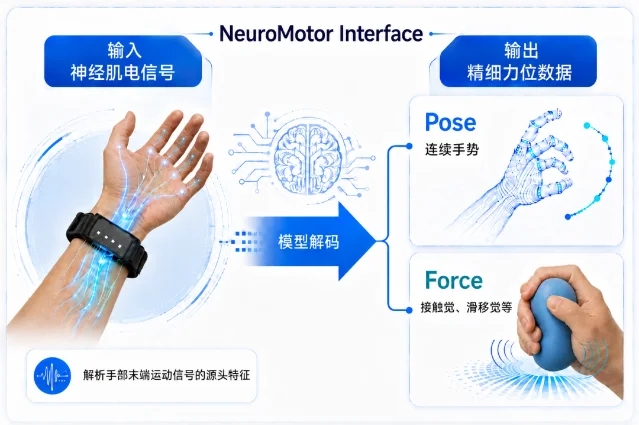
The company's core technology, NeuroScale, takes an upstream approach to the robotics data problem: instead of recording the results of movement (what video-based VLA training does), it captures surface electromyography signals from human operators and reconstructs continuous hand posture, force, and tactile feedback data through its PULSE foundation model. The effect is richer, more physically grounded training data with less human annotation overhead.
NeuroMotor Interface technical flow: EMG signals decoded into continuous hand pose and force data
OriginFlow's NeuroScale pipeline — sEMG signals decoded into hand posture, contact force, and slip data for robotics training 5
Monolith called the Pre-A1 its largest single embodied-intelligence investment. Commercial landing: OriginFlow is deploying in industrial manufacturing with unnamed partners and in home-service robot skill libraries with 58 Group (58 同城).
The speed and size of fundraising for a company led by a 25-year-old PhD student reflects how acutely the robotics industry feels the data bottleneck — and how willing investors are to back upstream infra bets when the downstream demand (humanoid robots in factories and homes) is already visible.

6. Ziguang Guowei acquires Ruineng Semiconductor for ¥1.9B

Listed chip designer Ziguang Guowei (002049.SZ) announced on May 22 a RMB 1.9B acquisition of 100% of Ruineng Semiconductor (瑞能半导), a power semiconductor IDM (Integrated Device Manufacturer) specializing in thyristors and SiC components.6 Deal structure: ¥380M cash + ¥1.52B in new Ziguang Guowei shares.
Ruineng's strategic value lies in SiC (silicon carbide) power devices, which are critical for EV power trains, industrial motor drives, and AI data-center power infrastructure — a supply chain gap that Ziguang Guowei needs to fill as it builds a broader power semiconductor portfolio. This follows a broader trend in the Chinese chip sector: IP-rich designers acquiring IDM capacity to reduce dependence on foundries amid export-control uncertainty.

Sector read: public markets absorb what VCs can't

Three separate IPO events in a single morning brief (CXMT, YMTC, Chaojibian) is a telling signal. China's private VC ecosystem has spent the past two years concentrating capital in a small number of high-conviction large-language-model and robotics bets — the 36Kr data point that three deals in May alone exceeded $10B in combined fundraising (Kimi, Step AI, DeepSeek) illustrates the compression.7 That leaves semiconductor and server infrastructure companies — capital-intensive, structurally sound but not "hot" VC territory — turning to domestic public markets.
The implicit signal to watch: if CXMT lists at a ¥3T+ market cap as projected, China's RMB fund LP base will book returns large enough to substantially refresh dry powder, potentially restarting early-stage allocation to hardware startups that have struggled to raise since late 2024.
リンクプレビューを読み込んでいます…

Sources: 21st Century Business Herald, 36Kr, Sina Finance/量子位, Securities Times, PEDaily/投资界, The Crane China Funding Weekly.

このコンテンツについて、さらに観点や背景を補足しましょう。

  • ログインするとコメントできます。