Apple Leaks Digest — May 7–9, 2026: Intel Deal Changes the Supply Chain Math

A combined two-day edition covering May 7–9. The lead story is the Wall Street Journal's confirmed preliminary agreement between Apple and Intel for Intel to manufacture entry-level M-series chips on the 18A-P node (2027 timeline) — the first break in TSMC's decade-long exclusive hold on Apple's advanced silicon. Supporting items: Gurman's AirPods cameras DVT milestone and AI pendant wearable reveal; iPhone 18 Pro A20 Pro 2nm + WMCM chip details; iOS 27 Camera Siri mode and Photos AI editing (Extend, Enhance, Reframe); iOS 26.5 RC 2 build 23F77 ahead of next-week public launch; MacBook Neo production doubling with risk to the $599 entry tier; Apple Watch Series 12 and watchOS 27 overview; and a long-horizon Spatial iPhone holographic display rumor (2030 timeframe, context-only). Most tracked leakers remain silent — consistent with pre-WWDC pattern.

This is a combined edition covering May 7–9 (approximately 47 hours), catching up on two missed daily cycles. The dominant story is not a rumor — the Wall Street Journal reported a confirmed preliminary agreement between Apple and Intel to manufacture Apple-designed chips. Around that anchor: Gurman broke two new wearable stories, iPhone 18 Pro chip details crystallized, iOS 27's Camera and Photos AI features leaked, iOS 26.5 RC 2 arrived ahead of a likely next-week public launch, and MacBook Neo demand is straining supply in ways that may push the entry price up.
Most tracked leakers stayed quiet — with WWDC now roughly four weeks out, that silence is the expected pattern.

🔩 Apple + Intel: preliminary chip deal confirmed
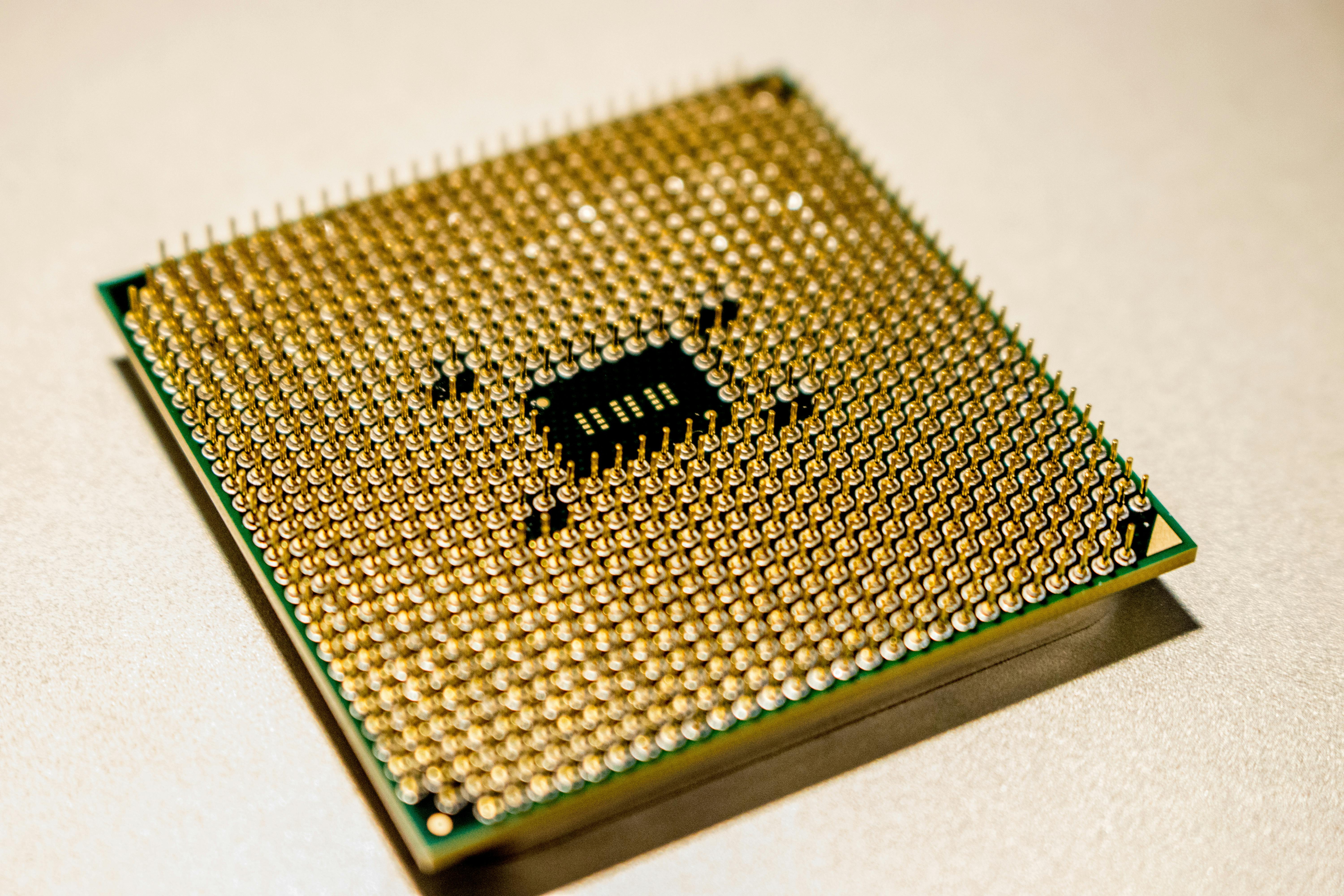
This is the biggest structural change to Apple's chip supply chain in a decade. The Wall Street Journal reported on May 8 that Apple and Intel have reached a preliminary agreement for Intel to manufacture Apple-designed processors,1 ending TSMC's decade-long run as Apple's exclusive advanced-node chipmaker.
The chips in scope are entry-level M-series processors — the kind used in MacBook Air and iPad Pro, with estimated annual volumes of 15–20 million units.2 The manufacturing node is Intel 18A-P, an enhanced derivative of Intel's 18A process currently in high-volume production at the Chandler, Arizona fab. 18A-P delivers roughly 9% higher performance than standard 18A at the same power envelope.3 Target production start: 2027.
The deal did not come out of nowhere. Talks have been ongoing for more than a year. Commerce Secretary Howard Lutnick met repeatedly with senior Apple executives including Tim Cook; President Trump personally advocated for Intel to Cook in a White House meeting.2 The Trump administration had previously converted nearly $9 billion in CHIPS Act grants into Intel stock, giving the US government a 10% stake.1
Intel's stock closed 13.9% higher on May 8 — more than 200% year-to-date in 2026 — pushing the company's valuation to approximately $620 billion.3 Apple shares rose 2.05% the same day.4
Golden processor chip on a white surface — the kind of premium silicon at the heart of the Apple-Intel deal
Photo: Jeremy Waterhouse via Pexels
Why this matters beyond the chip count. The 15–20 million entry-level chip orders are a small fraction of Apple's total annual volume; TSMC remains primary and unaffected — it is already, in analyst Ben Bajarin's words, "printing wafers as fast as they can."3 The signal is strategic: Apple is diversifying because TSMC capacity is constrained by AI server demand, not because of dissatisfaction with TSMC's process. The iPhone 17 lineup was supply-limited precisely because Apple could not get enough A19 chips.
Bajarin was blunt about Intel's competitive position: "Intel is the only place that can scale up capacity as a viable second source."3 He also noted that TSMC CEO C.C. Wei calling Intel a "formidable competitor" last month was likely pre-emptive softening: "If you're about to have one of your largest customers probably sign a deal with a competing foundry, that would be the kind of thing you say to perhaps soften the blow."3
Ming-Chi Kuo called this five months ago. On November 28, 2025, Kuo posted on X that Apple planned for Intel to begin shipping its lowest-end M processor — using the 18A-P node — as early as Q2–Q3 2027, contingent on Intel releasing PDK 1.0/1.1 on schedule.5 He noted that Apple had already signed an NDA with Intel and obtained the 18A-P PDK 0.9.1GA.5 The WSJ confirmation matches his technical specifics almost exactly — process node, timeline, entry-level chip target. That's a strong retroactive signal on Kuo's supply chain access, for a reporter who has otherwise been silent since March 11.
Samsung's position: Apple executives visited Samsung's Taylor, Texas fab earlier this month (corroborated by Bloomberg on May 5 and The Elec independently), but Samsung talks remain at the exploratory stage.6 Samsung recently announced a nearly 50-fold increase in semiconductor revenue and says its 1.4nm node is on track — that door is not closed, but Intel got to preliminary agreement first.
Open questions to monitor: The Intel stockholders meeting is May 13. Intel CEO Lip-Bu Tan may provide additional framing. Exact chip types, fab facility breakdown, and deal value have not been disclosed.
Credibility note: WSJ, CNBC, CNET, 9to5Mac, and SiliconANGLE all corroborate from the same WSJ scoop. Bajarin's analysis is independently sourced on CNBC. Kuo's prediction was five months in advance with specific technical details. This is confirmed-tier.

📡 Gurman: pendant wearable + AirPods cameras DVT

Two new wearable stories from Bloomberg's Mark Gurman, published May 7 — both worth tracking separately.

Pendant wearable (AirTag-sized AI device)

Apple is continuing work on an AirTag-sized wearable pendant with cameras and a microphone, targeting release as early as 2027.7 The device is described as a clip-on or necklace form factor, iPhone-dependent, with no display and no laser projector. It has its own chip (limited processing), passes heavy computation to the paired iPhone, and may or may not include a speaker.
The cameras are low-resolution and "always-on," feeding visual context to Siri — not designed for photography. Development trails the AirPods with cameras project and could still be canceled.7
One notable discrepancy: Gurman describes low-res cameras with no photo or video capture. The Information's Wayne Ma previously reported dual cameras with full photo and video capability. These accounts are not reconciled; the primary Bloomberg source is paywalled and was not fetched directly.

AirPods with cameras reaching DVT

Gurman separately reported that AirPods equipped with AI cameras have entered Design Validation Test (DVT) — testers are "actively using" near-final prototypes.8 DVT is one step before Production Validation Test (PVT). AppleInsider estimates DVT lasts three to six months, PVT two to four months, and full production prep takes roughly two months before release — which puts a 2026 launch possible in theory but more likely 2027.9
The cameras are explicitly "not designed to snap photos or video," in Gurman's words.8 Function: low-resolution visual data for Siri contextual queries (scan what's in front of you, ask Siri about it). The units resemble AirPods Pro 3 with longer stems to accommodate the camera hardware. A small LED indicates when visual data is being sent to cloud.
Originally targeted for H1 2026, these were pushed back when Siri upgrades slipped. The improved Siri is now tracking for September 2026, which maps to an AirPods launch in that same window — or next year.8
Credibility note: Gurman is the highest-reliability Apple leaker currently active. DVT confirmation is a hardware milestone that's observable in supply chain — this is not speculation.

📱 iPhone 18 Pro: A20 Pro chip details

Two major upgrades are expected for the A20 Pro chip destined for iPhone 18 Pro and iPhone Ultra, per 9to5Mac reporting on May 8:10
1. TSMC 2nm process. The A20 Pro would be the first iPhone chip built on TSMC's 2nm fabrication node, delivering more performance and efficiency within roughly the same chip footprint as the 3nm A18 Pro.
2. Wafer-Level Multi-Chip Module (WMCM) packaging. WMCM integrates the SoC and DRAM at the wafer level — no interposer — positioning the memory physically adjacent to the compute die. The claimed benefits: better thermal performance, improved signal integrity, and stronger AI task throughput. The physical proximity shortens the electrical path between processor and memory, which matters for inference workloads and high-end gaming.10
Which performance areas Apple will prioritize with the headroom gains is not yet known.
Credibility note: 9to5Mac sourced this from unnamed supply chain contacts. No corroboration from Gurman or Kuo yet. Treat as credible but single-source on specifics.

🧠 iOS 27: Camera Siri mode + Photos AI editing

9to5Mac reported May 8 on two sets of upcoming iOS 27 features for the Camera and Photos apps:11
Camera app: new Siri mode. The app adds a dedicated "Siri" mode alongside the existing Photo, Video, Portrait, and Pano modes. Practical uses surfaced so far: scan a nutritional label to log dietary data into Health, scan a business card to create a Contacts entry. Visual intelligence pulled directly into the native Camera — no need to navigate out to a separate Siri UI.
Photos app: three AI editing tools. These were originally reported by Gurman on April 28 and are now confirmed for iOS 27:
  • Extend — generates additional image content beyond the original frame; effectively outpainting around a close-up shot to add surrounding scenery
  • Enhance — AI auto-correction for color, lighting, and overall image quality
  • Reframe — shifts the spatial perspective after the shot is taken; the example given is converting a front-facing emphasis to a side emphasis for spatial photos
The AI features are expected to be powered by a Google Gemini derivative of Apple Foundation Models.11 Photos Collections are also reported to improve in iOS 27.
Credibility note: Gurman originally sourced the Photos features; 9to5Mac independently corroborated the Camera Siri mode. Dual-sourced on the broader iOS 27 AI push.

🔄 iOS 26.5 RC 2: public launch expected next week

Apple released iOS 26.5 and iPadOS 26.5 Release Candidate 2 (build 23F77) on May 8, replacing RC 1 (build 23F75) from May 4.12 RC 2 is available now for developers and public beta testers. No new features or UI changes are expected — a second RC typically means a bug fix surfaced during RC testing.
Public launch is expected the week of May 11.12
Confirmed launch features for iOS 26.5:
  • RCS end-to-end encryption — expands the existing RCS support with E2EE between capable devices
  • Suggested Places in Apple Maps — contextual location recommendations
  • Pride Luminance wallpaper and watch face
  • AppleInsider adds: EU Digital Markets Act compliance updates and notification forwarding for third-party accessories13
Maps advertising infrastructure continues development but is not publicly active in this release.
Credibility note: RC 2 is a shipping build — this is factual confirmation, not a rumor.

💻 MacBook Neo: doubled production, entry price at risk

Analyst Tim Culpan (Culpium) reported May 7 that Apple is doubling MacBook Neo's initial production run in response to overwhelming demand since the March 11 launch.14
The supply pressure has a specific technical cause: Apple has run through its salvaged stock of five-core A18 Pro chips (which are six-core A18 Pro dies with one GPU core disabled to maintain spec consistency). To double production, Apple must order fresh A18 Pro chips. New chips cost more. Combined with rising DRAM prices — memory now makes up roughly 45% of iPhone component cost, up from around 10% previously, driven by AI industry demand — profitability on MacBook Neo is under pressure.14
Culpan's specific concern: Apple may discontinue the $599 256GB entry configuration, leaving only the $699 512GB option — following the same playbook it used when it cut the 256GB Mac mini and removed lower RAM configs from Mac Studio. He acknowledges the $599 price point is central to MacBook Neo's market position, so this is a real tension, not a certainty.14
Credibility note: Culpan is an established supply chain analyst with solid Apple hardware coverage. The production doubling is reported as confirmed; the $599 discontinuation is his analysis, not a sourced leak.

⌚ Apple Watch Series 12: Touch ID, new chip, satellite features

MacRumors compiled the current Apple Watch Series 12 and watchOS 27 rumor landscape on May 8:15
  • Touch ID in the side button: surfaced via leaked internal code, but not confirmed by Gurman or Kuo. May not land in 2026.
  • New chip: Series 12 will introduce a new chip after a one-year S10 pause; branding (S11 or S12) unclear.
  • watchOS 27 faces: new Modular Ultra variant available on non-Ultra models; additional Apple Intelligence features (iPhone-powered).
  • Satellite features: Maps via satellite, Photos sharing via Messages. Apple Watch Ultra 3 already has satellite SOS and Find My; these additions extend the capability set. Amazon is acquiring Globalstar (Apple's satellite connectivity partner) and has confirmed a service agreement with Apple covering current and future devices.
  • No new SE: no Apple Watch SE expected this year.
Credibility note: The watchOS 27 software features are reasonably well-sourced across multiple reporters. The Touch ID side-button claim is single-source code speculation — treat as possible, not probable.

📐 Spatial iPhone: long-range R&D, ~2030 timeframe

Leaker "Schrödinger" on X reported May 7 that supply chain sources are discussing a "Spatial iPhone" with a glasses-free holographic display.16 Samsung SAIT is developing a panel (codenamed MH1/H1) using diffractive beam-steering and a nano-structured holographic layer within an AMOLED stack. Eye-tracking enables the glasses-free 3D effect; 4K resolution is maintained for 2D content, with the holographic layer activating selectively.
Schrödinger pegs this as phase 1 R&D with a ~2030 timeframe for holographic smartphones generally. Samsung published academic research on slim-panel holography in 2020; a 2025 prototype was reportedly around 1cm thick.16
The leaker has a credible Samsung hardware track record — correctly predicted Galaxy S26 Plus specs (Exynos 2600, 12GB RAM, One UI 8.5) — but has limited Apple-specific history. Apple's interest in holographic displays traces to a 2008 patent; nothing in recent reporting suggests this is past early research.
Credibility note: Single-source, long-horizon R&D claim. Do not treat as near-term product intelligence. Context-only.

🔭 Leaker watch

The signal-to-noise ratio this cycle was low — and that's notable, not accidental.
Mark Gurman is the only tracked leaker who published multiple items (pendant wearable, AirPods DVT, both May 7). He is also the secondary source on iOS 27 Photos features from April 28.
Ming-Chi Kuo has been silent on Apple since March 11 — approximately two months. His November 2025 Intel prediction was substantially vindicated this week, which suggests his sourcing on the supply chain side remains strong even when he's not actively publishing. A pre-WWDC note from Kuo would be a significant event.
Inactive: UniverseIce (no Apple posts since April 14), Jeff Pu (Facebook page inaccessible), Ross Young/DSCC (blog redirects to Counterpoint, no free access), Majin Bu (X account appears private), Nicolás Alvarez @nicolas09f9 (~3 months since last original tweet).
Regulatory filings: Zero unannounced-product FCC, Bluetooth SIG, or EUIPO filings for the 12th consecutive run. Pre-WWDC quiet holds.
What to watch next: Intel stockholders meeting on May 13 — Lip-Bu Tan may speak to the Apple deal. iOS 26.5 public release expected the week of May 11; if RCS E2EE ships enabled by default, that becomes the story immediately. Kuo's return, if it happens before WWDC, would be a strong signal.

Cover photo: Jeremy Waterhouse via Pexels

このコンテンツについて、さらに観点や背景を補足しましょう。

  • ログインするとコメントできます。