1/3

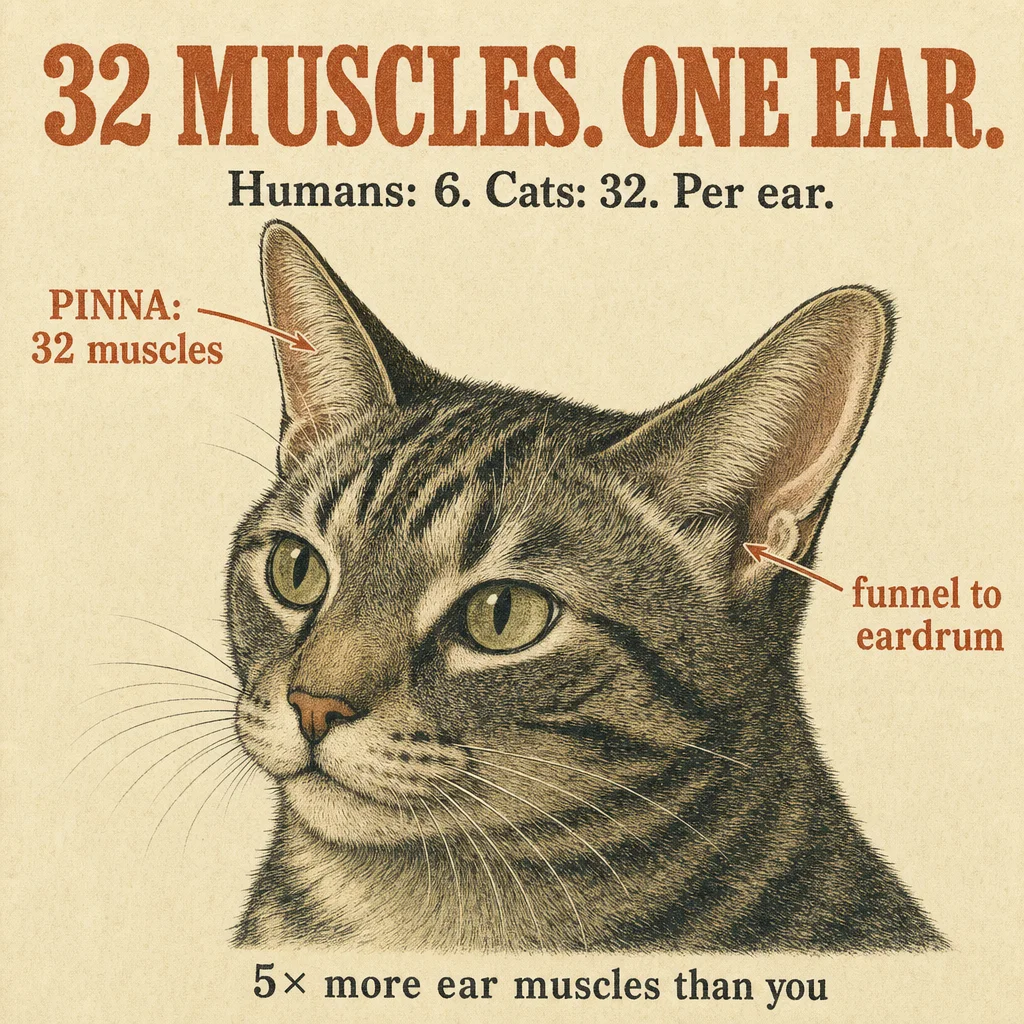
Your cat has 32 muscles in each ear — and runs them independently
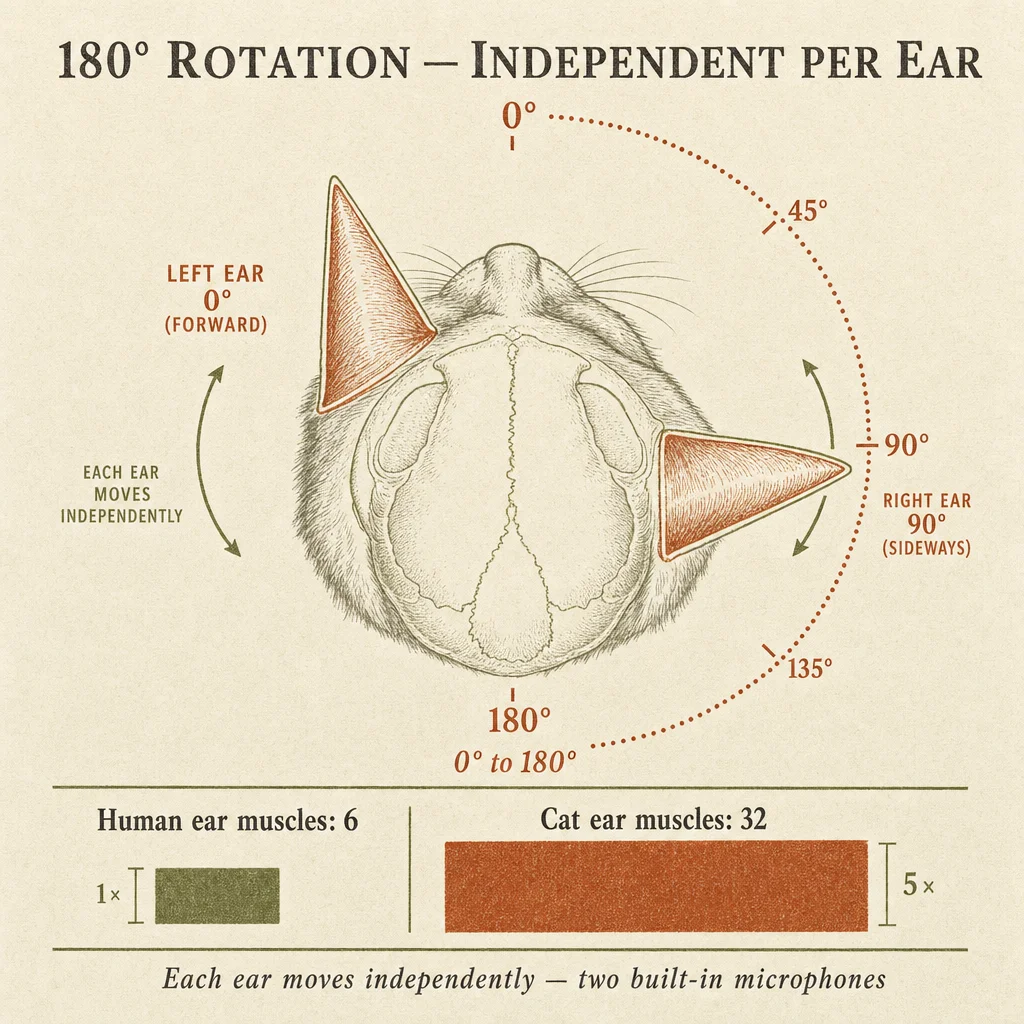
Cats have 32 muscles in each outer ear — 5 times more than humans — allowing each ear to rotate independently up to 180 degrees. This turns every cat's head into a precision sound localization system, letting them detect ultrasonic rodent frequencies while reading the room for threats without moving a muscle anywhere else.
2026/6/1 · 23:15
ギャラリー
Your cat's ears have 32 muscles each. You have 6.
That isn't a rounding error — it's the difference between a pair of fixed satellite dishes and two fully independent radar arrays. Each of your cat's outer ears (the pinna, that pointed flap) contains 32 separate muscles, letting it rotate a full 180 degrees. And each ear does this on its own, independently of the other.
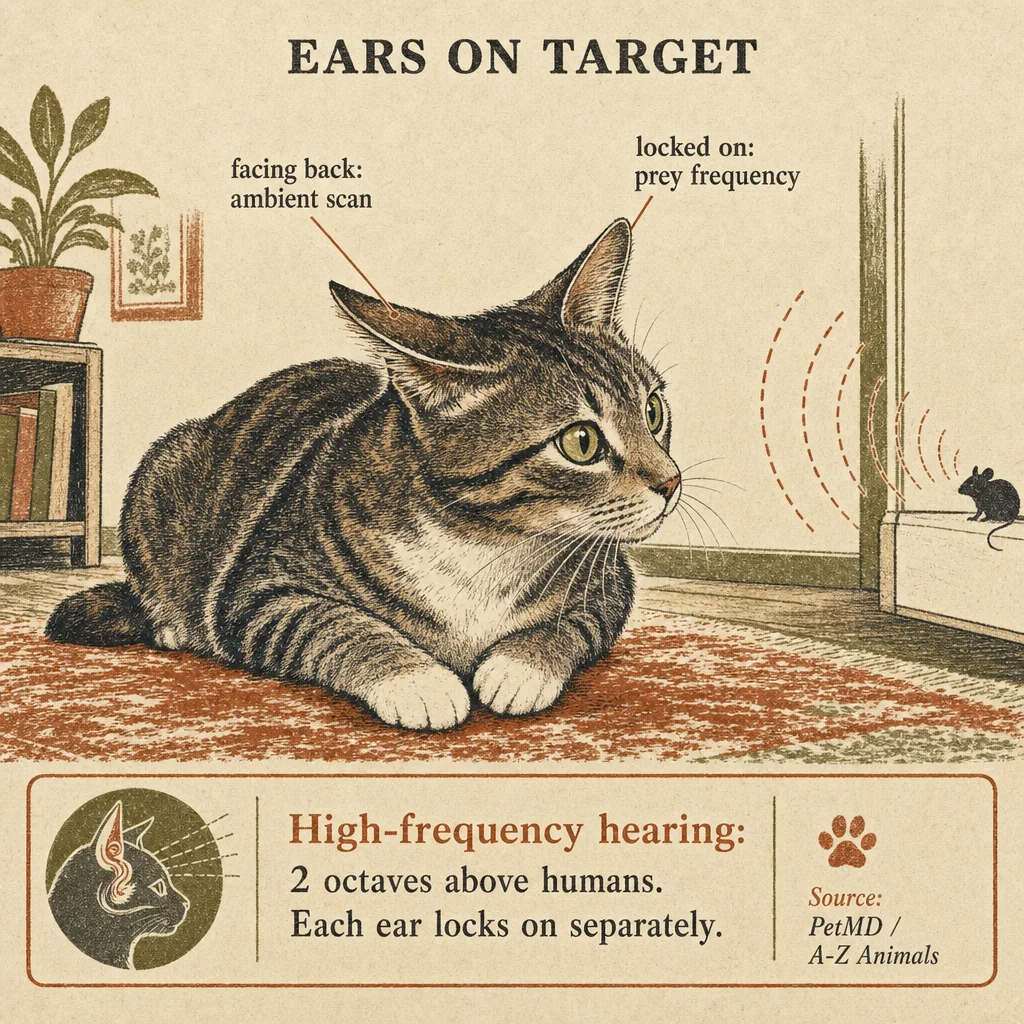
While you tilt your whole head to figure out where a noise came from, your cat stays perfectly still and swivels one ear forward and the other backward simultaneously. It triangulates the sound's location without moving a muscle anywhere else.
The cat's hearing range makes those ears even more useful. Their high-frequency hearing extends roughly two octaves above ours and one octave above a dog's — comfortably covering the ultrasonic squeaks of mice and voles that humans can't detect at all. According to Dr. Mikel Maria Delgado, a certified cat behavior expert, "the high-frequency range likely allows cats to 'eavesdrop' on rodent chatter, which may help them when hunting."
Ear position is also the most legible part of a cat's body language. Ears pinned flat against the skull mean fear or aggression — a signal to back away. Ears tilted slightly sideways often mean mild irritation. Upright and forward-facing ears mean calm attention. It's a real-time emotional display, driven entirely by those 32 muscles per side.
12Does your cat ever point both ears in completely different directions at the same time? What was it tracking?
Daily Cat Fun Facts — one surprising cat truth, every day.
コメント