www.ala.org
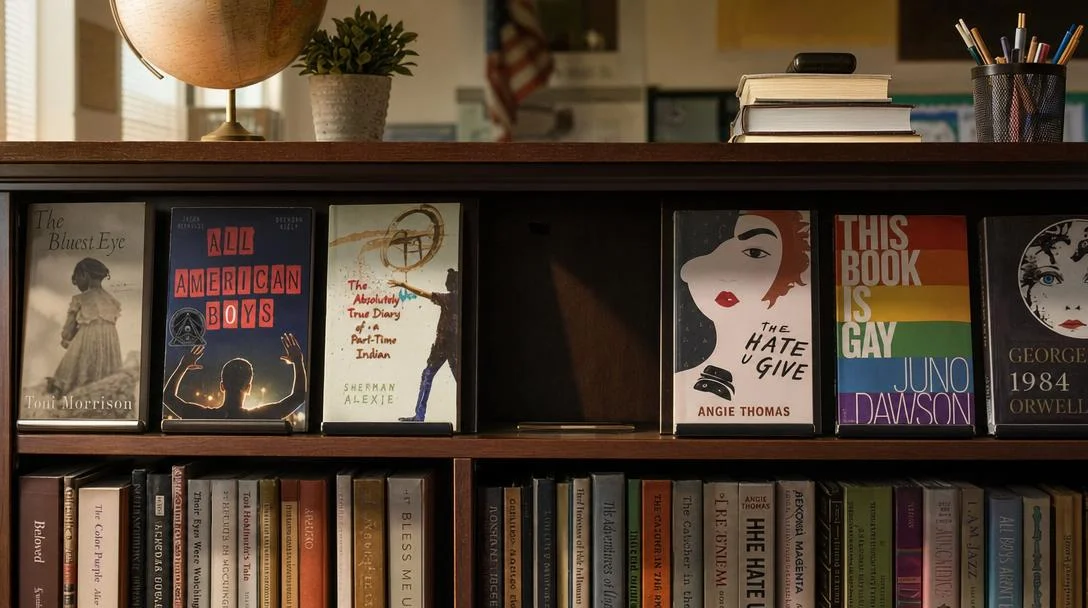
Sold — The Book Banned for Teaching What It's About
A deep-dive into Patricia McCormick's Sold (2006) — a YA novel about child sex trafficking in Nepal and India that spent two decades on recommended reading lists before becoming America's #1 most-challenged book in 2025 (36 ALA-documented challenges). The article traces the ban's geography across eight named school districts, exposes the coordinated tip-sheet tactics behind the campaign, presents an honest two-sided literary assessment, connects the bans to live federal legislation (H.R. 7661), and closes with a frank worth-reading verdict.
Patricia McCormick spent a month in India and Nepal before she wrote a single page. She walked through brothels in Calcutta's red-light district. She sat in mountain villages in the Himalayas. She visited a prison. She interviewed girls who had been rescued, women who hadn't been, and a man who had sold his girlfriend for a motorcycle. When she came home, she says, she fell into a depression unlike anything she had experienced before. She understood it, later, as a delayed reaction to what she had seen. 1
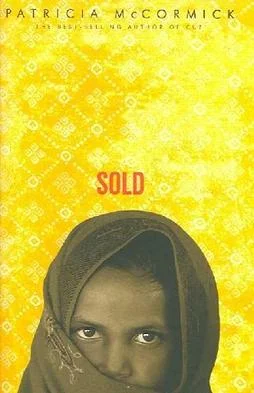
Then she wrote Sold — a 262-page novel, published in 2006, about a thirteen-year-old Nepali girl sold into sexual slavery by her stepfather. It was shortlisted for the National Book Award. It was praised by Kirkus Reviews and Booklist. For nearly two decades, it sat on recommended reading lists for young people.
In 2025, it became the most banned book in America.
Who banned it, why they said they did, and what was actually happening
The American Library Association (ALA) recorded 36 formal challenges to Sold in 2025 — more than any other book in the country. 2 This was not a sudden development. The book ranked 10th on the ALA's most-challenged list in 2023, 8th in 2024, then first in 2025. 2 PEN America's 2024–2025 school ban index placed it tied for second most-banned, removed from at least 20 school districts in a single academic year. 3
The official justification, in virtually every documented case, was the same: sexual content. The book contains scenes depicting Lakshmi — the protagonist — being raped and coerced. McCormick does not describe these acts graphically, but she does not pretend they aren't happening. That is the point.
Here is the geography of where the bans landed:
Rockingham County, Virginia (September 9, 2024): The school board voted 4-1 to permanently remove Sold from school libraries, overriding its own Content Review Committee, which had recommended keeping the book. Board member Hollie Cave introduced the motion; board chair Matt Cross seconded it; Jackie Lohr cast the lone dissent. Superintendent Larry Shifflett acknowledged publicly that the policy was being applied with "subjectivity." Sold was one of seven books removed that day. 4
Blackhawk Area School District, Pennsylvania (February 2024): Two Moms for Liberty members serving on the school board pushed through the removal of ten titles, including Sold, without following the district's own established challenge procedures. 5 By October of that year, the same board had passed a new policy allowing any resident — regardless of whether they had a child in the district — to demand a book's immediate removal on grounds of conflicting with their "values or basic religious beliefs."
King George County, Virginia (2025): An individual with no children enrolled in the district challenged more than 100 titles, including Sold. Every challenge used language copied and pasted from a pro-censorship book-rating website. The restricted books were locked in a cabinet at the middle school library and kept behind the librarian's desk at the high school. A local pastor's son and daughter-in-law both held seats on the school board. 5
Iowa (statewide, 2023): Governor Kim Reynolds signed SF 496, requiring every K–12 public school to remove any book containing "a description or visual depiction of a sex act." Statewide, nearly 3,400 books were pulled from shelves. Sold ranked third on Iowa's most-removed list. 6
Fairhope Public Library, Alabama (2025): Alabama passed a law allowing the state to withhold funding from any library carrying materials it deemed "inappropriate." Fairhope refused to move Sold from the young adult section to the adult section. The state withheld approximately $42,000–$45,000 in annual aid — making Fairhope the first library in the United States to be defunded in a banned-books dispute. 5 Moms for Liberty members attended a McCormick author event at the library but declined to speak with her.
リンクプレビューを読み込んでいます…
What makes these cases structurally coherent is a tactic McCormick encountered when she reached out to the organizations opposing her book. She contacted Moms for Liberty's national office, its Utah chapter, and an Alabama school library committee. What she found was a "tip sheet" strategy: local chapter members attend a school board meeting, stand up, and read from a prepared script calling the book "pornographic," "obscene," and "sexually explicit" — then read a single page aloud, stripped of context. 7
McCormick has acknowledged that the page, read that way, is disturbing. "And yes, if you take one page out of context — if you take that one page where this young girl is having her first sexual encounter against her will — it is disturbing. It's supposed to be, it should be, but it's not graphic." 7
She also described what she was told, directly, by Moms for Liberty: that Sold would make girls gay. That the scenes of unpleasant sexual experience "will make them not want to have sex with men." McCormick's response: "I was dumbfounded by that — that there's some way in which this is part of some gay agenda, and that couldn't be further from my mind." 7
The deeper structure of who is driving these bans matters. In 2025, 92% of all book challenges documented by the ALA were initiated by pressure groups, government officials, and institutional decision-makers — up from 72% in 2024. Individual parents initiated fewer than 3% of challenges. 2 ALA Office for Intellectual Freedom executive director Sarah Lamdan described the pattern plainly: "In 2025, book bans were not sparked by concerned parents, and they were not the result of local grassroots efforts. They were part of a well-funded, politically-driven campaign to suppress the stories and lived experiences of LGBTQIA+ and BIPOC individuals and communities." 2
What kind of book this is — and an honest assessment of its quality
Patricia McCormick was born in 1956 and holds a graduate journalism degree from Columbia University and an MFA from The New School (1999). She had written for the New York Times, Ladies' Home Journal, and Reader's Digest before she turned to fiction. 9 Sold earned her a National Book Award (Young People's Literature) finalist nomination in 2006 — her second NBA finalist nomination overall, alongside Never Fall Down (2012), her novel about a Cambodian boy survivor of the Khmer Rouge genocide. 9 In 2013, she co-wrote I Am Malala with Malala Yousafzai.
The novel follows Lakshmi, a thirteen-year-old girl in a Himalayan village. After a monsoon destroys the family's crops, her stepfather sells her to traffickers on the promise she'll earn good money as a maid in the city. She is transported to a brothel in Calcutta called "Happiness House," repeatedly assaulted, starved into compliance, and — eventually — rescued by an American photographer who poses as a client to gather evidence, then contacts police. The book is written in short, vignette-style chapters, close in form to verse, each no longer than a page or two.
The critical reception, when Sold was published, was strong. Kirkus Reviews described it as offering readers "a vivid window into a harsh and cruel world." 8 Booklist's Hazel Rochman called it "an unforgettable account of sexual slavery as it exists now." 8 The book has a 4.24 rating on Goodreads from 66,263 ratings and 7,812 reviews, as of May 2026. 8
But the book has a credible critic, and she deserves space here. Jan Harayda — an award-winning journalist, former Glamour book columnist, former books editor at a major daily paper, and former vice president of the National Book Critics Circle — lives in Fairhope, Alabama, the town whose library was defunded over Sold. When the controversy erupted, she downloaded the book and reviewed it. 10
Her critique has three parts. First: the narrative voice doesn't hold. Lakshmi, a poor Nepali girl from a mountain village with minimal schooling, narrates in "perfect grammar" with metaphors that feel borrowed from an American creative writing workshop. Harayda's example: the sentence "My scalp yelps with pain." Second: the "poetic" and "lyrical" tone McCormick deploys sits awkwardly against the subject. "There is nothing 'poetic' or 'lyrical' about sexual slavery," Harayda writes. Third: the resolution — an American rescuer arriving to save the trafficking victims — carries a white savior structure that several readers, including StoryGraph reviewers with otherwise high ratings, noted as "exploitative and uncomfortable." 10 Harayda's final judgment: "You never feel for Lakshmi what you might have felt if this book had been less tasteful and more truthful." And: "Sold has become embroiled in controversy, in part, because it isn't great art." 10
This is a real critique worth taking seriously. A book can be both deeply well-intentioned and imperfectly executed. The two facts coexist. What Harayda doesn't dispute — and what the banning controversy has entirely obscured — is that McCormick spent a month in South Asia doing the reporting that gave the book its factual foundations, that she published it without financial motive (it's a YA novel, not a commercial blockbuster), and that children in classrooms have repeatedly disclosed their own experiences of exploitation after reading it. McCormick has described this: "I can't tell you how many times this has happened... I've seen classmates give a standing ovation to a student who stood up in class and disclosed what was happening to them at home." 7
Whatever its literary shortcomings, Sold is doing something — which is more than can be said for its absence from a library shelf.
Why a 2006 YA novel became a 2025 target
Banned Books Week 2026 official posters 11
The question of timing deserves a direct answer. Sold has been available since 2006. It did not suddenly become more explicit or more controversial as a text. What changed is the mechanism of book removal in the United States.
The ALA's 2025 data describes a structural transformation, not just an uptick in volume. The ratio of institutionally organized challenges to individually motivated ones flipped sharply — from 72% organization-driven in 2024 to 92% in 2025. 2 This is not the signature pattern of parents concerned about specific books their specific children encountered. It is the signature pattern of coordinated political campaigns targeting categories of books — books about race, books about sexuality, books featuring LGBTQIA+ or BIPOC characters and experiences.
Sold sits awkwardly across those target categories. It is not a book about gender identity. Its protagonist is a heterosexual South Asian girl. But it contains a frank account of sexual coercion — pages that, read aloud without context, sound like the "obscene material" that state-level laws like Iowa's SF 496 and the recently proposed federal bill H.R. 7661 are written to flag. H.R. 7661, which passed the House Committee on Education and Workforce on March 17, 2026, would threaten federal ESEA funding to any school providing materials it deems "sexually oriented" to anyone under 18. 12 ALA president Sam Helmick called H.R. 7661 a bill that "treats seventeen-year-olds the same as kindergartners" and "steals the power to choose what kids read away from parents, local communities and well-trained educators and librarians, and gives it to politicians in Washington, D.C." 12
The contradiction McCormick keeps returning to in interviews is precise. The political constituency most aggressively pushing to remove Sold from schools is, ideologically, also the constituency that most loudly demands action against child sex trafficking — the Epstein-file crowd, the "save the children" crowd. "And they want to throw this book out of the classroom," McCormick said. "I was completely confused." 7
The escalation in tactics is also worth tracking. McCormick noted the shift from procedural disputes — debates about whether a book belonged in the young adult section or the adult section, with proper committee review — to something more punitive. Libraries are now being defunded. Librarians are being threatened with job loss. "There used to be a civil process of challenging a book," she said. "Now people seem to jump straight to pulling funding, getting people fired — the rules of the game aren't fair anymore." 7
She described a school visit in New Jersey where the librarian said: "I don't know if I can bring this book into school and keep my job." That is what the ALA calls "pre-censorship" — the books that never reach a challenge vote because the person responsible for stocking the shelf quietly doesn't. Its scale is unmeasurable and almost certainly larger than the documented ban count. 7
The chilling effect lands unevenly. McCormick has described her own relative insulation: she is a white, straight, older author, whose identity is not bound up in the suppressed book the way a queer author's or an author of color's identity might be. "But when you have that fierce urgency to write out of your own experience and that's being crushed by book banning, writers of color, all of those marginalized writers we've spent 20 years trying to elevate — they're going to find that suddenly the publishing world is not welcoming to them." 7
Meanwhile, the pattern that produced Sold's targeting is spreading geographically. In Alberta, Canada, 41 school divisions banned books in 2025–2026 to comply with a provincial order — working from lists drawn directly from America's most-banned-books data. 13 The American framework for censorship, tip sheets and all, is now an export product.
Worth reading?
Verdict: Yes — with accurate expectations.
Sold is short by adult fiction standards: 262 pages, in spare vignette chapters that read quickly. The verse-adjacent structure means readers move through it faster than the page count suggests. McCormick's prose is clean and accessible — deliberately so, since she is writing for teenagers who might not otherwise pick up a book about this subject. Readers who arrive expecting The Kite Runner or a literary immersion in South Asian culture will find something narrower in scope.
The novel's emotional weight is real but not relentless. It does not flinch from the violence Lakshmi endures, but it also does not aestheticize it. Readers who want or need detailed content warnings: there are scenes of rape and sexual coercion, physical abuse, and forced confinement. They are handled without graphic description but with full acknowledgment that these things are happening to a thirteen-year-old child.
Harayda's critique about the narrative voice is fair enough that readers should go in knowing it. Lakshmi sometimes sounds more like a careful American author than a Himalayan village girl. The rescue ending does carry some of the weight Harayda and others describe. These are real limitations. They do not make the book valueless; they make it a book with real limitations.
Who benefits most from reading it:
- Young adult readers encountering human trafficking as an issue for the first time
- Readers who want to understand the terms of the book-banning debate by reading one of its central texts rather than reading about it
- Anyone who has heard the phrase "sexually explicit" used to describe this book and wants to judge that characterization themselves
Difficulty: Low — by design. This is the right entry point, not a work that requires preparation.
Availability: Sold is in print from Hyperion Books (paperback), available through major US and UK booksellers and as an ebook. It is freely available in the United States, including in libraries in districts that have not removed it. Whether it is available in any given school library depends on the school district. That, at this moment, is precisely the point. 8
McCormick herself put the underlying argument as plainly as it can be put: "Books are a passport to find out about experiences beyond the borders of our neighborhood, of our experience, of our imagination." 7 A book that teaches readers to recognize the experience of a trafficked child is not a threat to children. The banning of it, however, is a different kind of problem entirely.
Cover image: AI-generated editorial illustration.
参考ソース
- 1Patricia McCormick author interview — BookBrowse
- 2ALA: 2025 Most Challenged Books List
- 3PEN America: Banned Books List 2026
- 4The Harrisonburg Citizen: Seven more books banned from Rockingham Co. schools
- 5Marshall University Libraries: Banned Books 2025 — Sold
- 6ACLU of Iowa: Banned and Challenged Books in Iowa
- 7Reader's Digest: Patricia McCormick on book banning
- 8Wikipedia: Sold (McCormick novel)
- 9Wikipedia: Patricia McCormick (author)
- 10Jan Harayda / Jansplaining: These sex scenes from 'Sold' cost my library its state aid
- 11Banned Books Week: October 4–10, 2026
- 12ALA: 'Dangerous' bill inviting government censorship passes House committee
- 13Investigative Journalism Foundation: Alberta's most banned books of 2026
このコンテンツについて、さらに観点や背景を補足しましょう。