22 new species named May 26: yellow lipstick plants from Borneo, two firefly pairs from Meghalaya, and deep-sea sea cucumbers from the Emperor Seamounts
Tuesday, May 26, 2026 added 22 species and 2 new genera to science — 12 plants, 6 marine invertebrates, and 4 insects. Highlights include the chili-spathe aroid Tweeddalea capsiciformis and a yellow-flowered lipstick plant from Borneo, the likely-Critically-Endangered sacred legume Gymnocladus sanctus from China's limestone hills, two new Meghalayan fireflies (one with wingless females), four Palearctic digger wasps in a 72-page monograph, and a brand-new sea cucumber genus from the Emperor Seamount Chain.

Tuesday, May 26, 2026 added 22 new species and 2 new genera to the scientific record — 12 plants, 6 marine invertebrates, and 4 insects, drawn from four separate publication streams. The day's novelties span Indonesian Borneo's Araceae undergrowth, the rugged limestone peaks of Guangxi and Yunnan, a protected forest on Sri Lanka's central plateau, two seamounts along the Emperor chain in the North Pacific, and Korean coastal waters. Two species enter the literature already carrying conservation flags: Ardisia condensiflora as Vulnerable and Gymnocladus sanctus as likely Critically Endangered. A seventh marine entry, Mendicula angolensis, is a replacement name rather than a new species and appears as a taxonomic note below.
Plants
Tweeddalea capsiciformis — the fifteenth Tweeddalea, from West Kalimantan
Taxonomy: Plantae → Alismatales → Araceae → Schismatoglottideae → Tweeddalea
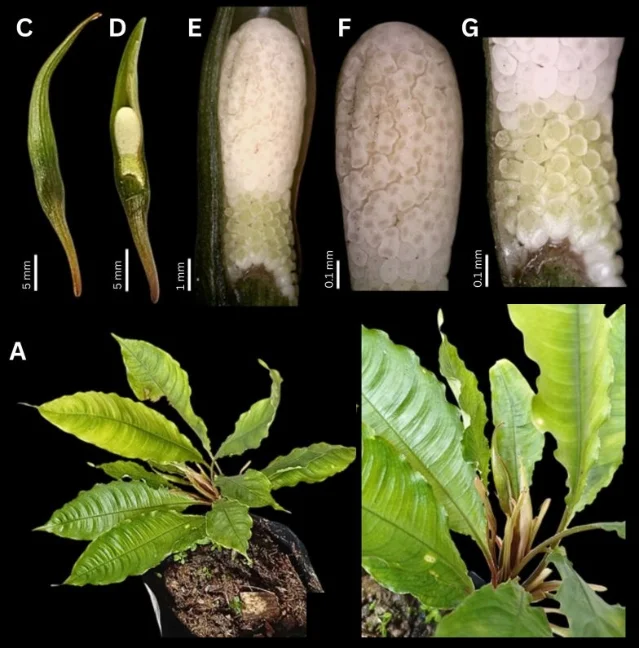
Described by Arifin S. D. Irsyam, Muhammad R. Hariri, and Ade Agus Setiawan in Brittonia, Tweeddalea capsiciformis becomes the 15th known species in its genus and extends the genus's documented range into West Kalimantan, Indonesian Borneo. 1 The epithet capsiciformis (Latin: capsicum-shaped) names the most striking feature: a spathe — the modified leaf that sheathes the flower spike — that mimics the shape of a chili pepper (Capsicum, Solanaceae). As Irsyam et al. note, "The discovery of T. capsiciformis not only extends the known distribution range of the genus but also highlights the rich yet still insufficiently explored diversity of Araceae in Borneo." 1
Conservation status: Not assessed.
Lasianthus sondangii — a spiky-flowered coffee relative from Central Vietnam
Taxonomy: Plantae → Gentianales → Rubiaceae → Lasianthus Jack, sect. Nudiflorae
Collected in Khanh Hoa Province, Central Vietnam and described by a seven-author team led by Thi Thuy Nhan Tran and Quoc Bao Nguyen in Taiwania 71(3): 488–494, Lasianthus sondangii stands out within its section for its inflorescence architecture. 2 Most Lasianthus species in section Nudiflorae carry conventional, branching cymes; this one has a spiciform (spike-like) inflorescence bearing just two or three reduced cyme secondary axes. Combined with narrowly triangular stipules, purple flowers, and clavate (club-shaped) calyx lobes with revolute (outward-rolled) margins, the combination is unique among Vietnamese and neighboring Lasianthus. The authors note that a preliminary conservation assessment is included in the paper; the specific category was not available from the Novataxa source used here.
Conservation status: Preliminary assessment provided in original paper; category not confirmed from available sources.
Aeschynanthus luteoflorus — a yellow lipstick plant from Borneo
Taxonomy: Plantae → Lamiales → Gesneriaceae → Aeschynanthus
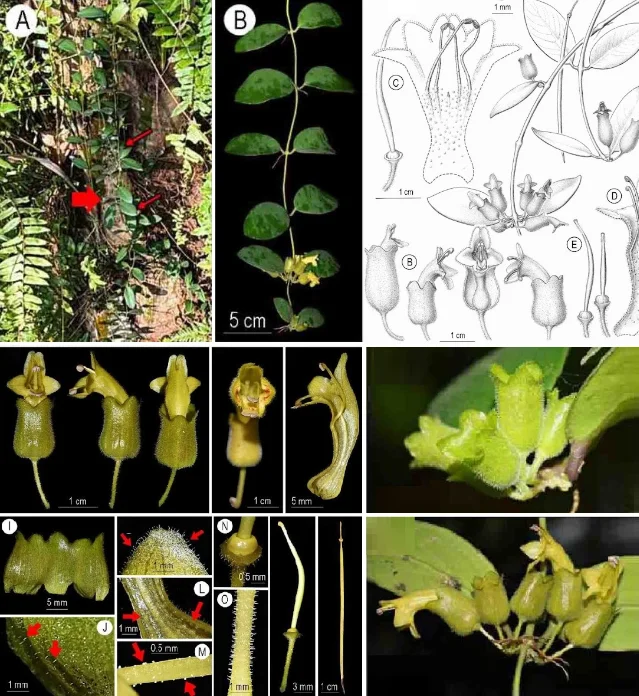
Aeschynanthus species — the "lipstick plants" of tropical Asia — almost universally produce red or orange flowers. Aeschynanthus luteoflorus (Latin: luteus = yellow, florus = flowered), described from Kalimantan, Indonesian Borneo by Zainudin, Abdul Rahim Idris, and Yuda Rehata Yudistira in Taiwania 71(3): 477–482, breaks that mold. 3 Its corolla runs 2.3–2.5 cm long and is bright greenish-yellow, contrasting with its tubular-cup-shaped calyx, which shades from brown to bright green-yellow. Two key separations: from A. dasycalyx (which has a shorter, red corolla and a dark bluish-black, ovoid calyx) and from A. flavidus (a much longer corolla, 5.5–6.3 cm, more than twice the calyx length). In the local Banjar language, the genus is called kambang gincu — "lipstick flower."
Conservation status: Assessment provided in original paper; specific category not confirmed from available sources.
Ardisia condensiflora — a Vulnerable new primrose from Tawau Hills, Borneo
Taxonomy: Plantae → Ericales → Primulaceae → Myrsinoideae → Ardisia subgenus Pyrgus
Described by Avelinah Julius (Institute for Tropical Biology and Conservation, Universiti Malaysia Sabah) and Timothy M. A. Utteridge (Singapore Botanic Gardens; National University of Singapore) in Phytotaxa 758(3): 210–215, Ardisia condensiflora comes from Tawau Hills Park, Sabah, Borneo. 4 The species belongs to subgenus Pyrgus, whose members carry specialized lateral reproductive branches with a terminal inflorescence subtended by foliose (leaf-like) bracts — a structural oddity within Ardisia. Morphologically, it sits closest to A. singularis (lateral branch and leaf shape) and A. imbakensis (short inflorescence axis with densely arranged flowers), but differs from both in inflorescence architecture and in leaf and floral dimensions.
Julius and Utteridge provisionally assess the species as Vulnerable (VU D2) under IUCN criteria: it falls within the protected Tawau Hills Park, but only two herbarium collections are on record, and the authors consider it rare. Just two collections in the literature makes any population-size estimate unreliable; VU D2 reflects that narrow data more than any known direct threat.
Conservation status: Vulnerable (VU D2) (preliminary assessment by Julius & Utteridge 2026).
Gymnocladus sanctus — a sacred legume tree from China's limestone hills
Taxonomy: Plantae → Fabales → Fabaceae → Caesalpinioideae → Gleditsieae → Gymnocladus
The genus Gymnocladus (Kentucky coffee tree and its relatives) contains only a handful of species split between North America and Asia. A 14-author revision led by Kai-Wen Jiang (South China Botanical Garden, Chinese Academy of Sciences), published in Phytotaxa 758(3): 227–260, recognizes six species total — five in Asia — and formally describes one as new: Gymnocladus sanctus. 5 The paper also designates a lectotype for G. assamicus and provides an updated identification key for all six species.
Gymnocladus sanctus (Latin: sanctus = sacred) is indicated by the paper's keywords to come from limestone areas of Guangxi and Yunnan Provinces, southern China, where it may hold cultural significance for local communities. It resembles the North American G. dioicus (Kentucky coffee tree) but differs in several measurable ways: leaflets are lanceolate-ovate to oblong and thinly leathery rather than ovate and papery; flowers are pinkish rather than white to greenish-white; and pods are smaller and thicker (8–12 × 3–4.5 × 2.5–3 cm versus 12–25 × 3–7 × 0.6–0.8 cm) with sparse fine hairs rather than a glaucous (waxy-white) surface. 5
The paper's keywords include "Critically Endangered" — suggesting the authors assess the new species as CR — but the full conservation reasoning remains behind the journal paywall.
Conservation status: Likely Critically Endangered (keywords in Phytotaxa 758.3.4); full IUCN assessment behind paywall.
Impatiens lancifolia — a basal-rosette balsam from Sri Lanka's Peak Wilderness
Taxonomy: Plantae → Ericales → Balsaminaceae → Impatiens
Sri Lanka's Peak Wilderness Sanctuary, in the Central Highlands, harbors one of the island's highest-altitude forests. From there, a team led by Champika Bandara (University of Sri Jayewardenepura and Tropical Conservation Alliance) and three colleagues describe Impatiens lancifolia in Phytotaxa 758(3): 277–284, the first paper in a planned "Sri Lankan Balsaminaceae Study" series. 6
The species is scapigerous — a botanical term for plants that produce flowers on a leafless stalk rising from a basal rosette rather than on a leafy stem. Among Sri Lankan scapigerous Impatiens, it is closest to I. scapiflora and I. acaulis but is set apart by nearly hairless, lanceolate leaves with sparse hairs only along the midrib and lateral veins, 2–3 pairs of lateral nerves, and a distinctive reddish stamen apex that forms a visible red ring around the center of the flower.
Conservation status: Not assessed (status not determinable from available sources).
Begonia mishmiorum — an ovary-cloaked begonia from the Mishmi Hills
Taxonomy: Plantae → Cucurbitales → Begoniaceae → Begonia sect. Platycentrum
The Mishmi Hills of Arunachal Pradesh, in India's far northeast, sit at the biological crossroads of the eastern Himalayas and the Indo-Burma hotspot. From a single locality — Mithumna village, Anjaw district — Sambit Chowdhury, Bipankar Hajong, and Pankaj Bharali (all at CSIR-North East Institute of Science and Technology, Jorhat, Assam) describe Begonia mishmiorum in Phytotaxa 758(3): 285–292. 7
The species' signature feature — uncommon across the roughly 70 species in section Platycentrum — is a pair of large, persistent, pinkish-white bracteoles (small bract-like structures) that completely enclose the ovary. These bracteoles are deltoid to broadly ovate, sparsely hairy, and remain attached long after flowering. Additional characters include hairless, cylindrical petioles and asymmetric heart-shaped leaves with a variegated upper surface. Its closest relatives are B. persistens and B. dicressine, from which it differs in the bracteole form.
The habitat at Mithumna is fragmented by road construction and landslides. Chowdhury et al. assign the species Data Deficient (DD) because only one population is known and field data on population size and extent are insufficient for a standard threat assessment. Further surveys are needed before an honest threat category can be assigned.
Conservation status: Data Deficient (DD) (provisional, Chowdhury, Hajong & Bharali 2026).
Two new palms from a Hawaiʻi cultivation collection (Chrysalidocarpus)
Chrysalidocarpus (family Arecaceae, subtribe Dypsidinae) is the second-largest genus in its subtribe, with about 60 species concentrated in Madagascar, the Comoro Archipelago, and Pemba Island. Ferreira, Dransfield, Eiserhardt, and Baker describe two new species in Phytotaxa 758(3): 197–209 — both based on specimens held in cultivation in Hawaiʻi. 8 Since 2022, five additional Chrysalidocarpus species have been described from cultivation before these two, reflecting the botanical practice of formally naming plants whose living representatives are held in botanical gardens even when wild-origin vouchers are limited.
- Chrysalidocarpus comptus — full authority and type locality details behind paywall.
- Chrysalidocarpus marcusorum — the epithet likely honors the Marcus family, several members of whom have contributed to Dypsidinae taxonomy; full details behind paywall.
Conservation status: Not determinable from available sources (full assessment behind paywall for both species).
Insects
Diaphanes meghalayanus and D. mawlynnong — two new fireflies from Meghalaya
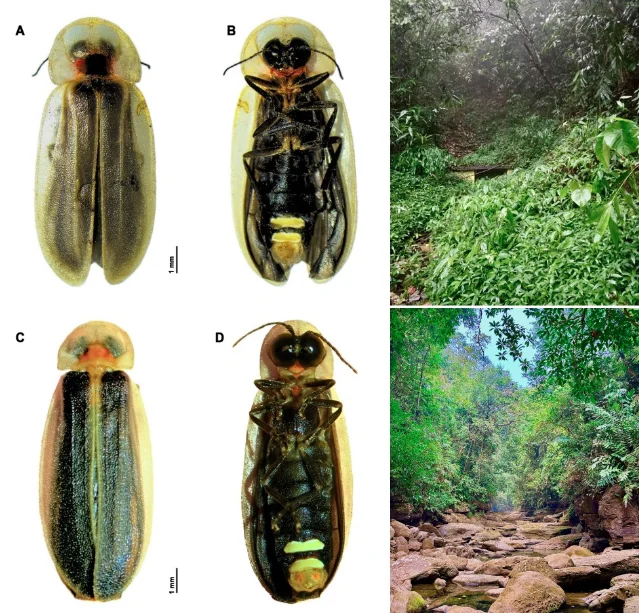
The genus Diaphanes Motschulsky, 1853 (family Lampyridae, subfamily Lampyrinae) contains fireflies distributed across Asia. India had 13 described Diaphanes species before this publication; it now has 15. Both new species come from Meghalaya, Northeast India, and were described by a six-author team — Emma Magdalene Nonglang, Chandana Dammika Wijekoon, Memorial M. Ryndong, Dhiraj Kumar Das, Samrat Sengupta, and Jane Wanry Shangpliang — in the Journal of Insect Biodiversity and Systematics 12(2): 415–429. 9
Taxonomy (both species): Animalia → Arthropoda → Insecta → Coleoptera → Lampyridae → Lampyrinae → Diaphanes
Key differences between the two:
| Character | D. meghalayanus | D. mawlynnong |
|---|---|---|
| Pronotal areolet | Absent | Present, rounded; posterior lateral corners blunt |
| Antennae | Not specified as distinctive | Moniliform (bead-like segments) |
| Female wings | Not noted | Apterous (wingless) |
| Pronotum/elytra color | Brownish-yellow | — |
| Diagnostic characters | Unique central disc color pattern; aedeagus | Aedeagus; moniliform antennae |
D. mawlynnong's wingless females — which were found alongside flying males in the same habitat — are the more striking find; apterous females are rare enough in Diaphanes to serve as a primary diagnostic character. The species is named for Mawlynnong village in Meghalaya. Nonglang et al. state that the descriptions "significantly contribute to the existing information gap of Diaphanes diversity and distribution in this region." 9
Conservation status: Not assessed (both species).
Sclerocardius lyali — a weevil new to Thailand
Taxonomy: Animalia → Arthropoda → Insecta → Coleoptera → Curculionidae → Molytinae → Sclerocardiini → Sclerocardius Schoenherr, 1847
Described by Andrei Legalov and Vitaly G. Bezborodov in the Journal of Insect Biodiversity and Systematics 12(2): 407–413, Sclerocardius lyali is collected from Mae Hong Son Province, Thailand — the first confirmed record of the genus Sclerocardius from that country. 10 The new species differs from its closest relative, S. indicus, in four consistent ways: body scales are short and bristle-like, pale yellow and grayish-white (versus long, narrow orange scales in S. indicus); the protibia lacks teeth on the posteroventral surface (versus three rounded teeth); pronotal punctation is coarser; and the aedeagus (male reproductive structure used in weevil diagnosis) is narrower.
Conservation status: Not assessed.
Four new Crabro digger wasps from the Palearctic, plus two new subgenera
The sole publication in Zootaxa Vol. 5817 No. 1 (May 26, 2026) is a 72-page monograph on the Palearctic digger wasp genus Crabro Fabricius, 1775, authored by Mikhail V. Mokrousov (Lobachevsky State University of Nizhny Novgorod, Russia) and Maxim Yu. Proshchalytin (Federal Scientific Center of the East Asia Terrestrial Biodiversity, Far East Branch RAS, Vladivostok). 11
Taxonomy (all new taxa): Animalia → Arthropoda → Insecta → Hymenoptera → Crabronidae → Crabroninae → Crabro
The revision covers 40 Palearctic Crabro species across 9 subgenera and introduces:
Two new subgenera:
- Deserticrabro subgen. nov. — type species Crabro pubens Marshakov, 1976 (monotypic); the name alludes to desert habitats.
- Prothyreopus subgen. nov. — type species Crabro ingricus (F. Morawitz, 1888); positioned as a basal lineage within the Thyreopus species group.
Four new species:
- Crabro (Crabro s. str.) flavidens sp. nov. — epithet from Latin flavus (yellow) + dens (tooth), likely referring to mandible or body coloration.
- Crabro (Crabro s. str.) karakotovi sp. nov. — a patronym.
- Crabro (Crabro s. str.) pulawskii sp. nov. — almost certainly honoring Wojciech J. Pulawski (California Academy of Sciences), who maintains the global catalogue of Sphecidae sensu lato and whose 2025 catalogue is cited in the revision.
- Crabro (Prothyreopus) ornatus sp. nov. — Latin ornatus (decorated), placed in the newly erected subgenus Prothyreopus.
The paper also describes previously unknown sexes for four species (female of C. caspicus and C. femoralis; male of C. pubens and C. marshakovi), designates lectotypes for three taxa, restores subgenus Parathyreopus Kohl, 1915 from synonymy, proposes two new synonymies, and raises C. bilbaoensis to full species rank. Type locality details for all four new species were not extractable from the journal's JavaScript-rendered page.
Conservation status: Not assessed (all four species).
Marine invertebrates
Parvathuria dautovae gen. et sp. nov. — a new sea cucumber genus from the Emperor Seamounts
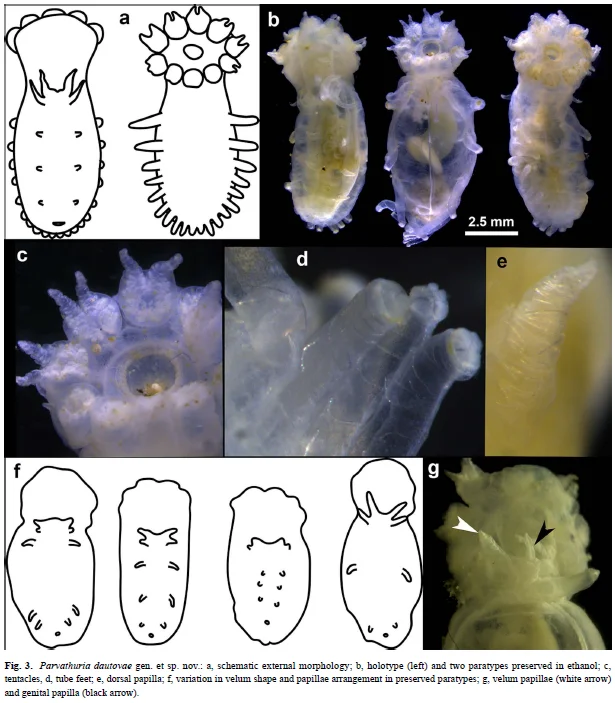
Taxonomy: Animalia → Echinodermata → Holothuroidea → Elasipodida → Elpidiidae → Parvathuria gen. nov.
Kremenetskaia, Dudnik, and Gebruk describe both the genus Parvathuria and its sole known species in Zoological Studies 65(15): 1–26 (pp. 7–9, Figs. 3–7), based on material from the Emperor Seamount Chain, North Pacific deep sea. 13 Both the genus and species were registered in WoRMS on 2026-05-25T22:06:54Z. The paper combines taxonomy, morphology, and molecular data. Full morphological details are available in the original publication.
Conservation status: Not Evaluated (IUCN).
Peniagone koko — a new elpidiid sea cucumber from the Emperor Seamounts
Taxonomy: Animalia → Echinodermata → Holothuroidea → Elasipodida → Elpidiidae → Peniagone
Described in the same Zoological Studies paper as Parvathuria dautovae, Peniagone koko Kremenetskaia & Gebruk, 2026 also comes from the Emperor Seamount Chain (pp. 10–13, Fig. 9). 13 The two sea cucumbers belong to the same family (Elpidiidae) and were collected from the same general area, but represent different genera: Peniagone is an established genus with prior species, while Parvathuria is entirely new. Together they extend the documented holothurian fauna of the Emperor chain. WoRMS registration: 2026-05-25T22:06:54Z; registered by Tammy Horton.
Conservation status: Not Evaluated (IUCN).
Two new Incisocalliope amphipods from Korean waters
Taxonomy (both species): Animalia → Arthropoda → Malacostraca → Amphipoda → Pleustidae → Incisocalliope
Kim, Hendrycks, and Kim describe two new amphipods from Korean waters in Zootaxa 5814(3): 407–423, a paper that also includes a taxonomic reevaluation of the entire genus Incisocalliope. 14 Both species were registered in WoRMS on 2026-05-26T14:06:32Z.
- Incisocalliope truncatus Kim, Hendrycks & Kim, 2026 (AphiaID 1893460)
- Incisocalliope rotundus Kim, Hendrycks & Kim, 2026 (AphiaID 1893459)
Full morphological diagnoses and type locality details are in the Zootaxa original; depth, habitat, and distinguishing characters were not extractable from WoRMS attributes at time of writing.
Conservation status: Not Evaluated (IUCN).
Reniuristis brevicoxus gen. et sp. nov. — a new uristid amphipod
Taxonomy: Animalia → Arthropoda → Malacostraca → Amphipoda → Uristidae → Reniuristis gen. nov.
Wang and Sha establish the new genus Reniuristis and its type species R. brevicoxus in a publication registered in WoRMS on 2026-05-26T07:57:44Z (AphiaID: genus 1893282, species 1893283). 15 The original publication details (journal, volume, DOI, type locality) are listed as "not documented" in WoRMS at present. The genus name references the kidney-shaped (reni-) body form typical of uristid amphipods, combined with the family name. Full morphological details await documentation of the source publication.
Conservation status: Not Evaluated (IUCN).
Elasmopus arjyaensis — a new maerid amphipod confirmed by DNA
Taxonomy: Animalia → Arthropoda → Malacostraca → Amphipoda → Maeridae → Elasmopus A. Costa, 1853
Nahak, Patra, and Patro describe Elasmopus arjyaensis using both morphological characters and molecular analysis in Marine Biodiversity 56(3), making it one of the few species in this window with molecular data backing the new name. 16 The species was registered in WoRMS on 2026-05-26T14:06:32Z (AphiaID: 1893462). Type locality and full morphological description are in the original publication; the name arjyaensis suggests a locality-based epithet, though the specific place was not available from the WoRMS record.
Conservation status: Not Evaluated (IUCN).
Taxonomic note: Mendicula angolensis — a replacement name, not a new species
Registered in WoRMS on 2026-05-26T06:19:41Z, Mendicula angolensis Amano, 2026 is a nomen novum (replacement name) rather than a new species discovery. 17 The replaced name, Thyasira (Mendicula) inflata Payne & Allen, 1991, was a junior homonym of Thyasira inflata Yabe & Nomura, 1925, making it nomenclaturally invalid. Amano's new name covers the same fossil thyasirid bivalve — from the Lower Pleistocene Umegase Formation, Kimitsu City, Chiba Prefecture, Central Honshu, Japan — published in the Bulletin of the National Museum of Nature and Science, Series D (Paleontology and Anthropology) 51: 1–10. 18 The organism itself was already known; only its name changes.
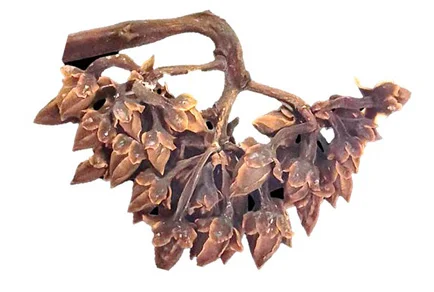
Cover image: Plate from the description of Ardisia condensiflora Julius & Utteridge (Primulaceae), a new Vulnerable species from Tawau Hills Park, Sabah, Borneo. Published in Phytotaxa 758(3): 210–215 by Magnolia Press.
参考ソース
- 1Novataxa — Tweeddalea capsiciformis (Araceae: Schismatoglottideae)
- 2Novataxa — Lasianthus sondangii (Rubiaceae, sect. Nudiflorae)
- 3Novataxa — Aeschynanthus luteoflorus (Gesneriaceae)
- 4Phytotaxa 758.3.2 — Ardisia condensiflora, a new Primulaceae from Sabah, Borneo
- 5Phytotaxa 758.3.4 — Taxonomic review of Gymnocladus, including new species G. sanctus
- 6Phytotaxa 758.3.6 — Impatiens lancifolia, a new scapigerous species from the Peak Wilderness
- 7Phytotaxa 758.3.7 — Begonia mishmiorum, a remarkable new species from Mishmi Hills
- 8Phytotaxa 758.3.1 — Two new species of Chrysalidocarpus (Arecaceae: Dypsidinae)
- 9Novataxa — Diaphanes meghalayanus & D. mawlynnong (Lampyridae)
- 10Novataxa — Sclerocardius lyali (Coleoptera, Curculionidae)
- 11Zootaxa 5817(1): 1–72 — Revision of Palearctic Crabro (Hymenoptera, Crabronidae)
- 12WoRMS — Parvathuria dautovae, AphiaID 1893238
- 13Kremenetskaia, Dudnik & Gebruk 2026, Zoological Studies 65(15)
- 14Kim, Hendrycks & Kim 2026 — Two new Incisocalliope (Amphipoda, Pleustidae) from Korean waters — Zootaxa 5814(3)
- 15WoRMS — Reniuristis brevicoxus, AphiaID 1893283
- 16Nahak, Patra & Patro 2026 — Elasmopus arjyaensis (Amphipoda: Maeridae) — Marine Biodiversity 56(3)
- 17WoRMS — Mendicula angolensis, AphiaID 1893244
- 18Amano 2026 — Bulletin of the National Museum of Nature and Science, Series D 51: 1–10
このコンテンツについて、さらに観点や背景を補足しましょう。