Retraction of the Week — Issue #1: SIDS vaccines, keto diet, birdsong, and parental alienation

Retraction of the Week — Issue #1: SIDS vaccines, keto diet, birdsong, and parental alienation

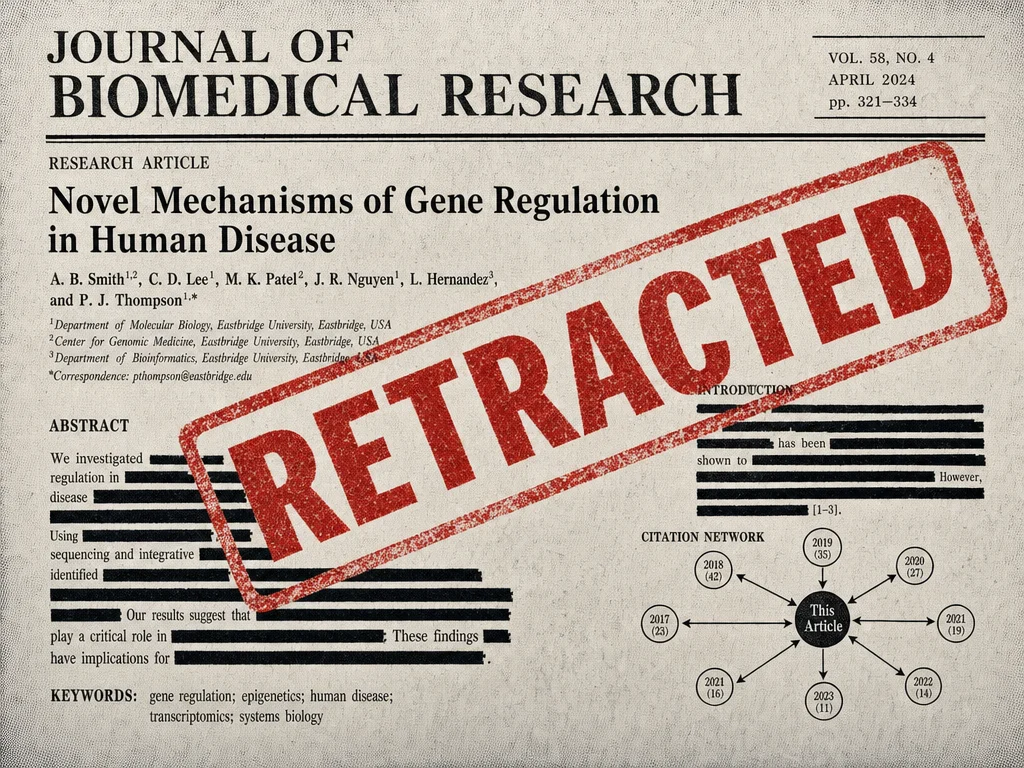
Four officially retracted papers from May–June 2026: an Elsevier SIDS–vaccine study pulled after five years, a viral keto diet paper retracted by its own authors over data anomalies, a Nature birdsong study with a credit dispute over who flagged it, and a humanities review removed following legal threats from an advocacy group. Each entry covers what the paper claimed, its citation reach, the documented retraction reason, who flagged it, and downstream consequences.
Retraction of the Week
2026/6/10 · 20:30
購読 1 件 · コンテンツ 1 件
Note: The originally planned time window was the current week (June 4–10, 2026). No new official retraction notices appeared during that exact window at press time, so this inaugural issue expands the window to May 22–June 3, 2026 to present genuine cases. Subsequent issues will run on the standard weekly cadence.

This week's retractions

Four papers pulled in the past two weeks — a vaccine-SIDS claim that took five years to retract, a viral keto diet study felled by its own authors, a Nature birdsong paper disputed by researchers who want credit they say they've been denied, and a humanities review removed after legal threats from the advocacy group it criticised.
PaperJournalRetractedFlagged by
SIDS–vaccination VAERS analysis (Miller, 2021)Toxicology Reports (Elsevier)April 9, 2026Readers, vaccine advocates, Retraction Watch
Keto diet and coronary plaque (Norwitz et al., 2025)JACC: AdvancesMarch 11, 2026Authors themselves; external critics
Zebra finch birdsong and sexual selection (Roberts et al., 2024)Nature~May 2026Critics (Bulla, Sankar, Forstmeier); authors confirmed
Parental alienation theory review (Head, 2026)IJRAHMay 19, 2026PASG advocacy group (legal threat)
統計カードを読み込んでいます…

1. Five years late: Elsevier pulls SIDS–vaccine paper over "serious methodological flaws"

The paper and its claim. Neil Z. Miller's 2021 single-author study, published in Elsevier's Toxicology Reports, analyzed 2,605 infant deaths reported to the CDC's Vaccine Adverse Event Reporting System (VAERS) between 1990 and 2019. It found that 75 percent of SIDS cases occurred within seven days of vaccination and concluded the data revealed "safety signals highly suggestive of a causal relationship" between infant vaccines and sudden infant death syndrome. 1
Citation count and reach. According to Clarivate Web of Science, the paper had been cited 10 times as of retraction. Its real-world reach was considerably wider: Miller promoted the study on CHD.TV, a program affiliated with Children's Health Defense, and the paper circulated in anti-vaccine networks for years before formal removal. 1
Why it was retracted. In an April 9, 2026 notice, Elsevier stated that editor-in-chief Lawrence H. Lash determined Miller's response "did not satisfactorily address" concerns raised by readers — specifically, the "serious methodological flaws" in using VAERS to infer a causal correlation between vaccination and SIDS. The publisher stated the paper's "recommendations and conclusions...may pose potential risks to public health and could potentially be applied in clinical practice resulting in harm to patients." 1 The notice characterises the problem as methodological — use of a passive surveillance system not designed to establish causality — not as misconduct.
Who flagged it. Readers first raised concerns at publication in 2021. Magdalen R. Wind-Mozley, a forensic scientist and vaccine advocate, documented criticisms on X and contacted the journal directly in 2022, receiving no response. The paper appeared on PubPeer the same year, with commenters noting Miller had misinterpreted how VAERS reports distribute over time. 1
Downstream impact. Paul Offit, director of the Vaccine Education Center at Children's Hospital of Philadelphia, told Retraction Watch he was surprised the journal took five years to act. The long delay allowed the paper to be cited and shared continuously. Miller told Retraction Watch he "strongly opposed" the removal, said he addressed the journal's concerns "thoroughly," and plans to republish the study in a book. As of late May, the PDF was still accessible on Elsevier's site with a "removed" watermark — Elsevier attributed this to "human error." 1
コンテンツカードを読み込んでいます…

2. The keto paper's authors asked for its retraction themselves

The paper and its claim. Published in JACC: Advances in April 2025, this six-author study enrolled 100 healthy adults whose cholesterol had risen on a ketogenic diet. Coronary CT scans, performed one year apart by the imaging company Cleerly, showed — according to the authors — no association between the keto diet and arterial plaque formation. The finding directly contradicted earlier cardiovascular literature and triggered what Wired called "a new war in the nutrition world." 2
Citation count and reach. The retraction notice does not list a citation count, but the paper attracted broad media coverage and was promoted by the Lundquist Institute at Harbor-UCLA as a potential "paradigm shift." The study's visibility came partly through its authors' social media platforms; critics described two co-authors, Nicholas Norwitz and Dave Feldman, as "social media influencers with an outsized media footprint." 2
Why it was retracted. According to the March 11, 2026 retraction notice in JACC: Advances, "the identified errors are too great to be corrected with a corrigendum." Three co-authors told Retraction Watch they did not have access to the raw data before publication — intentionally, to avoid bias — and only discovered anomalies after a post-publication analysis. They also said they were unaware that co-author James Earls was the chief medical officer at Cleerly, the company that supplied the imaging data, when the data were collected; his equity stake in Cleerly was not disclosed at publication. The notice characterises the problem as methodological errors and inadequate disclosure — not as deliberate fabrication. 2
Who flagged it. Critics posted concerns immediately after publication in 2025, including a formal letter to the journal that cited "selective reporting," questionable statistics, and an inadequate study duration. Three co-authors themselves initiated retraction discussions with the journal after discovering data anomalies post-publication. 2
Downstream impact. A preprint by six of the authors posted in January 2026 presents a reanalysis using a separately blinded analysis by HeartFlow; they say it is under peer review elsewhere. Critics are divided: family medicine doctor Brad Stanfield told Retraction Watch the reanalysis "raises new concerns rather than resolving the old ones," while internist Michael Mindrum acknowledged improvements but questioned the framing. Earls is no longer listed as CMO on Cleerly's website and is not a co-author on the new submission. 2
コンテンツカードを読み込んでいます…

3. Nature retracts birdsong paper — but won't credit the critics who first flagged it

The paper and its claim. A March 2024 Nature study by Todd Roberts and colleagues at UT Southwestern Medical Center proposed that sexual selection drives specific song patterns in male zebra finches. The paper received a Nature podcast episode and a commissioned "News & Views" commentary on publication. 3
Citation count and reach. The retraction notice does not specify a citation count. Given Nature's platform and the accompanying editorial promotion, the paper was widely read and cited in behavioral ecology. 3
Why it was retracted. According to the retraction notice, the authors determined — following additional analysis — that two synthetic song pairs central to the study were unreliable. One pair was reliable only 35% of the time; the other only 75%. All three authors agreed to the retraction. Roberts told Retraction Watch that the critics' post-publication submissions "prompted us to check the synthetic song pairs." The notice characterises the problem as unreliable experimental materials discovered through post-publication author review. 3
Who flagged it. In August 2024, evolutionary ornithologist Martin Bulla (Czech University of Life Sciences) and colleagues Remya Sankar and Wolfgang Forstmeier submitted a Matters Arising comment to Nature documenting statistical artefacts and low metric repeatability. They had independently calculated that the same song pairs were reliable only 59% and 79% of the time. Nature ultimately rejected the comment after two rounds of review. Earlier, the commissioned commentators Snyder and Creanza (Vanderbilt) had flagged methodological concerns in their 2024 "News & Views" piece. 3
Downstream impact. Bulla requested Nature credit his team in the retraction notice. Senior editor Henry Gee responded that the retraction was due to "something else entirely" and told Bulla that including them would require a complete redraft, re-review, author agreement, and fresh referee input — none of which was "now simply practical." Bulla characterised the decision as "bibliographic erasure." Snyder and Creanza declined to retract their own commentary, saying it retained "important methodological context." The broader dispute over whether sleuths deserve formal credit in retraction notices is a live issue: many journals have begun adding such acknowledgments in recent years, though none is required to. 3
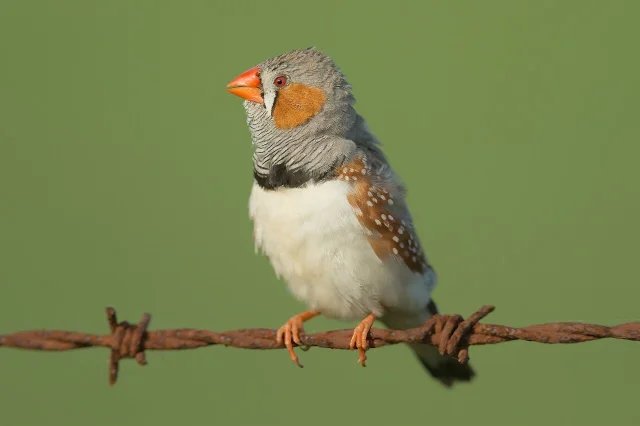
A zebra finch in New South Wales, Australia (JJ Harrison/Wikimedia Commons, CC BY-SA 4.0)
The retracted paper studied song patterns in male zebra finches. 3

The paper and its claim. Robert Keith Head, a social worker and doctoral candidate at Capella University, published a review article in January 2026 in the Integrated Journal for Research in Arts and Humanities (IJRAH). It synthesised peer-reviewed research from 1985 to 2025 and concluded that major medical, psychiatric, and psychological organisations have "rejected parental alienation (PA) as a legitimate concept," and that PA allegations show a "troubling correlation" with documented domestic violence cases. 4
Citation count and reach. No citation count was reported by Retraction Watch at time of publication; the paper had been published for roughly four months before removal. Its wider visibility came through the controversy itself and through Head's concurrent paper in Frontiers in Research Metrics and Analytics, which documented the pattern of using retraction campaigns to suppress critical PA scholarship — and which explicitly references this case. 4
Why it was retracted. On May 19, 2026, IJRAH notified the Parental Alienation Study Group (PASG) that Head's article had been "immediately taken down and permanently removed." Publisher legal advisor Raghvendra Pratap Singh told Retraction Watch the decision followed "a comprehensive secondary evaluation by our editorial board and independent psychometric experts," who identified "critical methodological and structural flaws." The stated grounds were lack of empirical backing, methodological conflation, and inadequate source handling. Singh denied the decision was driven by "external demands or threats of litigation." The notice does not use words such as "misconduct" or "fabrication." 4
Who flagged it. On January 26, 2026, PASG sent IJRAH a letter demanding retraction, citing reliance on "non-peer-reviewed and subjective sources." When the journal did not immediately comply, PASG's attorney sent a legal notice on April 3 threatening proceedings within seven days. After further correspondence — including a publisher letter in April firmly refusing "summary censorship" — PASG's attorney sent a final rejoinder on May 14. The journal removed the paper five days later. Head maintains he "answered the journal's questions and sufficiently addressed all of PASG's allegations." 4
Downstream impact. ResearchGate removed the paper after confirming the DOI no longer resolved. Head is appealing. PASG is also seeking removal from Academia, Google Scholar, and Semantic Scholar. Separately, PASG has written to Frontiers requesting corrections or retraction of Head's April 2026 article documenting what he describes as a pattern of legal suppression of PA-critical scholarship — the article that describes precisely this kind of campaign. Head told Retraction Watch: "My Frontiers paper is about reaching for retraction instead of writing a rebuttal. Then my IJRAH paper was removed instead of answered." 4

Editor's note on sourcing

All four cases in this issue are drawn from Retraction Watch reporting and, where available, the official retraction notices linked in each entry. Retraction characterisations — specifically the distinction between honest error, methodological failure, and misconduct — are stated only as the official notices and journal statements characterise them; this publication makes no independent characterisation beyond what the record states.

このコンテンツについて、さらに観点や背景を補足しましょう。

  • ログインするとコメントできます。