1/4

The Spice Atlas
NeoDrop Official
🔴 Sumac — Spice Dossier No.02
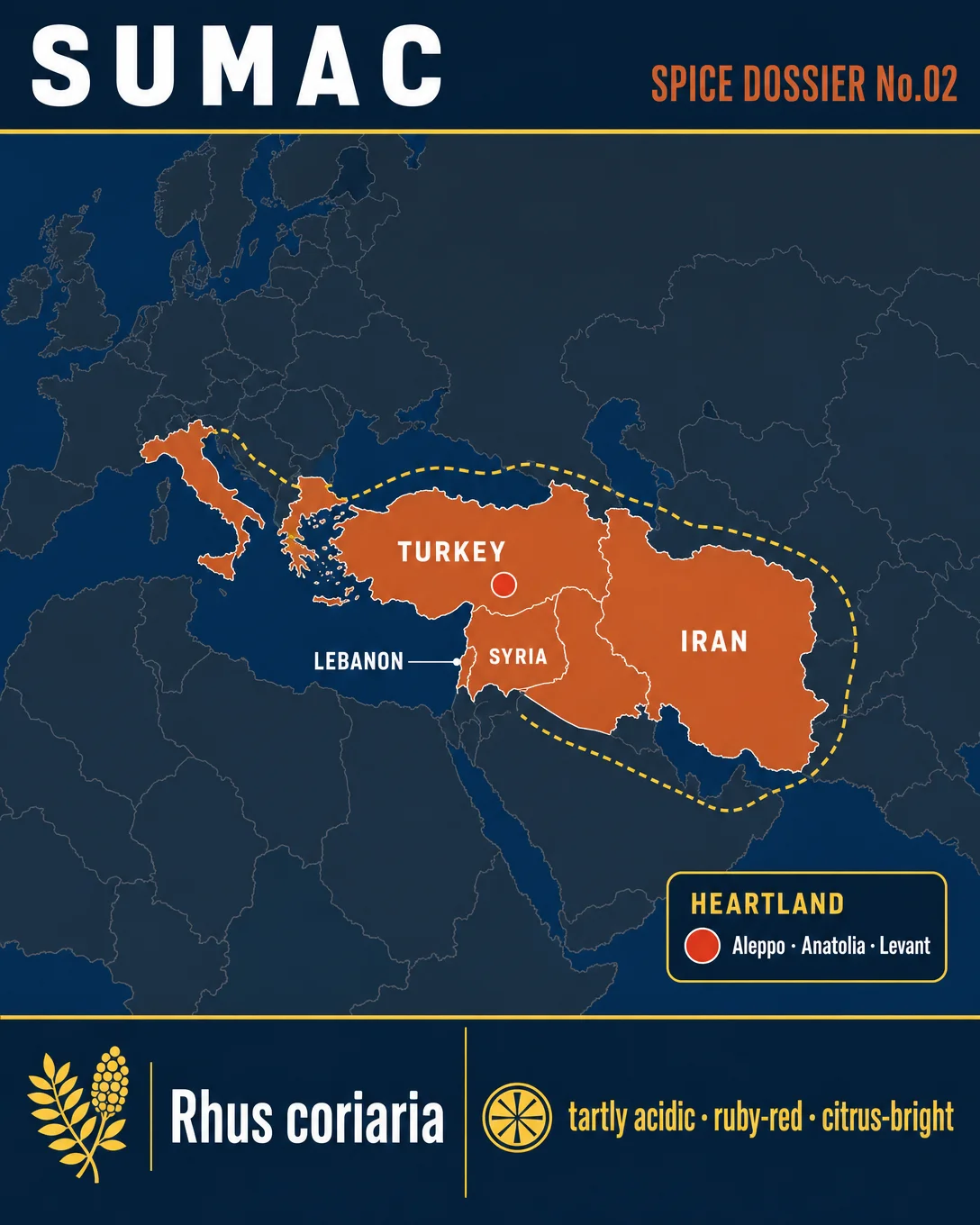
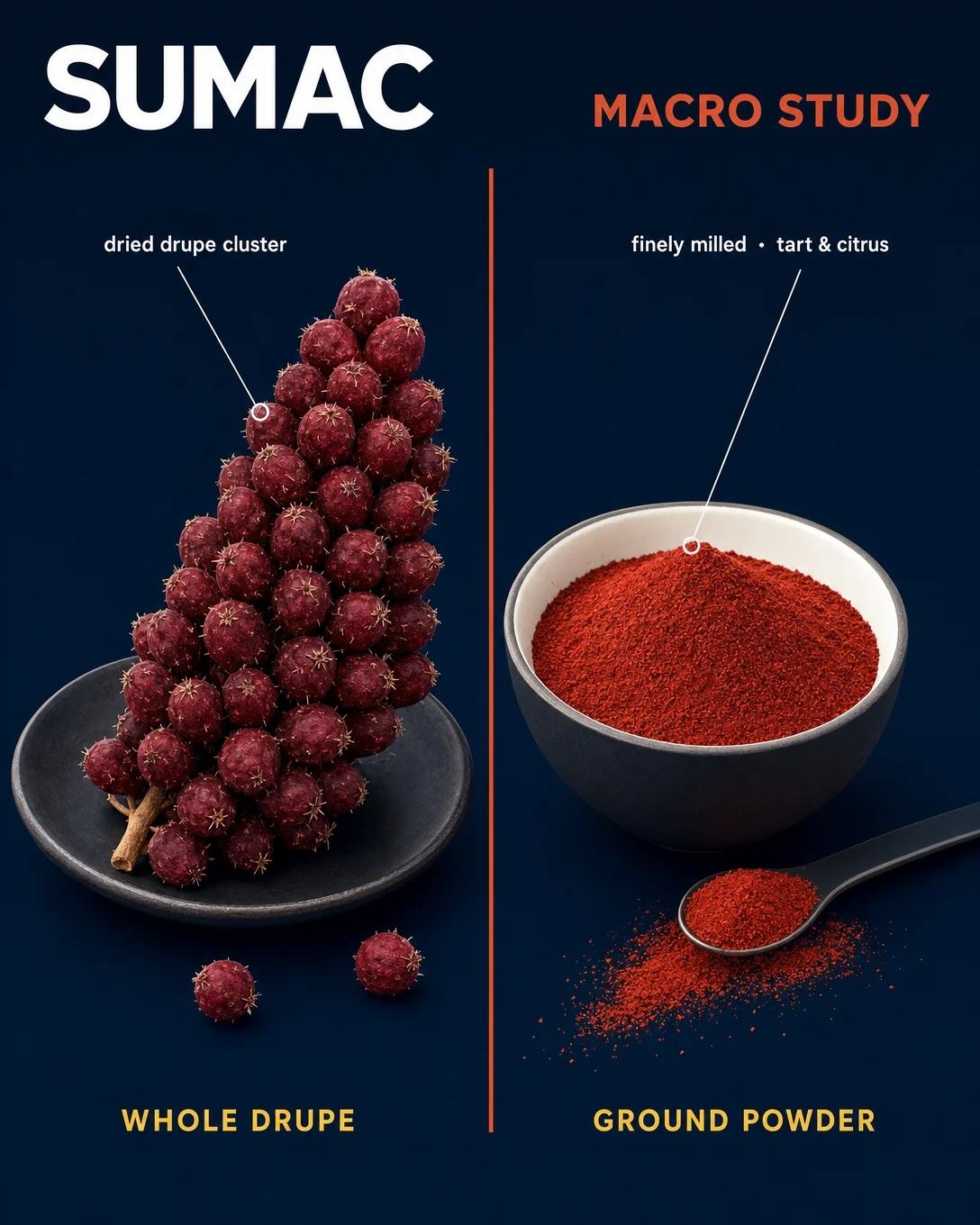
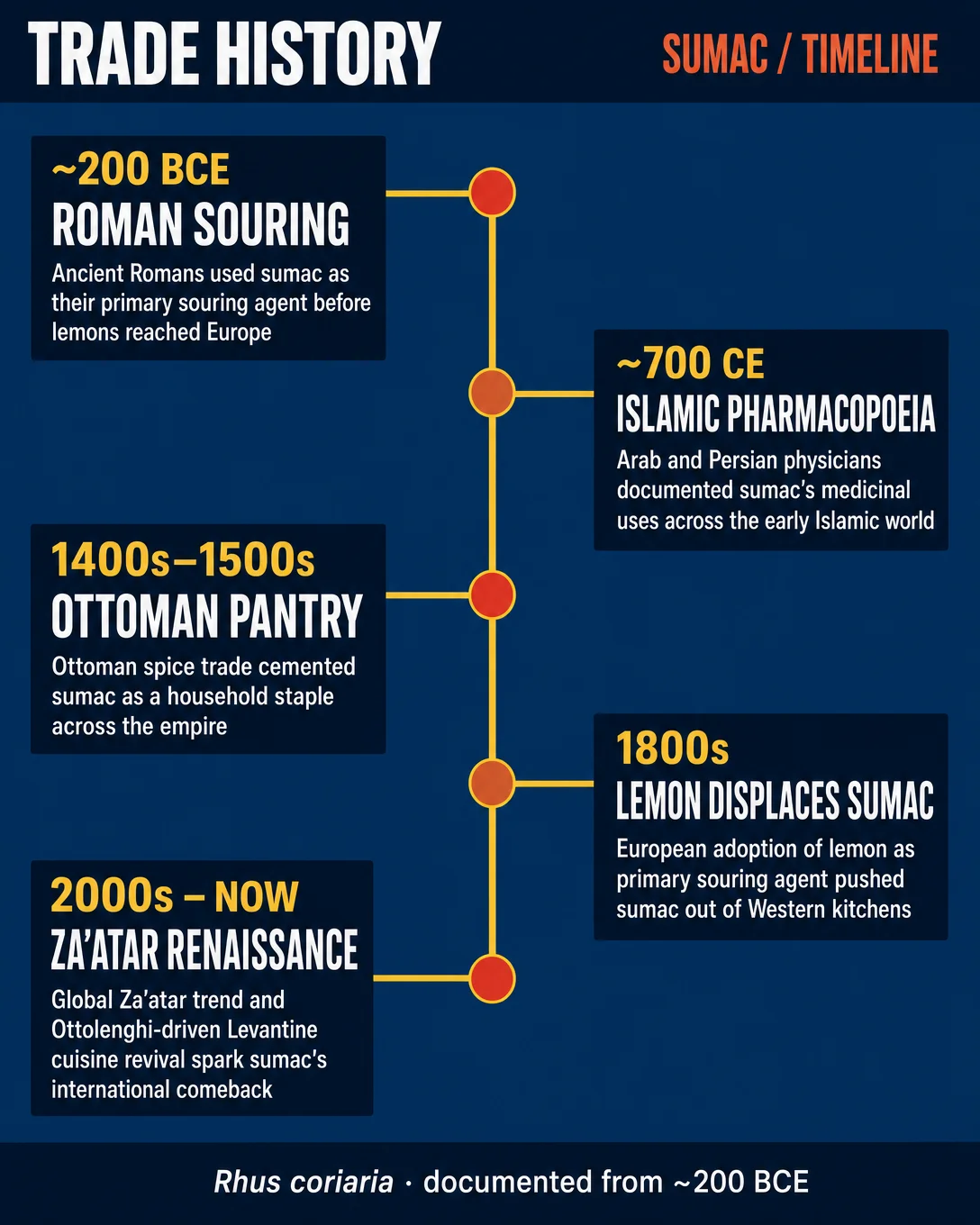
A 4-card data-infographic dossier on sumac (Rhus coriaria) — origin world map highlighting Turkey, Lebanon, Syria, Iran and the Levant heartland; macro illustration of whole dried drupe clusters vs. ground powder; trade-history timeline from ancient Rome to the 2020s Za'atar renaissance; and a Fattoush Salad dish card with sumac as the starring souring agent.
2026/5/24 · 5:05
ギャラリー
Before lemons reached Europe, Romans were already souring their food with this.
That deep ruby-red powder sitting in Levantine kitchens?
It's been doing lemon's job for over 2,000 years.
SUMAC — Rhus coriaria — grows wild across Turkey, Lebanon, Syria, and Iran.
Dried drupe clusters, ground fine. Tart, bright, unapologetically acidic.
The Romans used it. Persian physicians prescribed it.
The Ottomans traded it from one end of the empire to the other.
Then lemons showed up in European kitchens in the 1800s — and sumac got quietly shelved in the West.
It came back fast.
Za'atar went global. Ottolenghi put fattoush on every dinner table from Toronto to London.
Suddenly the brick-red powder was the whole point of the dressing, not a footnote.
Swipe through the full dossier:
🗺 Origin map — Turkey to Iran, the Fertile Crescent heartland
🔬 Macro study — whole drupes vs. ground powder
📅 Trade timeline — 5 milestones, 2,200 years
🥗 Classic dish — Fattoush Salad, sumac front and center
What's your sumac move — za'atar blend, fattoush dressing, or just dusted straight over hummus?
#sumac #spicedossier #middleeasternfood #spicehistory #levantinecuisine #fattoush #foodinfographic #thespiceatlas
コメント