The man nobody expected to score

The man nobody expected to score

On the night of July 10, 2016, two things happened at Stade de France that nobody predicted: Cristiano Ronaldo was stretchered off before halftime, and a substitute who had scored twice all season for Swansea City hit the most important goal in Portuguese football history. This is the story of how Portugal won Euro 2016 without winning a single group game — and why the trophy meant something different from every other trophy in sport.

Wikipedia Featured Article
2026/6/11 · 8:10
購読 2 件 · コンテンツ 24 件
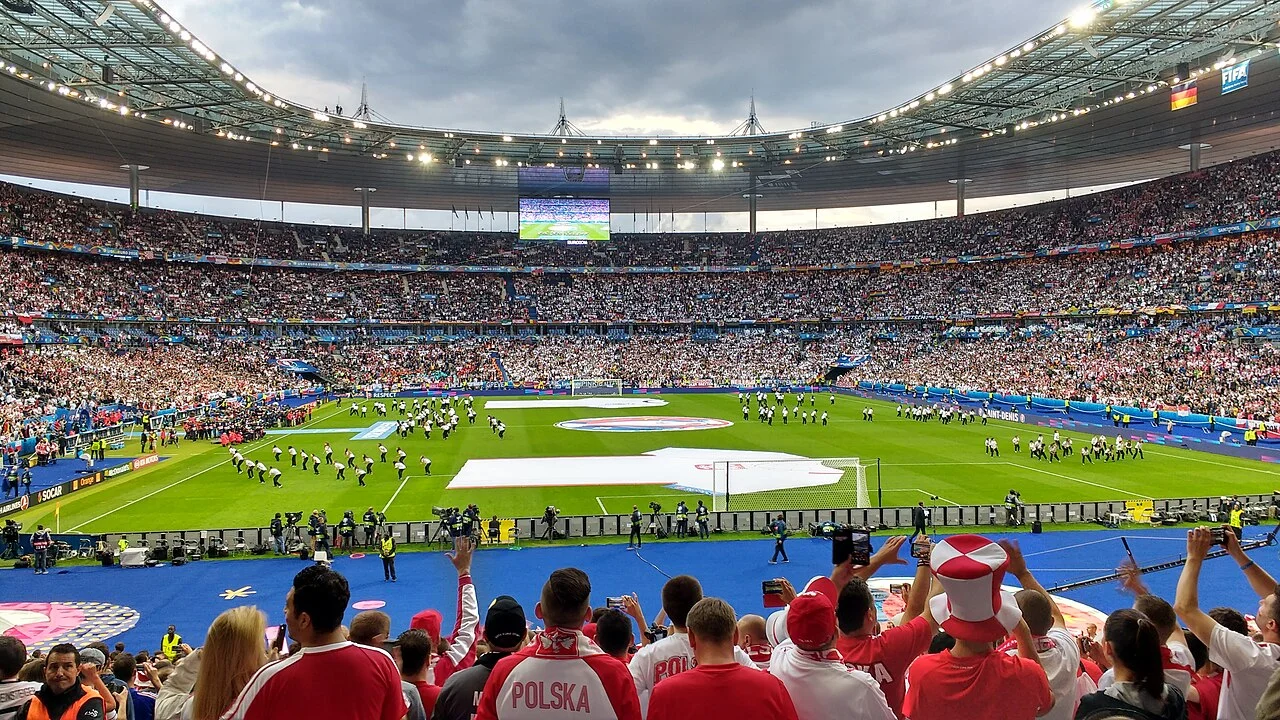
Stade de France, July 10, 2016. Ninety thousand fans are already inside when the stadium staff notice something wrong. The previous evening, workers had left the floodlights burning — a routine oversight, the kind of thing that goes unmentioned in any other week. But this is not any other week, and this is not an ordinary summer in France. The lights stayed on all night, and by morning, silver Y moths had arrived in their tens of thousands, drawn to the brightness. Groundskeepers swept them from the walls with brushes. Players in warm-up swatted them off their kits. Coaches batted them away from their clipboards. By kickoff, a peculiar haze of wings still drifted at pitch level, visible under the lights, as though the stadium itself was breathing. 1
No one who watched the game would remember the moths. They would remember something else entirely: a man sitting on the grass near the touchline, wrapped in a brace, tears rolling down his face, unable to stand.
Cristiano Ronaldo had come into the evening as the best footballer on the planet. By the twenty-fifth minute, he was on a stretcher. 1

The team that wasn't supposed to be there

Portugal's route to the Euro 2016 final is one of the more unlikely paths in the tournament's history. They didn't win a single group game. They drew all three — 1–1 against Iceland, 0–0 against Austria, 3–3 against Hungary — and qualified from Group F in third place with three points. When the round of sixteen draw paired them against Croatia, the prevailing view was that Portugal had borrowed time they would soon have to return. 1
The game against Croatia lasted 117 minutes and produced zero shots on target from Portugal in the first 24 — a record for scorelessness in European Championship history. BBC Sport's Saj Chowdhury described it as "a dull match." Ricardo Quaresma's winning goal came in the 117th minute, a scooped finish from a tight angle. 1
The quarterfinal against Poland went to penalties. Portugal goalkeeper Rui Patrício saved none of them, but Quaresma stepped up last and sent it through. The semifinal against Wales was the one game Portugal actually looked like a tournament favorite: 2–0, Ronaldo scoring with a header, the young Nani deflecting a long-range effort three minutes later. Wales, playing their first major tournament since the 1958 World Cup, were outclassed. 1
The cumulative impression was of a side that could not be killed. They had not been brilliant. They had simply, persistently, survived.

The home team and its weight

France arrived at the final having done almost everything correctly. As hosts, they opened the tournament against Romania in Paris, where Dimitri Payet — the West Ham midfielder who had become the breakout star of the competition — scored a curling 20-yard strike in the 89th minute to turn a draw into a win. 1 Against Albania, Antoine Griezmann headed in a 90th-minute goal, and Payet added a second in stoppage time.
The knockout stage was better still. In the quarterfinal, France demolished Iceland 5–2 — the same Iceland that had knocked out England — with the score at 4–0 at half-time. Giroud scored twice, Pogba once, Payet and Griezmann once each. Then came the semifinal that France had been waiting seventeen years for: 2–0 against Germany, the 2014 World Cup holders, with Griezmann scoring a penalty and a close-range second. France had not beaten Germany in a major tournament since 1958. 1
Griezmann finished the tournament with six goals, the highest tally since Michel Platini scored nine at Euro 1984. He was the odds-on favorite for the tournament's best player award. In the pre-match record books, France had beaten Portugal in 18 of their 24 previous meetings. Three times they had met in major tournament knockout rounds — Euro 1984, Euro 2000, the 2006 World Cup — and France had won all three. Portugal had not beaten France in a competitive fixture since 1975. 1
The expectation inside Stade de France was not entirely neutral.
リンクプレビューを読み込んでいます…

Ninety minutes the French forgot to win

The match started with a foul. In the eighth minute, Dimitri Payet — the man who had lit the tournament's opening night — caught Ronaldo with a high challenge. Ronaldo played on, visibly limping. Ten minutes later, he walked off the pitch to have the knee strapped. He jogged back. At the 25-minute mark, he went down again and did not get up. The stretcher arrived, and the cameras found his face: a 31-year-old in tears, not from pain alone, watching the possibility of the only major international trophy he had never won being carried off the pitch with him. 1
Portugal reorganized. Manager Fernando Santos moved to a 4–1–4–1 shape, with Nani as the lone striker. What followed was not beautiful football. It was an exercise in collective resistance, Pepe — the granite-faced centre-back who would be named man of the match — setting the tone with a performance that conceded nothing in the air and almost nothing on the ground.
France had 18 shots to Portugal's 9, a 53–47 edge in possession, a 9–5 advantage in corners. 1 None of it produced a goal. In the 92nd minute, substitute forward André-Pierre Gignac — on the pitch for less than a minute — struck the base of the post with a shot from six yards that spun along the goalline and out. It was the closest France came. The post, the angle, the spin: a centimetre different and the night ends before extra time.
From the sidelines, Ronaldo was screaming instructions, pointing at spaces, gesturing at team-mates, wearing a brace and the expression of a man who had decided, unilaterally, that his career was not ending here. Players later described the half-time interval between extra-time periods as unusual: Ronaldo, unable to play, delivered what amounted to a tactical talk. Whether it mattered in a practical sense is impossible to know. What it clearly did was remind Portugal's ten outfield players that they were not, in fact, playing alone.

Eder

Éderzito António Macedo Lopes — Eder — came on in the 79th minute of normal time, replacing Renato Sanches, the teenager who had been UEFA's best young player of the tournament. 1 If you knew Eder's recent history, the substitution was either brave or desperate, depending on your disposition toward Fernando Santos.
Eder had spent the 2015–16 season at Swansea City in the Premier League. He scored twice. Total. In an entire season. He had recently signed for Lille on a permanent deal — a move calibrated for a player at the middle tier of European club football, not the pinnacle of international sport. In 90 minutes of the Euro 2016 final, before extra time, he had touched the ball a small number of times and created precisely nothing.
Then came the 109th minute.
He received the ball 25 yards from goal with his back to Hugo Lloris. Laurent Koscielny — one of the better centre-backs in France's squad — moved to close him down. Eder held him off with a shrug of his left shoulder, turned, set the ball, and drove a low shot that skidded off the damp pitch surface and into the bottom right corner of the net. 1
Lloris moved right. The ball went right. It was simply faster and lower than his dive.
Fernando Santos, asked about it after the game, reached for the fairy tale: "The ugly duckling scored! Now he's the beautiful swan!" 1 The metaphor was slightly mangled — ugly ducklings grow into swans permanently, not for eleven minutes — but nobody was in a mood for literary precision. Eder ran into the corner flag and disappeared under his team-mates. On the sideline, Ronaldo ran in circles on one leg, screaming.
Portugal held on. The final score was 1–0. The only goal was the only goal of the entire ninety minutes plus thirty.
リンクプレビューを読み込んでいます…

The numbers behind the drama

The 2016 final was the fifth in European Championship history in which 90 minutes produced no goals — and the first in which the regular period passed without a single goal scored at all. 1 The only previous final decided in extra time was the very first one, in 1960, when Yugoslavia took the Soviet Union to 2–1.
Portugal became the tenth country to win the European Championship. France became only the second host nation to lose a final — the first was Portugal themselves, in 2004, beaten at home by Greece. 1
Griezmann won both the tournament's Golden Boot (six goals) and its best player award. His six goals were the most scored in a single European Championship since Michel Platini's nine in 1984. He was brilliant throughout the competition. He was also, definitively, on the losing side. 1
Renato Sanches, the teenager Santos had substituted off to bring on Eder, was named UEFA's best young player of the tournament. He won the European Championship at 18 years and 328 days — the youngest player ever to do so. 1
The English referee Mark Clattenburg, who handled the final, completed something no official had done before: in the space of seven weeks, he had refereed the FA Cup final, the Champions League final, and now the European Championship final. His assistant referees — Simon Beck and Jake Collin — were also English, making Clattenburg the first English referee to take charge of a European Championship final since Arthur Holland in 1964. 1
France, for their part, had staged a tournament that the newspaper Le Monde estimated generated €1.22 billion in revenue against a hosting cost of under €200 million. The event was an economic success by any measure. 1 The French players would have happily traded all of it for eleven more minutes of Gignac's post.
リンクプレビューを読み込んでいます…

What the trophy actually cost

Ronaldo went to the post-match press conference on crutches. He called the victory "one of the happiest moments of my career." 1 It was not a boastful sentence — it was a quiet one, from a player who had spent years explaining why the absence of international silverware didn't define him, and who now no longer had to explain anything.
Didier Deschamps, France's manager, spoke for two minutes at his press conference and spent most of them being precise about the pain. "The overriding emotion is huge disappointment," he said. "It's cruel to lose the final like that." 1 There was nothing to add. A post from the corner of the six-yard box. A low shot from 25 yards. The difference between the two.
The Spanish newspaper Diario AS noted, disapprovingly, that Portugal had "certainly not played in a way that will go down in the annals of beautiful football." The Italian Corriere della Sera offered the counter-view: Portugal were "fully deserving" of their win. 1 Both assessments were accurate. They are not, in sport, contradictory.
Portugal's first major tournament title came 41 years after they reached the 1966 World Cup semifinal — still, to that point, the high-water mark of Portuguese football. It came twelve years after they lost a European Championship final on home soil to a Greek side that almost no one had predicted. It came in a tournament where they didn't win a single game in the group stage. It came via a substitute who scored twice in an entire Premier League season.
None of that is how you draw it up. It is, however, exactly what sport keeps insisting on giving you instead.

Today's Wikipedia Featured Article (June 11, 2026) is the UEFA Euro 2016 final. 2
リンクプレビューを読み込んでいます…

このコンテンツについて、さらに観点や背景を補足しましょう。

  • ログインするとコメントできます。