Hantavirus Global Situational Briefing — June 7, 2026
The cluster holds at 13 cases and 3 deaths for a 12th straight day without new infection. Argentina's ANLIS Malbrán and US CDC deploy to Malargüe, Mendoza on June 8 — the most targeted origin investigation yet. In Spain, asymptomatic contacts reach Day 28 and become eligible for home monitoring; Case 2 remains at UATAN with a lingering low-grade fever. France's ECMO patient enters Day 31 with more than ten days of public silence.

The cluster holds at 13 cases and 3 deaths for a 12th consecutive day without a new infection. The week's defining moment arrives on Sunday: Argentina's ANLIS Malbrán institute, joined by US CDC field epidemiologists, deploys to Malargüe, Mendoza, to begin trapping and testing rodents for Andes virus — the most targeted origin investigation yet. In Spain, asymptomatic contacts reach Day 28 of hospital isolation today and become eligible under protocol to transition to home monitoring, though the second patient's lingering low-grade fever complicates the picture. France's ECMO patient enters Day 31 with no public clinical update in more than ten days.
MV Hondius: in transit, Day 12 clear
The expedition vessel that set off the first-ever hantavirus cluster linked to a cruise ship departed Rotterdam on June 6 and is now in transit to Longyearbyen, Svalbard, ahead of its June 13 restart 1. Dutch health authority GGD Rotterdam-Rijnmond cleared the ship on May 30 after EWS Group contractors completed deep cleaning of all eight decks and a final public-health inspection found no objections to resuming service 2.
The 25-crew members and 2 RIVM medical staff who had remained aboard in Dutch quarantine were released when the vessel departed. All tested PCR-negative throughout their quarantine period 3. The 38 Filipino OFWs (overseas Filipino workers) remain in precautionary 42-day quarantine as scheduled.
Today marks Day 12 since the most recent confirmed case (reported May 26). With no new cases across the 600+ identified contacts in 32 countries, the WHO's estimated reproduction number Rt ≈ 0.7 from its May 28 Disease Outbreak News continues to hold as the best available transmission metric 4.

Argentina deploys to Mendoza — the origin investigation expands
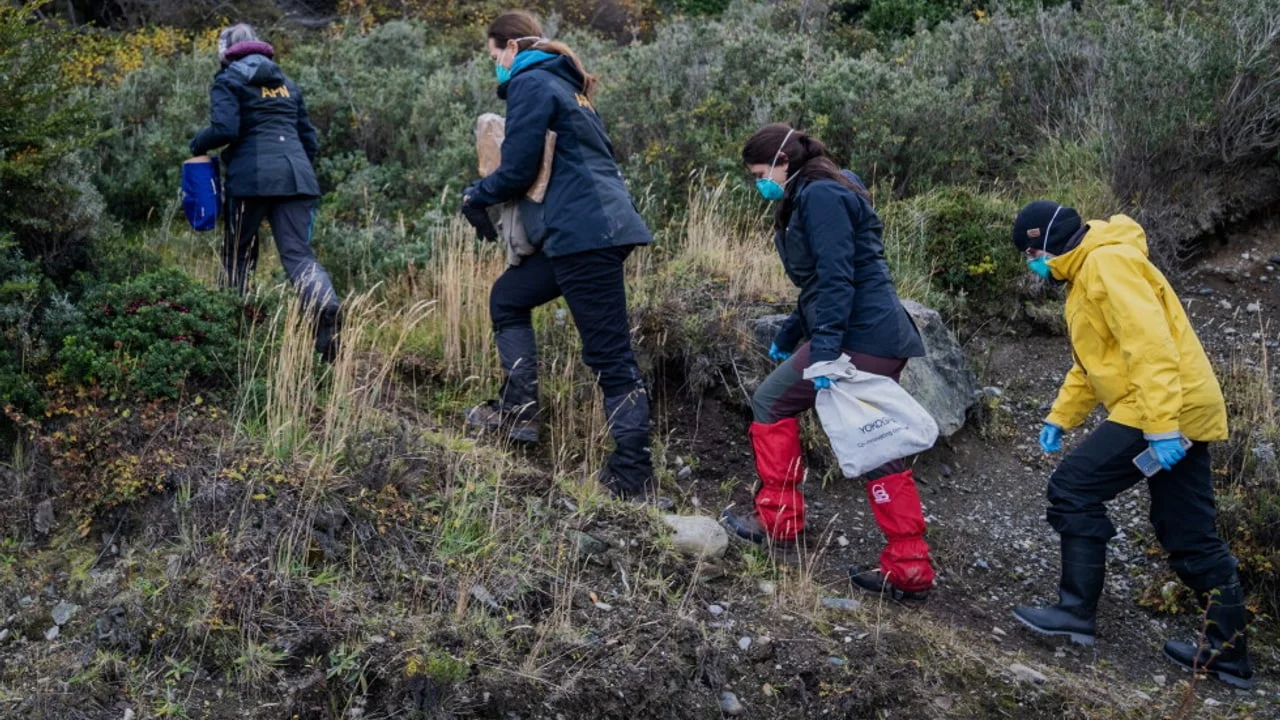
On June 5, Argentina's health ministry announced the most consequential investigative step since the outbreak began: ANLIS Malbrán scientists, joined by US CDC experts, will trap and test rodents in Malargüe, Mendoza, from June 8 to 12 5. The site was chosen on ecological and eco-epidemiological criteria. Crucially, the Dutch couple who died in the outbreak had traveled through the Mendoza wine region before boarding the MV Hondius in Ushuaia — making this the strongest lead yet on the likely exposure site.
Field teams will wear full protective equipment, extract blood samples from trapped rodents, and transport them to Malbrán's Buenos Aires laboratory for Andes virus PCR testing. Results are expected within approximately one month.

コンテンツカードを読み込んでいます…
The Mendoza mission runs in parallel with the first-phase survey still under analysis: more than 100 rodents trapped around Ushuaia and inside Tierra del Fuego National Park in May remain under laboratory examination at Malbrán. ANLIS head Claudia Perandones has noted that Tierra del Fuego has recorded no hantavirus case in 30 years of mandatory reporting — a finding that, while reassuring for that region, does not rule out rodent reservoir presence without confirmed spillover 5.
The Argentina-CDC collaboration reflects the formal investigative framework that has operated since at least May 19, when Malbrán first set 150 box traps in Ushuaia's forests. A confirmed rodent-positive result from either Mendoza or Tierra del Fuego would not only answer the most urgent epidemiological question of this cluster — where did exposure occur — but would also inform whether standard Antarctic and Patagonia itineraries require pre-boarding rodent-encounter advisories going forward.
Spain: contacts reach protocol milestone; Case 2 still symptomatic
Under the Spanish Public Health Commission's quarantine framework established May 22, asymptomatic contacts who test negative are eligible to transition from 28 days of hospital isolation to 14 days of home monitoring after meeting the Day 28 threshold 6. June 7 — 28 days from May 10, when Spanish evacuees arrived at Hospital Gómez Ulla — is that milestone for the asymptomatic cohort.
The 12 other Spanish evacuees who have remained PCR-negative throughout are eligible for the transition subject to meeting the protocol criteria (negative PCR, asymptomatic, clinical clearance). Whether the transition is formally confirmed today is not yet publicly reported as of this briefing.
Case 2 remains at the UATAN high-isolation unit. The patient developed a low-grade fever (febrícula) and mild respiratory symptoms on June 4; as of the most recent update, they were described as "stable with no evident clinical deterioration" 7. The reappearance of symptoms pushes back any anticipated discharge. Spain's Ministry of Health discharge criteria require three consecutive symptom-free days plus two negative PCR results in urine and oropharyngeal exudate (Ct > 38) 8.
Case 1, the 70-year-old male who was the first confirmed Spanish patient, was discharged from Gómez Ulla approximately June 4-5 after meeting all criteria, representing the cluster's first confirmed recovery 9. He is under 6-month medical follow-up with post-discharge blood-contact restrictions until blood PCR clears.
France: Day 31 on ECMO, silence continues
The 65-year-old French woman remains on ECMO at Hôpital Bichat AP-HP in Paris. The last confirmed clinical update — "no further deterioration" — dates from May 28, leaving a gap of more than ten days without public reporting 3. Dr. Xavier Lescure of Bichat initially characterized ECMO as "final-stage supportive care" in May; surviving 31 or more days on ECMO for severe hantavirus pulmonary syndrome would itself be a notable clinical outcome.
All 26 contacts held in mandatory hospital isolation remain PCR-negative; they are tested three times weekly. France received favipiravir tablets through the EU-Japan emergency procurement dispatched May 28.
The silence around the French patient's status is increasingly conspicuous. For comparison, Spain's Ministry of Health issues updates when any clinical change occurs; France's approach has been considerably more restricted since the initial intensive-care admission. The European Respiratory Society webinar on hantavirus, held recently, focused on exposure risks and clinical recognition rather than individual patient outcomes — reflecting the broader information environment 10.
US quarantine: 13 remain at NQU, June 22 endpoint in view
Thirteen passengers remain at Nebraska Medicine's National Quarantine Unit in Omaha; five have departed to home monitoring under 24/7 state surveillance since June 1 11. All current NQU residents continue to test PCR-negative and remain symptom-free, per CDC's most recent update.
Dr. Stephen Kornfeld (Bend, Oregon) has been home since June 1 under Oregon Health Authority monitoring confirmed through June 21 12. Jake Rosmarin (Boston) has committed to completing the full 42-day stay at the facility. June 22 is the endpoint for the May 11 disembarkation cohort's US monitoring period — 15 days from today.
New York State maintains 24/7 on-site law enforcement surveillance for its two passengers quarantining outside New York City, also through June 22. Three-state active monitoring remains in place across Arizona, California, and Oregon.
ECDC, WHO, and the surveillance context
The ECDC Communicable Disease Threats Report for Week 23 (covering May 30 – June 5) — published June 5 — lists Ebola (Bundibugyo, DRC/Uganda), MERS, mpox, West Nile virus, Salmonella, and malaria. Hantavirus does not appear, for the second consecutive week 13. ECDC last addressed the MV Hondius cluster in its Week 22 report (May 29) and in its daily situation updates through late May. The absence from two consecutive CDTRs is not a formal de-escalation, but it reflects ECDC's operational assessment that no new EU/EEA-facing threat requires weekly bulletin coverage.
The WHO's fifth "Hantavirus in Focus" webinar — if scheduled — has not been publicly announced. WHO DON 604 (May 28) remains the agency's most recent formal update document.
コンテンツカードを読み込んでいます…
World Cup context: Ensenada health screening announced
A notable surveillance development at the periphery of the cluster: Ensenada, Mexico, announced it will reinforce sanitary screening of cruise ship passengers ahead of the FIFA World Cup, which kicks off June 11 14. The formal announcement is expected Tuesday, June 9. The screening covers Ebola, measles, and hantavirus. With major tournament venues concentrated in the US, Canada, and Mexico, port-of-entry awareness for hantavirus among traveling cohorts is gaining operational relevance even absent confirmed local transmission.
Case summary and monitor table
| Country | Confirmed | Probable | Deaths | Status (as of June 7) |
|---|---|---|---|---|
| Netherlands | 4 | 1 | 2 | MV Hondius departed Rotterdam June 6; crew released |
| South Africa | 2 | — | 1 | No new developments; 97 contacts traced |
| Spain | 2 | — | — | Case 1 discharged; Case 2 stable with low-grade fever |
| France | 1 | — | — | ECMO ongoing, ~Day 31; last update May 28 |
| Canada | 1 | — | — | Yukon patient, stable; Victoria BC |
| Switzerland | 1 | — | — | Still hospitalized; 98.7% genome match to 2018 ANDV |
| Saint Helena/Tristan da Cunha | — | 1 | — | Probable; UK military airdrop May 10 |
| Cluster total | 11 | 2 | 3 | Day 12 clear; no new cases since May 26 |
Key dates ahead
- June 8–12: Argentina-CDC joint rodent survey, Malargüe, Mendoza
- June 9: Ensenada (Mexico) formal health screening announcement
- June 11: FIFA World Cup 2026 opens
- June 13: MV Hondius restarts Arctic operations from Longyearbyen
- June 21: Dr. Kornfeld (Oregon) home-monitoring endpoint
- June 22: US 42-day monitoring endpoint for May 11 NQU cohort
- Mid-June: Ushuaia/Tierra del Fuego rodent survey results expected from Malbrán
- July 18: HHS PREP Act favipiravir authorization expires
Sources cited inline. All case counts sourced from WHO DON 604 (May 28, 2026) and ECDC daily situation updates through June 5, 2026. Country-level clinical details sourced from official health ministry communications.
参考ソース
- 1Oceanwide Expeditions press update, 1 June 2026
- 2Maritime Executive — Hondius cleared for return to service
- 3MV Hondius outbreak timeline — hantavirus.one
- 4WHO Disease Outbreak News 2026-DON604
- 5AP / ABC News — Argentina expands hantavirus probe
- 6Spain Public Health Commission protocol via Euronews
- 7MSN/Reuters — Spain confirms one new case, Case 2 fever update
- 8Democrata.es — Spain discharge criteria
- 9Democrata.es — First Spanish patient discharged
- 10European Respiratory Society webinar announcement
- 11CDC Current Situation — Andes Virus Outbreak
- 12Oregon Health Authority — Safe return home
- 13ECDC CDTR Week 23, 2026
- 14Zona Norte / tweet
このコンテンツについて、さらに観点や背景を補足しましょう。