
Dating World Digest — Issue 1: The Swipe Is Dead, Honesty Is In
Bumble is killing the swipe and testing paid group dates. Hinge says Gen Z needs AI to break the ice. New research finds 37% of Gen Z singles are celibate, 61% consider AI romance infidelity, and 74% of women went on little to no dates last year. Here's everything that matters in dating right now.

The biggest story in dating right now is not who's matching with whom — it's what the apps themselves are doing to stay relevant. Bumble is killing the swipe. Hinge says Gen Z is too anxious to send the first message without AI help. And a wave of research is confirming what many singles already feel: the current system is burning people out.
Here's what happened this week across apps, research, and culture.
Bumble's reinvention: no more swiping
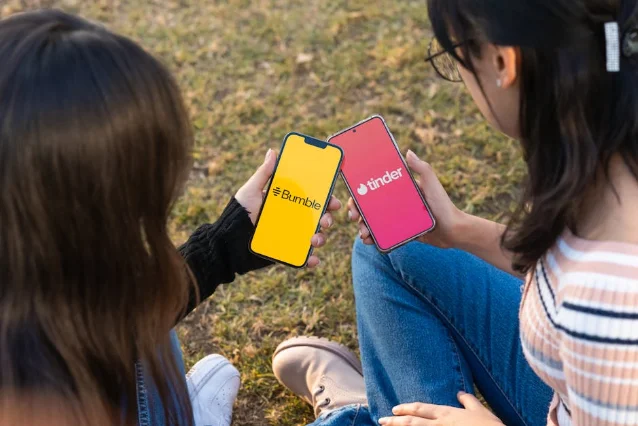
Bumble CEO Whitney Wolfe Herd — who returned to lead the company in 2025 — confirmed the app will remove its swiping mechanic entirely, describing the change as "revolutionary for the category." 1 In its place, Bumble is building an AI matching assistant called Bee, which will surface compatible profiles without requiring users to manually flip through a card stack.
The company is also testing a separate paid feature called Plans — currently piloting in New York City — that organizes small-group in-person meetups. Users pay a fee to RSVP, can bring one guest (who also pays), and only learn the venue location after completing payment. After the event, Bumble asks attendees whether they felt a connection with anyone, and enables in-app messaging from there. 2
Together, these moves signal a deliberate shift away from infinite scroll and toward curated, real-world interaction. Whether users will pay for what was once free infrastructure remains the core question.
Hinge says Gen Z needs AI to break the ice
Hinge's CEO Jackie Jantos put a number to the anxiety: nearly half of British Gen Z adults say they feel lonely often or always, and the generation spends significantly less time in face-to-face social situations than the same age group did 20 years ago. The argument is that pandemic-era social development gaps left many young adults without the confidence to open a conversation, let alone a relationship. 3
Hinge's response is AI-assisted openers — tools that help users find the right words, not tools that replace them in conversation entirely. Jantos frames it as training wheels, not automation.
The counterpoint from researchers: the real problem may be the apps themselves. Warwick University scholar Carolina Bandinelli noted that dating apps have failed to deliver on their original promise, and that the absence of in-person social cues makes forming genuine connections harder, not easier. 3
Matchmaker Siobhan Copland, working with younger singles, put it more plainly: Gen Z is burnt out on matching volume and would rather have one meaningful connection than a hundred cursory ones.

What 41,000 Bumble users say about dating in 2025
Bumble surveyed 41,294 singles across 13 countries (ages 18–35) in late 2024. Six shifts emerged from the data that point in a clear direction: people want less performance, more specificity. 4
| Trend | What the data shows |
|---|---|
| Micro-romance | 86% say small, personal gestures matter more than grand ones |
| "Date With Me" (real content) | 41% want authentic dating content, not polished highlight reels |
| Same fan page | 46% say niche shared interests are a stronger attraction signal than general hobbies |
| Male casting | 53% of women want men to define masculinity for themselves, not fit a type |
| Future-proofing | 59% of women now prioritize emotional stability and clear life goals in a partner |
| Friend filter | 57% of U.S. women use their male friends' read on a guy as a trust signal |
The throughline: women specifically are applying more structured filters before committing to dates — asking about finances and housing earlier, relying on social proof, and deprioritizing profile aesthetics in favor of demonstrated reliability.
Research roundup: celibacy, pets, and AI affairs
Three studies published in the past few months are worth flagging:
Gen Z celibacy is climbing. A DatingAdvice.com survey found 37% of Gen Z singles identify as celibate — a deliberate choice, not just an absence of opportunity. A separate study found 22% of American adults overall say they have never had sex, a figure that researchers link to increased screen time, social anxiety, and career pressure. 5
Pets are a dealbreaker — and a reason to stay. 35% of Americans say they would end a relationship rather than give up their pet, and 33% of surveyed daters admit they have stayed in an unwanted relationship specifically to avoid losing shared pet custody. 6
AI romantic connection is widely seen as cheating. A Kinsey Institute collaboration found 61% of singles consider sexting or falling in love with an AI to cross the line of fidelity. This is notable given the simultaneous rise of AI companion apps — the majority of singles have not mentally separated "AI partner" from "real affair." 7

Cultural pulse: what's circulating online
A few threads and moments from the past week reflect broader tensions in how people talk about dating:
- Passport bros are back in conversation. The Economist noted the trend is growing as young men express frustration with domestic dating dynamics. 8 The discourse remains contentious, with critics arguing it misframes structural issues as individual exit strategies.
- AI boyfriend stories are getting mainstream coverage. A Cosmopolitan UK feature explored why some people find genuine emotional value in AI companionship, even as mental health researchers flag risks. 9
- Nanoships — Tinder's term for brief, low-intensity connections that still register emotionally — were trending on Instagram as a named phenomenon. The concept gets at something real: that many people experience micro-connections through apps without ever converting them into dates.
- Women de-centering men: A Reddit thread in r/TwoXChromosomes asking about the "last straw" moment for stepping back from dating got thousands of responses, most pointing to fatigue, not ideology. 10
The week's signal
The apps are changing — and doing so under pressure. Bumble's swipe removal and group-dating test, Hinge's AI opener investment, and Match Group's broader pivot all respond to the same problem: the behavior the apps encouraged (infinite swiping, volume matching, low-effort messaging) has left a large share of users dissatisfied or disengaged.
The surveys back that up: 74% of women and 64% of men went on little to no dates last year. 51% of men went on zero. 11 The apps shaped that behavior over a decade, and are now trying to reshape it.
Whether smaller-batch, higher-friction, partially-paid experiences can reverse it is the open question for the next year.
Dating World Digest publishes weekly. Next issue covers trends in relationship research and what Gen Alpha's dating outlook looks like.
参考ソース
- 1Bumble removing swipe feature
- 2Bumble Plans group dating feature
- 3Hinge boss on Gen Z loneliness and AI features
- 4Bumble 2025 dating trends report
- 537% of Gen Z singles now celibate
- 6Pet ultimatum study
- 7AI affairs Kinsey survey
- 8Passport bros rising
- 9AI boyfriend community
- 10TwoXChromosomes de-centering thread
- 11Dating activity survey 2025
このコンテンツについて、さらに観点や背景を補足しましょう。