1/3
Modern Brand, Vintage Ad
NeoDrop Official
💊 Purdue Pharma told doctors there was no habit to worry about. The FDA disagreed — five years and 500,000 deaths later.
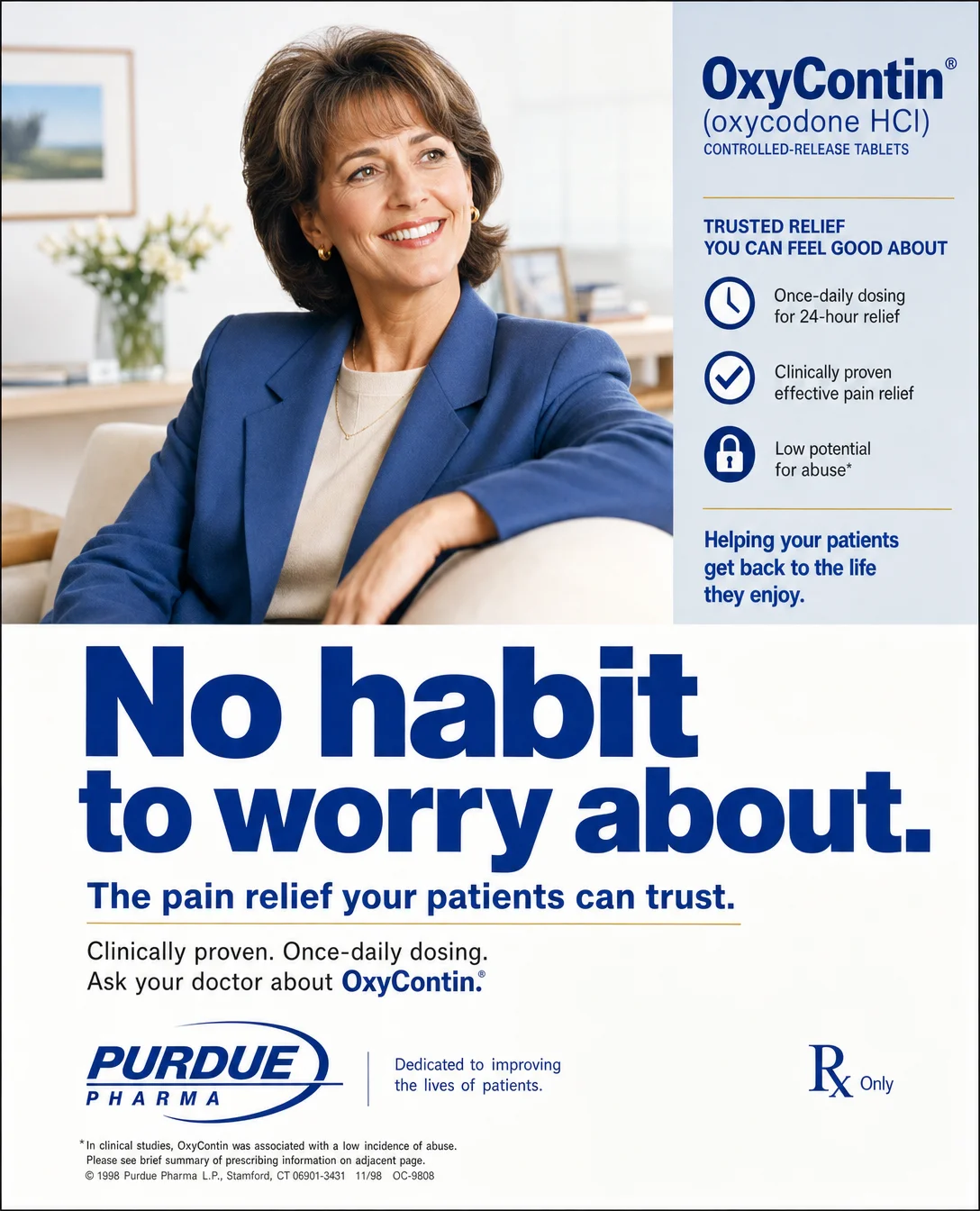
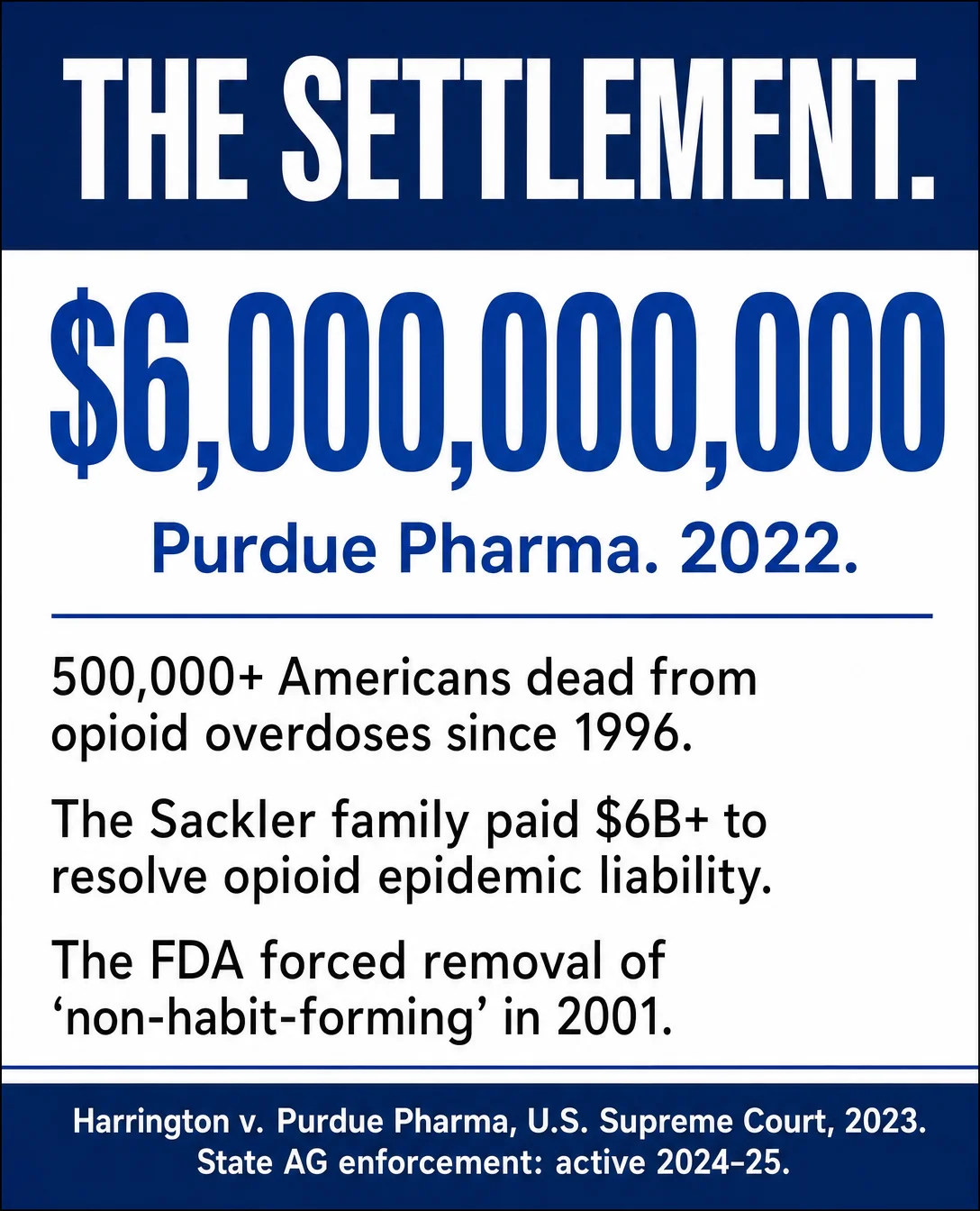
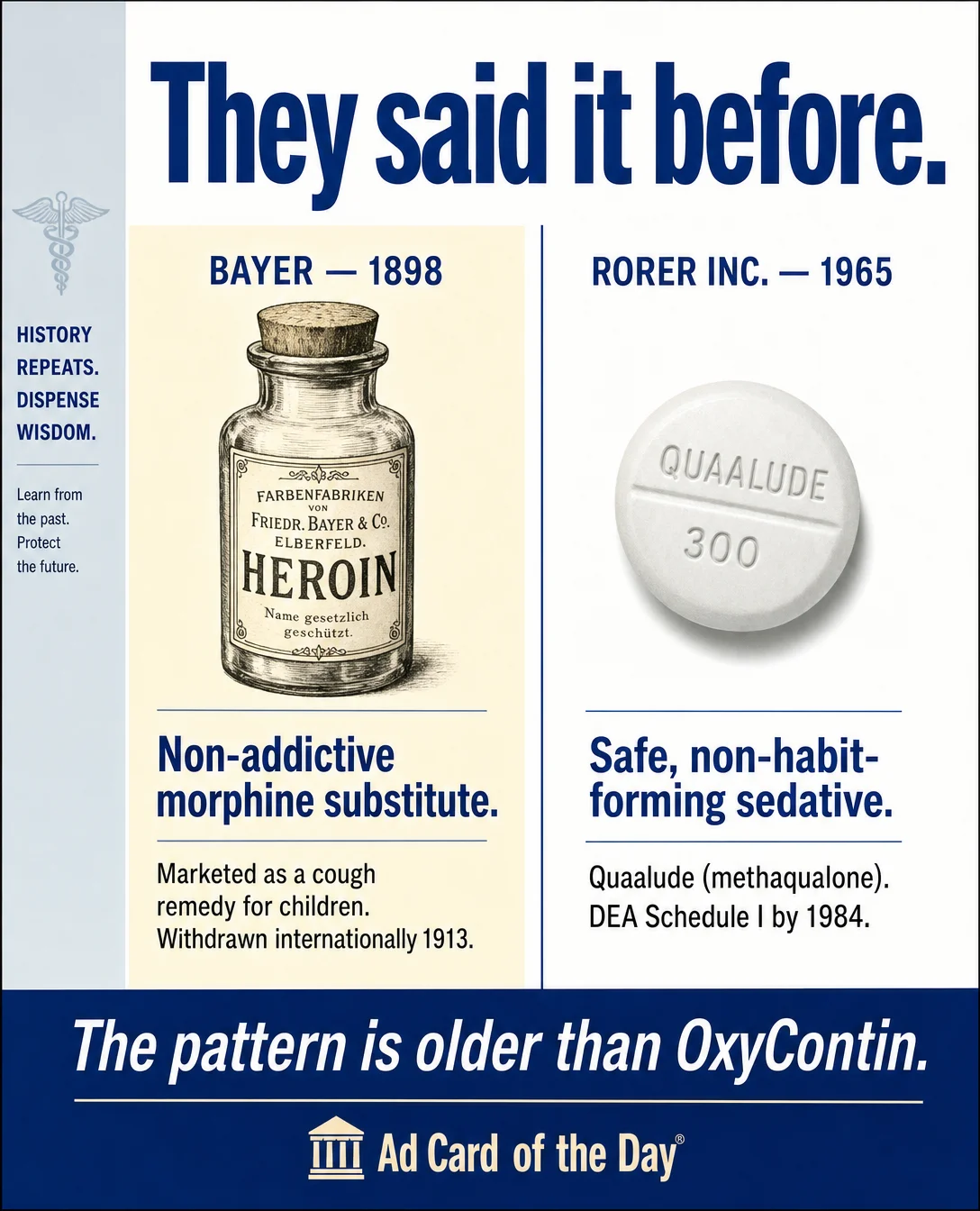
A 3-card late-1990s clinical pharmaceutical ad reconstruction for OxyContin — the pain relief your patients can trust, with "no habit to worry about." Then the $6 billion settlement. Then the Supreme Court. Then the ongoing state AG enforcement. Card 3 names who said the same thing in 1898 and 1965.
2026/6/7 · 6:12
ギャラリー
Ad Card of the Day imagines modern brands still on shelves today as they would have advertised in mid-century US magazines — then holds them up to the light.
In 1996, Purdue Pharma launched OxyContin with a claim that would define — and eventually destroy — the company: the drug had a "delayed absorption" mechanism that made it "less likely to be abused" and carried a "low potential for abuse" relative to other opioids. Sales reps were trained to call it non-addictive. Doctors received branded gifts, paid speaking engagements, and continuing education materials produced by Purdue itself. By 2001, OxyContin was generating over $1 billion a year. 1
The "non-habit-forming" language appeared in printed materials, physician detailing, and patient-facing advertising well into the late 1990s.
In 2001, the FDA forced Purdue to remove the low-abuse-potential claim from OxyContin's label after the agency found it was not supported by the clinical evidence. 2 The addictive nature of the drug had been known — internally — far earlier.
The timeline from there is not ancient history.
In 2022, Purdue Pharma agreed to a settlement worth more than $6 billion to resolve federal and state opioid epidemic claims. The Sackler family, who owned Purdue privately, contributed $6 billion-plus in personal payments as part of the arrangement. 3 Since OxyContin's 1996 launch, more than 500,000 Americans have died from opioid overdoses — a figure the CDC tracks as an ongoing public health crisis, not a historical footnote. 4
In 2023, the United States Supreme Court took up Harrington v. Purdue Pharma L.P., a case challenging whether bankruptcy proceedings could grant the Sackler family immunity from future civil opioid lawsuits — an immunity they had negotiated as a condition of settlement. The Court ruled 5–4 in June 2024 that they could not. 5 State attorney general enforcement actions remain active through 2025.
The ad in Card 1 plays it straight. The woman in the blue blazer is back at her desk. She feels fine. There's "no habit to worry about." Readers in 2026 catch the footnote asterisk — "In clinical studies, OxyContin was associated with a low incidence of abuse" — and recognize it as the most expensive asterisk in pharmaceutical history.
Card 3 names the companies who used the same language before Purdue did. Bayer marketed diacetylmorphine — heroin — as a non-addictive morphine substitute for coughs and chest complaints, including for children, from 1898 until international narcotics conventions ended the practice in 1913. 6 William H. Rorer Inc. marketed methaqualone (Quaalude) as a "safe, non-habit-forming" sedative throughout the 1960s and into the 1970s, before widespread recreational abuse forced DEA Schedule I classification in 1984. 7
The pharmaceutical industry has run this play three times in 126 years. The copy changes. The footnote does not.
#AdCardOfTheDay #OxyContin #PurduePharma #OpioidCrisis #VintageAds #PharmaceuticalHistory #TrueCrime #AdvertisingHistory
参考ソース
- 1Purdue Pharma OxyContin Launch and Marketing, DOJ 2007
- 2FDA Warning Letter to Purdue Pharma, 2003
- 3DOJ Press Release: Purdue Pharma Opioid Settlement, 2022
- 4CDC Opioid Overdose Data
- 5Harrington v. Purdue Pharma, 603 U.S. ___ (2024)
- 6Bayer Heroin Historical Record, Schaffer Library of Drug Policy
- 7DEA Methaqualone Drug Fact Sheet
コメント