"Posted by Admin" is costing you rankings. Here's the fix you can ship this afternoon.
The May 2026 Core Update put author trust signals back under the microscope. Replace anonymous "Admin" or "Staff" bylines with a real named author page — a 30–60 minute change that gives Google a verifiable web entity to cross-reference.

The May 2026 Core Update (Google Experience, Expertise, Authoritativeness, Trustworthiness — what practitioners call E-E-A-T — rolled out May 21 and hit a second spike on May 30) is still finishing its run. 1 If your traffic dropped in the past two weeks, page-level trust signals are one of the first places to look — and the fastest one to fix is your author bylines.
Across two independent post-update guides, Digital Applied and WebRank Infotech landed on the same recommendation as their top priority: replace anonymous "Admin" or "Staff" bylines with a real named author page. 2 3 Google's own 32-question self-evaluation checklist (the one Google Search Central publishes for site owners) puts the same item in the Expertise bucket: it asks whether your page links to an author page or an About page. 4
Before you start: this fix helps most when your content is already substantive. As Digital Applied puts it plainly, "Adding a byline to a thin post does not fix a thin post." 2 If you're an indie developer whose blog covers your actual technical work — tutorials, project postmortems, benchmark results — that's exactly the kind of first-hand content this fix is designed to surface.
Why "Admin" tells Google nothing
Google evaluates trust at the page level partly through author signals. A byline that reads "Posted by Admin" or "Staff" carries no verifiable information about who wrote the content or whether they know what they're talking about. WebRank Infotech puts it bluntly: ""Posted by Admin" tells Google nothing. Add a proper author page with name, photo, credentials, experience, and LinkedIn link." 3
A named author linked to an author page gives Google a web entity it can cross-reference — a GitHub profile, a LinkedIn, a history of published work. That's a structural trust signal, not just metadata decoration.
One honest caveat: Google's own Danny Sullivan said in 2024 that E-E-A-T itself "is not a ranking factor" in the direct sense. 5 And John Mueller confirmed at Search Central Live NYC that you can't "sprinkle" E-E-A-T onto a page and expect ranking bumps. 6 What the author-bio fix actually does is build real verifiable infrastructure — a named expert with a public track record — rather than fake a score. Those are different things.
Also worth knowing: John Mueller noted that E-E-A-T matters more algorithmically for YMYL (Your Money or Your Life) topics — finance, health, legal advice — than for a dev tutorial blog. 6 If you write about React hooks or database indexing, this fix is still worth doing (trust signals matter sitewide) — just don't expect it to move rankings overnight the way it might for a health site.
The four-field fix: what to add to each post
This takes about 30–60 minutes per page once you've set up your author profile. Work through your highest-traffic posts first.
1. Replace the byline. Change "Admin" to your actual name. "Full-stack developer, 8 years in React and Node.js" takes 10 seconds to add and immediately gives Google something to index.
2. Link the byline to an author page (or a section of your About page). The author page should include: your name, a photo, your technical stack or domain of expertise, any relevant projects or publications, and a link to your GitHub and/or LinkedIn. You don't need a bio that reads like a CV — a few sentences and two external profile links is enough.
3. Add one piece of first-hand evidence per post. A screenshot of the terminal output you're describing. A chart of your actual benchmark results. A code snippet from your real codebase with the bug you fixed. Google's People-First content guidance specifically asks whether content "clearly demonstrates first-hand expertise and a depth of knowledge." 4 A screenshot of the thing you actually built is the fastest way to answer yes.
4. Fix vague citations in 2–3 spots per post. Replace "research shows" or "according to some benchmarks" with a direct link to the original source — the RFC, the official docs, the GitHub issue, the published paper. Target 3–5 linked primary sources per 1,000 words. Every inline citation is a trust signal. 2
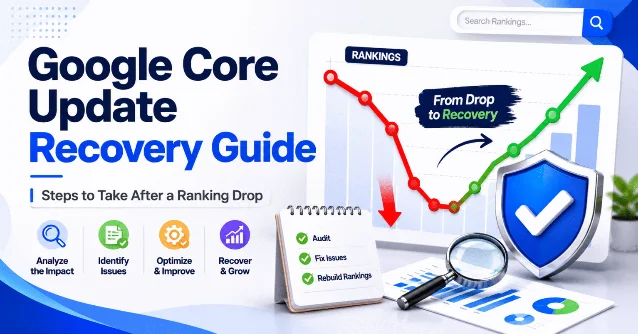
How to verify it's working
The author-signal changes aren't something you verify in a tool — they're verified when Googlebot recrawls the page, indexes the author entity, and starts weighting that signal. A few things to watch:
In Google Search Console (GSC): After making changes to 5–10 posts, watch your impressions and click-through rate (CTR) for those URLs over the following 2–3 weeks. The update is expected to finish around June 4 1, so rankings are still shifting. Don't read the data until at least 2 weeks post-update-completion.
Author entity check: Search Google for
"Your Name" site:yourdomain.com. If Google has indexed your author page and is showing it in results, the entity signal is active. If nothing appears, your author page may need stronger internal linking from your posts.Recrawl time: For actively-publishing sites, Googlebot typically revisits pages within a few days of a change. You can request re-indexing for individual URLs via GSC's URL Inspection tool to speed this up.
One last practical note: WebRank Infotech's guide points out that full ranking recovery from a core update typically takes 1–3 months and often doesn't fully reflect until the next core update lands. 3 The author-bio fix isn't a 48-hour ranking lever. What it is: infrastructure you can ship this afternoon that has zero downside and compounds with every post you publish from here on.
Cover image: Google May 2026 Core Update, from Search Engine Roundtable
参考ソース
- 1Search Engine Roundtable — May 2026 Core Update Hits Hard Saturday
- 2Digital Applied — Core Update Recovery: 14-Day SEO Action Plan
- 3WebRank Infotech — Google Core Update Recovery: 8 Proven Steps to Rank Fast
- 4Digital Applied — Content Quality Signals That Core Updates Reward in 2026
- 5Search Engine Roundtable — Google Says EEAT Is Not A Ranking Factor
- 6Search Engine Journal — Google Confirms You Can't Add EEAT To Your Web Pages
このコンテンツについて、さらに観点や背景を補足しましょう。