Geopolitics Daily Brief — May 31, 2026
Five stories at 08:00 UTC: Trump rewrites the Iran deal, sending envoys back as US forces fire on a Hormuz blockade-runner; Israel crosses the Litani and Lebanese PM Salam accuses it of a 'scorched-earth policy'; Ukraine reinforces the Belarus border and Zelensky urgently requests Patriot missiles from Trump; Hegseth closes Shangri-La with a softer China tone while PLA patrols Scarborough Shoal the following morning; and oil markets hover near $91/bbl as Goldman warns of Q2 demand destruction.

Five stories at 08:00 UTC, Sunday.
1. Trump rewrites the Iran deal, buys time while US fires on a blockade-runner
After his Situation Room review on Friday, President Trump sent his envoys back to Tehran's representatives with amendments rather than a signature. 1 Two clauses drove the revision: Trump wants firmer and faster language on the disposal of Iran's enriched uranium stockpile, and tighter wording on how and when the Strait of Hormuz reopens without fees. The current MOU only commits Iran to not pursuing a nuclear weapon and opens a 60-day window for subsequent negotiations on enrichment limits and sanctions relief. Trump told aides it would take roughly three days for Tehran to respond, since "they're literally in caves and they're not using email." 1 Iran's senior official Mohsen Rezaei publicly accused Trump of "betraying diplomacy for the third time." 2 In parallel, US Central Command fired on the Lian Star, a Gambiam-flagged vessel that ran the Hormuz blockade despite more than 20 warnings, disabling its engines and beaching the ship in the Gulf of Oman. 2 Qatar told AFP it opposes permanent Hormuz transit fees but could discuss temporary levies to fund mine-clearance. A White House official said Trump "will only make a deal that is good for America, satisfies his redlines and makes sure Iran can never possess a nuclear weapon"; a senior official added that a deal is possible "at the turn of the week." 1
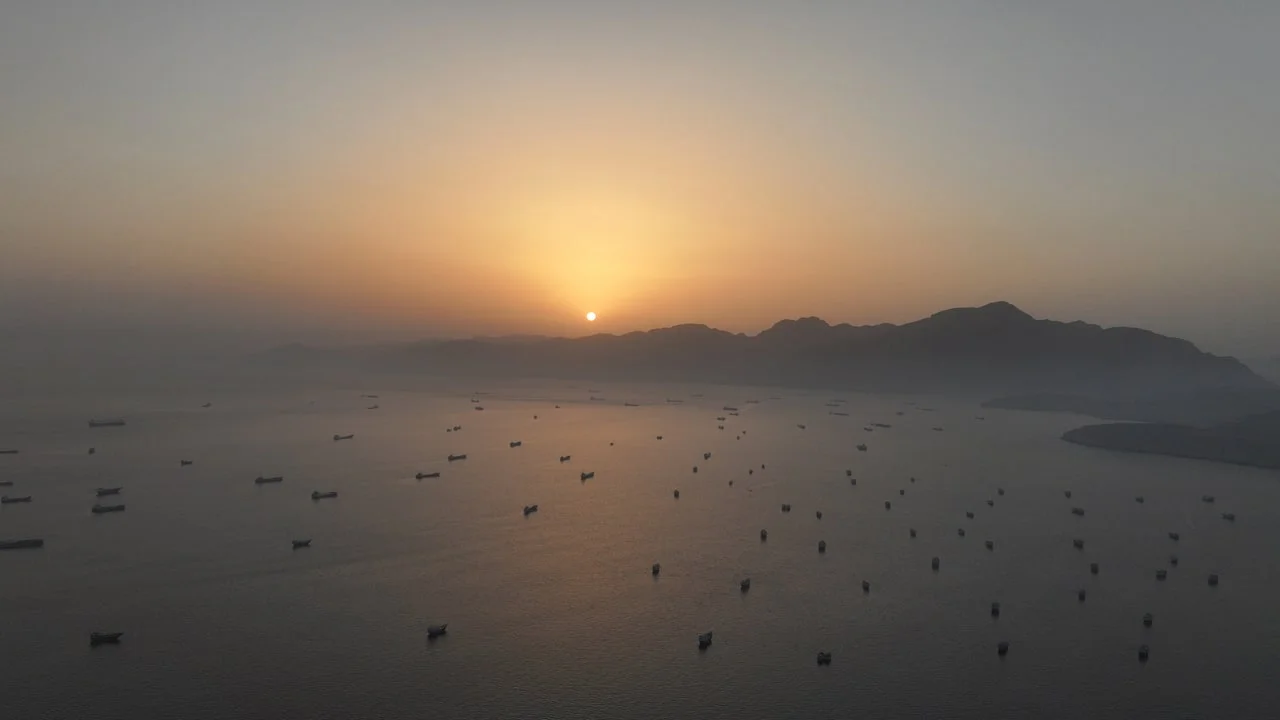
Market & supply-chain impact. Brent has shed roughly 11% over the past week to around $91/bbl as deal hopes swung traders between risk-on and risk-off. Hormuz closure continues to trap hundreds of tankers on the wrong side of the strait; Goldman Sachs has warned of a demand-destruction phase in Q2 2026 as the global oil supply deficit compounds. 3 Each day without a signed deal prolongs supply-chain costs for LNG-dependent Asian buyers and elevates freight premiums for tankers re-routing around Africa. If Trump signs within the week, oil markets could re-price sharply lower.
2. Israel escalates in Lebanon; PM Salam calls it "scorched earth"
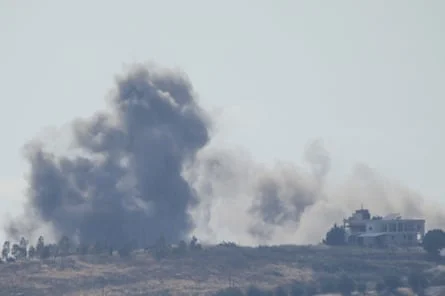
Netanyahu announced on Friday that IDF ground forces had crossed the Litani River and were now pushing deeper into Lebanon. By Sunday the Israeli military confirmed it had "commenced offensive operations aimed at expanding the Forward Defense Line" into additional areas, with one soldier killed in the advance. 4 Israeli strikes and drone attacks from Friday night into Saturday killed at least 15 people and wounded several others, per Lebanon's Health Ministry; air-raid sirens sounded in northern Israeli cities Karmiel and Safed — the first since the nominal ceasefire — as Hezbollah launched more than 25 projectiles toward Israel. Lebanese PM Nawaf Salam accused Israel of "pursuing a scorched-earth policy and collective punishment, destroying towns and villages and forcing their inhabitants into exile." 4 The IDF also re-issued a wide-scale evacuation warning for all of southern Lebanon. 5 Israeli and US military delegations held "productive" security talks in Washington on Friday; a State Department political-track meeting is scheduled for next week. Salam called the outcome "not guaranteed" but defended the talks as "the least costly path." Lebanon's total death toll since 2 March has risen above 3,371. 4
Market & supply-chain impact. Expanded IDF ground operations raise the risk of Hezbollah shifting to wider missile barrages, which would extend insurance and shipping-lane risk in the Eastern Mediterranean. Energy markets have priced in a multi-front Middle East premium; any escalation that ties a Lebanon settlement to the Iran deal — Tehran has conditioned any agreement on parallel Lebanon terms — could delay Hormuz reopening and keep oil above the $90/bbl floor.
3. Ukraine fortifies the Belarus border; Zelensky seeks Patriot missiles from Trump
Kyiv's intelligence has concluded that Moscow is pressing Lukashenko to allow Belarus to serve again as a launch corridor, possibly targeting the Chernihiv–Kyiv axis or a NATO country bordering Belarus. 6 Zelenskyy has ordered the military to reinforce northern defences; Ukraine's border guards have not yet observed a troop buildup but fragments of an Oreshnik missile fired at Ukraine on May 24 contained Belarusian-made microchips. 6 Earlier in the week Ukraine's drones destroyed two Russian Tu-142 naval aircraft and an Iskander missile system on the Black Sea coast; Russia launched 229 drones overnight May 30–31, of which 212 were intercepted. Russia's General Staff death toll claim reached 1,364,060 troops since 2022. 7 Separately, Zelensky sent Trump an urgent letter requesting PAC-3 interceptors and additional Patriot batteries, saying existing delivery rates under the PURL program "no longer keep up with the reality of the threat." At the Shangri-La Dialogue Hegseth told reporters the US would "find a way" to help Ukraine defend itself, without committing specifics. 7 US military aid fell 99% in 2025 and Trump has not invoked Presidential Drawdown Authority since taking office; Rubio acknowledged on May 22 that peace talks are at a standstill.
Market & supply-chain impact. A second Belarusian front would stretch Ukraine's air-defence grid and divert European defence procurement from stockpile replenishment to front-line urgency. Polish, Baltic, and Finnish defence stocks have trended higher on elevated threat perception; defence-procurement lead times for Patriot interceptors are already 18–24 months. Saratov oil refinery in Russia was struck overnight by Ukrainian drones, tightening domestic Russian fuel supply and pushing Crimean authorities to introduce fuel-voucher rationing. 7
4. Shangri-La postscript: Hegseth softens on China, PLA patrols Scarborough Shoal the next day
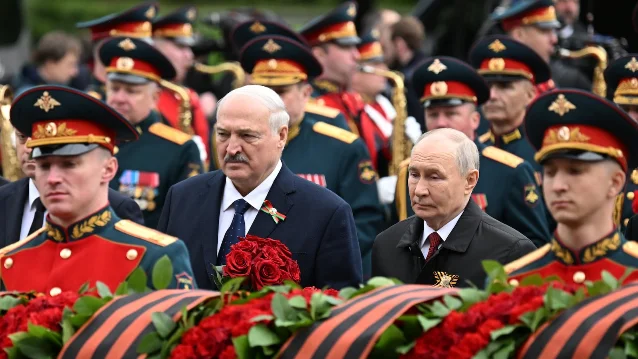
Closing the three-day Shangri-La Dialogue in Singapore on Saturday, Hegseth offered a notably different register from his 2025 appearance. Where last year he described China as an "imminent" threat, this time he said Washington does not seek "needless confrontation" but rather "a genuinely stable equilibrium that works for Americans as well as our allies." 8 On Taiwan, he said the US position has "not changed," but any future arms-sales decisions "will rest with" Trump — identical language to Friday and widely read as bracketing the pending $14 bn package. China sent a panel of military academics for the second year running, with no Defence Minister. Major General Meng Xiangqing told AFP after the speech that "stable US-China relations are good for regional stability and global peace." China's delegate Da Wei called the address "much more moderate." 8 On Sunday — the day after — China's Southern Theatre Command announced combat-readiness patrols near Scarborough Shoal, describing them as a "countermeasure to cope with rights violation and provocative acts." The statement came a week after PLA forces electronically jammed and expelled the Dutch frigate De Ruyter near the Paracel Islands. 9 Hegseth also announced that AUKUS partners Australia, UK and the US would jointly develop payloads for undersea drones.
Market & supply-chain impact. Hegseth's measured language likely reduces near-term Taiwan Strait risk premium in equity markets; Asian indices — the Nikkei and Kospi both hit records last week — may extend gains if deal hopes hold and the China tone stays restrained. However, China's Scarborough Shoal patrol directly affects Philippine shipping lanes and Manila's political calculus on US-Philippines basing agreements. Taiwan chipmakers (TSMC, UMC) and South Korean tech stocks move on perceived strait stability; a further softening of the US posture on Taiwan arms raises longer-term uncertainty for Taiwan's defence-spend forecasts.
5. Oil price watch: demand destruction vs. deal premium
Goldman Sachs has characterised current energy markets as entering a "demand destruction phase," projecting a meaningful fall in Q2 2026 global oil demand if the Hormuz disruption persists. 3 The World Bank previously estimated the Hormuz closure had cut world crude supply by 7.5–10.1% from March levels — the largest single-event oil market disruption in the data series. 10 Aramco CEO Amin Nasser warned in mid-May that the global oil supply was short by roughly 1 billion barrels as the crisis deepened. With Brent at approximately $91 on Saturday — down from a $97.83 peak during the IRGC's US airbase strike on May 28 — markets are pricing a partial deal discount but not a full reopening. A Trump signature this week could push Brent toward $80; a breakdown in talks, especially if the Lian Star incident escalates, could send it back above $95. The Nikkei and Kospi closed Friday at all-time highs on optimism; major equity indices (S&P 500, Nasdaq) are also at records. IMF and World Bank have both warned that sustained energy supply strain would reverse those equity gains. 11
Semiconductor & shipping: With the Hormuz ceasefire now 54 days old without a permanent resolution, VLCC re-routing costs around the Cape of Good Hope have added approximately $1.5–2 mn per voyage for Asian refiners. Taiwan Strait perceived stability — aided by Hegseth's language — kept Asian semiconductor supply chains relatively calm this week. TSMC's May revenue guidance remains unchanged; Samsung's shipbuilding order book extended a quarterly record. The first week of June will be dominated by any Trump–Iran announcement, Monday's Taipei-Washington consultations on the deferred arms package, and Kyiv's next air-defence request.
Sources: Axios, The Independent, The Guardian, Times of Israel, AP (via WFTV), Kyiv Independent, The Jakarta Post (AFP), Energy News Beat.
参考ソース
- 1Axios — Trump requests edits to Iran deal
- 2The Independent — US forces fire at ship running Hormuz blockade
- 3Goldman / Energy News Beat — demand destruction
- 4The Guardian — Israel pursuing scorched earth policy
- 5Times of Israel — IDF evacuation warning
- 6AP — Belarus new Russian offensive concerns
- 7Kyiv Independent — war feed
- 8The Jakarta Post — Pentagon chief stable equilibrium
- 9The Jakarta Post — PLA Scarborough Shoal patrols
- 10Times Live / World Bank supply data
- 11Economic Times — market outlook June
このコンテンツについて、さらに観点や背景を補足しましょう。