

Diary of a Detenu: J.B. Maude's Napoleonic Prison Journal Is Now Online

Diary of a Detenu: J.B. Maude's Napoleonic Prison Journal Is Now Online

A Church of England clergyman left Oxford for Paris in 1802 and didn't come home for over a decade. Queen's College MS 403 & 404 — the Diary of a Detenu — is his firsthand journal of civilian internment in Napoleonic Verdun, now freely viewable on Digital Bodleian.

Today's Newly Digitized Rare Books Worldwide
2026/5/21 · 23:48
購読 2 件 · コンテンツ 5 件
In the spring of 1802, a clergyman named John Barnabas Maude — a Fellow of The Queen's College, Oxford — left England for Paris. The Peace of Amiens had just opened France to British travellers for the first time in years, and Maude, like hundreds of his compatriots, went. Fourteen months later, the peace collapsed. Napoleon ordered the arrest of every British adult male on French soil. Maude never made it home. He spent the next several years in Verdun, writing everything down.
The manuscript he kept — two volumes, now catalogued as Queen's College MS 403 and MS 404 and known as the Diary of a Detenu — was digitized by the Bodleian Libraries in April 2026 and is now freely available on Digital Bodleian. 1 Queen's College Library announced the release on April 22 alongside three other newly digitized manuscripts from its collection. 2

The wrong moment to visit France

The Peace of Amiens lasted just fourteen months, from March 1802 to May 1803. During that window, roughly ten thousand British subjects crossed the Channel, many of them simply curious about a country they had been cut off from for a decade of war. When hostilities resumed, Napoleon chose not to let them leave. Under a decree he issued in May 1803, all British men aged between eighteen and sixty — civilian tourists, merchants, artists, clergymen — were classified as détenus (detainees) and placed under supervision. 3
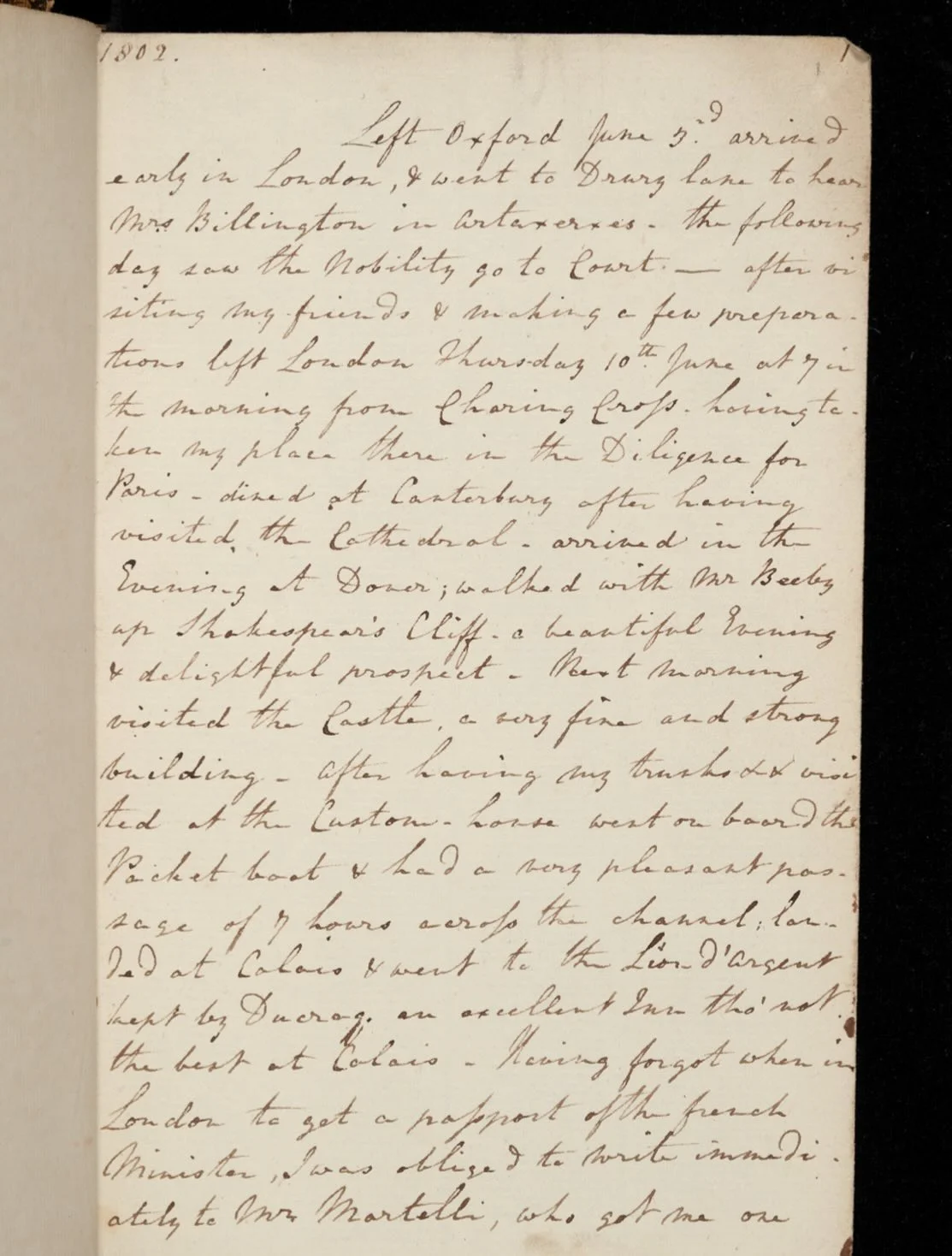
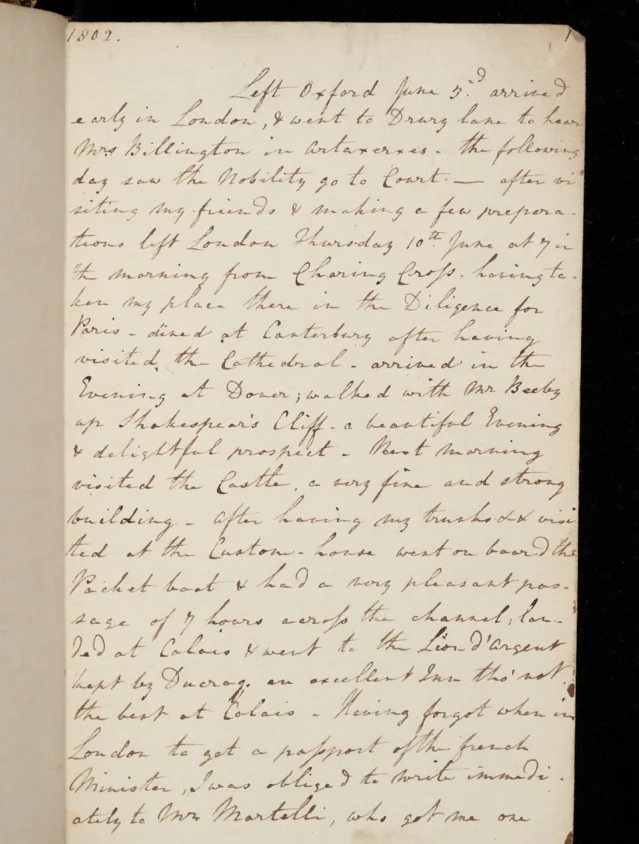
Maude's diary opens with his departure from Oxford — the handwriting clear and purposeful, the destination Paris — and the reader already knows what he does not: that the trip will stretch into years. His opening pages record the journey of a traveller. His later pages record something else entirely.

Verdun and the British detained

The town selected as the main parole depot for British detainees was Verdun, a fortress city in northeastern France far from any coast. Officers and civilians with means were placed on parole — they could move within the town walls and arrange their own lodgings, provided they signed a promise not to escape. By 1812, roughly 16,000 British prisoners were held across France, with Verdun functioning as the central hub, home to a community that included military officers, their families, elderly civilians, and men of the cloth like Maude. 3 4
On December 2, 1803, Maude recorded a formal shift in his status. He had received an order from the commandant, he wrote, informing the detainees "that in future we were prisoners and could no longer..." 3 The sentence breaks off in the historian's citation, but its direction is clear enough: the comfortable ambiguity of being a stranded tourist was over.
An editorial illustration depicting a Georgian clergyman writing by candlelight at a stone-walled desk in provincial France, circa 1805.

What Maude put on the page

The diary runs from 1802 through approximately 1809, covering seven years of captivity. Maude recorded the social routines of the British detainee community: relief committee meetings, religious observances, commentary on the political news that filtered in from the outside world. In June 1806, he noted his reaction to the new British administration and its likely consequences for the colonies — the diary of an Oxford churchman, yes, but one paying close attention to events far beyond Verdun's walls. 3
What historian Élodie Duché (York St John University) describes as especially striking is the cross-cultural texture of Maude's account: a Church of England parson navigating life inside Catholic France, attending French religious events, observing a society that was officially his country's enemy. 5 Duché has drawn on the diary extensively in her research on civilian internment during the Napoleonic Wars, treating it as a primary source for understanding the daily texture of British captivity in France — one that goes well beyond military history into questions of faith, finance, and cultural encounter.
Maude also put his practical energy to use during his years in Verdun. In 1810 he edited and arranged the printing of a Book of Common Prayer at a local press in the city, specifically for use by the British prisoner community. The edition was produced by the Christophe printing house in Verdun. 5 First editions are described in booksellers' records as very scarce. 3
He was eventually released — the Journal ends around 1809, and the catalog dates the manuscript through 1814, the year Napoleon abdicated and the prisoners were freed — and he returned to Oxford. The diary went with him, and then into the Queen's College library, where it stayed for two centuries before being scanned.

Read it online

The full digitized manuscript — both volumes — is now open to anyone on Digital Bodleian.
リンクプレビューを読み込んでいます…
1
Cover image: photograph of the diary's opening page, from Queen's College Library Instagram announcement

このコンテンツについて、さらに観点や背景を補足しましょう。

  • ログインするとコメントできます。